

Biophilic Design for Coastal Homes

Light, Natural Form, Reflection & the Quiet Logic of the Shore
Biophilic design for coastal homes explores how light, natural form, reflection, texture, and shoreline rhythm help a room feel calmer, softer, and more connected to nature.
The most restorative coastal rooms are often the ones most aligned with the natural world — where light shifts gently, materials hold warmth and texture, and the forms inside the room echo something true about the shoreline outside.
At Echoes of the Sea, this idea underlies so much of what I create: a way of seeing how natural form, reflection, softness, and visual breathing room can bring calm into a home without forcing it.
What Is Biophilic Design?
Biophilic design is often simplified into plants, sunlight, and the idea of bringing the outdoors in.
Those things matter, but the feeling goes deeper than that.
Biophilic design is about creating a stronger connection between people and the natural world through light, texture, natural rhythm, organic form, reflection, and materials that feel alive rather than artificial. A room does not become biophilic because it contains one plant. It becomes biophilic when the whole space begins to feel more responsive, more restorative, and more connected to the logic of nature.
In coastal homes, that connection can feel especially natural because the shoreline already offers many of the qualities biophilic design values most.
Why Coastal Homes Speak This Language So Naturally
The coast already teaches us what biophilic design is trying to do.
Light changes constantly. Water reflects brightness into the room. Shell spirals, coral branches, bird forms, botanicals, driftwood, and shoreline textures all carry structure without harshness. Even stillness feels alive.
That is part of why coastal interiors can feel so calming when they are done well. The room does not have to imitate nature literally. It only has to carry some of the same qualities — openness without emptiness, softness without vagueness, pattern without visual strain, and structure without rigidity.
When those qualities come together, a room often feels calmer without trying too hard.
The Elements of Biophilic Coastal Design
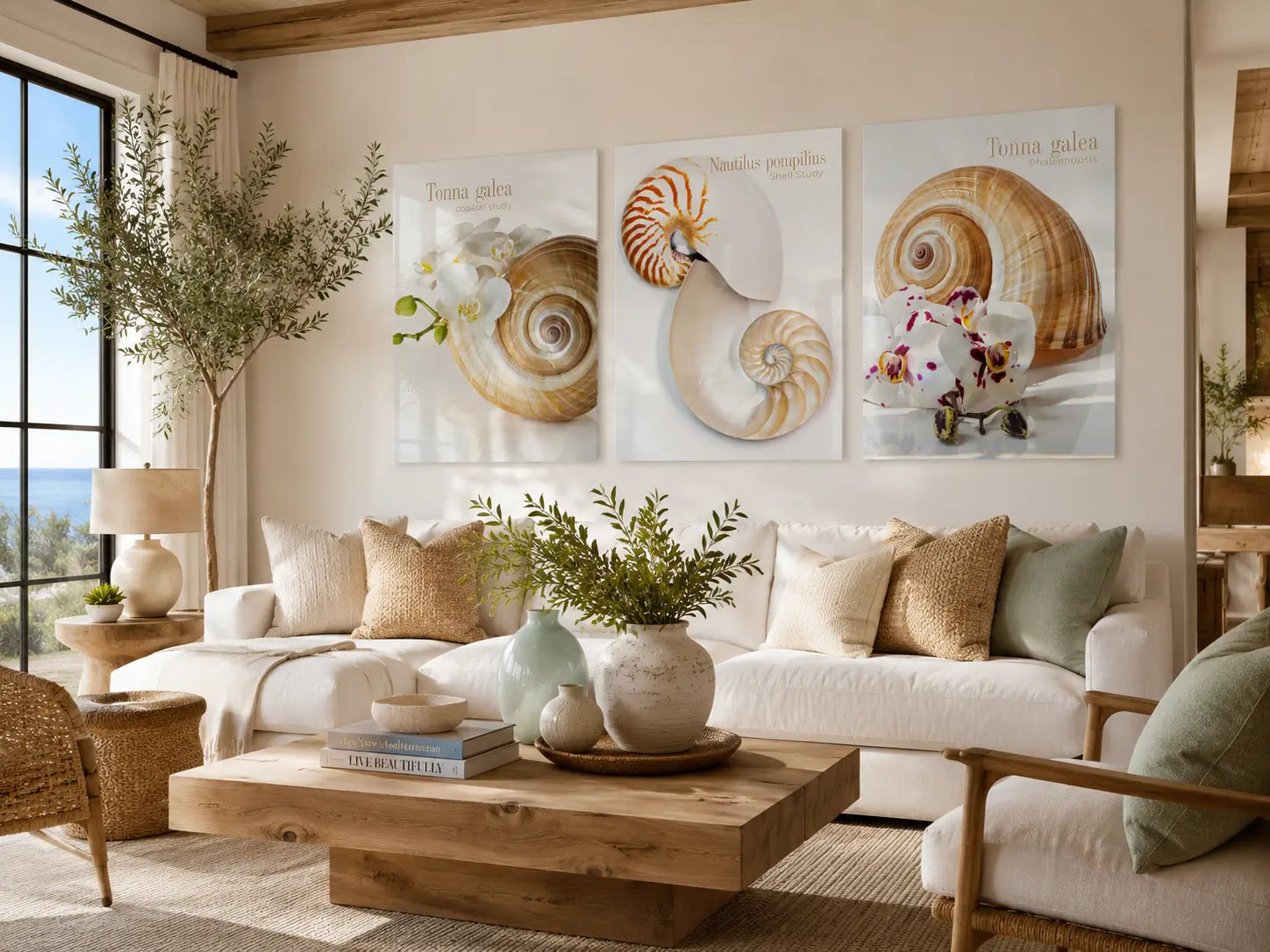
Biophilic coastal design is shaped by more than one feature. The rooms that feel calmest usually combine several qualities at once — light that changes gently, forms the eye can follow, materials with texture and age, and enough visual breathing room for everything to settle into balance.
These are some of the elements that help coastal homes feel softer, more restorative, and more connected to the natural world.
Light & Reflection
Natural light is one of the strongest biophilic elements in any coastal room. It changes through the day, softens materials, and gives a space a sense of rhythm instead of visual sameness.
Reflection matters just as much. Water, wet sand, glass, pale walls, and light-responsive surfaces all help coastal interiors feel luminous rather than merely bright. That reflected light often feels softer than direct light, which is part of why it can make a room feel more open and more restorative.
Glass art belongs naturally in this conversation. It does not only display an image — it interacts with light, subtle glow, and changing brightness throughout the day.
Explore more:
Natural Form, Pattern & Texture
Some of the most calming rooms contain forms the eye can follow gently. Shell spirals, coral branches, botanical curves, driftwood grain, layered petals, and weathered edges all create rhythm without rigidity.
That is part of what makes these shoreline forms so easy to live with. They repeat, but not mechanically. They suggest structure, but not harshness. A shell spiral feels balanced. Coral feels intricate but resolved. Driftwood carries age, variation, and quiet natural architecture.
These are the forms that shape so much of biophilic coastal design — and they are also the forms that shape much of my work.
Explore more:
Space, Calm & Belonging
Not every calming room is minimal, but most calming rooms understand restraint.
Biophilic interiors often feel restful because they allow light, texture, and focal points enough room to breathe. The eye is not forced to work too hard. One stronger piece can do more than several smaller accents. A room can feel open without feeling empty, and styled without feeling crowded.
This is also where placement matters. In a room with a view, the art still matters — but its role changes. It no longer has to compete. It has to belong.
When art is chosen well, it can help a room feel softer, more grounded, and more complete after the light changes.
Explore more:
Biophilic Coastal Design — In Glass
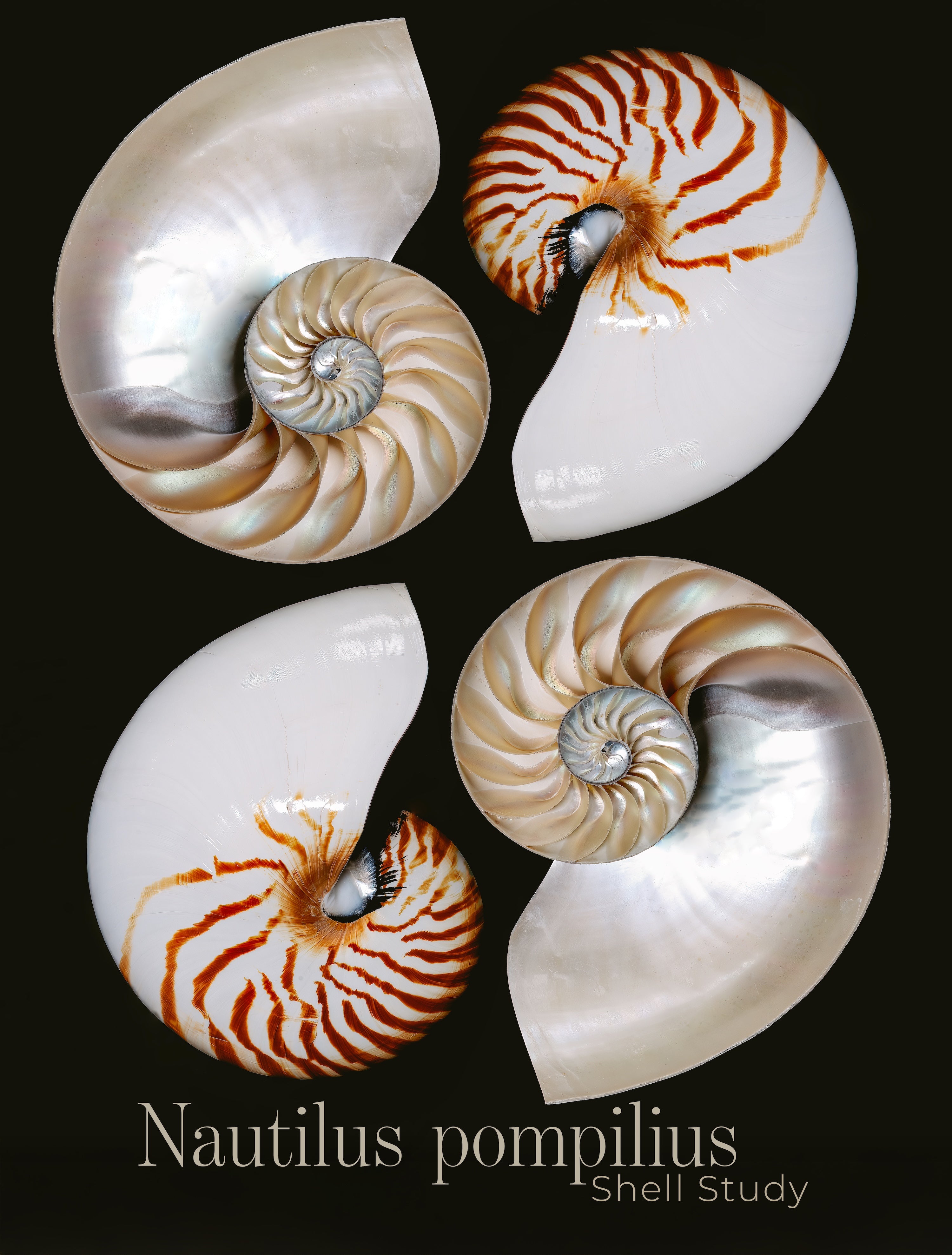
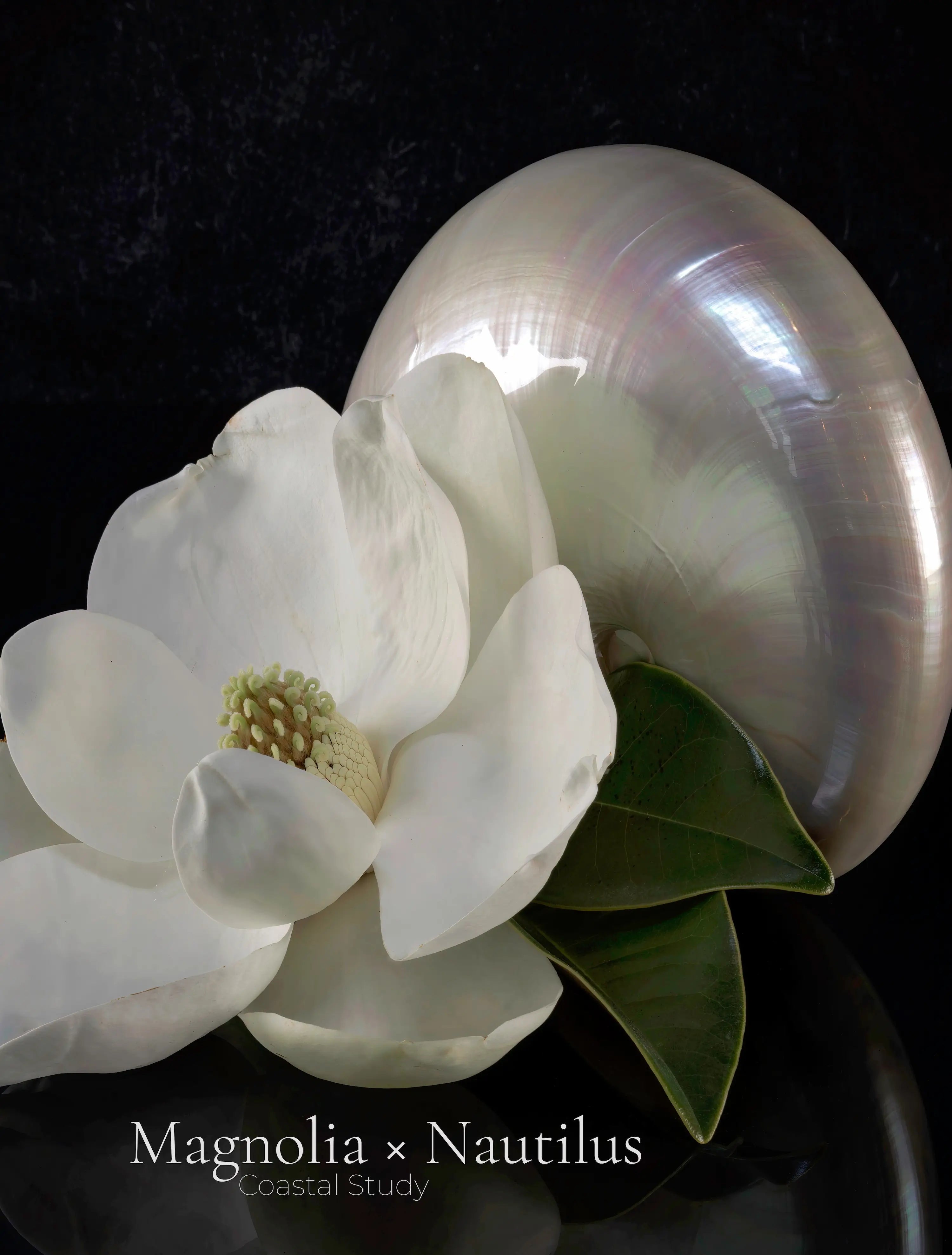
These pieces are shaped by the same qualities biophilic design values: natural rhythm, shoreline form, reflection, light, and the kind of quiet structure that helps a room feel calmer over time.
Whether the subject is a shell study, botanical pairing, bird portrait, or shoreline scene, the goal is the same — to create art that feels connected to nature without making a room feel overly literal or staged.
Explore biophilic coastal art through:




From Nature to Atmosphere
When a room feels restorative, it is rarely because of one element alone.
More often, it is because the light, materials, textures, and forms inside it make sense together. The room begins to carry some of the same softness, rhythm, and quiet order found outside.
That is the deeper promise of biophilic coastal design.
It is not about trend.
It is not about decoration for its own sake.
It is about creating interiors that feel calmer, more grounded, and more aligned with the natural world.
In coastal homes, that can feel especially beautiful.
Explore Biophilic Coastal Design
Each piece of Echoes of the Sea is part of a larger visual language — a conversation between light, texture, rhythm, and natural form inspired by the shoreline.
Explore the collections and journal entries that bring this way of living into the home:
- Biophilic Design for Coastal Homes: Why Natural Forms Make a Room Feel Calm
- Bringing the Outdoors In: 7 Biophilic Design Elements Every Coastal Home Needs
- Biophilic Lighting for Coastal Homes: The Healing Power of Natural Light
- Coastal Botanical Wall Art: A Softer Biophilic Approach
- Fractals in Nature: Why Shells, Coral, and Nautilus Patterns Feel So Calming
- Why Glass Wall Art Elevates Coastal Interiors
- What to Hang When the View Is Already Beautiful
- The Natural Architecture of the Sea
- Coastal Wall Art for Living Rooms
- Coastal Wall Art for Bedrooms
- Coastal Wall Art & Design Ideas
- Shop Coastal Glass Prints