

Why Glass Wall Art Elevates Coastal Interiors
|
|
Time to read 5 min
Cart
Your cart is empty
|
|
Time to read 5 min
In coastal design, light defines the space.
It shapes how walls feel in the morning, how colors shift in the afternoon, and how rooms settle into warmth at night.
When choosing coastal wall art, material matters just as much as subject. For homeowners deciding between glass vs canvas wall art, the difference becomes immediately visible in how each material interacts with light.
Glass wall art refers to artwork printed directly onto specialty glass surfaces, creating a frameless presentation that reflects light rather than absorbing it. In modern coastal interiors, that reflective quality enhances depth, clarity, and architectural presence.
In bright, light-filled coastal interiors, glass wall art can feel especially at home because its smooth, reflective surface preserves fine detail while complementing the openness of the room.s.
If you’d like a deeper look at how our glass prints are constructed, mounted, and designed to interact with light, visit our Why Glass page for a full breakdown of the material difference.
Few wall art materials respond to light-filled coastal environments the way glass does.
Canvas absorbs light.
Glass reflects it.
Because coastal interiors are built around air, openness, and luminosity, artwork that reflects light enhances architecture rather than flattening it.
Glass behaves like water — mirroring brightness, amplifying movement, and revealing depth as light shifts throughout the day.
Morning light creates shimmer.
Evening light creates glow.
The artwork evolves with the room.
The benefits of glass wall art extend beyond aesthetics.
Unlike canvas or paper prints, glass maintains visual definition in bright, light-filled rooms. In coastal interiors where subtle blues, layered neutrals, and horizon lines shape the mood, clarity becomes essential. Glass wall art allows those tonal shifts and reflective highlights to remain crisp — especially in sunlit spaces where softer materials may appear muted.
Benefits include:
Enhanced light interaction in sunlit rooms
Increased perceived depth on open walls
Crisp coastal color definition
Frameless architectural presentation
Easy surface care for everyday interiors
In modern coastal interiors where light defines the architecture, glass offers a distinctly refined advantage.
Black-and-white coastal photography offers a particularly clear example of what glass can do. Read The Quiet Drama of Black and White Coastal Photography to see how the material strengthens fine texture, tonal depth, and the subtle play of light.
Framed art adds dimension through layering — matting, glass covers, frame depth.
Frameless glass wall art creates depth within the image itself.
Because the image is printed directly onto glass, the surface remains clean and architectural. This gives coastal interiors a modern finish that feels intentional rather than decorative.
In modern coastal living rooms, this means:
In coastal spa-inspired bathrooms and entryways, it means:
Glass does not compete with the room. It integrates into it.
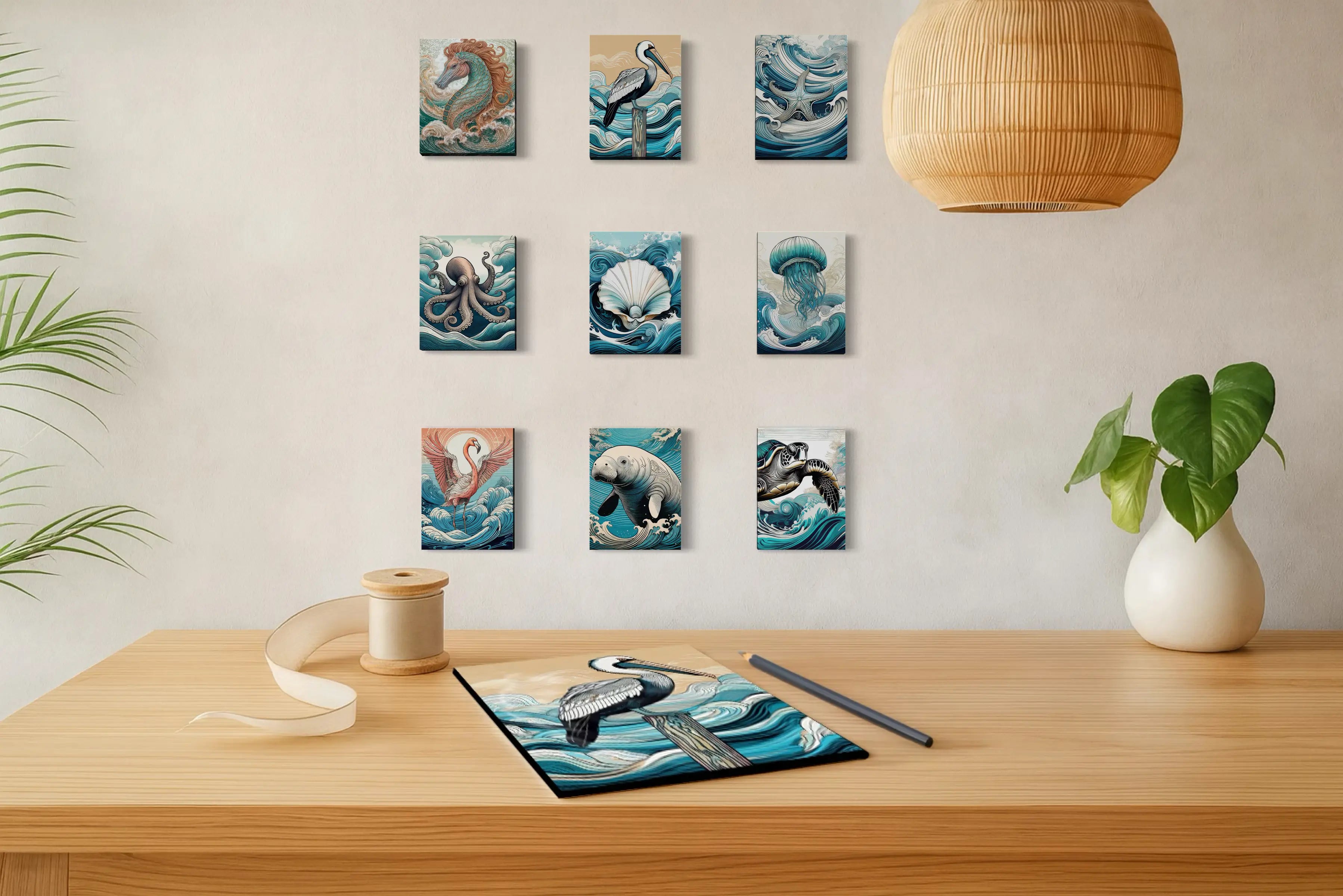
Thin, frameless profile with reflective surface designed to amplify light.
Coastal imagery relies on subtle gradients:
Lower-quality materials can dull these shifts.
Glass preserves them.
Glass helps preserve the fine clarity coastal imagery depends on. Its smooth surface keeps subtle gradients, shell detail, horizon transitions, and reflective highlights looking crisp and luminous. Our prints are produced with UV inks designed to resist fading, helping those colors and tonal shifts remain vivid over time.
Blues stay clear.
Whites remain bright.
Neutrals retain warmth without turning muddy.
Coastal design typically layers soft, matte materials — linen upholstery, driftwood textures, woven fibers, tile, and light-toned walls. These finishes create warmth and ease, but they also absorb light.
Glass introduces intentional contrast.
Matte + reflective.
Organic + architectural.
Soft + structured.
That contrast is what elevates a coastal interior from decorative to refined. Rather than competing with natural textures, glass enhances them — preserving clarity while allowing surrounding materials to remain relaxed and tactile.
Because coastal homes are often designed around openness and natural light, the material choice for wall art becomes part of the architecture itself.
Living Rooms
In spaces with large windows and open sight lines, glass maintains visual definition without adding bulk. It reflects daylight subtly, helping artwork feel integrated rather than layered on.
Bathrooms & Spa Spaces
Glass pairs naturally with tile, stone, quartz, and mirrors — creating cohesion among reflective surfaces while remaining easy to maintain in well-ventilated interiors.
Entryways
Narrow walls and transitional spaces benefit from depth without heaviness. The clean, frameless profile keeps these areas feeling open and intentional.
Bedrooms
Soft morning light interacts gently with glass, enhancing neutral palettes without overpowering them. The result feels calm, dimensional, and quietly architectural.
When coastal interiors rely on air, light, and layered texture, glass becomes more than a surface — it becomes a structural design decision.
In contemporary interiors, materials like:
are chosen for their reflective qualities.
Glass wall art belongs in that ecosystem.
It feels intentional.
It feels enduring.
It feels considered.
When art begins to feel architectural rather than ornamental, it shifts from accessory to anchor.
Coastal art is rarely just aesthetic.
It quietly influences mood.
Horizon lines calm the nervous system.
Spirals create subconscious balance.
Ocean imagery expands perceived space.
When these visual cues are amplified by reflective material, their impact strengthens.
Glass adds:
Without heaviness.
The result is coastal wall art that feels breathable.
The result is coastal wall art that feels breathable — part of the reason glass works so naturally within a more biophilic coastal interior. For a broader look at how light, reflection, natural form, and visual breathing room work together, explore our Biophilic Design for Coastal Homes hub.
Glass wall art is designed for interior spaces where light, color, and composition can be fully appreciated.
Our current glass print collections are crafted specifically for indoor use.
Whether your walls are light and airy or deep and dramatic, glass adds depth, clarity, and presence without visual heaviness.
If you’re still deciding on subject matter — from abstract waves to marine life or minimalist horizons — explore our Ocean Prints Guide to compare styles and compositions for coastal interiors.
The sea is defined by reflection.
Light on water.
Movement on surface.
Depth beneath clarity.
Glass is especially well suited to those same coastal characteristics — reflection, depth, and movement as light changes across the surface.
That’s why it feels aligned with coastal interiors.
Not trendy.
Not decorative.
Aligned.
When coastal wall art is printed on glass, it doesn’t just depict the ocean.
It behaves like it.
Glass changes depending on the artwork, the scale, and the room around it. A single print can feel clean and architectural, a triptych can carry movement across a larger wall, and black-and-white work can bring out fine texture and tonal depth.
Explore All Coastal Glass Wall Art
Need help with sizing? Visit our Glass Wall Art Size Guide.
Want a deeper look at the material? Read our Why Glass breakdown.


