
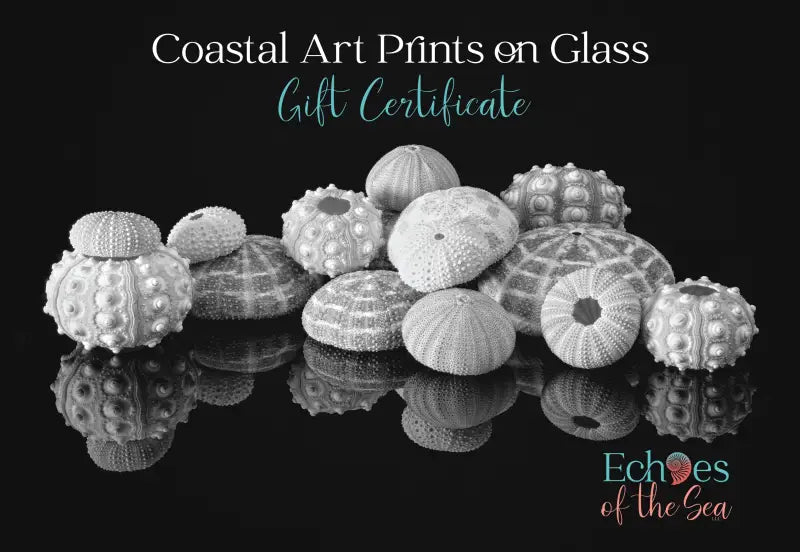
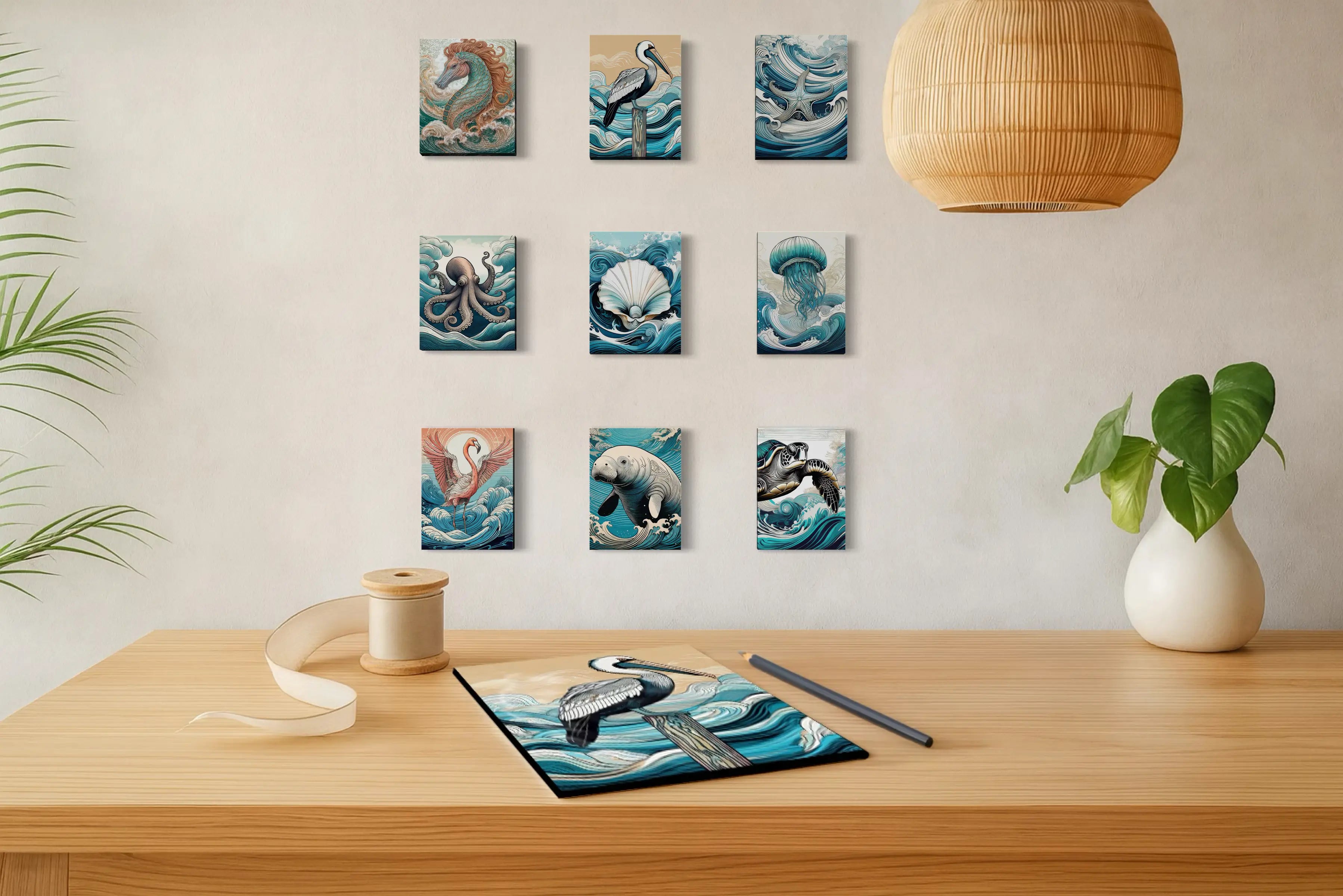
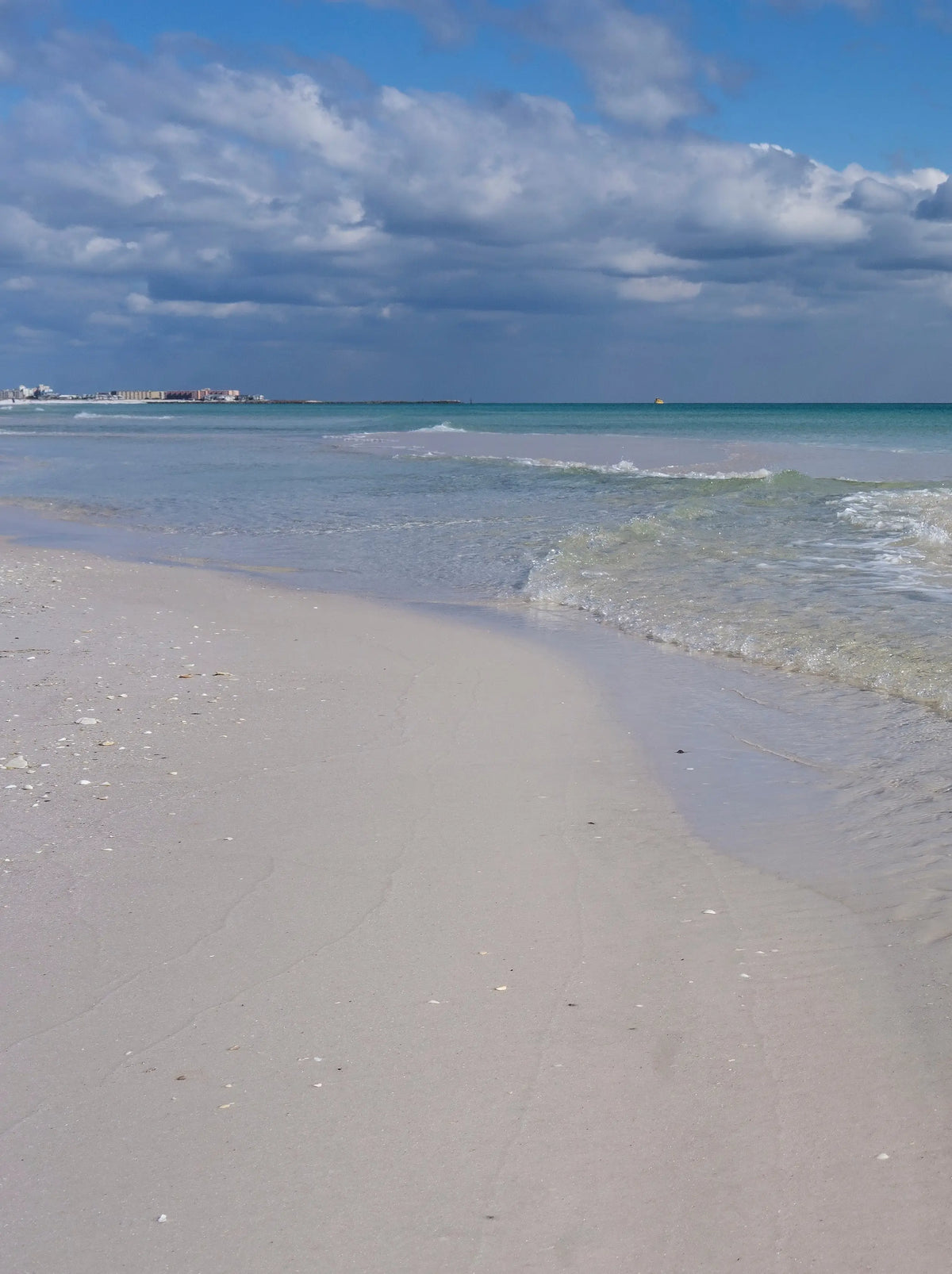
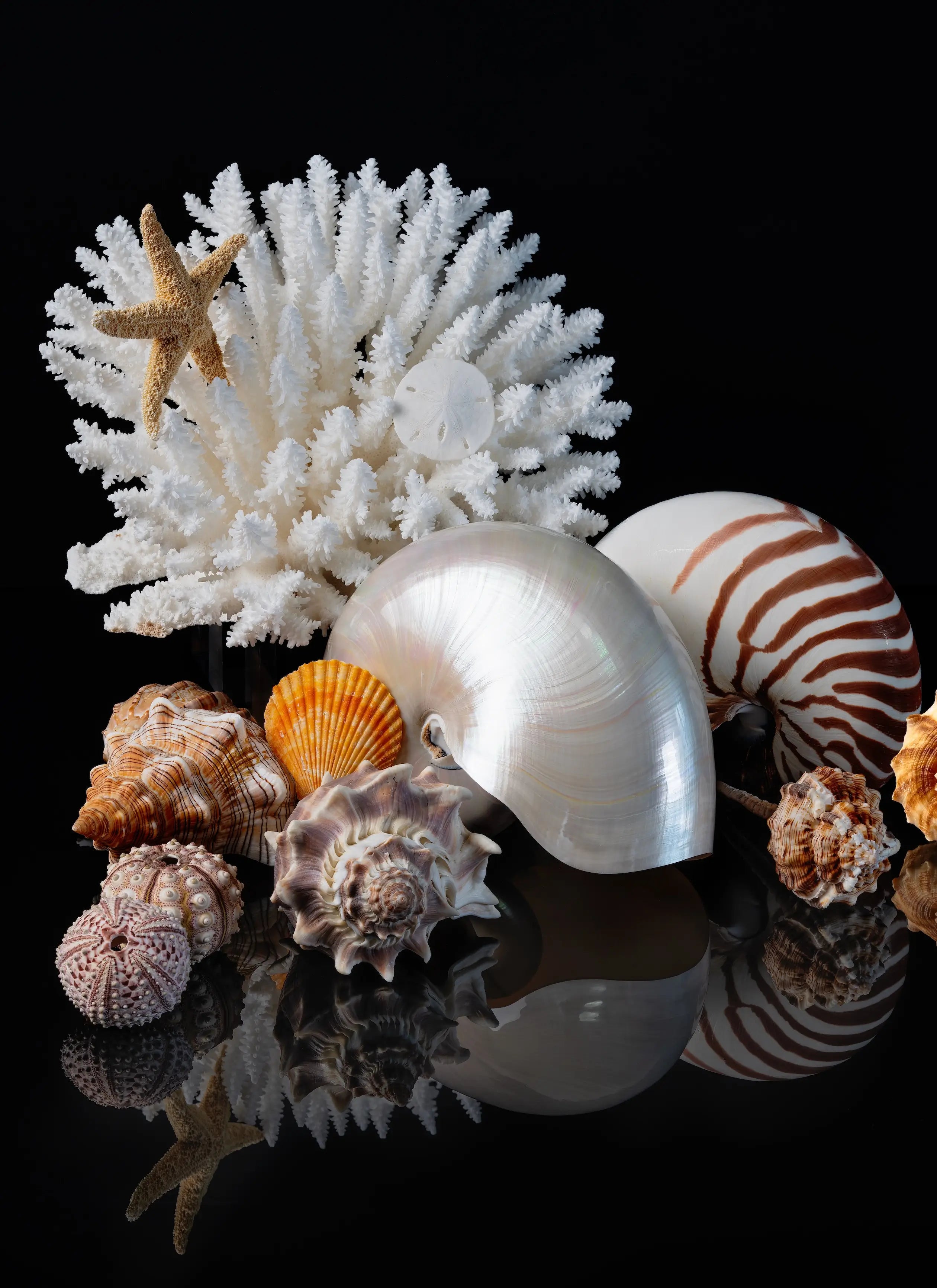
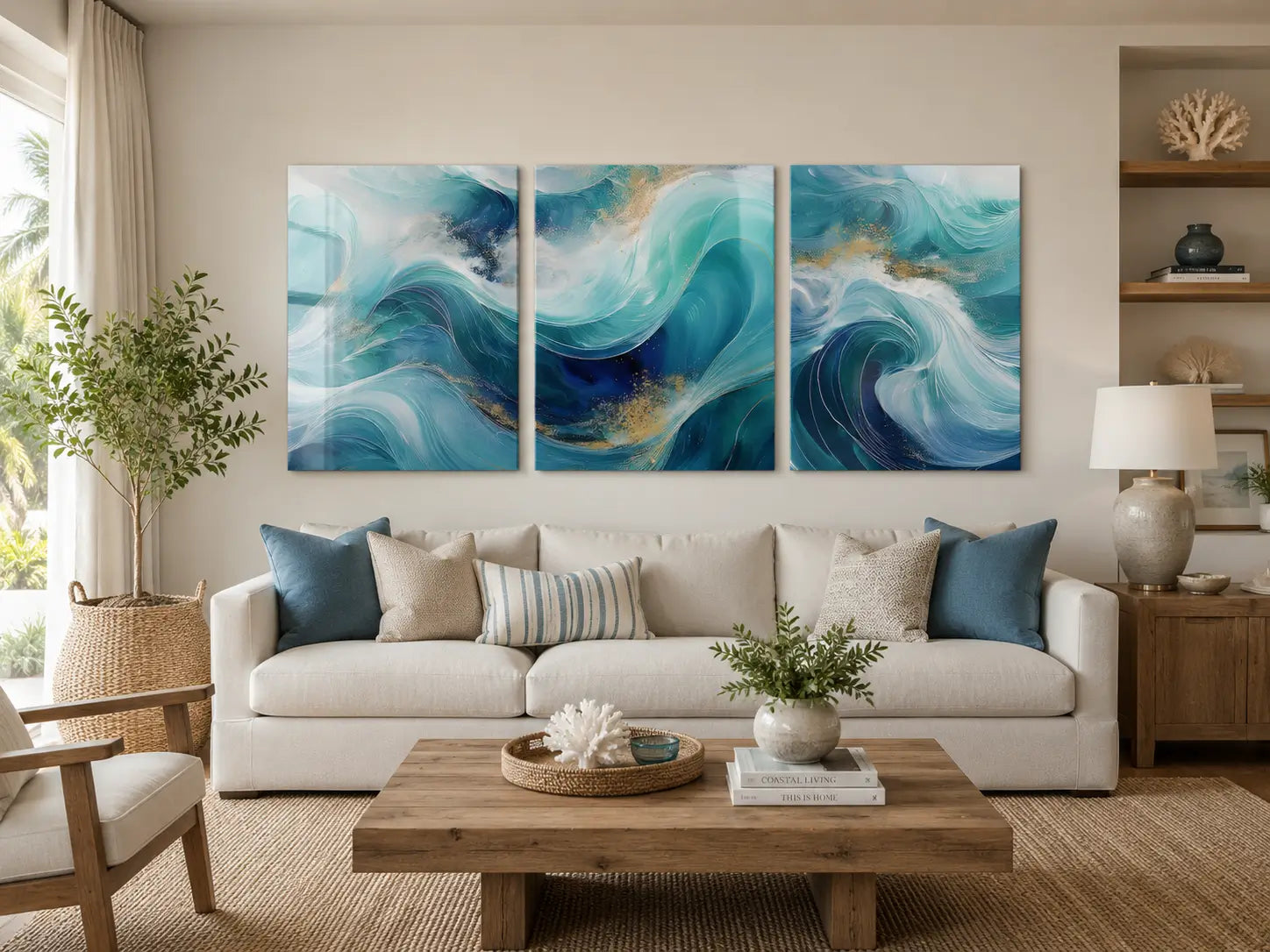
Some walls ask for more than a single piece of art. These coastal diptychs and triptychs extend shells, coral, shoreline photography, and other marine forms across two or three luminous glass panels—creating statement-scale art for larger walls without overwhelming the room.


Coastal Wall Art Designed for Larger Spaces
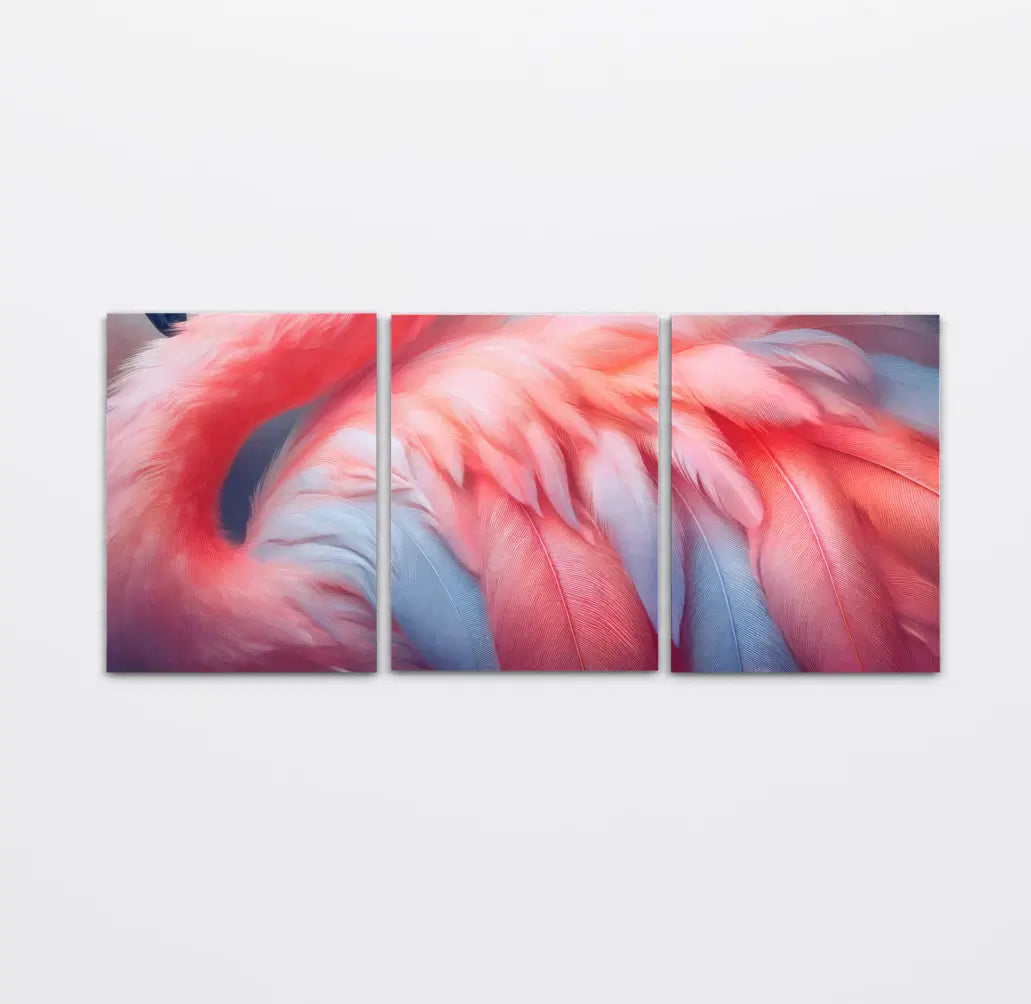
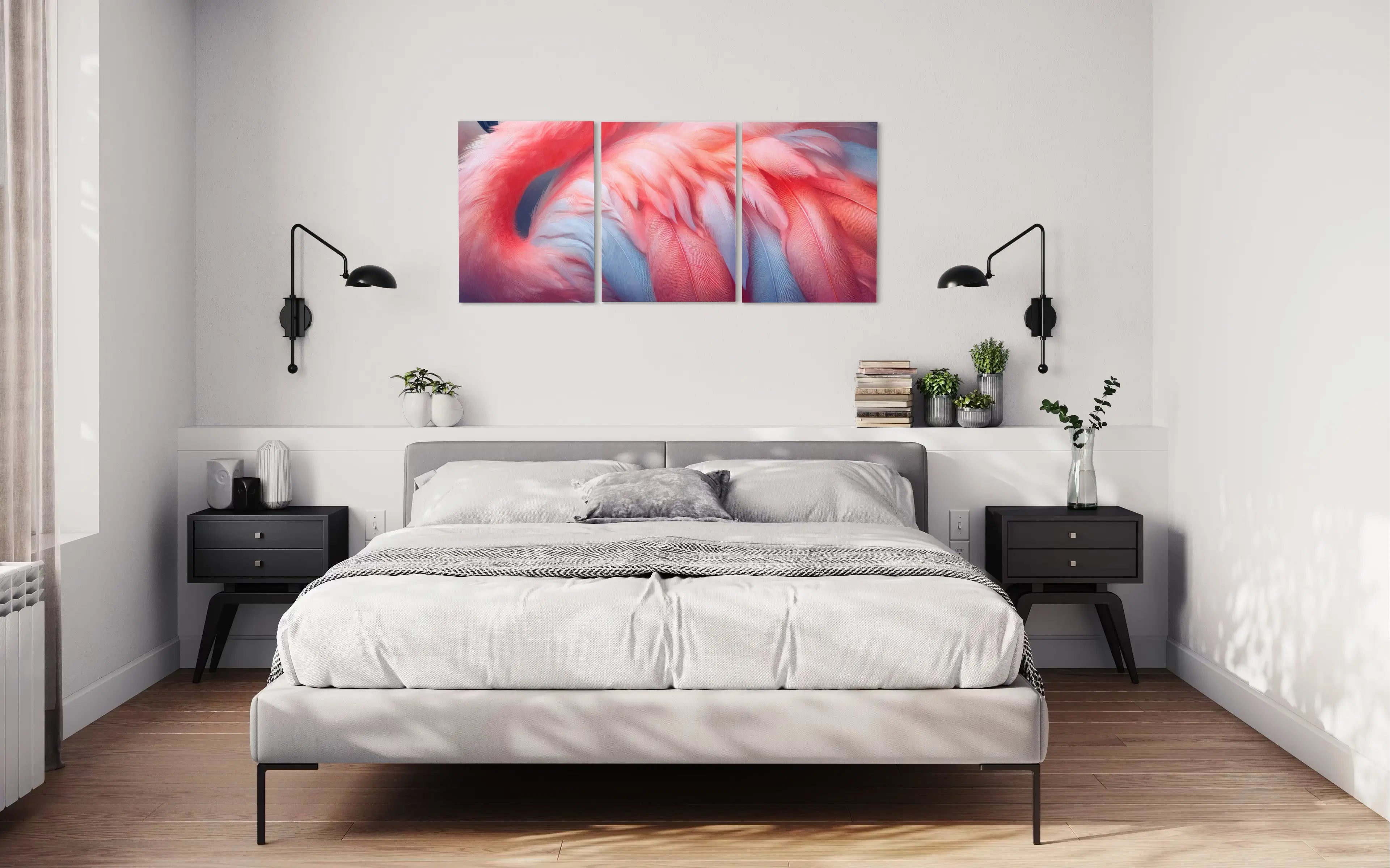
Large walls can be surprisingly difficult to decorate. A single print may feel undersized, while a collection of unrelated pieces can make the space feel busy. Diptych and triptych wall art offers another approach: one visual idea extended across multiple panels, creating width, movement, and presence without making the room feel crowded.
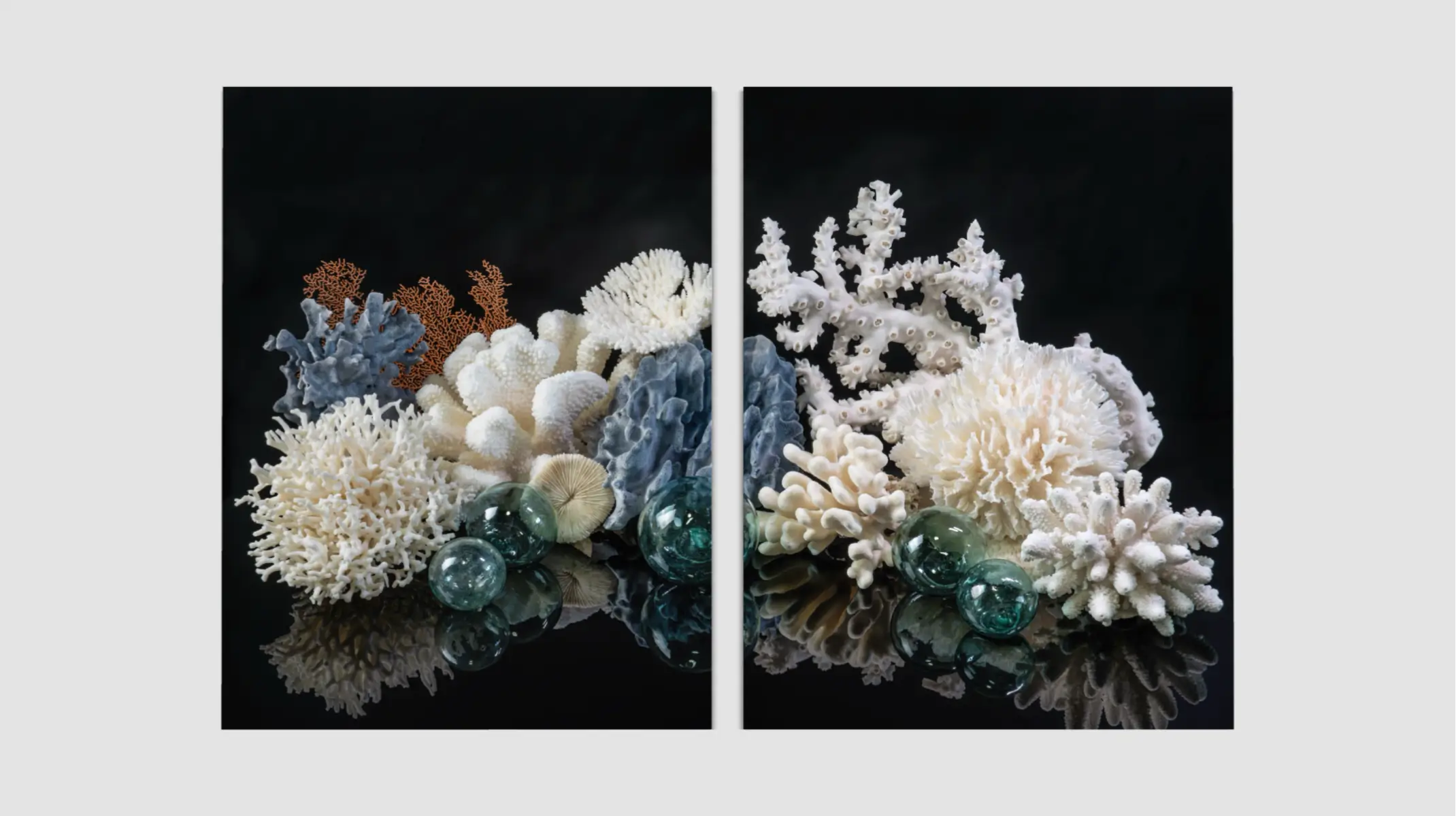
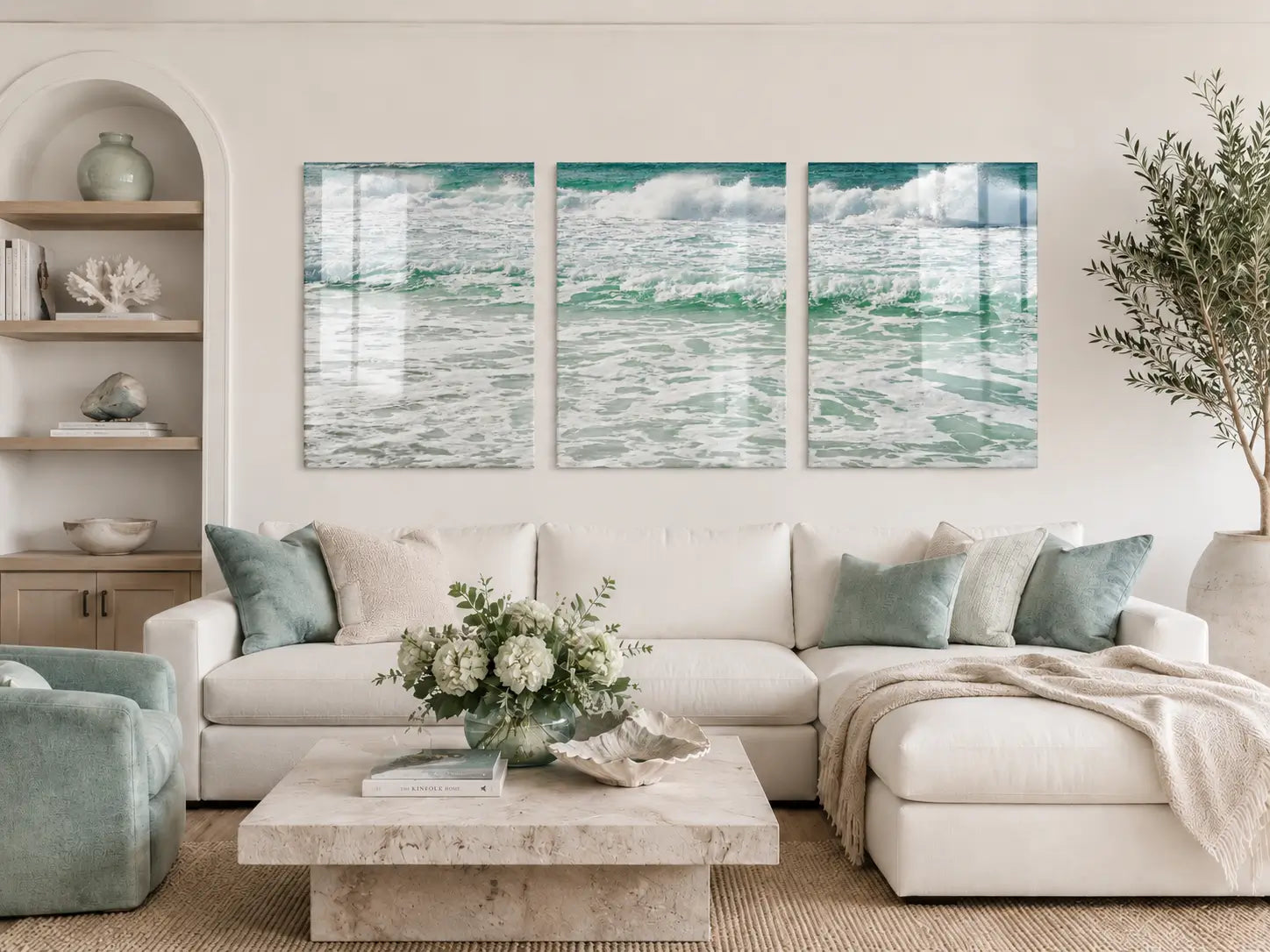
These multi-panel coastal pieces are especially well suited for walls above sofas, beds, consoles, dining tables, long hallways, and larger commercial spaces. The separation between the panels gives the artwork room to breathe while allowing the overall composition to occupy more of the wall.
What Is the Difference Between a Diptych and a Triptych?
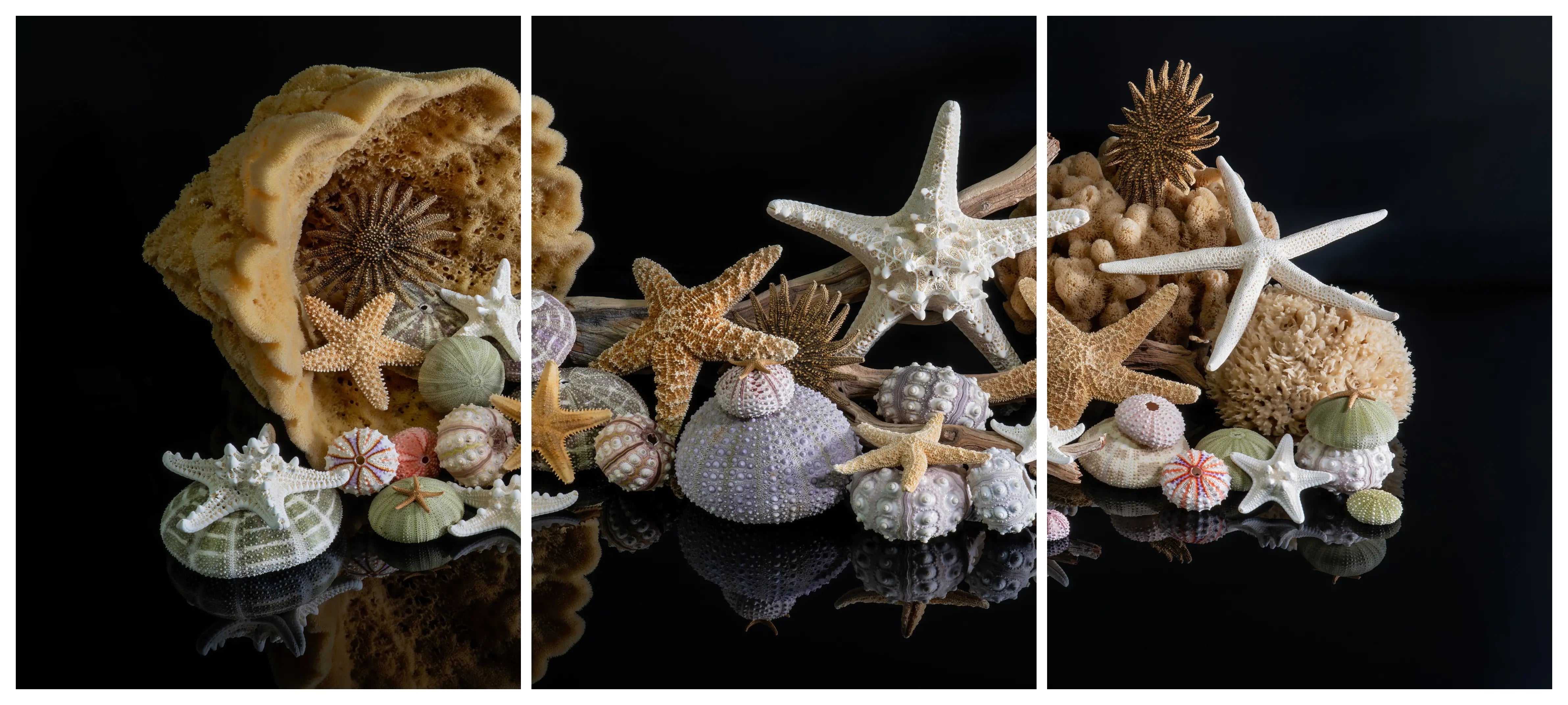
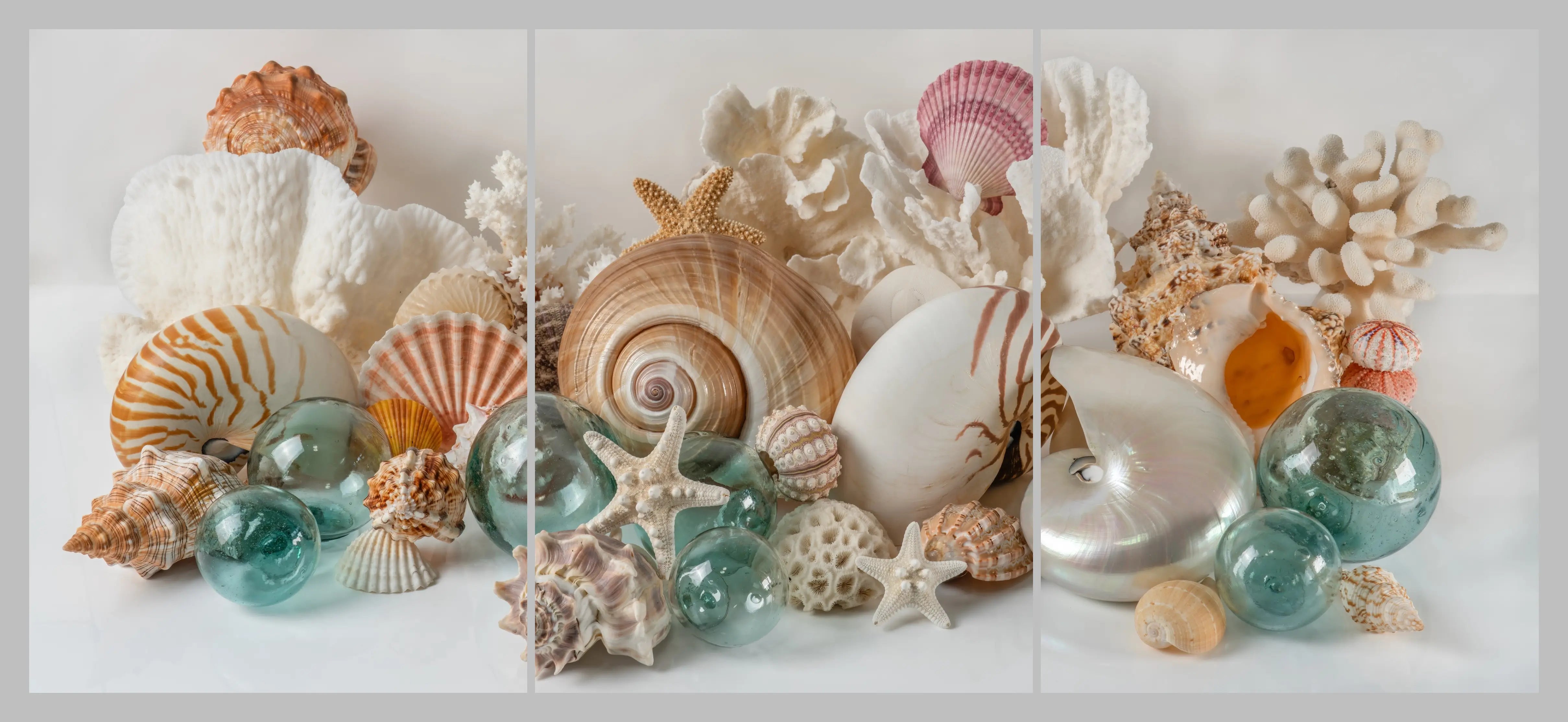
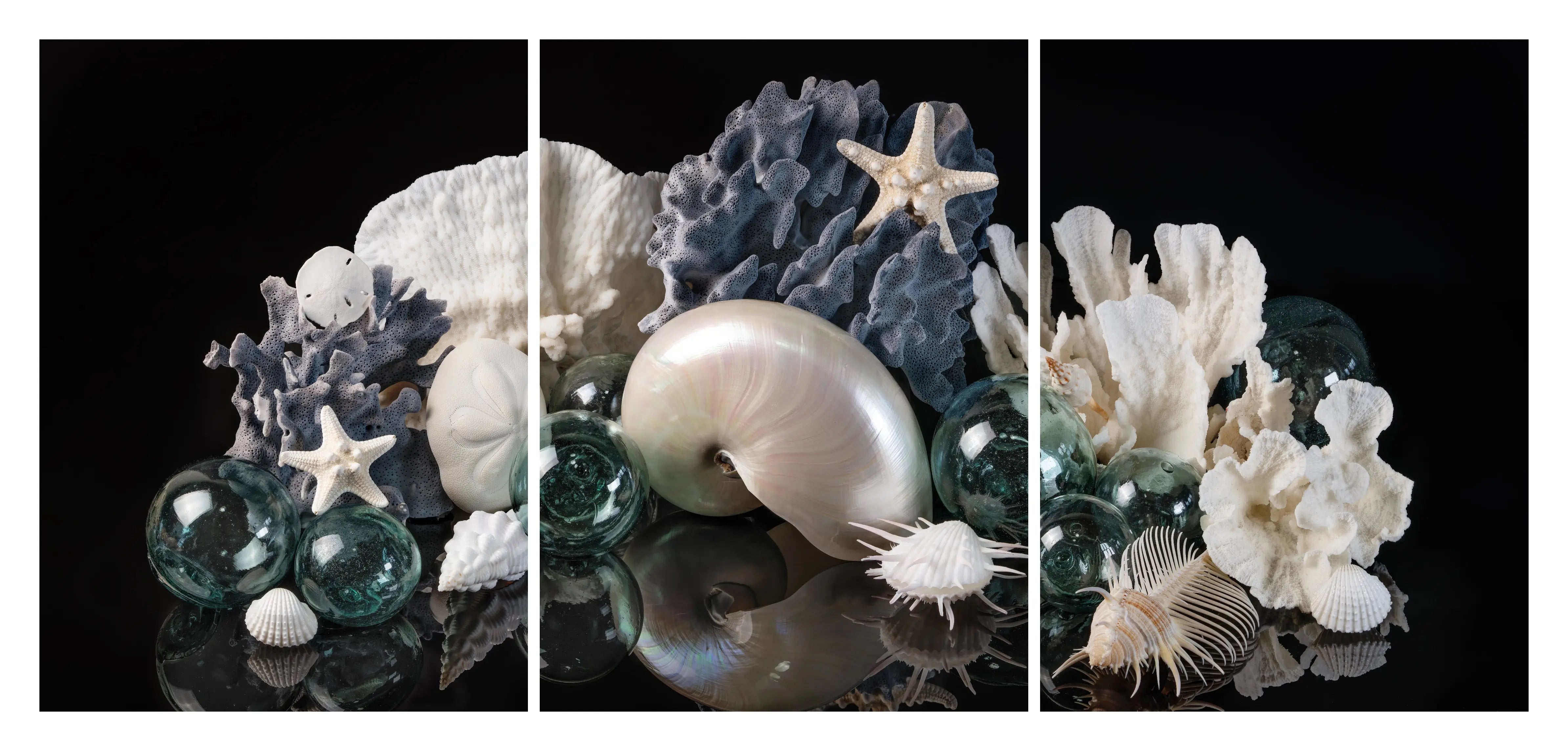
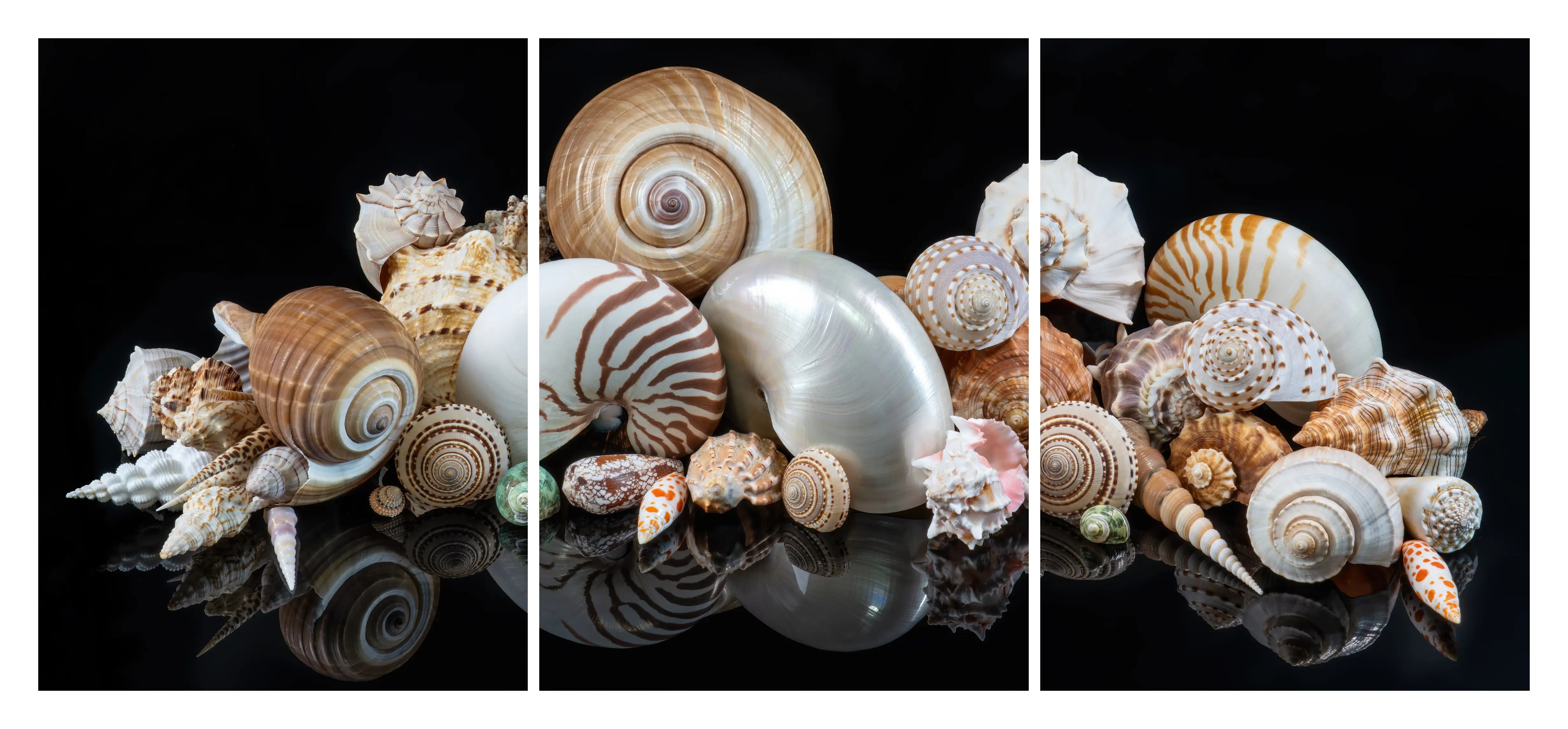
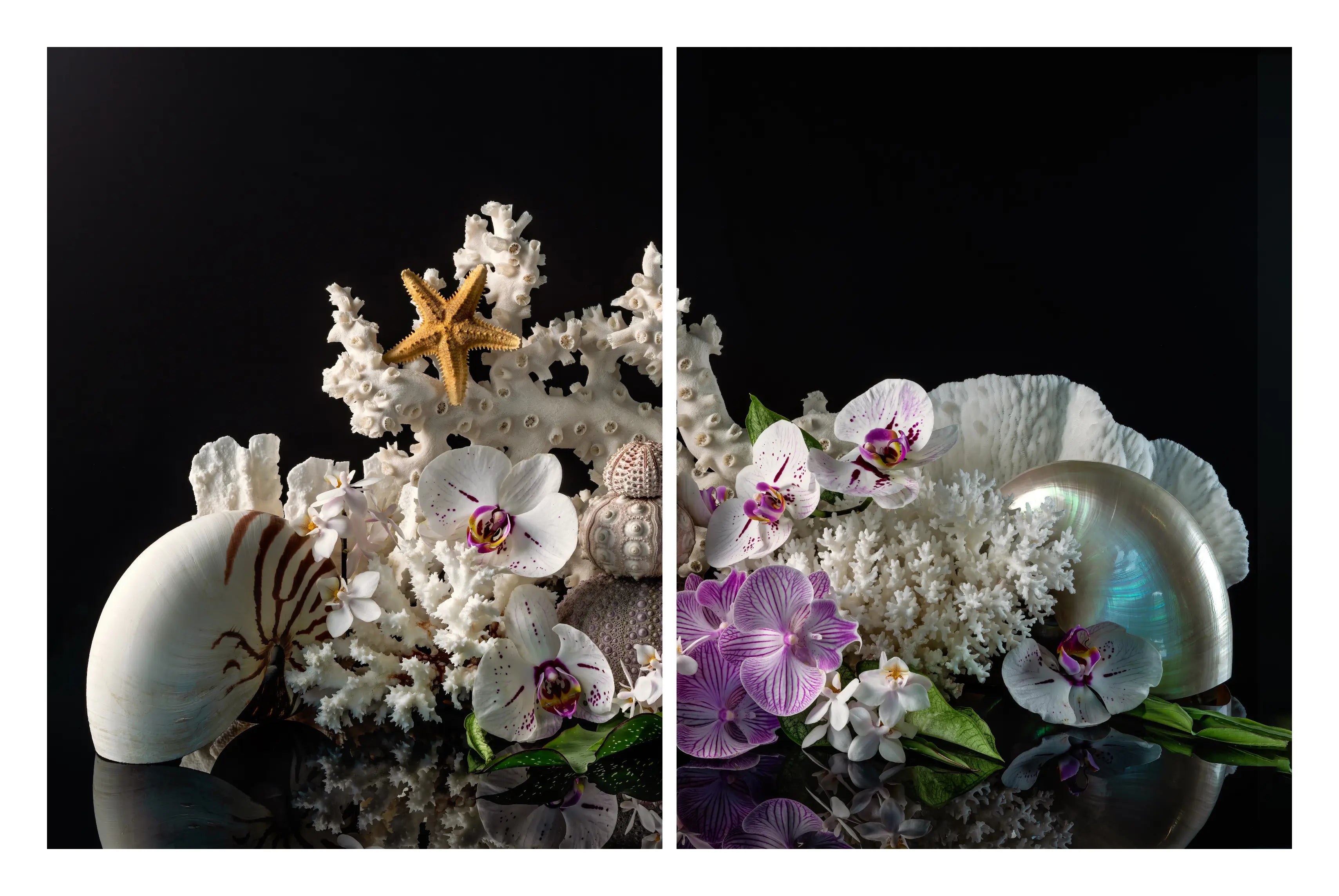
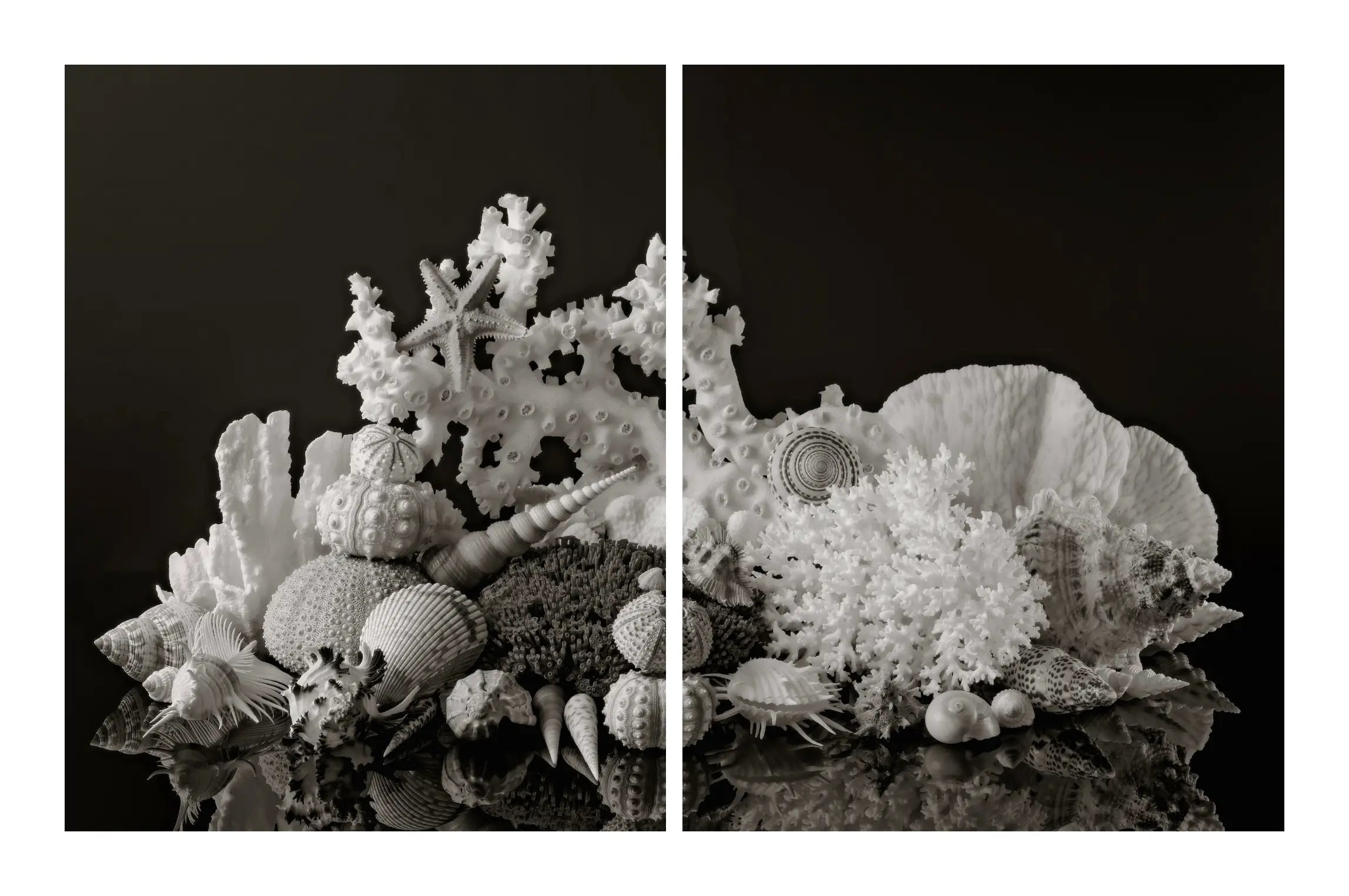
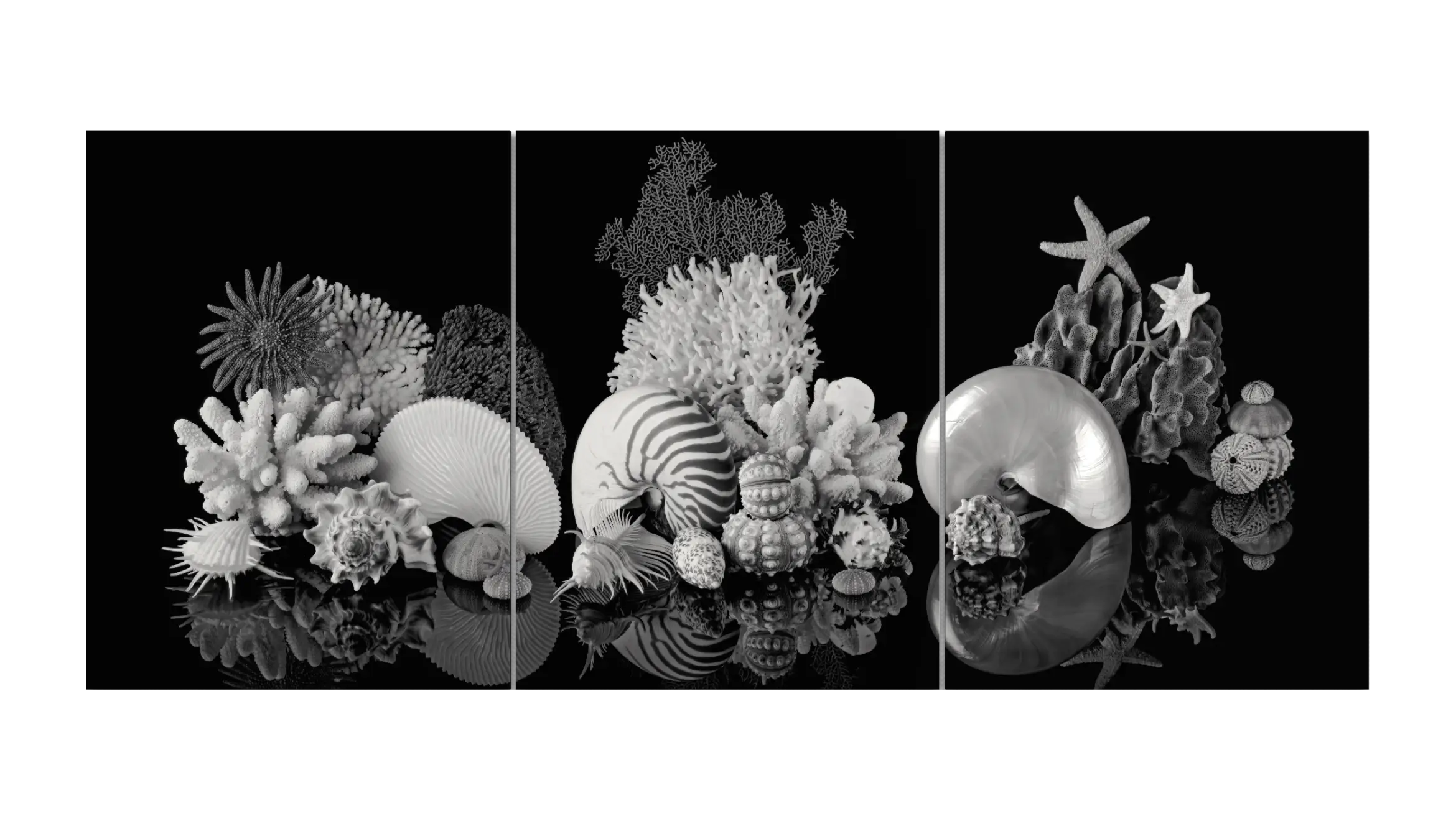
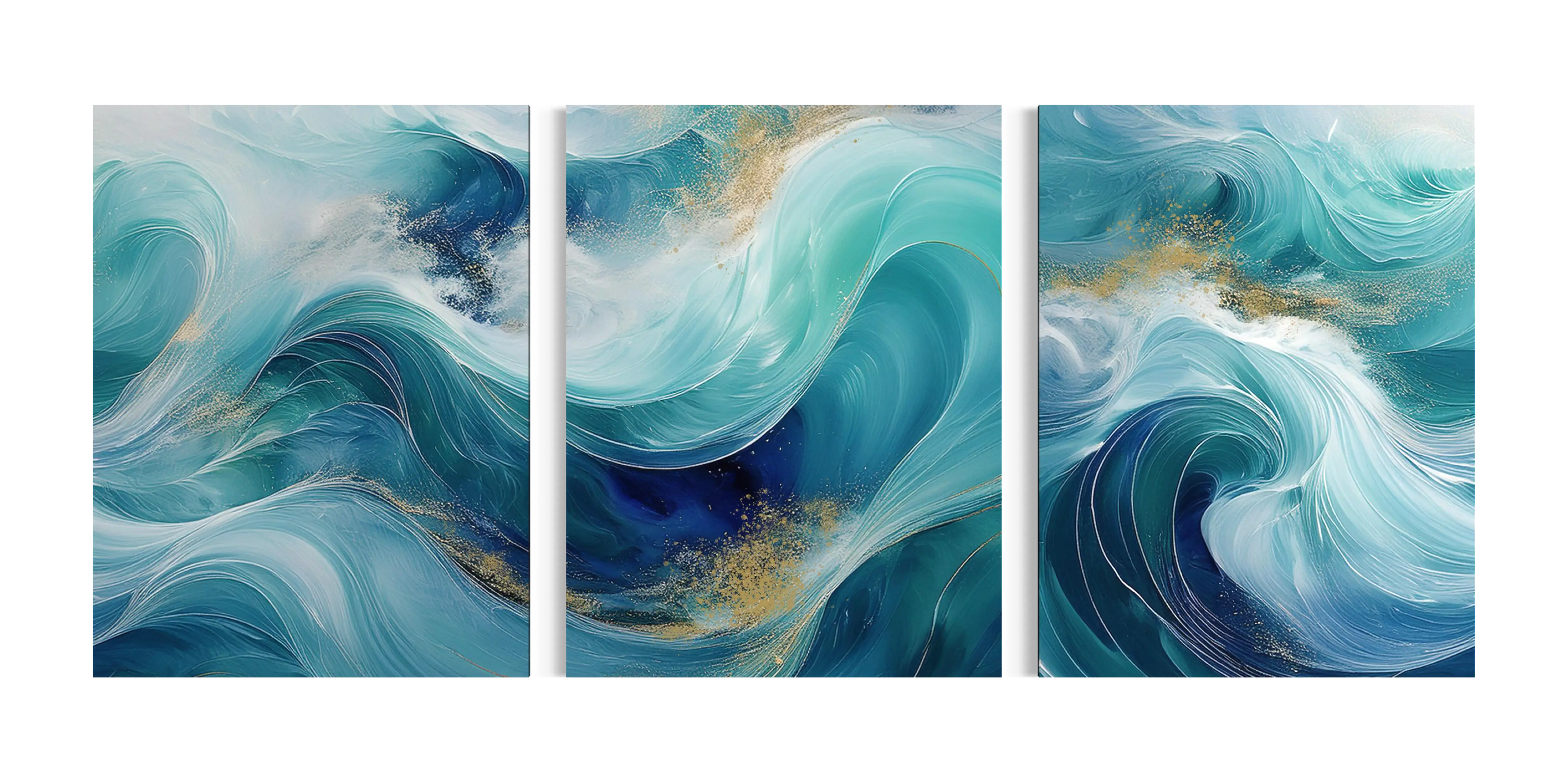
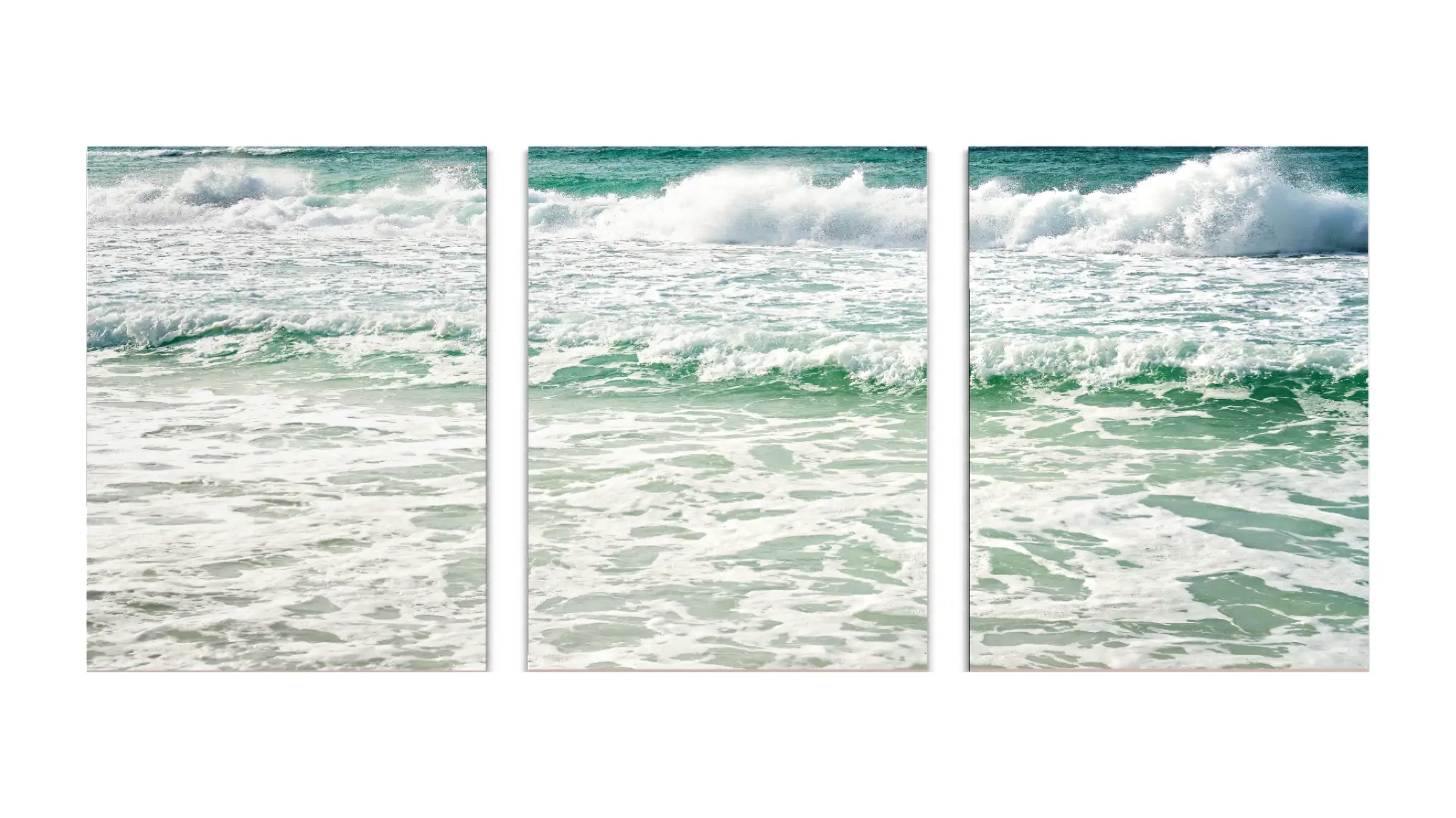
A diptych is an artwork presented across two panels, while a triptych uses three. Both are forms of multi-panel wall art, designed to be displayed together as one larger composition.
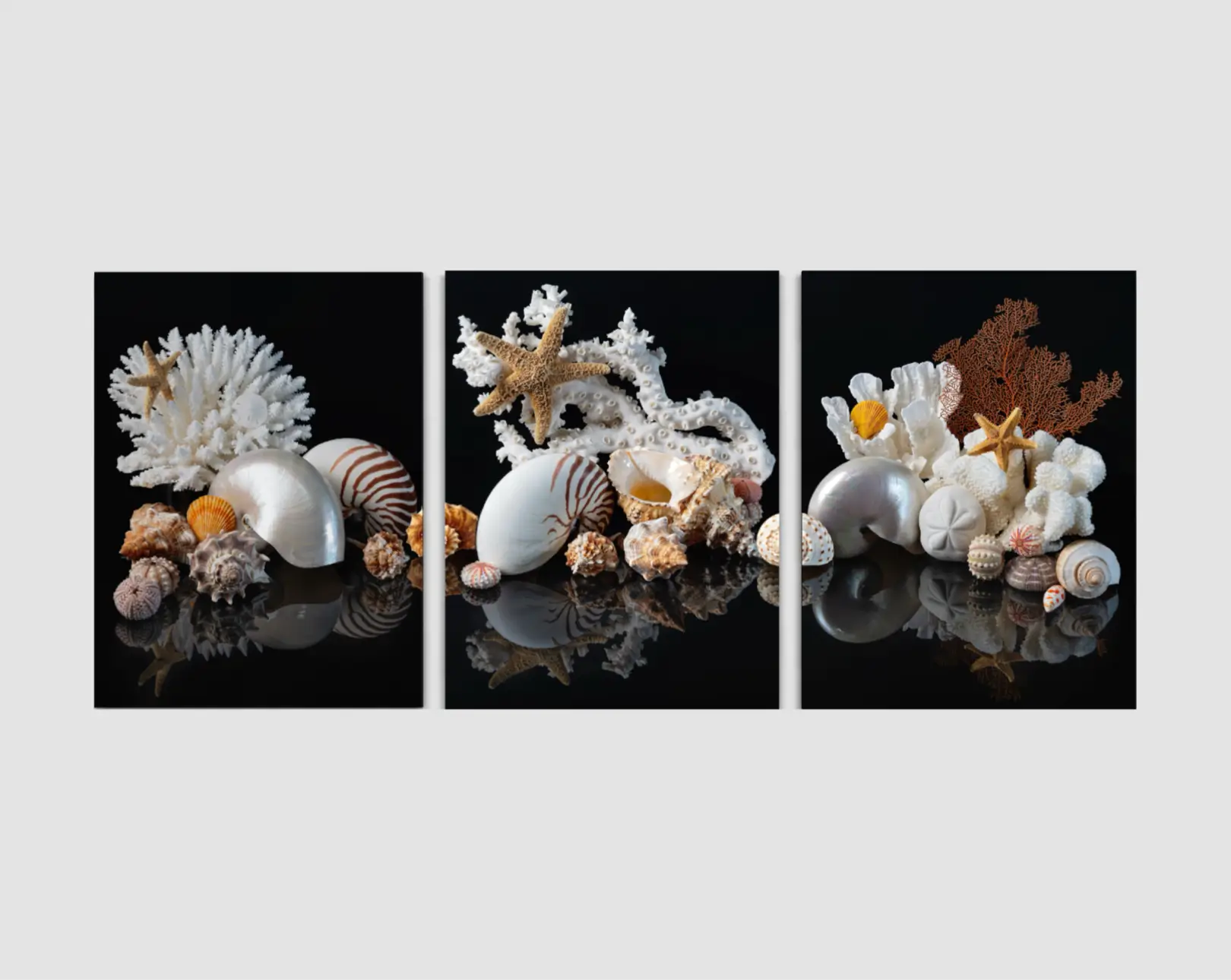
Some Echoes of the Sea pieces flow continuously from one panel into the next. A shell, sea urchin, coral branch, reflection, or line of movement may cross a panel break so the eye naturally travels across the entire artwork. Other compositions allow each panel a little more independence while repeating color, form, and texture to keep the pieces visually connected.
The spaces between the panels become part of the finished artwork rather than simply gaps between pictures.
Shells, Coral, and the Architecture of the Sea
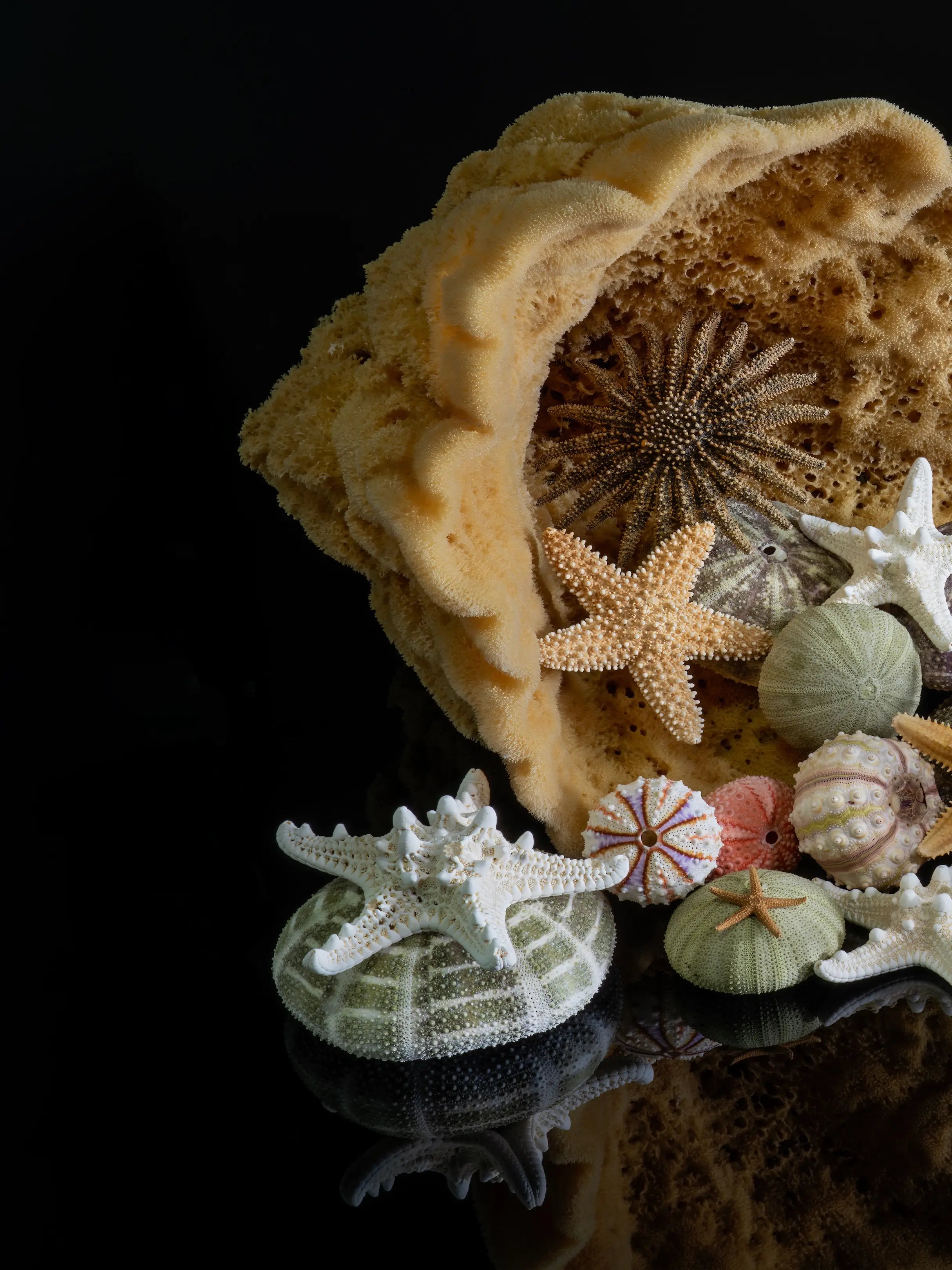
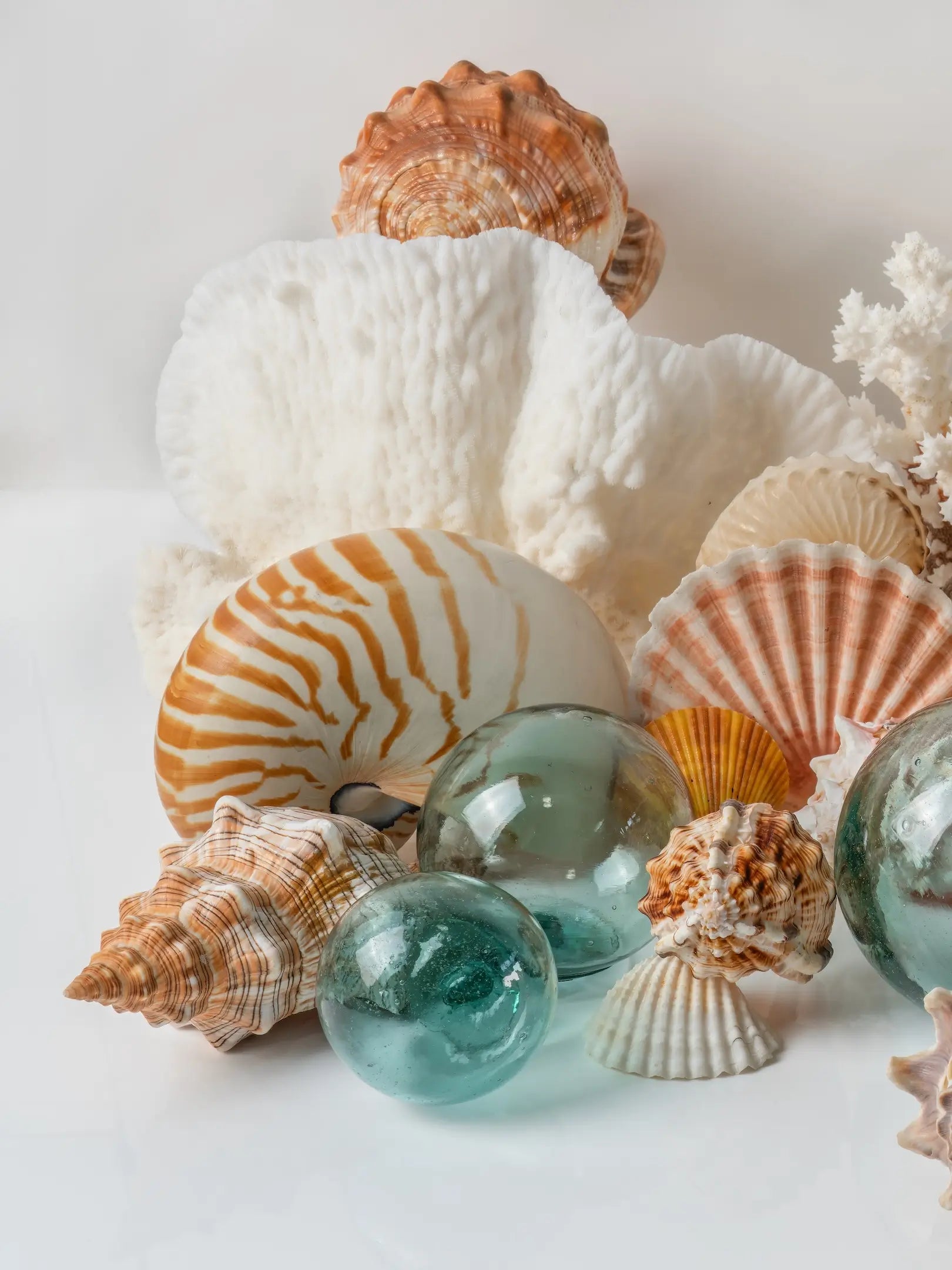
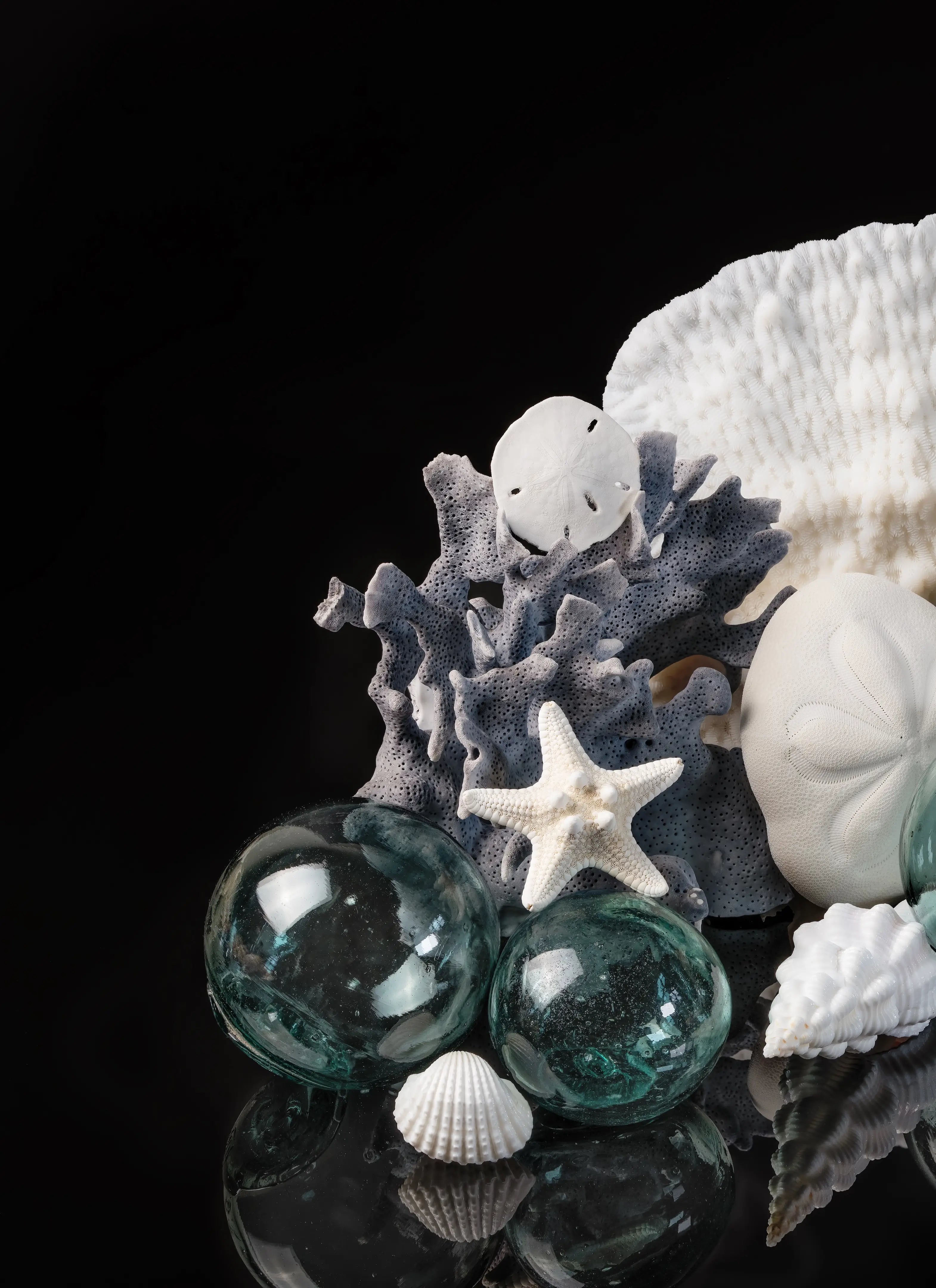
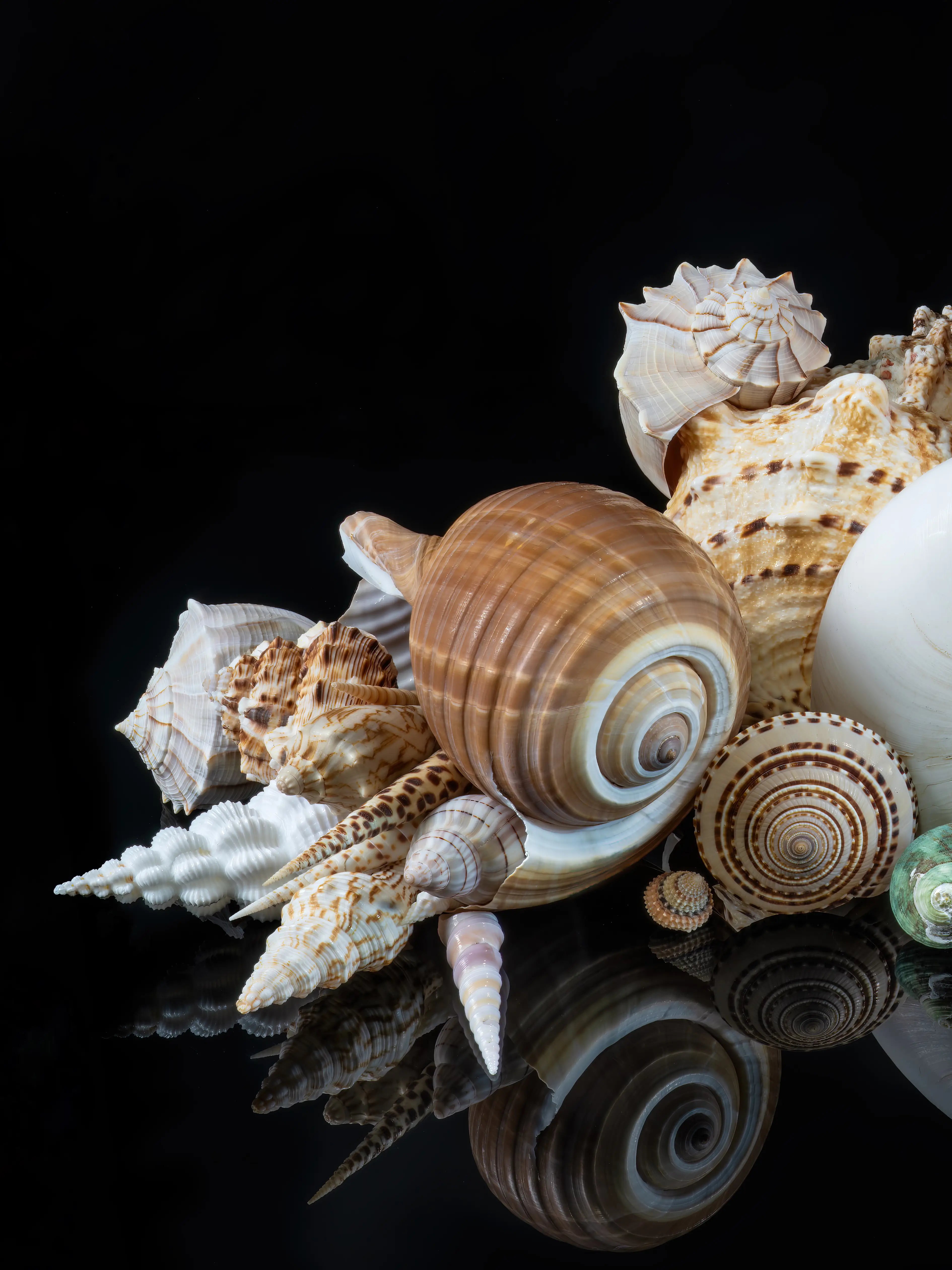
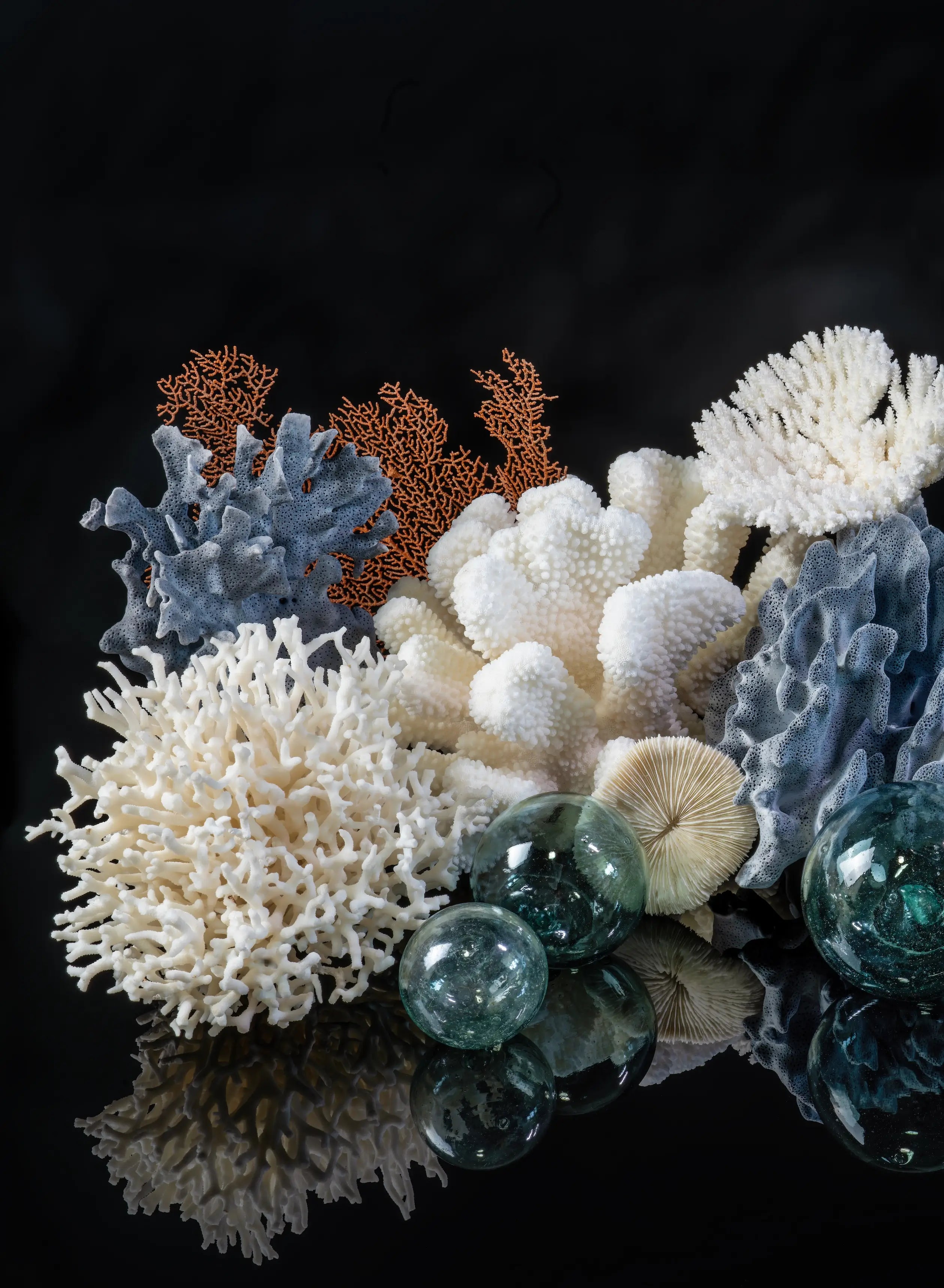
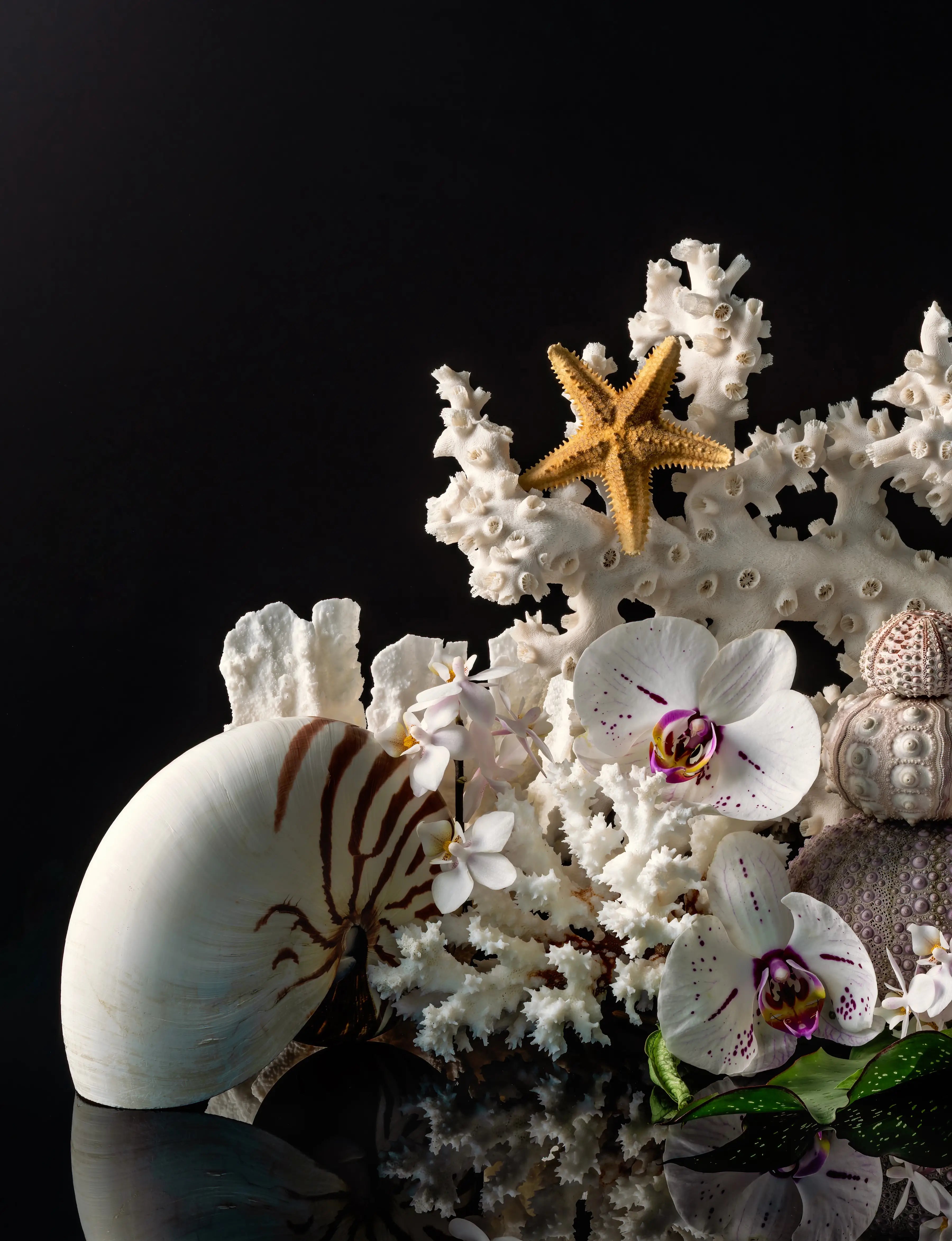
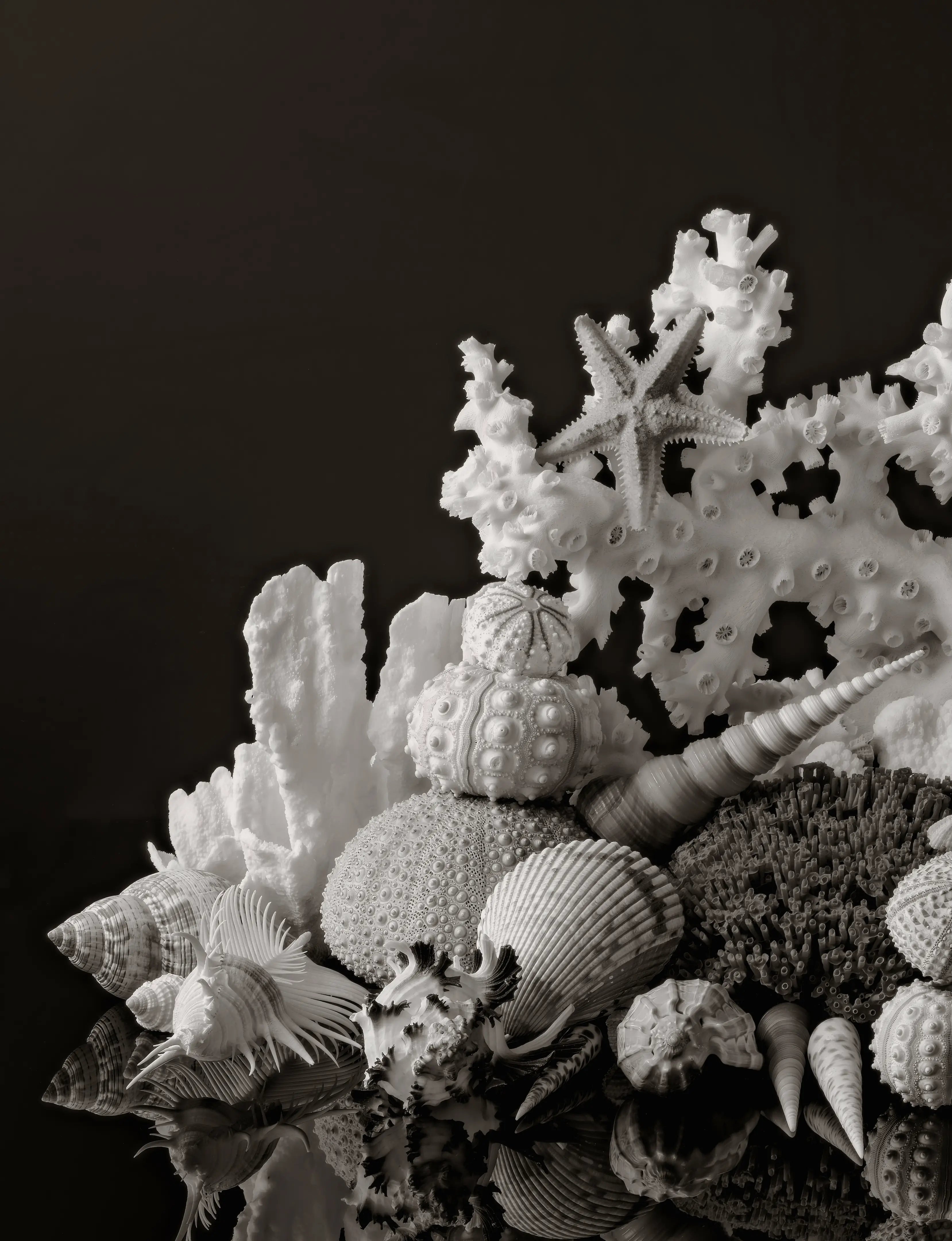
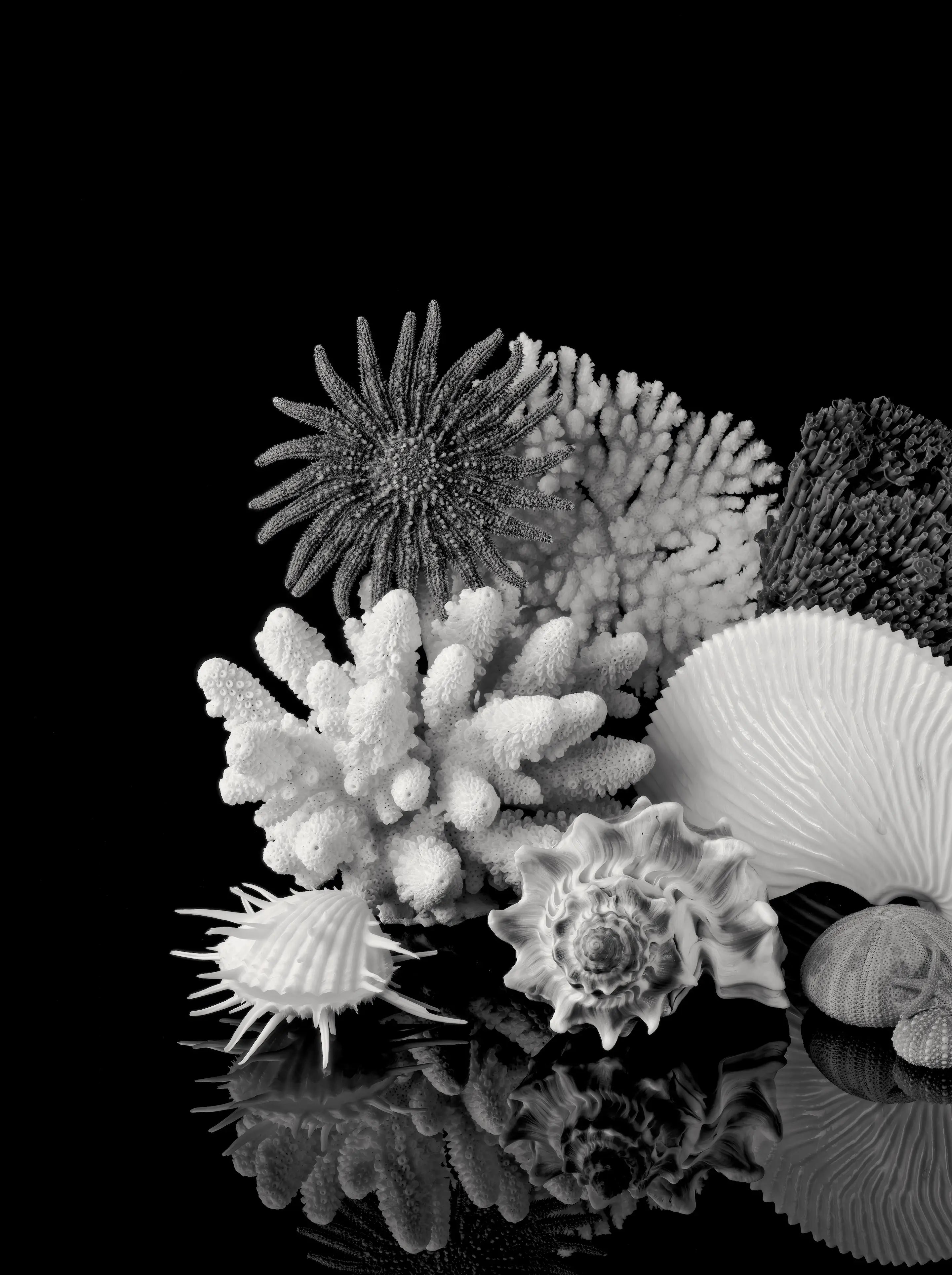
Many of these compositions begin with the natural forms that continually draw me back to the coast: nautilus shells, coral, sea stars, sea urchins, glass floats, reflected surfaces, and the extraordinary variety of shapes created by marine life.
Presented across several panels, those small forms can take on a very different scale. A nautilus becomes an anchor for an entire wall. Coral feels almost architectural. Repeating sea urchins become a study in natural geometry, while collections of spiral shells create movement from one panel to the next.
The goal is not simply to enlarge a coastal subject. It is to give its structure, texture, and presence enough room to be experienced as art.
From Dramatic Black to Light Coastal Interiors
The collection includes two very different interpretations of coastal art.
The darker pieces use deep backgrounds, reflective surfaces, and carefully controlled light to make pearl shells, coral, nacre, and glass appear almost luminous. These compositions have a stronger, more dramatic presence and work beautifully in modern interiors where the artwork is intended to become a focal point.
The lighter pieces create a softer mood. Pearl, sand, white coral, pale aqua, and natural tones complement the light woods, linen textures, warm whites, and quiet neutral palettes often found in contemporary coastal interiors.
Both approaches begin with the same inspiration, but they allow the coast to enter a room in very different ways.
Why Multi-Panel Art Works So Well on Glass
Frameless glass gives diptychs and triptychs a clean, contemporary presentation that works especially well across multiple panels. Without heavy frames surrounding each piece, the eye can move more easily from one panel to the next.
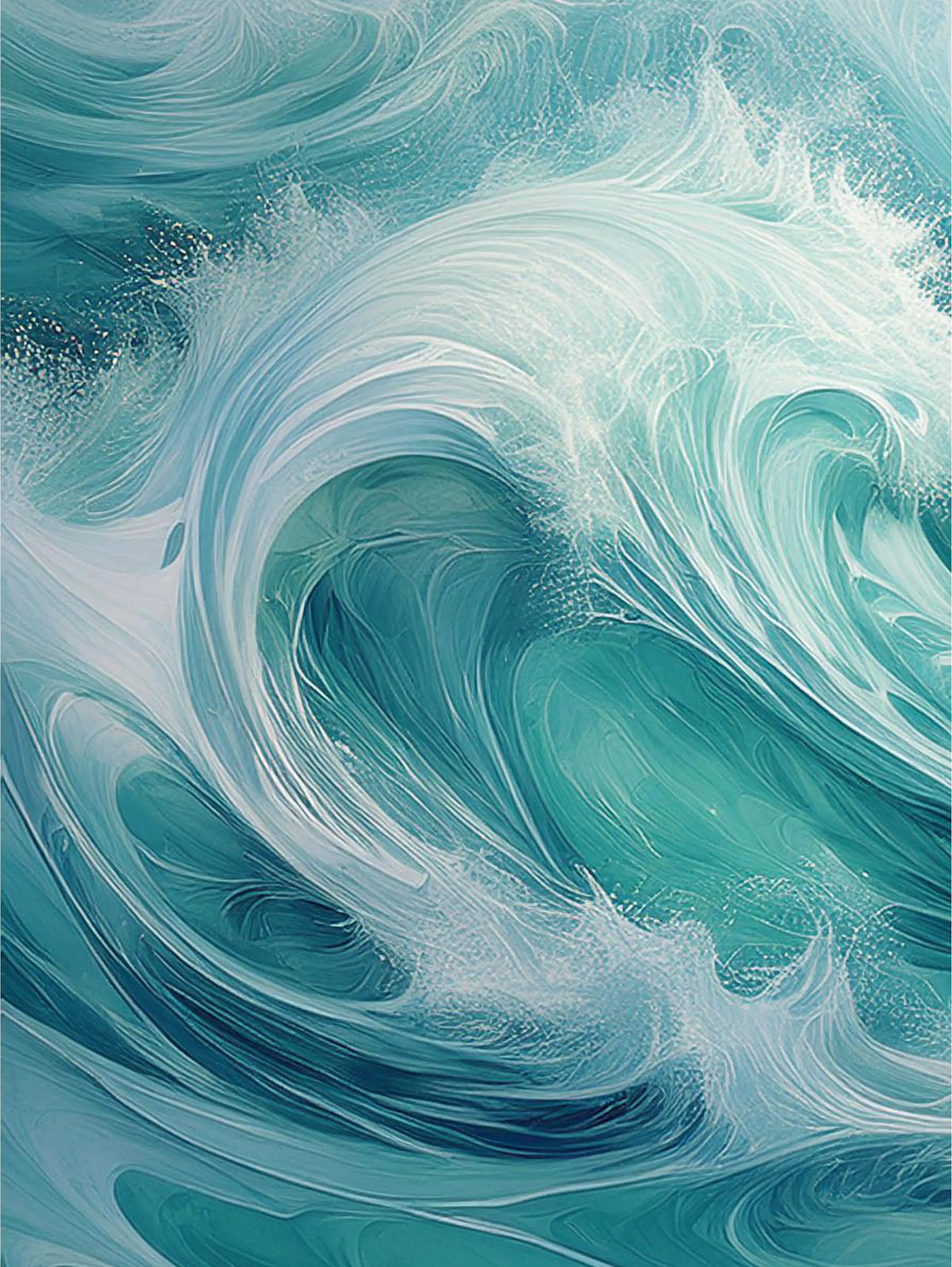
The glossy surface also preserves the qualities that are so important in these photographs: fine coral texture, the sheen of nacre, reflected forms, subtle color, deep shadow, and the changing relationship between artwork and room light.
The result is large-scale coastal wall art that feels substantial without becoming visually heavy.
Bringing the Feeling of the Coast Into a Larger Room
Whether an image spans one panel or three, the purpose behind Echoes of the Sea remains the same.
I want the artwork to carry more than a picture of the coast into a room. I want it to preserve some of the peace, wonder, movement, and connection to nature we experience near the water—and give that feeling enough space to become part of the home.
These coastal diptychs, triptychs, and multi-panel glass prints are created for the walls that need a little more presence, while still leaving room for the eye—and the room—to breathe.