

What to Hang When the View Is Already Beautiful
|
|
Time to read 9 min
Cart
Your cart is empty
|
|
Time to read 9 min
A beautiful view can make you think a room needs less art. Sometimes it does. But more often, it means the art has a different job to do.
In a room filled with ocean light, marsh horizon, treetops, dunes, or open sky, the goal of good coastal wall art is not to outshine what is outside the window. It is to make the room feel whole.
The right piece can echo the atmosphere beyond the glass, anchor an airy space, add warmth after sunset, or bring a deeper mood the view itself cannot provide.
A room with a view does not always need less art. It needs art that knows how to belong.
Table of contents
When a room with a view still needs art
What different kinds of art can do in these spaces
How to choose between quiet support and stronger contrast
Where art works best when windows already carry the room
Why glass prints can be especially effective in view-filled interiors
Often, yes.
A view gives a room openness, light, and a natural focal point. But that does not always solve everything. A room may still need structure. It may still need intimacy. It may still need something that holds the space together when the weather changes, the blinds close, or night falls and the glass turns dark.
That is especially true in coastal homes. During the day, the view may do much of the emotional work. By evening, the room needs its own presence.
Art in a room with a view is not always there to compete. More often, it is there to complete. That is especially true when choosing coastal wall art for bright rooms with large windows or open views.
The better question is not, “Can this room handle art?”
It is, “What is the room still missing?”
Sometimes the answer is softness. Sometimes it is contrast. Sometimes it is a center of gravity. Sometimes it is one piece that keeps the room from feeling too open, too literal, or too dependent on daylight.
That is why almost any kind of coastal art can work in these spaces if it is chosen for the room rather than against it.
A coastal landscape can deepen the atmosphere.
A dark shell study can anchor a bright room.
A bird portrait can bring presence and character.
A vibrant wildlife piece can add life where the room feels too quiet.
A reflective glass print can catch changing light and become part of the room’s rhythm instead of a flat interruption on the wall.
The point is not to choose the quietest art. It is to choose the art that makes the room feel complete. In rooms with a view, the best coastal wall art is rarely about matching the scenery exactly. It is about giving the room what the window cannot: structure, depth, intimacy, or a stronger sense of presence.


This is one of the most overlooked jobs art does in a room with a view.
During the day, the eye may move naturally toward the window. But rooms live through more than midday light. They live through overcast weather, dusk, rain, evening, and the hours when the view softens into darkness.
Good art keeps the room from going flat after sunset. It gives the space something to hold onto when the landscape outside becomes quieter.
This is one reason coastal wall art on glass can be so effective in rooms with a view.
It does not just sit on the wall. It interacts with light. The surface can pick up reflection, subtle glow, and changing brightness throughout the day, which helps the piece feel connected to the room rather than isolated from it.
That matters in coastal spaces, where natural light is rarely static. Morning light, cloudy light, late light, and reflected water light all change how a room feels. A glass print can respond to those shifts in a way matte surfaces often cannot.
That does not mean every room with a view needs glass. But when you want art that feels luminous, contemporary, and quietly architectural, it is an especially strong choice.
For a broader look at how light, natural form, reflection, and visual breathing room work together in calmer coastal interiors, explore our Biophilic Design for Coastal Homes hub.
If you want the design side of that idea more fully, read Why Glass Wall Art Elevates Coastal Interiors.
There is no single formula, but a few patterns tend to work.
In a bright living room with expansive windows, one larger piece often feels calmer than several smaller ones. A room that already has long sightlines usually benefits from clarity.
In a bedroom with water or treetop views, quieter work often shines. Shell studies, softer botanicals, and calmer coastal pieces can bring intimacy without making the room feel crowded.

In a room that feels too airy or too unresolved, darker art can be surprisingly helpful. A strong shell study, bird portrait, or moodier glass print can keep the space from drifting.
In a vacation home or beach house, art can also help after dark. A room that feels wonderful at noon can feel bare at night. The right piece gives it continuity.
Sometimes the best piece for a room with a view is not another scene at all.
Black-and-white coastal art can work beautifully in these spaces because it brings structure without adding more color competition. In a bright room with strong light and long sightlines, a monochrome shell study, bird portrait, or wave detail can feel especially architectural — crisp, sculptural, and calm. Explore that idea further in The Quiet Drama of Black and White Coastal Photography.
Close-up coastal textures can do something similar. A driftwood study, shell surface, coral detail, or even a softer botanical coastal piece can give the room material presence without pulling attention away from the landscape outside.
This is often a smart choice when the room already has enough openness and color, but still needs depth.
In rooms with a view, placement is often what separates art that feels natural from art that feels forced.
A few good rules:
This is one reason entryways and side-wall moments can be such effective places for coastal art. They let the room feel finished without interrupting the main sightline.
In the end, art in these rooms usually works best as a supporting force within the architecture rather than a dramatic interruption of it.
A good way to decide is to ask one question:
What is this room missing when the view is no longer the whole story?
If it feels too open, it may need structure.
If it feels cold, it may need warmth.
If it feels flat, it may need contrast.
If it feels unfinished, it may need one piece with enough presence to settle the room.
That is usually a better guide than trying to “match the water.”
Rooms with views often feel most beautiful when the art adds something the window cannot: form, depth, rhythm, intimacy, reflection, or mood.
For more on choosing art based on what a room is missing, read The Unexpected Coastal Wall Art Guide: How to Choose Art for the Feeling Your Room Needs.
The best coastal rooms do not always rely on obvious choices.
Sometimes the right piece is a landscape that echoes the horizon outside. Sometimes it is a dark shell study that gives the room calm and gravity. Sometimes it is a bold bird portrait that introduces character. Sometimes it is a vibrant wildlife print that gives the space the one note it was missing.
A beautiful view may be the first thing you notice.
The right art is often what makes the room stay with you.
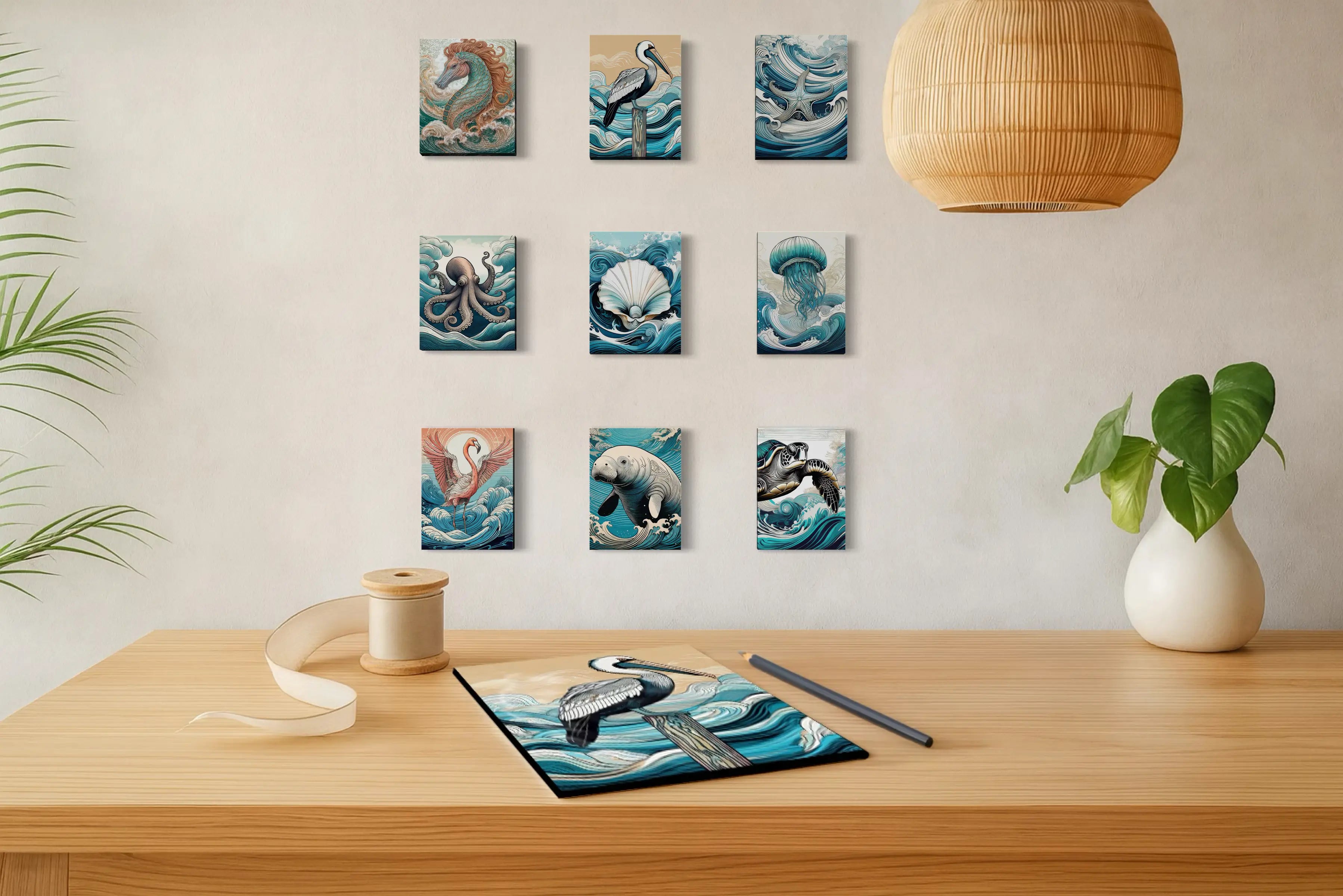
Some rooms need a piece that echoes the horizon. Others need contrast, structure, or a stronger center of gravity. These featured prints reflect a few of the ways coastal art can work beautifully in a room with a view.
Explore glass prints that echo the horizon, anchor bright spaces, and add atmosphere after the light changes.
Yes. A view can provide light and openness, but art often adds structure, warmth, mood, or a sense of completion when the light changes.
The best pieces usually support the room rather than compete with the window. Coastal landscapes, shell studies, bird portraits, wildlife art, and reflective glass prints can all work beautifully depending on what the room needs.
Not exactly. It usually works better when the art either echoes the mood of the view or adds something the view cannot provide, such as structure, contrast, or intimacy.
Absolutely. Darker shell studies, bird portraits, and coastal noir pieces can anchor an airy room and give it depth without fighting the view.
Often, yes. One strong piece or triptych can feel calmer and more intentional than several smaller ones, especially in open living rooms or spaces with long sightlines.
About the Author — Lisa Reid
Lisa Reid is the artist and founder behind Echoes of the Sea LLC, where coastal art is shaped by shoreline light, natural form, and the quiet atmosphere of the sea. Through her glass wall art and The Coastal Journal, she explores how reflection, biophilic design, and thoughtful coastal styling can help rooms feel calmer, softer, and more connected to nature.


