

Biophilic Design for Coastal Homes: Why Natural Forms Make a Room Feel Calm
|
|
Time to read 10 min
Cart
Your cart is empty
|
|
Time to read 10 min
Biophilic interior design is the idea that a home feels better when it reflects the natural world. Most people picture plants, open windows, and sunlit rooms when they hear the term. Those things matter. But in a coastal home, the feeling can come from something quieter too: the spiral of a shell, the branching line of driftwood, the posture of a shorebird, or the slow, fluid shape of a sea turtle.
Some rooms settle you almost immediately. They do not always have more furniture, better styling, or more color. Often, they simply feel more connected to nature. That connection can come through texture, shape, repetition, movement, and the visual order we recognize instinctively in the living world.
That is part of what makes biophilic design so compelling in coastal interiors. It gives a name to something many people already respond to without fully realizing it. A shell can bring rhythm. Driftwood can bring age and texture. Birds can bring stillness. Botanicals can soften a room with growth and grace. None of these things need to be loud to change how a space feels.
In that sense, biophilic coastal design is not about adding more. It is about choosing forms that make a room feel more alive, more grounded, and more at ease.
Biophilic design is about creating a stronger connection to nature indoors.
In coastal homes, that connection can come through shells, driftwood, birds, botanicals, and other shoreline forms.
A room does not need to be filled with plants to feel biophilic.
Natural texture, repetition, movement, and organic shape can all help a room feel calmer.
Coastal art can support biophilic design when it reflects the forms and rhythms of the shoreline.
Biophilic design is an approach to interiors that helps people feel more connected to nature through light, texture, material, pattern, and organic form.
It is often described as bringing the outdoors in, but the idea goes deeper than that. A room does not need to imitate nature literally to feel restorative. It simply needs to reflect some of the qualities we respond to in the natural world: layered texture, weathered material, branching structure, gentle repetition, and living movement.
This is what makes biophilic design especially relevant in coastal homes. Shoreline environments are already full of these visual cues. The coast offers curve, grain, softness, motion, reflection, asymmetry, repetition, and open space. When those qualities appear indoors, they can make a room feel calmer and more coherent.
For readers who want a deeper look at the broader principles behind biophilic design, the Global Wellness Institute offers a helpful guide to creating positive spaces through nature-connected design.
Natural forms tend to hold variation without chaos. That is one reason they feel so good to live with.
A shell spiral repeats, but not mechanically. If you want to go deeper into why shells, coral, and nautilus patterns feel so visually satisfying, read Fractals in Nature: Why Shells, Coral, and Nautilus Patterns Feel So Calming. Driftwood twists, but with purpose. A bird can look both still and alert at once. Petals layer softly. Coral branches outward with structure but never feels rigid. These forms give the eye something to follow, and they do it gently.
Coastal biophilic design often feels calming because it reflects this balance. There is rhythm, but not monotony. Texture, but not clutter. Movement, but not restlessness. A room shaped by natural form can feel ordered without feeling severe.
In coastal art, this effect can be especially strong. The shoreline is full of patterns that are organic and spacious at the same time. That combination often creates the kind of visual calm people want in a home but struggle to define.
Many coastal homes already move in this direction, even if no one uses the word biophilic. They tend to favor natural light, airier layouts, tactile materials, pale woods, woven textures, and a softer boundary between indoors and out.
What biophilic design adds is intention. It explains why these spaces feel good. It is not only because they are bright or beach-adjacent. It is because they reflect the kinds of forms and materials our eyes and bodies tend to interpret as grounding: weathered grain, organic curve, layered softness, open space, and natural rhythm.
This is where art becomes especially important. A room can have beautiful furniture and still feel emotionally flat. Art is often what brings a stronger sense of connection into the space. When it carries natural form, texture, and structure, it can deepen the room’s relationship to the coast in a way that feels subtle but lasting.
That same biophilic idea shows up in color too, especially in how the Everglades reshaped my idea of coastal color.
Shells bring one of the clearest examples of natural rhythm into a room. Their curves feel balanced and fluid, which is part of why spiral forms have remained so powerful in art, architecture, and design.
For a closer look at the relationship between shell spirals, natural growth patterns, and the Fibonacci sequence, read Why the Fibonacci Spiral Is Nature’s Most Beautiful Pattern.
In a coastal interior, shell imagery can introduce motion without agitation and structure without harshness. That makes it especially effective in rooms where you want visual calm with a little depth, such as bedrooms, offices, and quieter living spaces.
Driftwood art offers a different kind of beauty. It is not about symmetry or polish. Its appeal comes from grain, erosion, and time.
That weathered quality can make a room feel more grounded because it introduces organic imperfection. In a space that is otherwise clean-lined or visually restrained, driftwood texture adds age, softness, and something tactile for the eye to rest on.
Driftwood also carries its own quiet coastal palette — weathered grays, sand tones, softened browns, and silvery neutrals shaped by sun, salt, and time. I explore those colors more closely in the Driftwood Coastal Color Palette.
Bird imagery often works through posture as much as form. A heron’s stillness, a pelican’s calm watchfulness, or the lift of a shorebird can all bring a sense of quiet attention into a room.
This makes coastal bird art especially useful in spaces that benefit from presence without heaviness. Entryways, home offices, and sitting areas often respond beautifully to that kind of visual energy.
Sea turtles bring a slower, more fluid kind of motion. Their forms suggest continuity rather than speed. They do not disrupt a room; they soften it.
That is part of why sea turtle art often feels so restorative. In living rooms, baths, or spaces meant to feel reflective and easy, they can introduce movement without adding tension.
Botanicals soften a room in a different way. They bring signs of growth, layering, and life. Petals, stems, and leaves can ease harder edges and help a space feel more open, breathable, and gently alive.
In coastal interiors, botanicals work especially well when they are used with some restraint. They do not need to feel cottage-like or overly floral. Paired with shells, weathered textures, or more sculptural natural forms, they can feel elegant and deeply rooted.
Bedrooms usually respond best to softer forms. Botanicals, shells, and driftwood studies can help the room feel calm without becoming empty or sleepy. The goal is not to remove all energy. It is to create a sense of ease.
In a work space, structure matters. A shell spiral, a branching form, or a bird print with quiet presence can create visual rhythm without distraction. These are the kinds of pieces that support focus rather than competing for it.
Living rooms can hold more range. A sea turtle can bring motion, a shell can add order, and driftwood or botanical pieces can add natural texture. The key is not to over-theme the room. Let the natural forms create the atmosphere.
Bathrooms often respond beautifully to shells, birds, and more minimal botanicals. These forms echo water, softness, and stillness without requiring much explanation.
An entryway is often the best place for a piece with immediate presence. Bird imagery or sculptural natural forms can make the home feel intentional from the first glance.
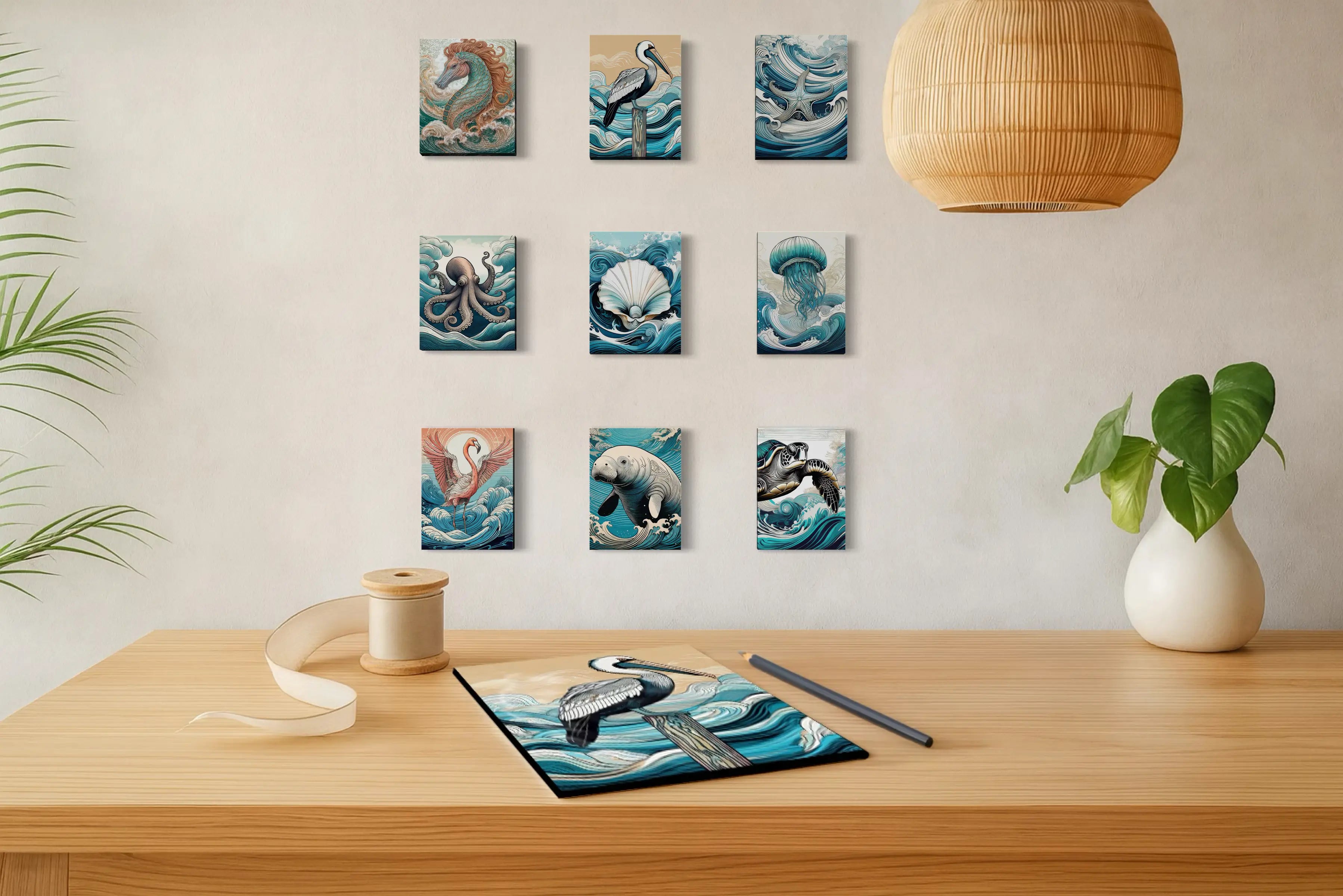
These are the kinds of coastal pieces that work beautifully in a biophilic home — art shaped by shells, driftwood, birds, botanicals, and other natural forms that bring texture, rhythm, and quiet calm into a room.
One of the most common misunderstandings about calm interiors is that they need to be sparse to the point of silence. But some of the most peaceful rooms are not empty at all. They are simply coherent. The forms make sense together. The textures relate to one another. The room feels guided by something quieter than trend.
That is what coastal biophilic design does so well. It gives a space an underlying logic that feels intuitive rather than forced. In a coastal home, that logic might come through shell rhythm, driftwood grain, feathered stillness, botanical softness, or the quiet movement of a sea turtle gliding through water.
For a more practical look at how coastal biophilic design shows up in real rooms, read Bringing the Outdoors In: 7 Biophilic Design Elements Every Coastal Home Needs.
These things do not just decorate a room. They help it feel more connected, more breathable, and more alive.
Biophilic design for coastal homes is not only about what you add to a room. It is about what the room begins to reflect. When the forms inside it echo the natural world outside through shells, driftwood, birds, botanicals, and gentle movement, the space often feels calmer without trying too hard.
That is part of what makes coastal art so powerful when it is chosen well. It can do more than fill a wall. It can reconnect a room to texture, rhythm, and the quiet logic of nature — especially in spaces with large windows or beautiful views, where the art needs to support what is already there. I explore that idea more fully in What to Hang When the View Is Already Beautiful.
Explore coastal art shaped by shells, driftwood, birds, botanicals, and other shoreline forms that bring calm, structure, and quiet beauty into the home.
Biophilic design is an approach to interiors that helps people feel more connected to nature through light, texture, material, pattern, and organic form.
Biophilic design often feels calming because it reflects the kinds of shapes, textures, and rhythms people naturally associate with the outdoors. Organic repetition, weathered surfaces, branching lines, and natural movement can all help a room feel more balanced and restorative.
In coastal homes, biophilic design often shows up through shells, driftwood, birds, botanicals, natural textures, and art that reflects the forms and rhythms of the shoreline.
Yes. Coastal art can feel biophilic through shell spirals, driftwood texture, bird imagery, sea turtle movement, coral structure, and other natural forms that create a stronger sense of connection to the living world.
Some of the strongest natural forms for coastal interiors include shells, driftwood, birds, sea turtles, coral, and botanicals. Each brings a different kind of calm, texture, and visual rhythm into a room.
About the Author — Lisa Reid
Lisa Reid is the artist and founder of Echoes of the Sea LLC, where coastal art is shaped by shoreline texture, natural form, and the quiet beauty of the sea. Through her glass prints and writing, she explores how shells, driftwood, birds, and botanicals can bring calm, structure, and a deeper sense of connection into the home.


