

Bringing the Outdoors In: 7 Biophilic Design Elements Every Coastal Home Needs
|
|
Time to read 10 min
Cart
Your cart is empty
|
|
Time to read 10 min
In my recent post on biophilic design for coastal homes, I explored why natural forms feel so calming in a room. This follow-up takes the next step: what that actually looks like in practice.
Biophilic interior design is often simplified into plants, sunlight, and the idea of bringing the outdoors in. Those things matter, but the feeling goes deeper. In coastal homes, the most restorative spaces tend to combine several elements at once — shifting light, weathered texture, organic form, gentle movement, and a sense of visual calm that feels natural rather than staged.
That is part of what makes biophilic design feel so at home by the shore. The coastline already offers weathered grain, shell spirals, soft repetition, reflected light, and forms shaped by tide and time. When those same qualities show up indoors, rooms often feel calmer without trying too hard.
These are seven biophilic design elements that work beautifully in coastal interiors — and the kinds of coastal art that can help bring them to life.
For a broader overview of how light, natural form, reflection, texture, and visual breathing room work together in coastal interiors, explore our Biophilic Design for Coastal Homes hub.
Biophilic design is about creating a stronger connection to nature indoors.
In coastal homes, that connection often comes through light, texture, rhythm, form, and reflective surfaces.
A room does not need to be filled with plants to feel biophilic.
Organic materials, natural forms, and visual breathing room matter just as much as greenery.
Coastal art can support biophilic design when it reflects the quiet logic of the shoreline.
Few things shape a room more powerfully than light. Morning light can feel crisp and hopeful. Afternoon light can warm textures and soften edges. Evening light can make a room settle into calm.
In coastal homes, light often feels like part of the architecture itself. It moves across pale woods, linens, woven textures, and reflective surfaces in ways that make the room feel alive. A biophilic room does not fight that movement. It allows light to change the space throughout the day.
That is one reason coastal interiors can feel so restorative when they are done well. The room does not feel static. It feels responsive.
In coastal art, this often looks like: prints that interact gently with light rather than absorbing it completely.
High-clarity glass works beautifully here because it responds to changing light in a way paper and canvas do not. A glass print can hold depth, reflection, and subtle glow, which makes it especially effective in rooms built around daylight.
Biophilic design is not only about what a room looks like. It is also about what it feels like to live with. Organic materials create warmth because they carry variation, grain, softness, and evidence of time.
In coastal homes, that might mean linen, woven fibers, pale wood, stone, rattan, or the weathered texture of driftwood. These materials bring a quieter kind of richness into a room. They soften clean lines and keep modern spaces from feeling sterile.
Weathered texture is especially powerful because it feels grounded rather than polished for its own sake. It carries the calm imperfection of the shoreline.
In coastal art, this often looks like: driftwood studies, coral texture, shell surfaces, and shoreline details with strong grain or layered natural character.
Printed on glass, these textures keep their precision while gaining light and depth. The result can feel both natural and refined at once.
Some of the most calming rooms contain forms the eye can follow gently. Spirals, branching lines, layered petals, rounded stones, shell curves, and feathered shapes all create rhythm without rigidity.
This is part of what makes natural forms so easy to live with. They repeat, but not mechanically. They suggest structure, but not harshness. A shell spiral feels balanced. A branch feels purposeful. A bird’s posture can feel still and alert at once.
If you want to go deeper into why shell spirals, branching coral, and other shoreline patterns feel so visually satisfying, read Fractals in Nature: Why Shells, Coral, and Nautilus Patterns Feel So Calming.
In coastal interiors, these forms are everywhere. Shells, coral, driftwood, sea turtles, shorebirds, and botanicals all carry a kind of visual logic that feels coherent rather than forced.
In coastal art, this often looks like: nautilus studies, branching coral, layered botanicals, and other pieces shaped by natural rhythm.
This is also where your more sculptural shell and coastal study pieces can become especially powerful. The nautilus, coral, and other repeating natural forms echo patterns found throughout the shoreline, creating interest without visual strain.
Water changes the way coastal spaces feel, even when it is only implied. Reflection, shimmer, stillness, and soft movement all affect the mood of a room.
That does not mean every coastal home needs a fountain or a panoramic view. Water cues can be subtler than that. Reflected light, glass surfaces, a soft horizon line, or art that suggests rain, tide, or rippling movement can all bring a calmer atmosphere indoors.
Reflective materials support this especially well when they are used with restraint. In a room built around light and texture, a glossy surface can echo the way water behaves outdoors: holding light, shifting gently, and adding depth without clutter.
In coastal art, this often looks like: rain-softened bird imagery, shoreline reflections, wave studies, and prints where subtle gloss becomes part of the experience.
High-clarity glass prints are especially effective here because they literally reflect and refract light, echoing the shimmer of water and wet sand.
One of the recurring ideas in biophilic design is prospect and refuge: spaces can feel especially comfortable when they balance a view outward with a sense of shelter.
In a coastal home, prospect often comes through airy layouts, longer sight lines, windows, and visual openness. Refuge comes through quieter corners, soft seating, sheltered bedrooms, reading nooks, and spaces that feel emotionally contained.
The best rooms often have both. They feel breathable, but not exposed. Open, but not empty.
In coastal art, this often looks like: one calming focal piece that anchors a room without overwhelming it.
A shell study, driftwood print, coastal bird, or botanical piece can help create that balance by giving the eye somewhere to rest. In rooms with large windows or open coastal views, that same balance matters even more — the art has to support the room without competing with what is outside, something I explore more fully in What to Hang When the View Is Already Beautiful. This is where scale matters too. One thoughtful print can often do more than several smaller decorative accents.
Biophilic design is often associated with real plants, but imagery matters too. A room can feel more connected to nature through the forms it holds, even when those forms appear in art rather than in a pot on the floor.
In coastal homes, this might mean birds, shells, driftwood, sea turtles, coral, botanicals, or shoreline studies. The key is not to make the room feel themed. It is to choose imagery that carries natural structure, stillness, and life.
When chosen with restraint, these pieces deepen the biophilic feeling without making a room feel obvious or overdone.
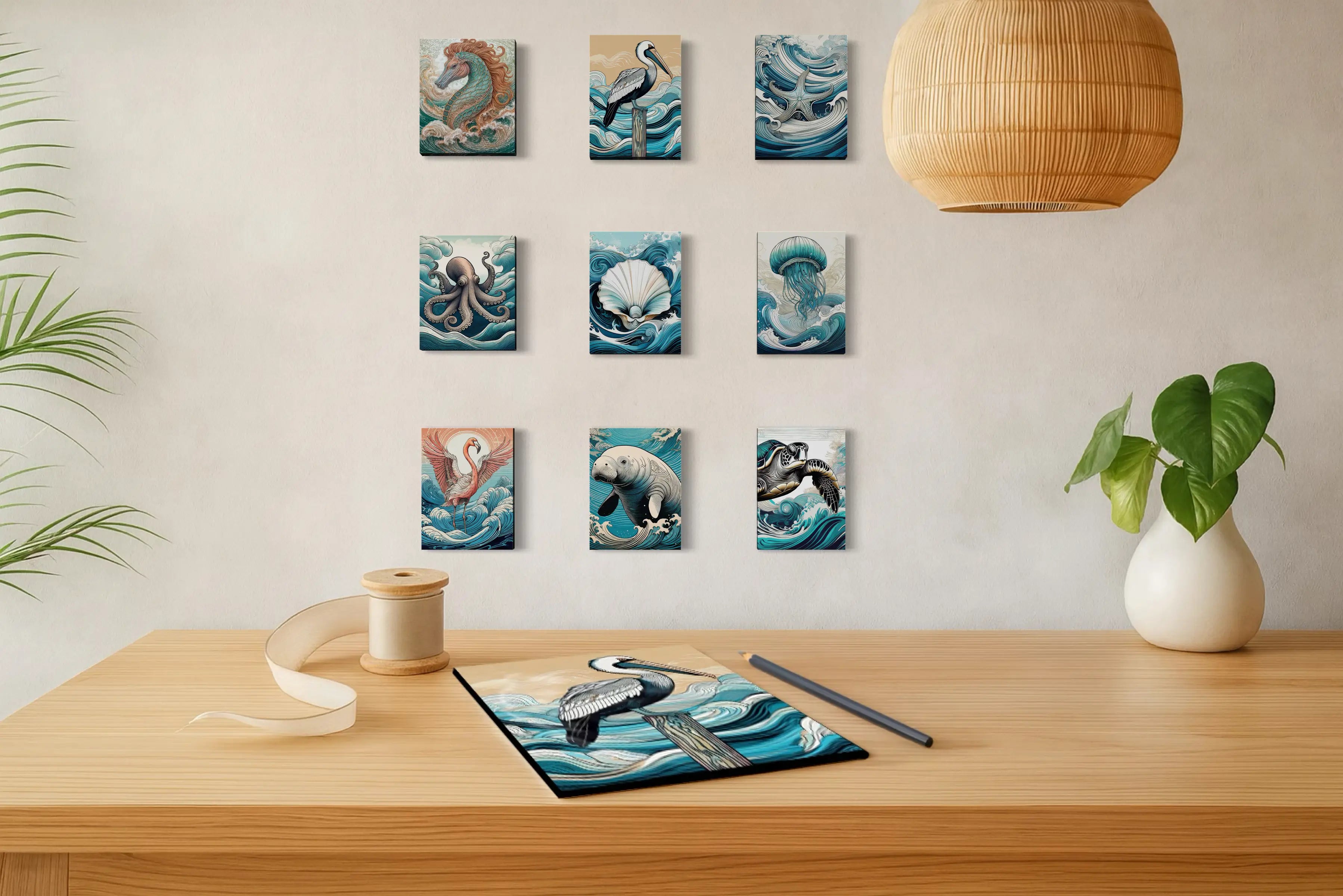
In coastal art, this often looks like: pelicans with quiet presence, sea turtles with gentle motion, botanicals that soften a room, and shells that add natural rhythm.
This is where coastal glass art can be especially useful. The right piece can add movement, softness, texture, or stillness without adding clutter. It can make the room feel more alive while still feeling controlled.
Not every calming room is minimal, but most calming rooms understand restraint. Visual breathing room is one of the quietest biophilic design elements, and one of the most important.
Nature rarely feels crowded in the way human spaces sometimes do. There is pattern, but also pause. Texture, but also air. Biophilic interiors work in a similar way. They let materials, forms, and focal points stand out instead of competing constantly for attention.
In coastal homes, this often means choosing fewer, stronger elements. One beautiful driftwood print can do more than several smaller decorative accents. A bird image with quiet presence can anchor an entryway more effectively than a busy wall.
In coastal art, this often looks like: one stronger piece, thoughtful spacing, and imagery with enough calm to hold a room without overwhelming it.
Glass can support this beautifully because its clean, frameless presentation helps a piece feel present without adding bulk.
Coastal rooms can also suggest the quieter rhythm of nature—the visual equivalent of susurrus, the soft whisper of waves, grasses, and wind.
The most successful biophilic coastal rooms rarely rely on just one of these ideas. They combine them.
A room might have soft natural light, woven textures, weathered wood, open sight lines, and one strong shell or bird print. Another might lean on botanicals, reflective surfaces, and more sheltering furniture. The point is not to follow a formula. It is to understand the qualities that make a room feel connected to nature.
That is also why biophilic design works so well with coastal art. Art can carry several of these elements at once. A single piece can bring rhythm, texture, stillness, movement, and a stronger sense of the natural world into the room.
These are the kinds of coastal pieces that support biophilic design beautifully — art shaped by shells, driftwood, birds, botanicals, reflective water, and other shoreline forms that bring calm, structure, and quiet rhythm into a room.
For me, the most effective biophilic wall art does more than picture nature. It carries some of nature’s rhythm, texture, light, or movement into the room.
Explore a few of our favorite coastal prints inspired by natural form, curated for homes that feel connected, collected, and quietly at ease.
When a room feels calm, it is not always because it has less in it. Often, it is because the elements inside it make sense together. The light feels natural. The textures feel lived with. The forms feel grounded. The room carries some of the same rhythm, softness, and quiet order found outside.
That is the real promise of biophilic design. It is not trend-driven. It is not decorative in a shallow way. It is about creating spaces that feel more aligned with how people actually respond to nature.
In coastal homes, that can look especially beautiful. The shoreline already offers so much of what biophilic design values: light, weathering, openness, movement, reflection, and the kind of natural form that feels calm without ever feeling dull.
The main elements of biophilic design often include natural light, organic materials, natural forms, repeating patterns, reflective or water-like cues, a balance of openness and shelter, living imagery, and visual breathing room.
In coastal homes, biophilic design often works through shoreline-inspired light, weathered texture, shells, driftwood, birds, sea turtles, botanicals, and art that reflects the rhythms of nature.
No. Plants can help, but biophilic design can also come through light, material, texture, form, pattern, and nature-based imagery.
Art shaped by shells, driftwood, birds, botanicals, sea turtles, coral, and reflective water cues often works beautifully in biophilic coastal interiors.
Natural forms often feel calming because they combine rhythm, variation, movement, and structure in ways that feel balanced rather than rigid.
About the Author — Lisa Reid
Lisa Reid is the artist and founder behind Echoes of the Sea LLC, where coastal art is shaped by shoreline light, natural form, and the quiet textures of the sea. Through her glass wall art and The Coastal Journal, she explores how biophilic design, coastal imagery, and thoughtful interiors can help create homes that feel calmer, more grounded, and more connected to nature. Her work blends the reflective beauty of glass with a refined coastal point of view to bring warmth, rhythm, and a sense of place indoors.


