

Coastal Entryway Art: What Should Your Home Say First?
|
|
Time to read 8 min
Cart
Your cart is empty
|
|
Time to read 8 min
A dune-path glass print sets a calm, airy tone in this light-filled coastal entryway.
Table of contents
The entryway is the first sentence of the home.
Before anyone sees the living room, the view, or the details you have layered throughout the rest of the space, they experience the arrival. That moment may be brief, but it shapes everything that follows. The entryway tells people whether a home feels calm, polished, collected, expressive, airy, or warm.
That is why coastal entryway art matters more than people sometimes realize. The right piece does more than fill a wall. It sets the tone. It creates welcome. It tells the room how to feel from the very first step inside.
If you are choosing entryway wall art, the most useful question is not simply what matches the space. It is this: What should your home say first?
An entryway does not need to be large to have presence.
Whether you are choosing foyer wall art for a formal entrance or one strong piece for a smaller threshold, the goal is the same: give the arrival a clear sense of intention.
A blank wall in an entryway can make the arrival feel unfinished. A generic piece can make it feel forgettable. But the right artwork gives the space shape immediately. It gives the eye a place to land. It creates rhythm, mood, and clarity before anything else has had the chance to speak.
This is one of the reasons coastal wall art works so beautifully in entryways. Coastal imagery often carries openness, light, movement, and a sense of breath. In the right piece, those qualities do not feel themed or overly literal. They feel atmospheric. They make the entrance feel considered and alive.
This is where the decision becomes interesting.
Not every home wants to greet people in the same way. Some entryways should feel soft and restorative. Others want a little more contrast and structure. Some should feel warm and personal. Others should feel quietly elevated.
A well-chosen entryway print can help you shape that first impression with far more precision than most decorative accents ever could.
If you want the entryway to feel immediately peaceful, a shoreline path, dune landscape, or pale horizon piece often works beautifully. These compositions create visual breathing room and give the space a quieter beginning.
Shell studies, softly layered coastal still lifes, and luminous glass pieces often create an entry that feels gracious without trying too hard. They suggest care, beauty, and ease.
A darker-ground shell study, a portrait-style bird print, or a more sculptural composition can make the space feel thoughtful and composed from the start. This is often the direction that gives an entryway quiet authority.
If the home wants a little more pulse, birds, waves, and marine life pieces can bring movement into the threshold. They create energy without clutter.
Not every strong entryway needs a dramatic piece. Sometimes the right artwork simply gives the wall a point of gravity. It makes the arrival feel complete.
Different entryways call for different kinds of presence.
This is often the strongest choice. One well-scaled piece above a console or on the main sightline can make the space feel resolved at once. It works especially well in smaller or narrower entries, where too many elements can make the wall feel busy.
A vertical pair can be a beautiful choice in an entryway with taller ceilings or a more defined wall niche. Stacking two pieces creates lift and structure while still feeling refined, giving the entrance a collected, intentional presence.
A coastal gallery wall works best when the goal is a layered, collected feeling. It can be beautiful in the right entryway, but it needs enough visual room to breathe. In a tighter threshold, one strong focal point is usually more effective.
If the space feels narrow or compressed, a horizontal print can visually widen the wall. Dune paths, shoreline scenes, and lower-horizon pieces are particularly good at creating that sense of openness.
When you want more lift or a stronger focal point, a vertical or portrait-oriented print can work beautifully. It draws the eye upward and adds elegance, even in a modest-sized entryway.
The entryway has different needs than a living room, and the art should respond to that.
Think first about viewing distance. In an entryway, people often stand close to the piece. That makes composition, detail, and surface quality more important. It also means the artwork should reward a near look without feeling overly busy.
Next, consider the shape of the space. A long, narrow wall usually wants one clear point of focus. A more open foyer can support a larger statement or a slightly fuller arrangement.
Natural light matters too. If the entryway receives daylight, glass wall art can be especially beautiful there. Light moves across the surface, the image feels more luminous, and the arrival takes on a more refined presence. If the area is dimmer, contrast and clarity become even more important.
Finally, think about relationship. The entryway does not need to summarize the entire home, but it should feel like the beginning of it. The piece you choose should suggest something true about the rooms beyond.
The entryway is one of the places where medium makes a noticeable difference.
Glass wall art reflects and interacts with light in a way canvas and paper do not. It feels cleaner, more architectural, and often more integrated into the wall. In an entryway, where people experience the space quickly, that polished clarity matters. The piece reads immediately.
Glass also helps an entryway feel visually lighter. It can hold presence without heaviness, which is especially useful in smaller foyers, narrow entrances, or bright beach house entryway spaces where you want the room to feel open rather than weighed down.
That subtle luminosity is one of the reasons glass works so well in coastal interiors. It echoes the qualities that make coastal spaces feel beautiful in the first place: openness, reflection, air, and light.
If you are deciding what kind of welcome you want to create, these are a few especially strong directions for coastal entryway art:
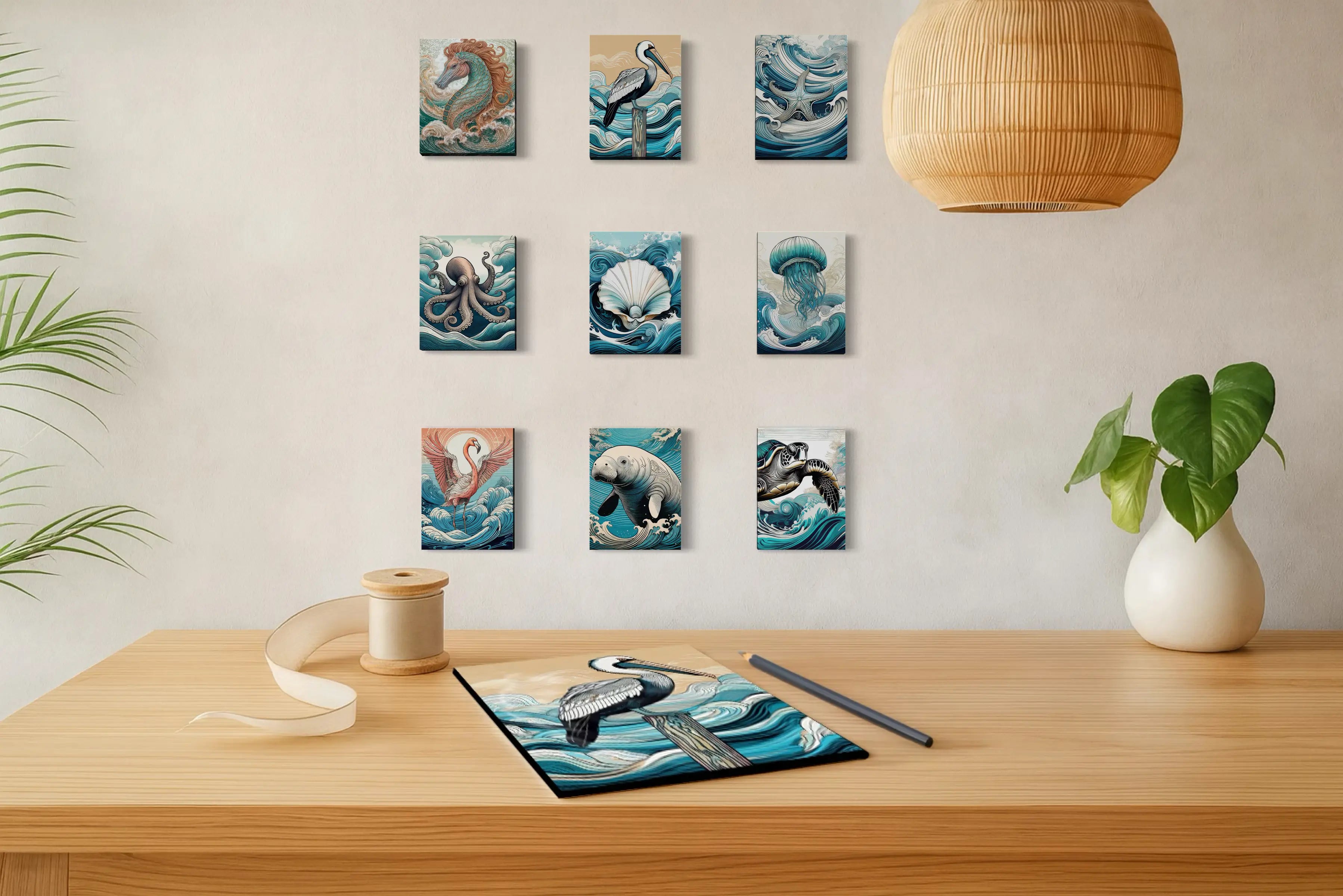
If you are starting to picture the kind of entryway you want, the featured prints below offer a few beautiful ways to create that feeling — from airy and welcoming to polished, expressive, and quietly dramatic.
These are the featured glass prints from this article — each chosen for the different kind of welcome it creates. Whether you want your entryway to feel light and airy, warm and gracious, polished and collected, or full of movement, this is a good place to begin.
The entryway may be brief, but it shapes the feeling of the home in an instant.
Before anyone sees the rooms beyond, they experience the arrival. They register the tone. They understand, often without realizing it, whether the home feels calm, welcoming, expressive, collected, or quietly refined.
That is why choosing the right entryway wall art is worth more thought than people sometimes give it. The best piece does more than decorate the threshold. It creates presence, sets the emotional tone, and gives your home a more memorable beginning.
If you want your entryway to feel beautiful from the first step inside, explore the collection and find the print that says exactly what you want your home to say first.
The best entryway art depends on the scale and tone of the space. In many homes, one statement print works best because it creates a clear focal point without making the entrance feel crowded.
Either can work. The better question is what you want your home to communicate first. Some spaces benefit from softness and ease, while others feel stronger with contrast, movement, or a more defined focal point.
Yes. Glass wall art reflects light, feels polished and architectural, and helps an entryway feel brighter and more resolved from the first moment inside.
That depends on the wall and any furniture beneath it. In most cases, the piece should feel proportional to the console or wall area rather than oversized for the threshold.
Yes, if the space can support it. A gallery wall works best when you want the entrance to feel layered and collected. In smaller entryways, one strong piece is often more effective
About the Author
Lisa Reid is the photographer and founder behind Echoes of the Sea LLC, where she creates coastal glass wall art designed to bring atmosphere, movement, and emotional presence into the home. Through light, composition, and ocean-inspired subject matter, her work helps interiors feel more airy, refined, transportive, and deeply personal.


