


Why the Spiral Draws the Eye
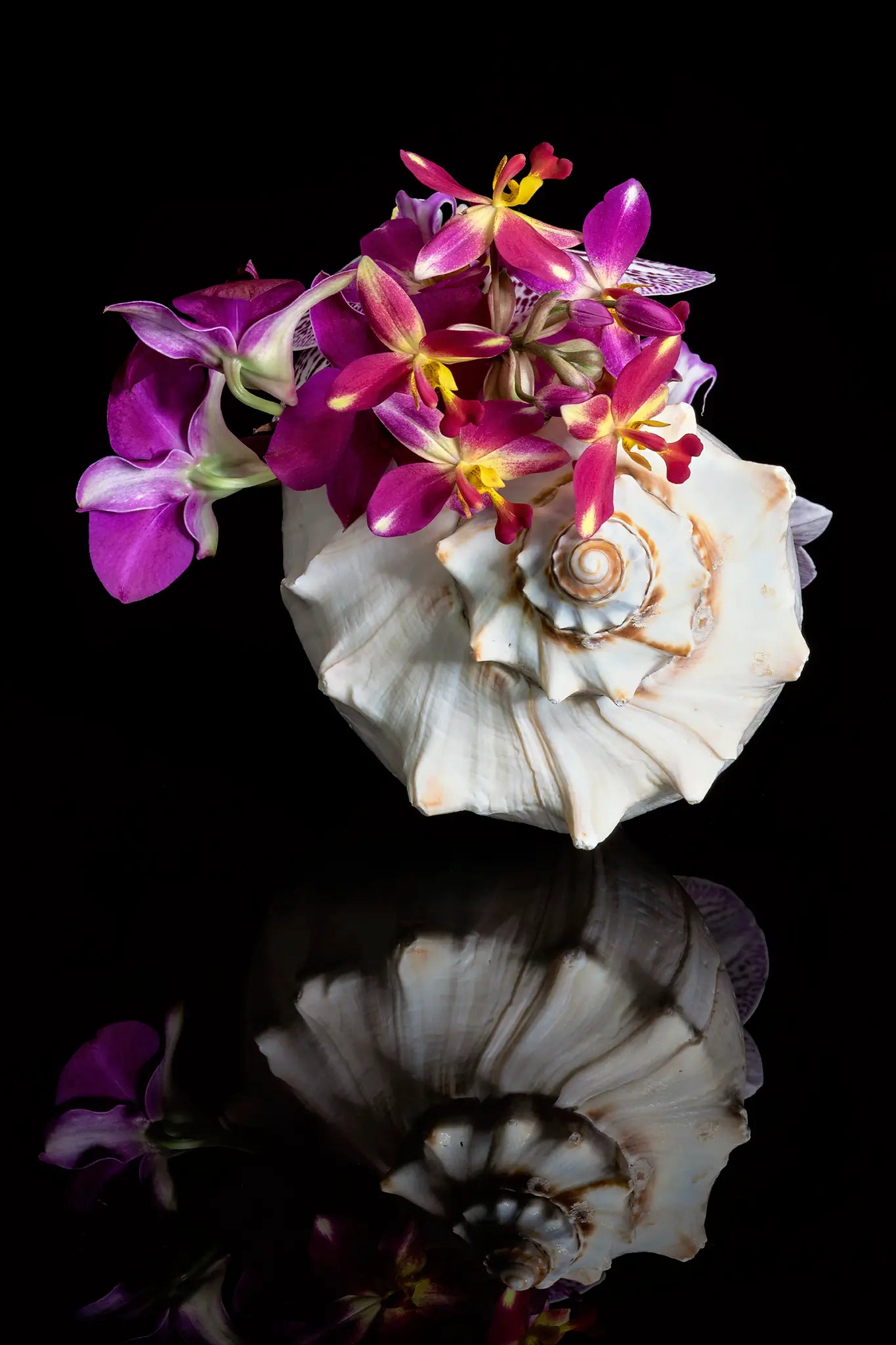
There is something about a spiral that naturally invites the eye to follow it. We trace the curve inward toward its center or outward as it expands, finding movement in a form that is completely still.
Spirals appear throughout nature—in shells, plants, storms, galaxies, and patterns of growth—but they are especially striking along the coast. A shell records its growth in its structure, creating curves, chambers, ridges, and repeating forms that can feel both orderly and beautifully organic.
For a deeper look at why this pattern appears again and again, explore The Spiral in Nature — Geometry, Harmony, and the Sea.
Spiral Shells and Natural Geometry
Many spiral shells grow in patterns that can be described as logarithmic or logarithmic-like, allowing the shell to increase in size while maintaining much of its overall form. That growth creates the sweeping curves and expanding chambers that make spiral shells so visually recognizable.
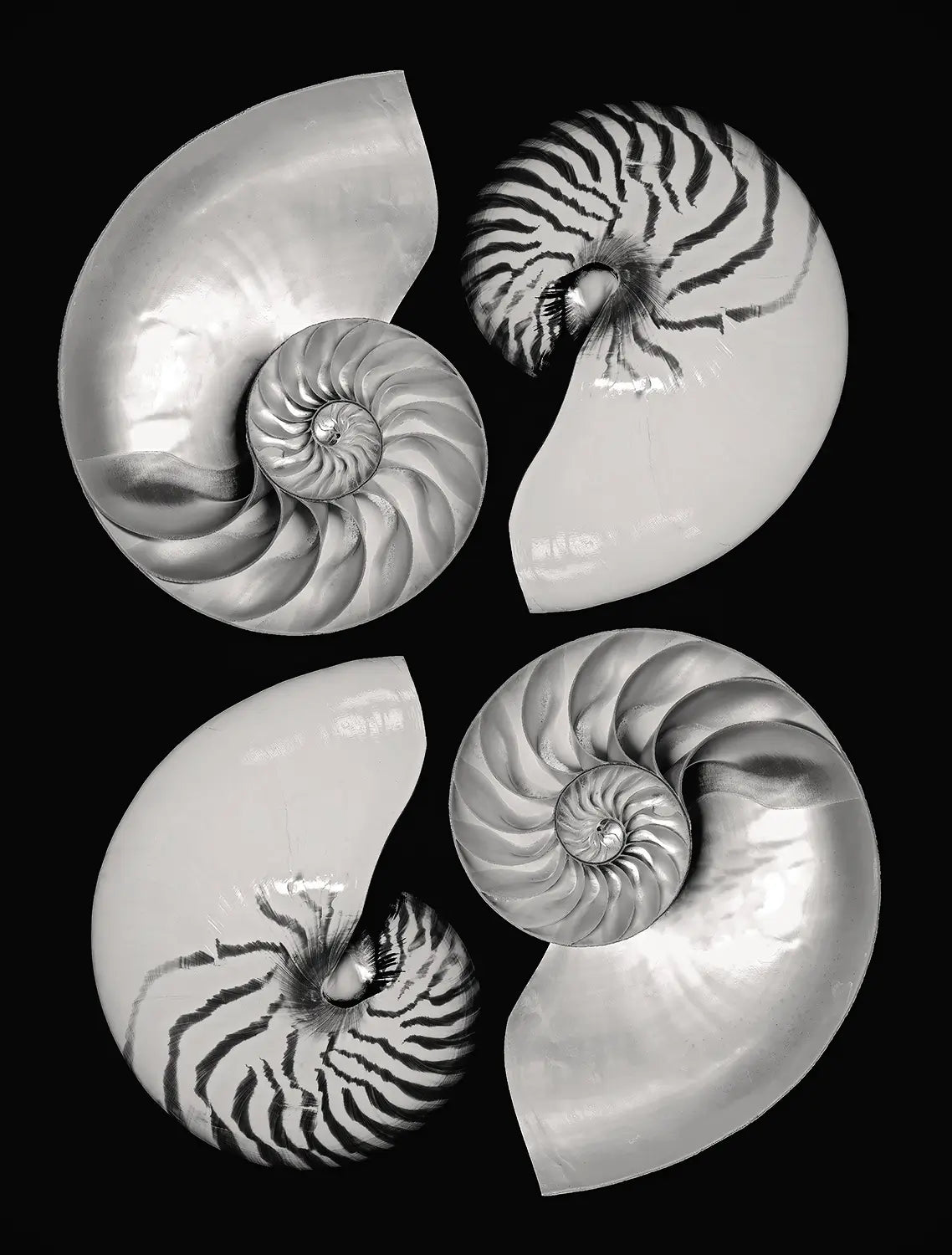
The nautilus is perhaps the most famous example, but it is important not to assume that every shell follows an exact Fibonacci sequence or golden spiral. Nature is more varied than that. The beauty lies in the relationship between growth, proportion, repetition, and the small irregularities that make each form unique.
These structures are part of a much larger story of pattern beneath the surface. Explore The Architecture of the Sea for more on shells, coral, symmetry, repetition, and the extraordinary forms created by ocean life.
From Nautilus to Conch, Tun and Sundial Shells
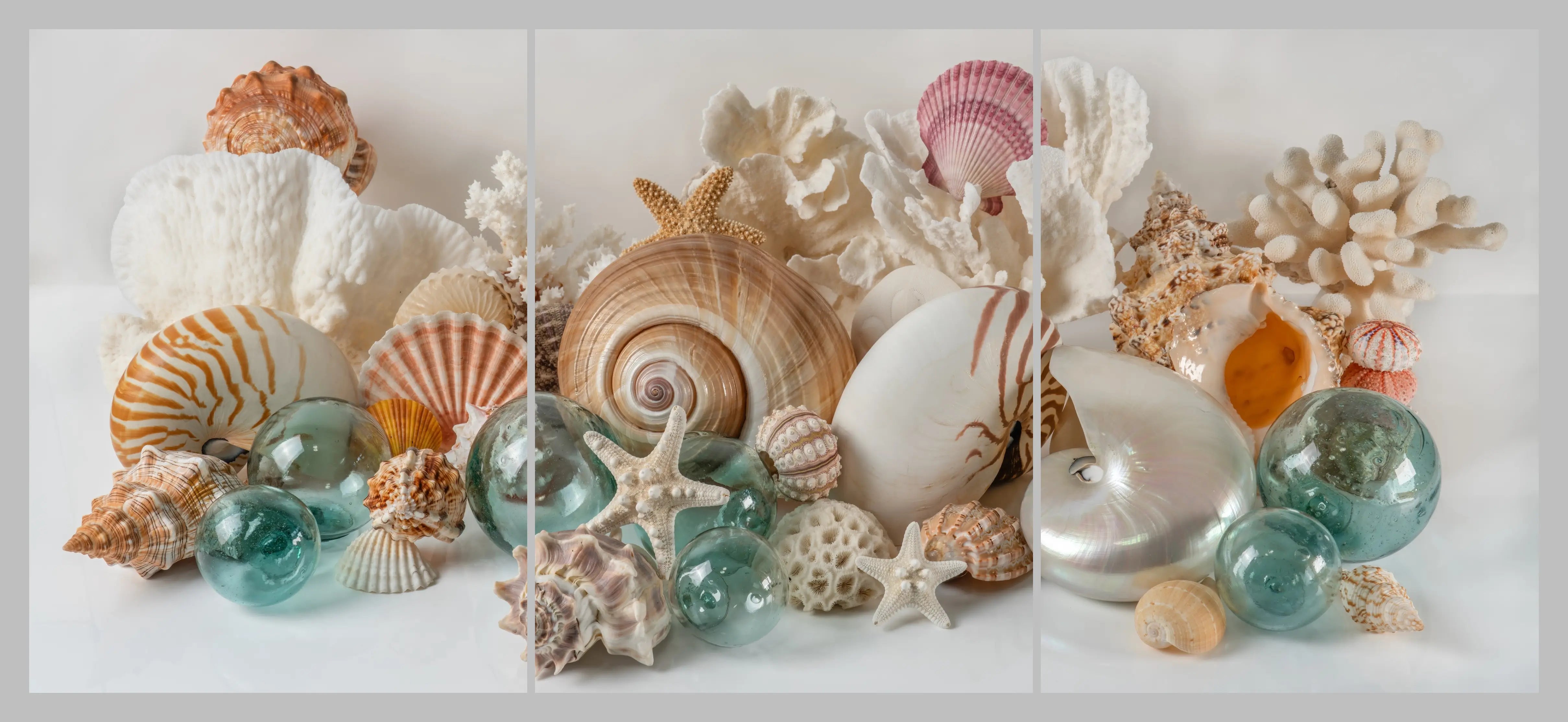
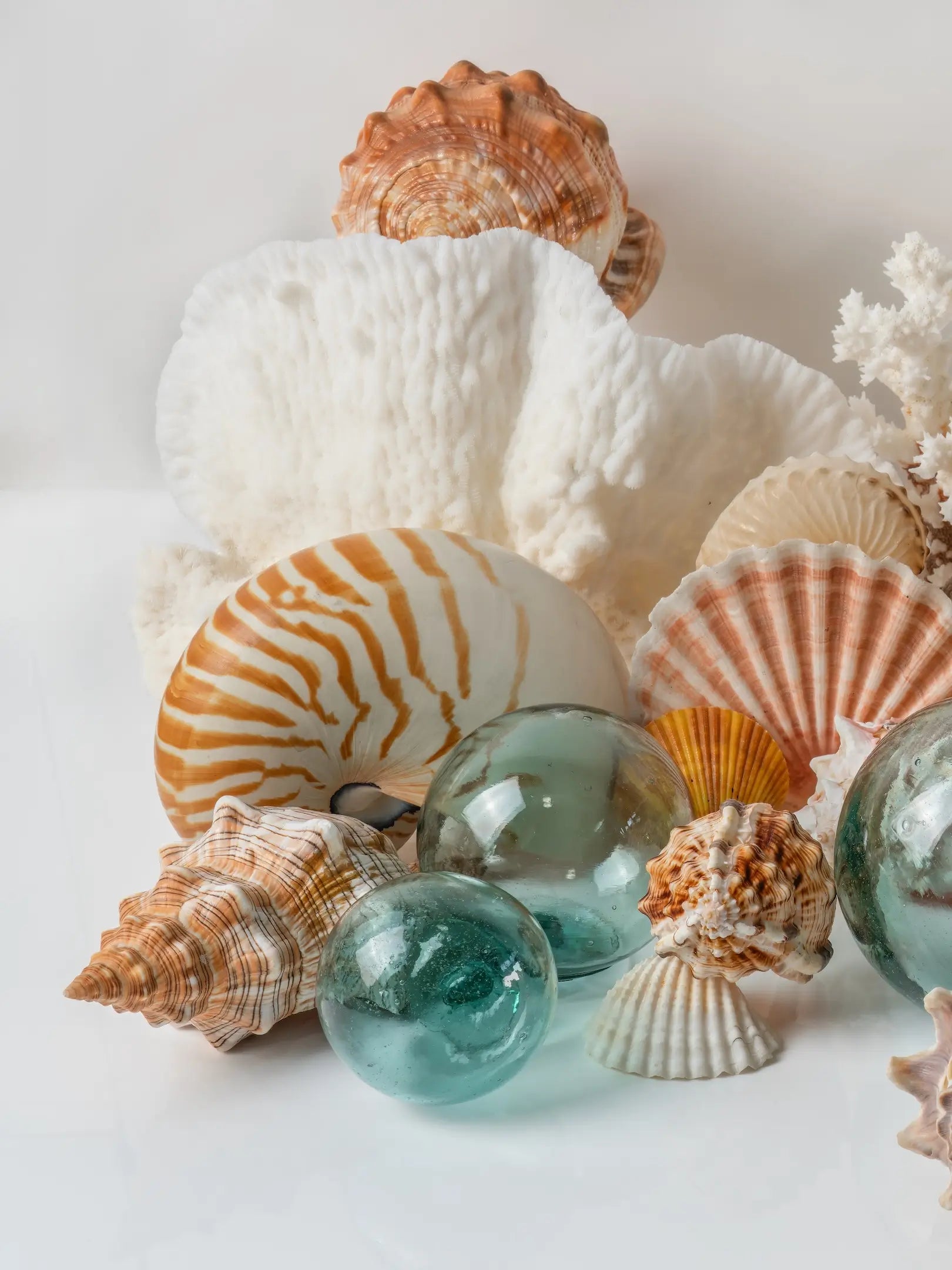
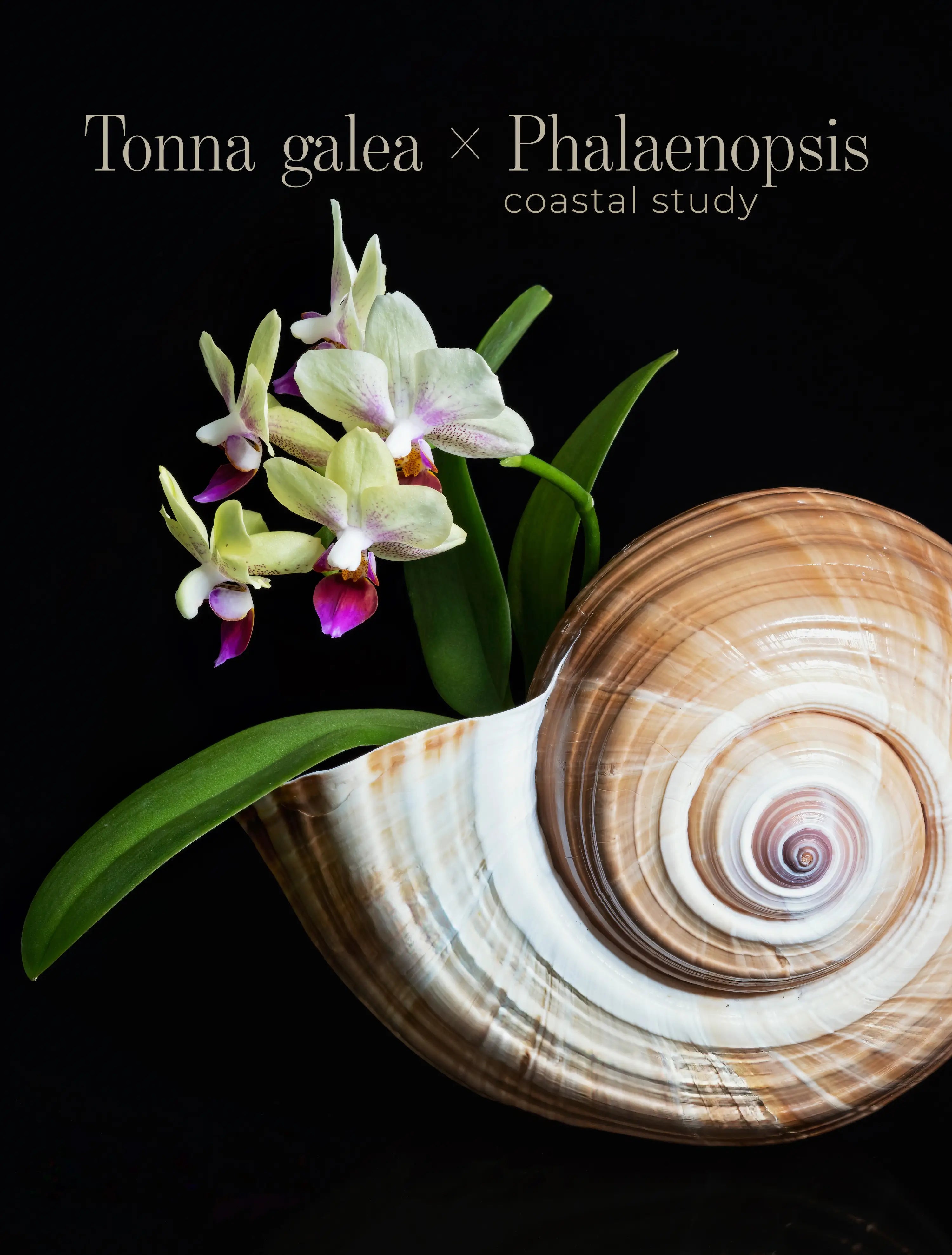
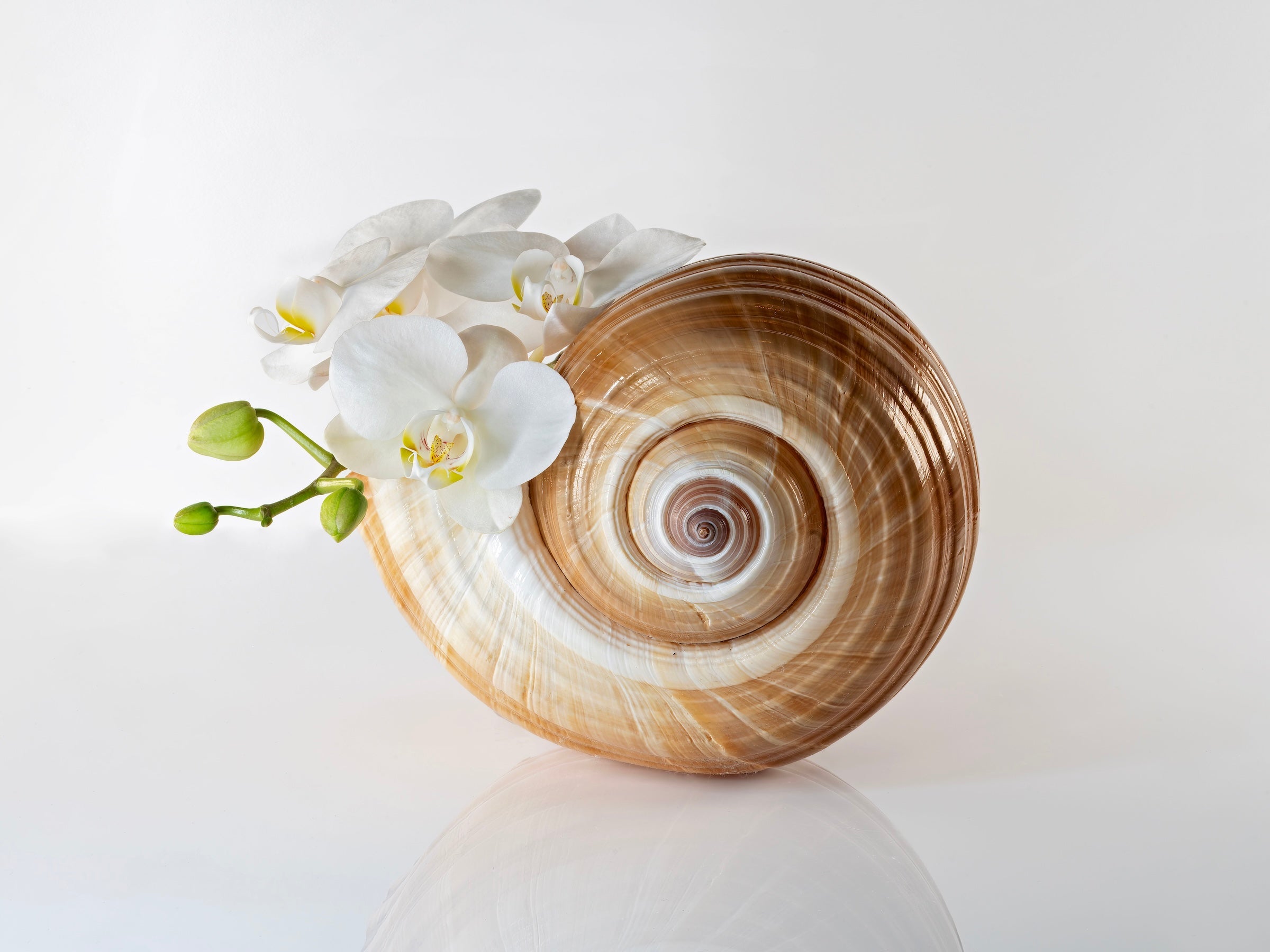
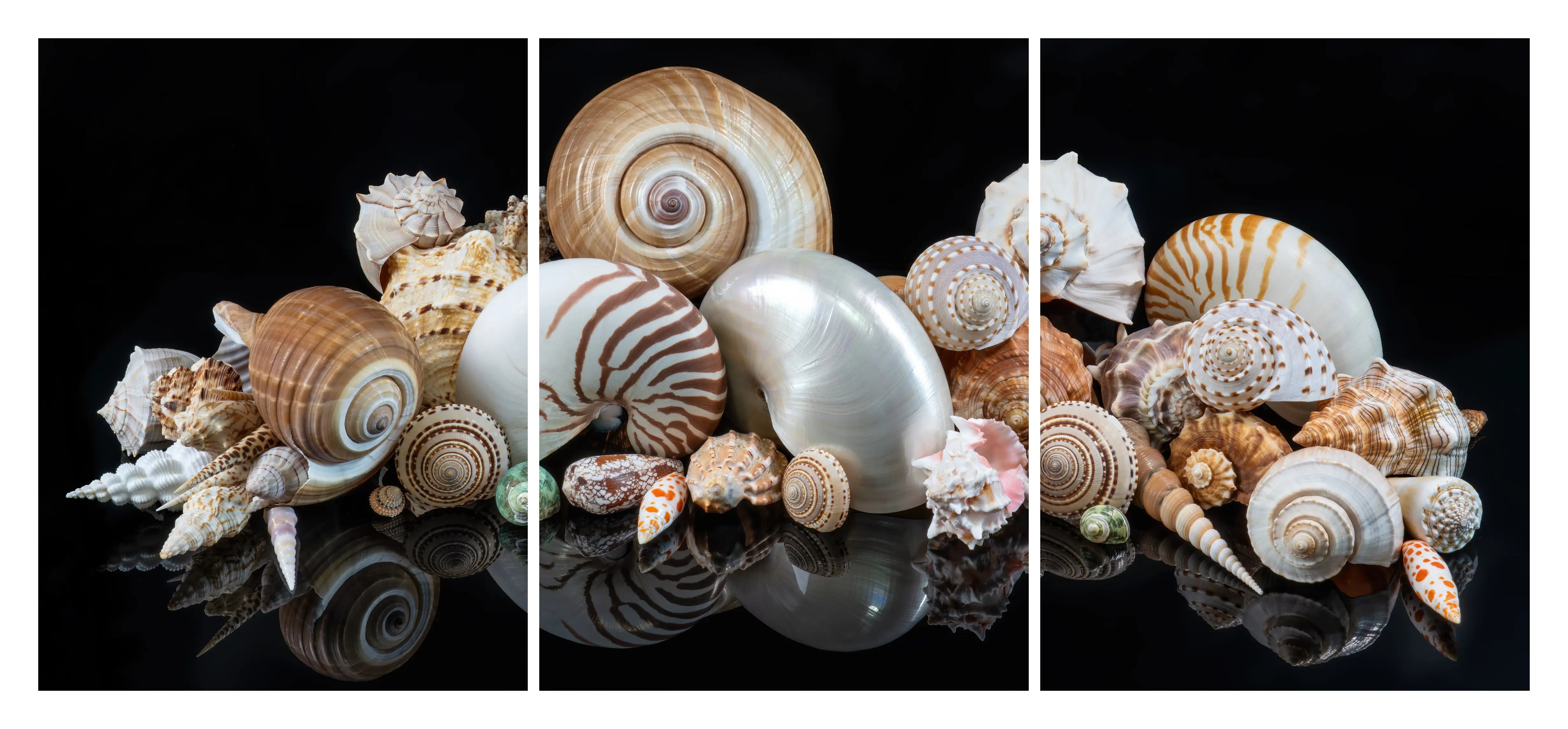
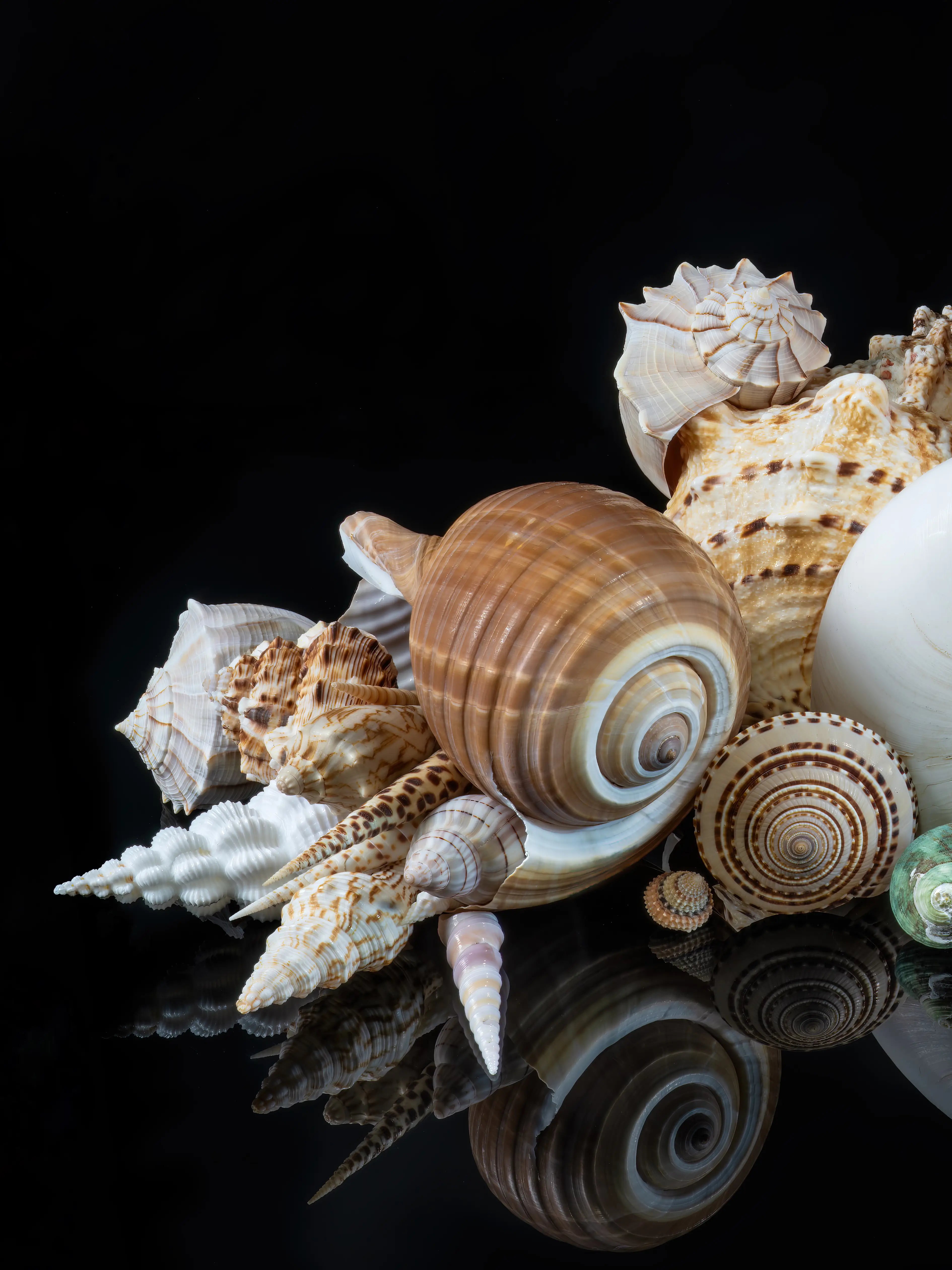
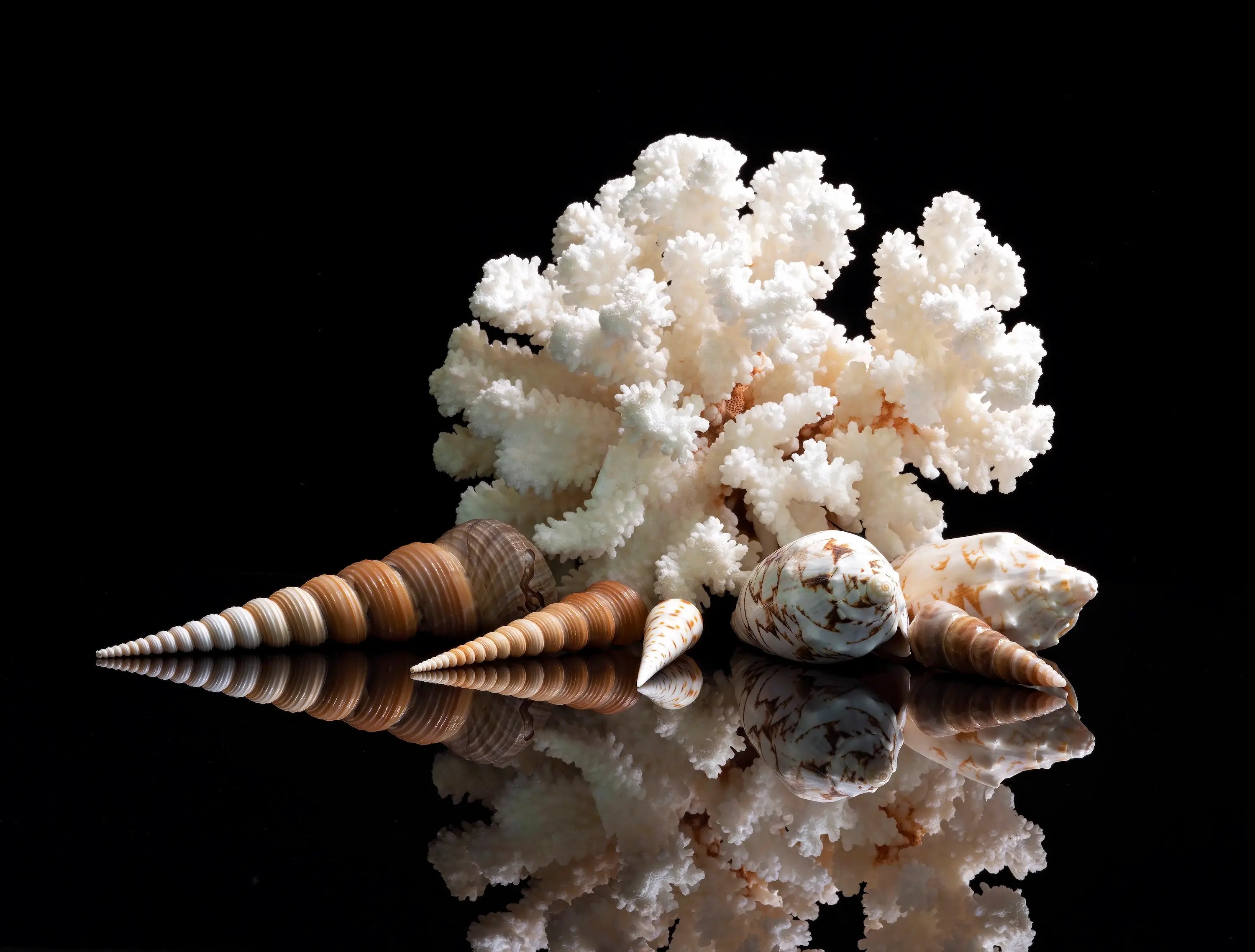
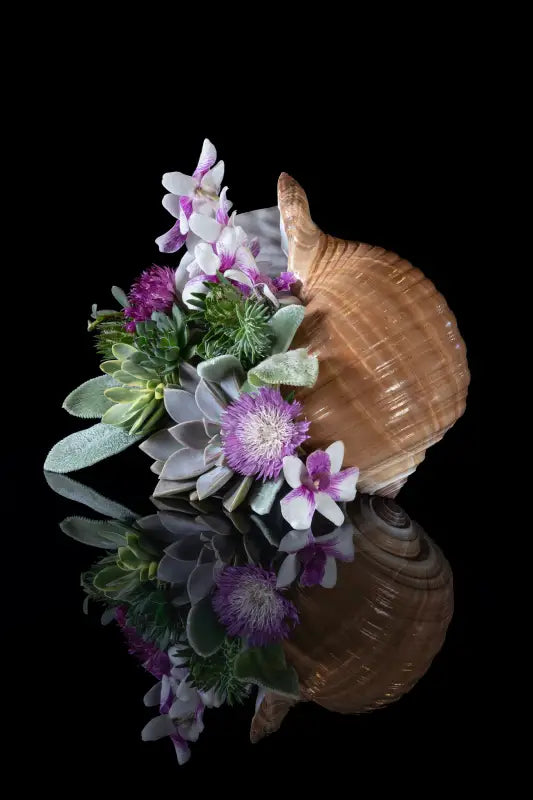
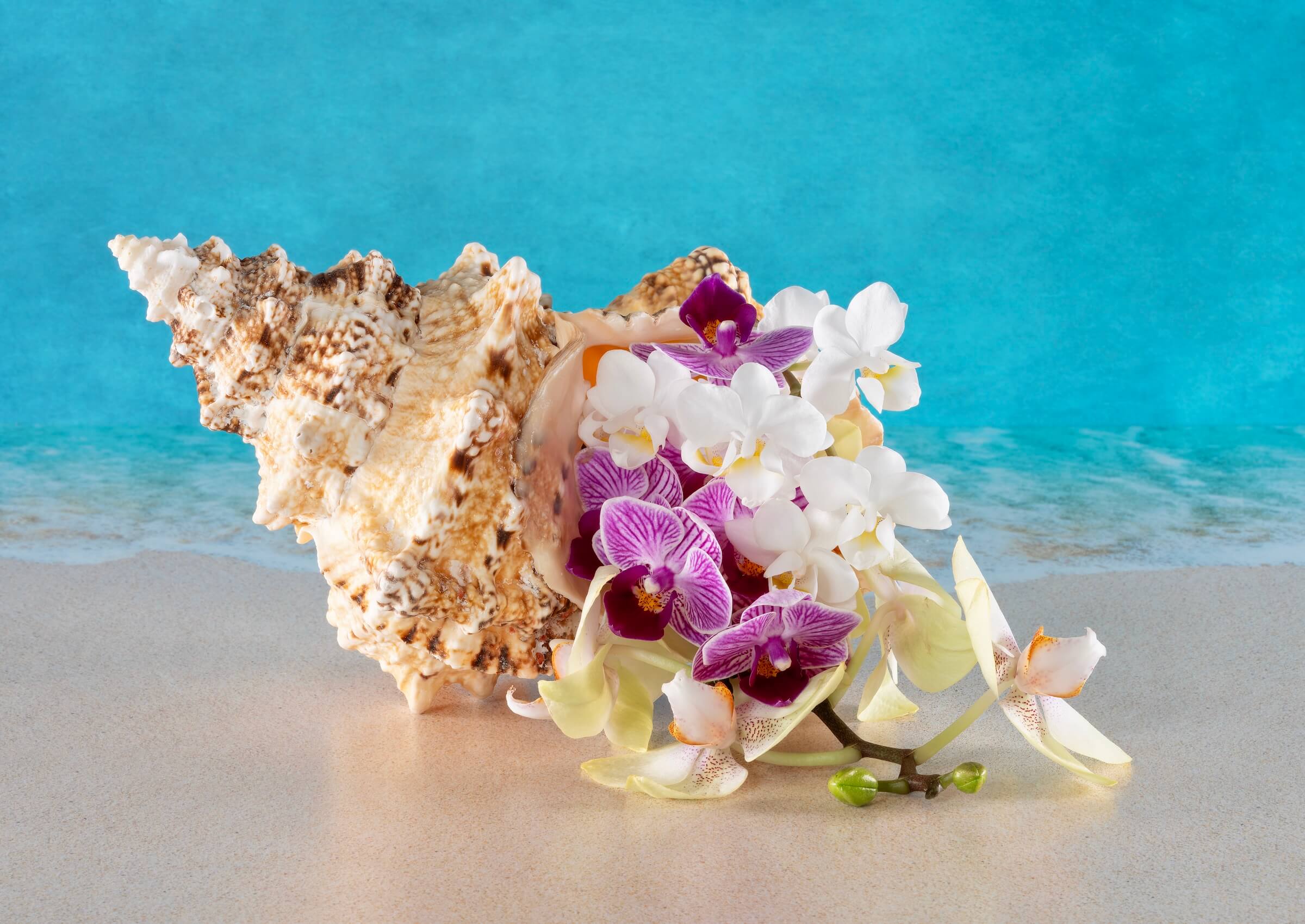
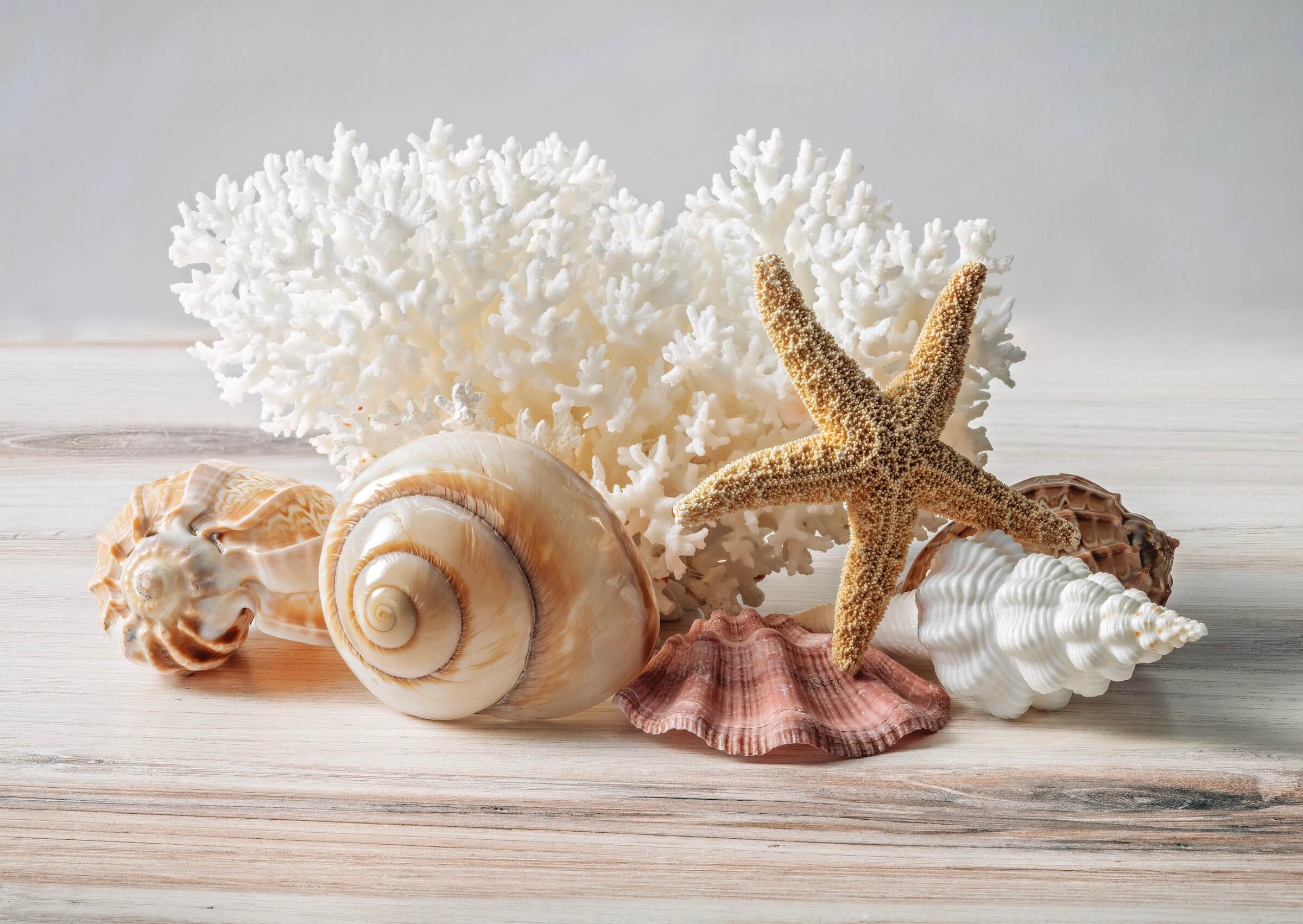
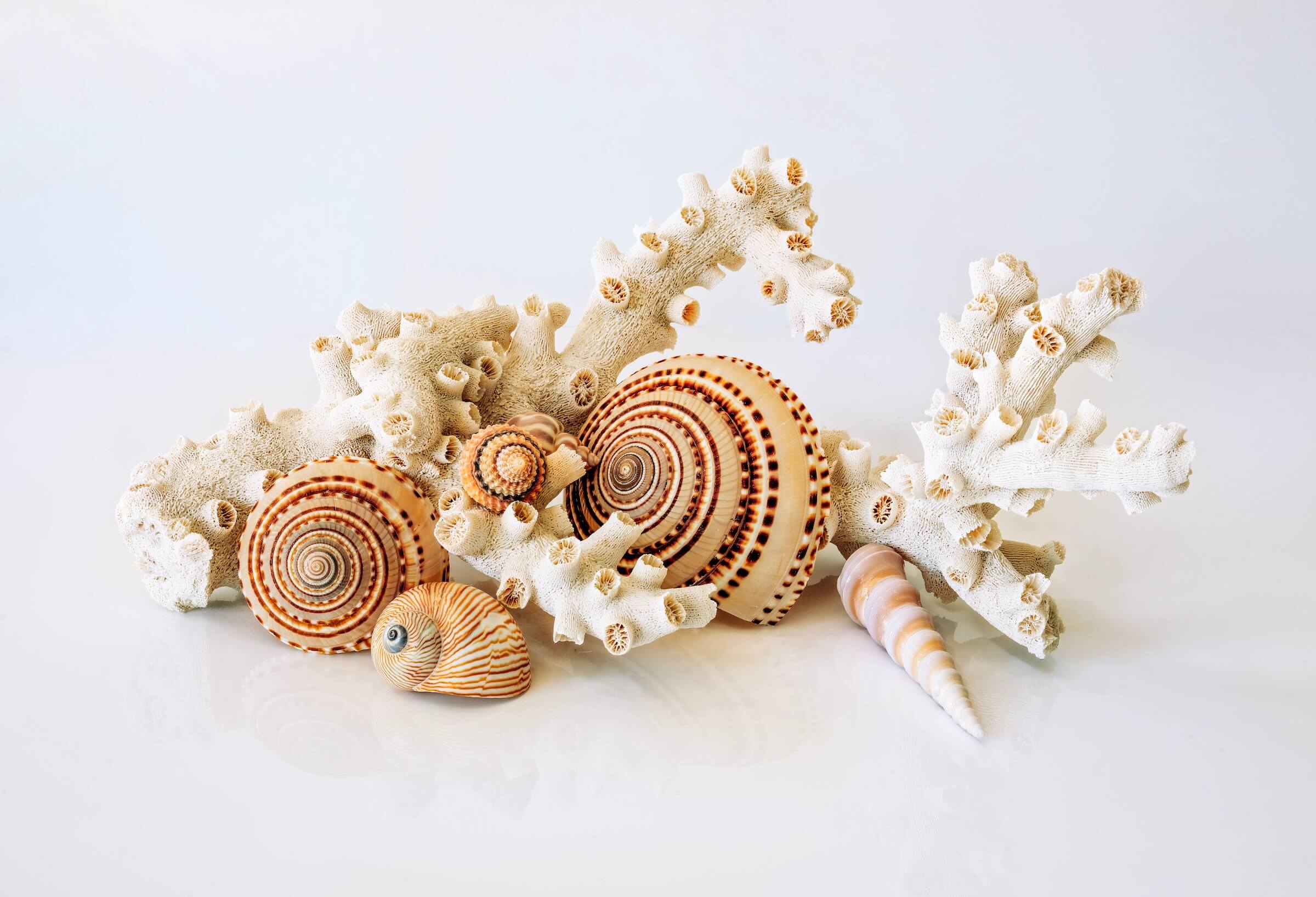
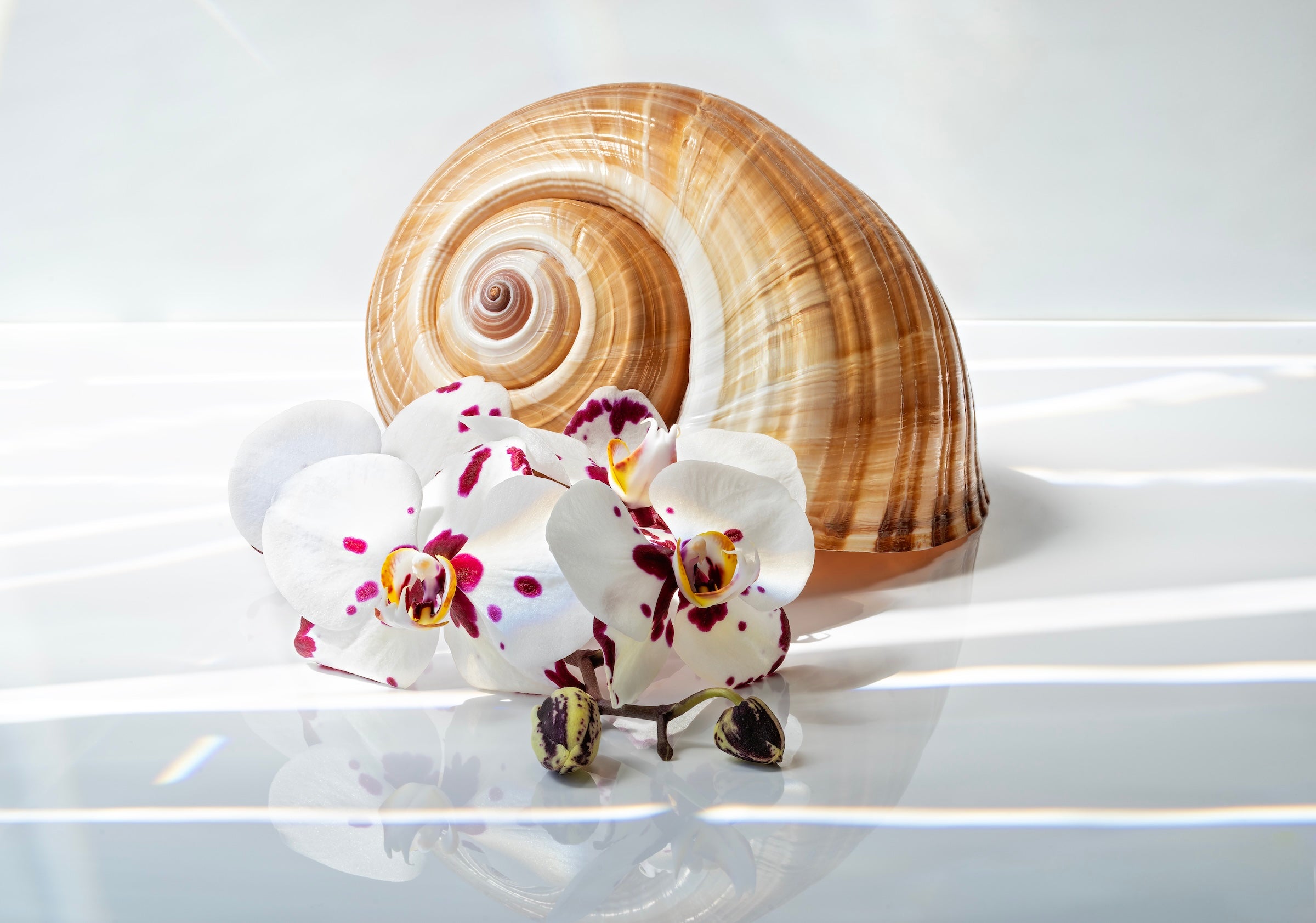
Spiral seashells do not all look alike. A nautilus reveals broad chambers and a sweeping curve, while giant tun shells have a fuller, more rounded form. Conchs combine strong spirals with sculptural openings and ridges, while sundial and moon snail shells create their own distinctive patterns.
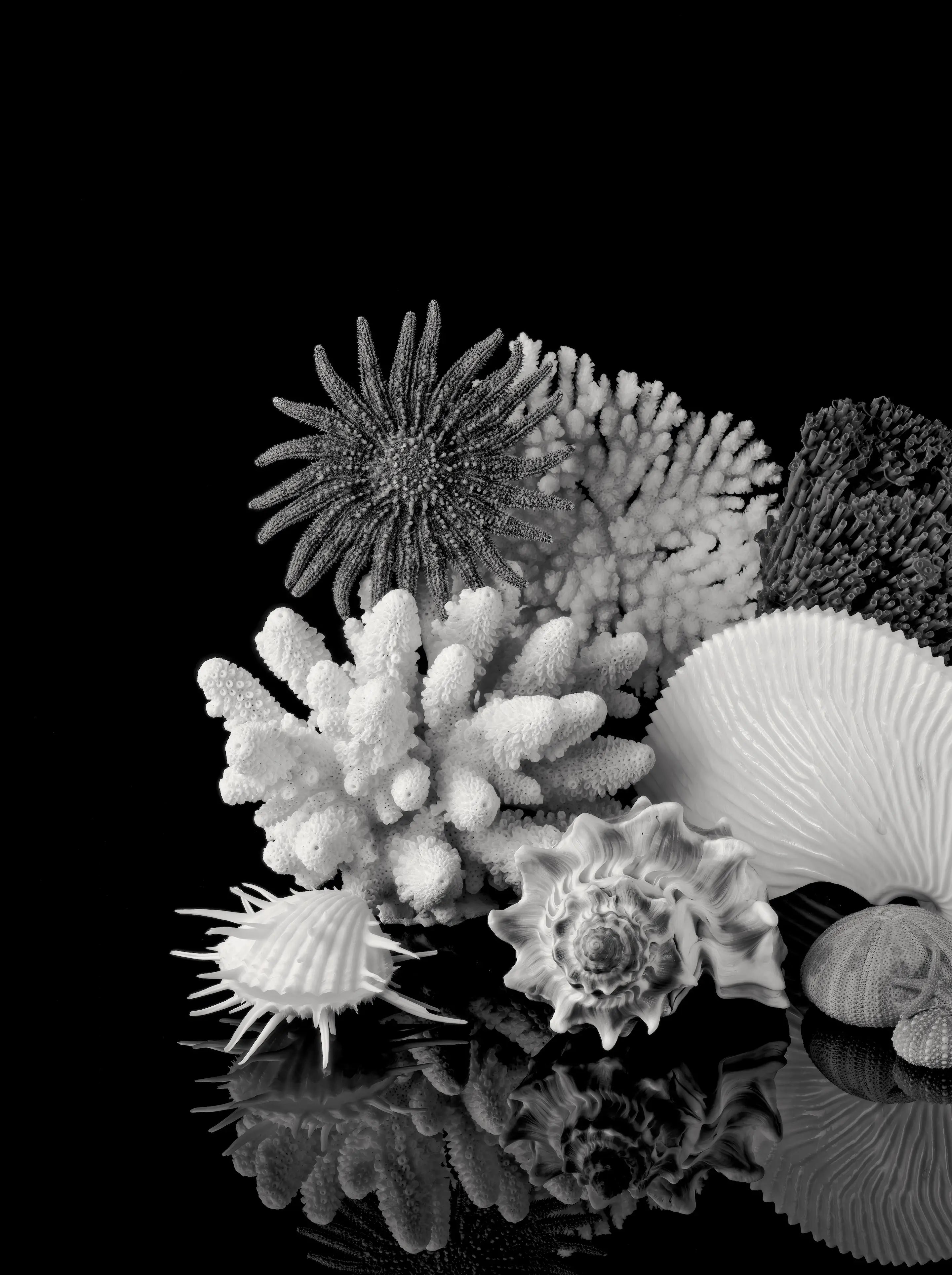
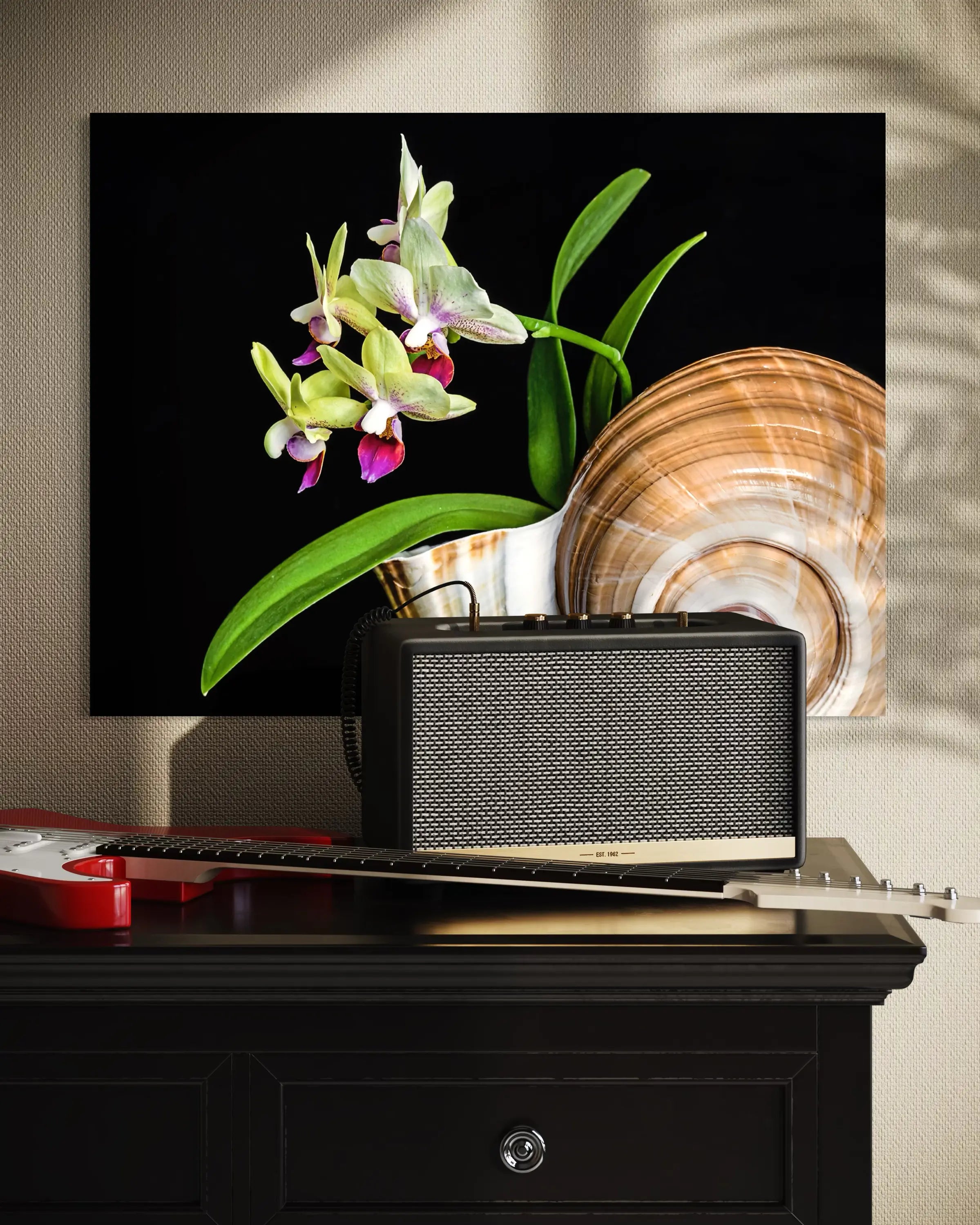
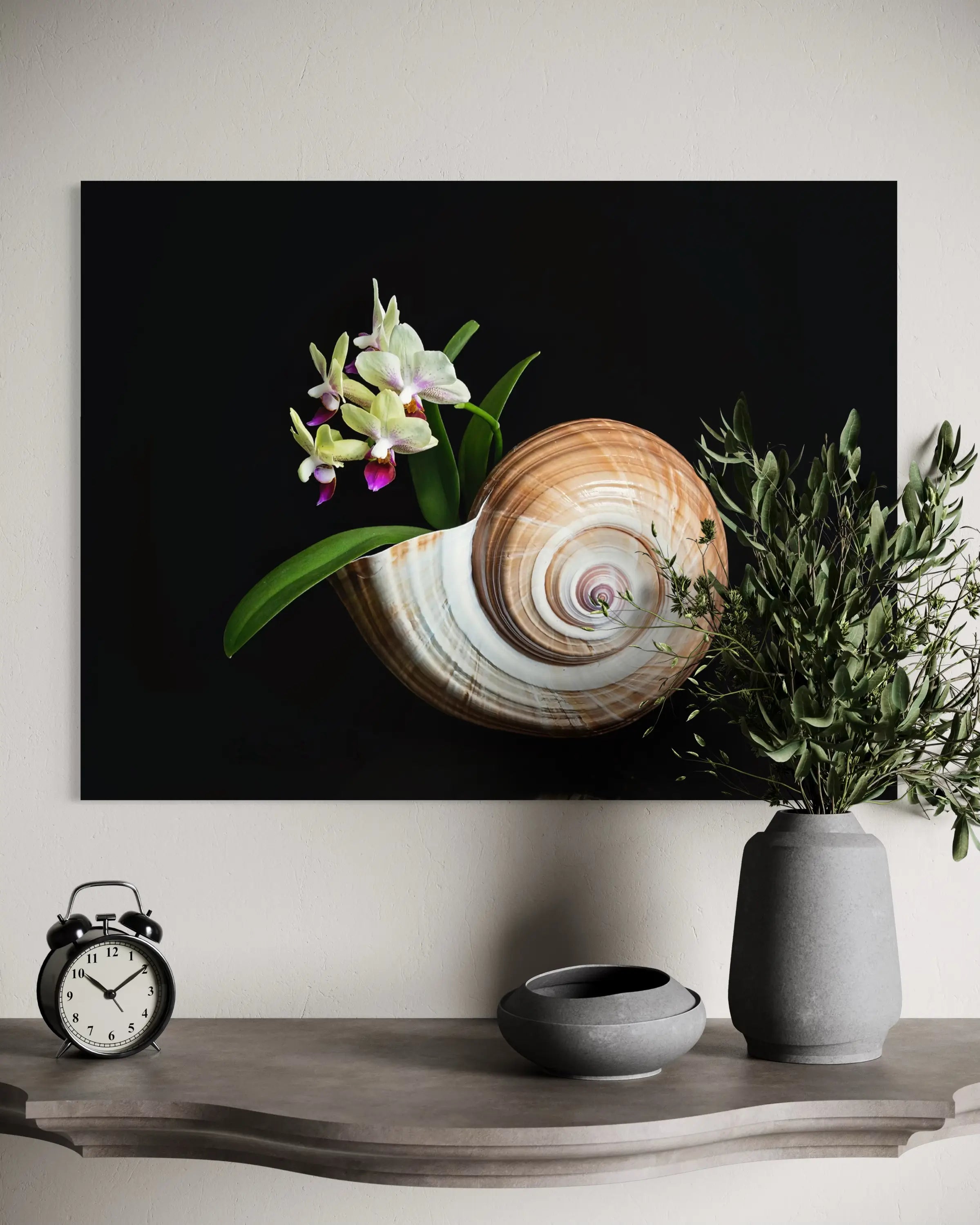
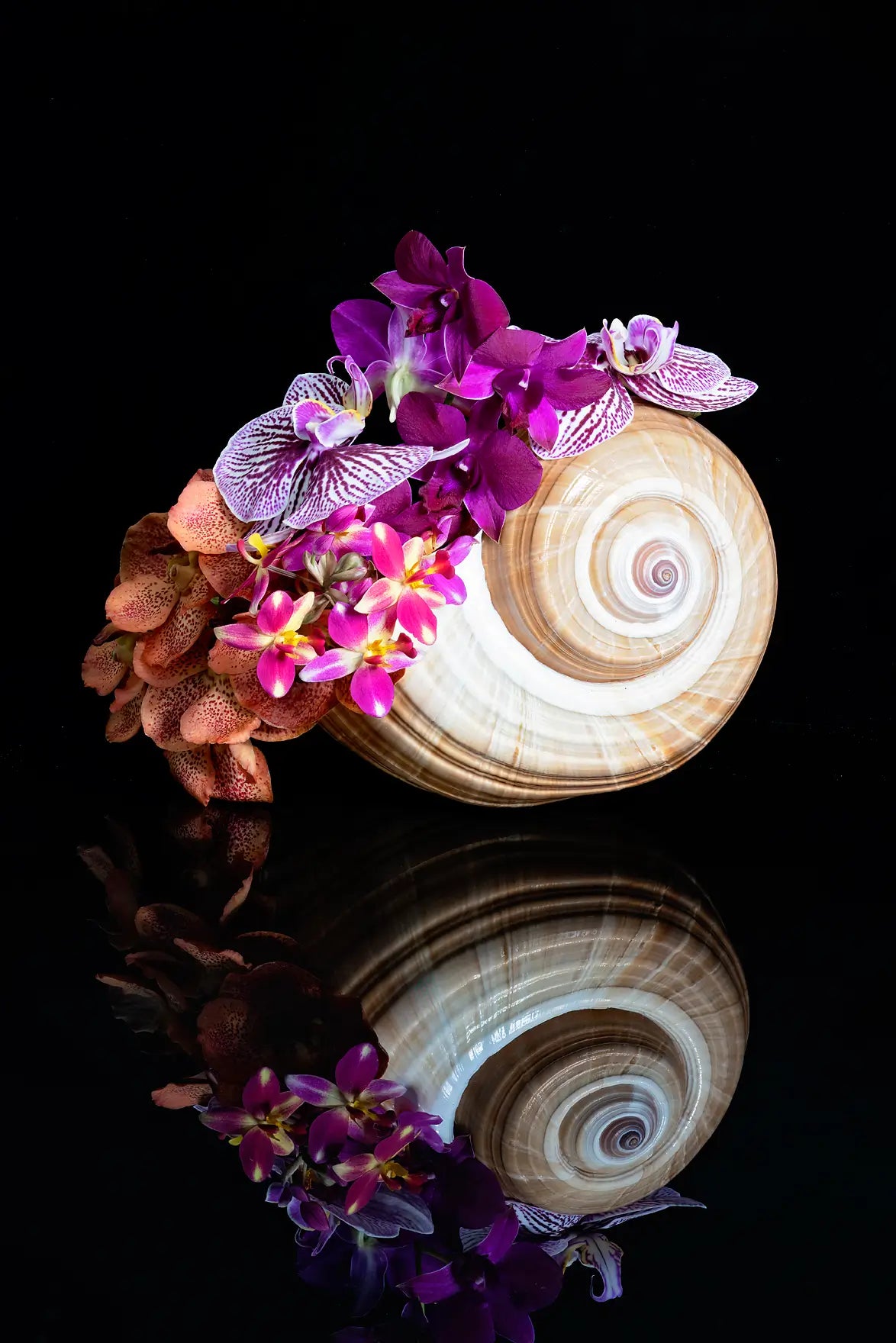
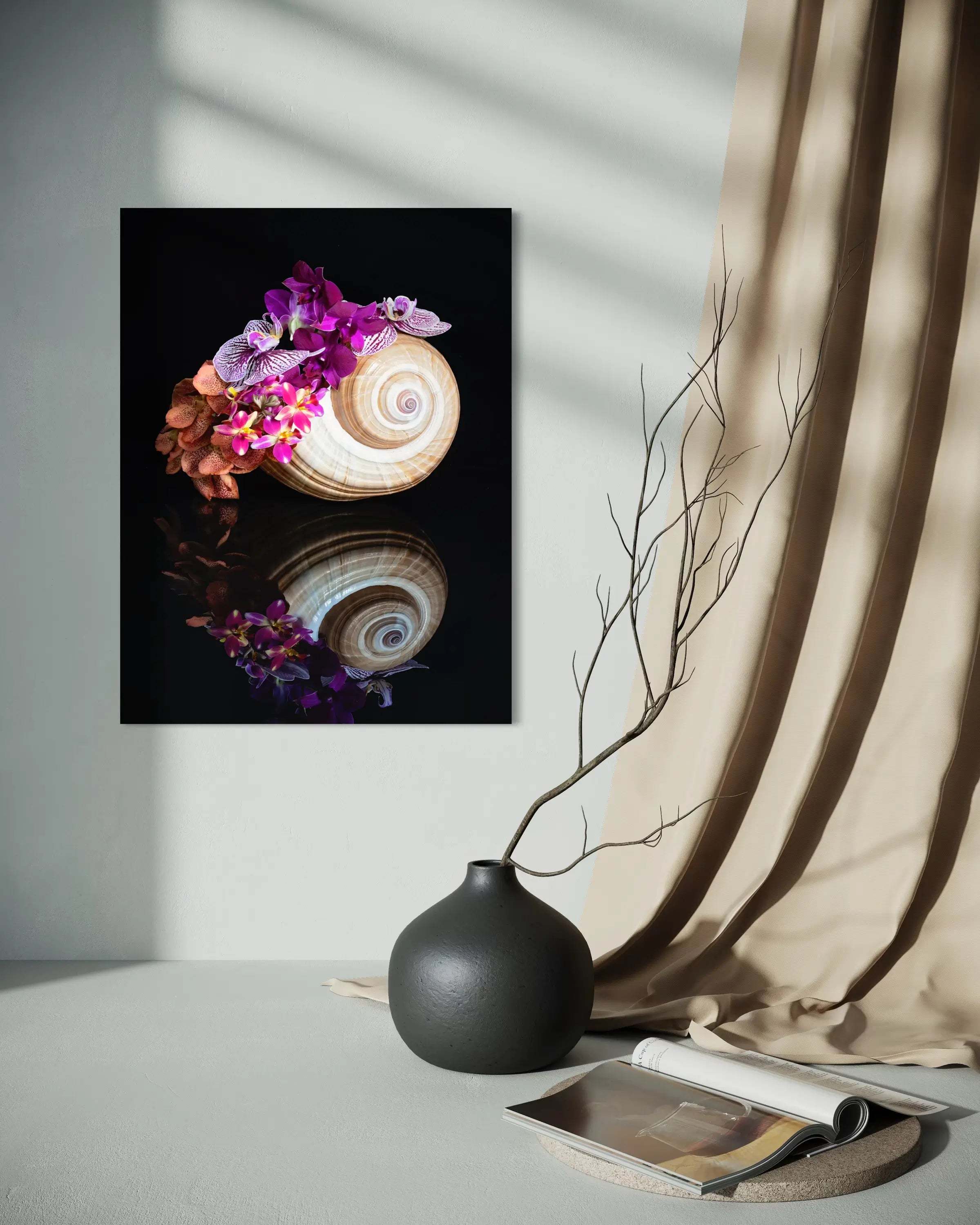
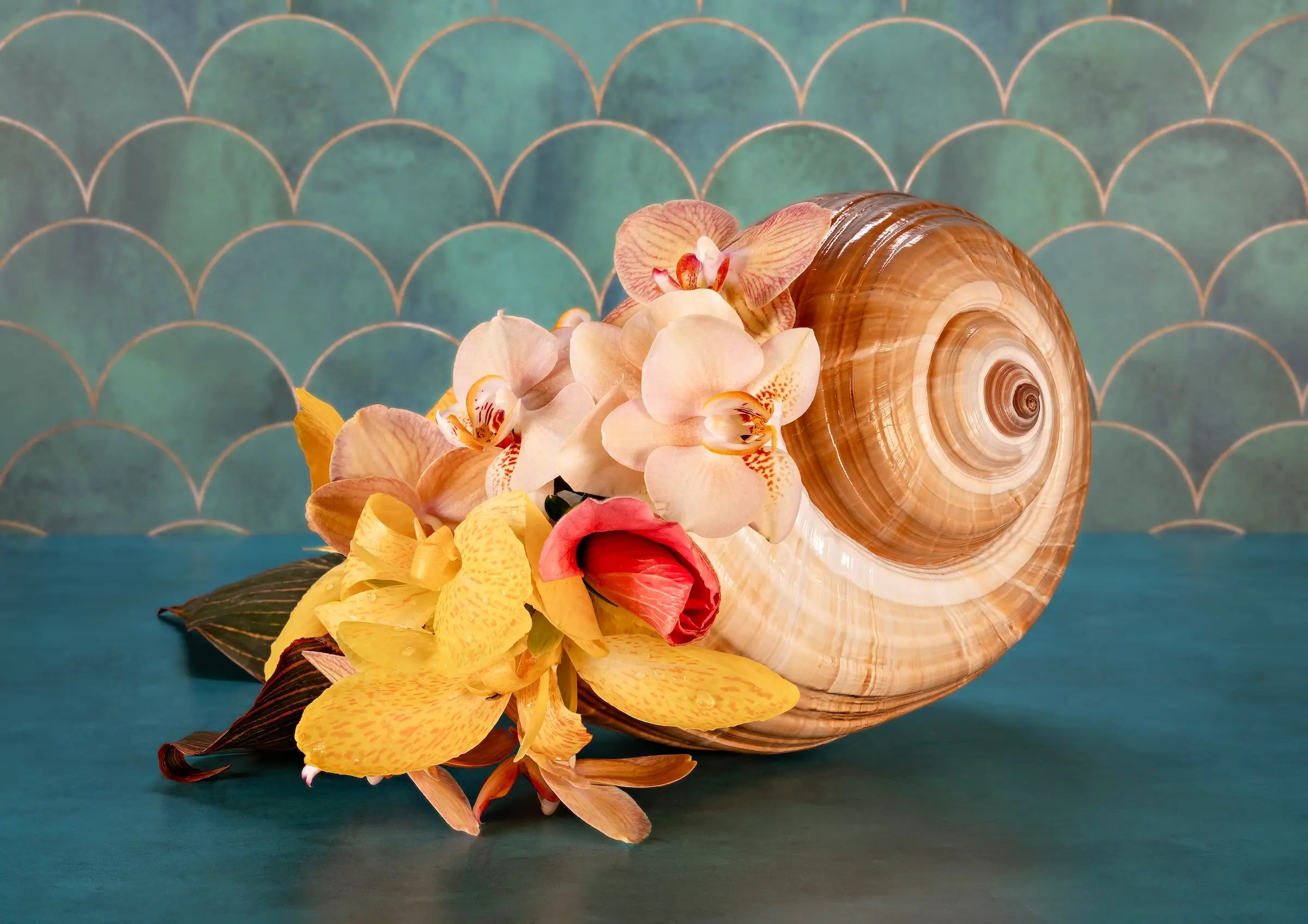
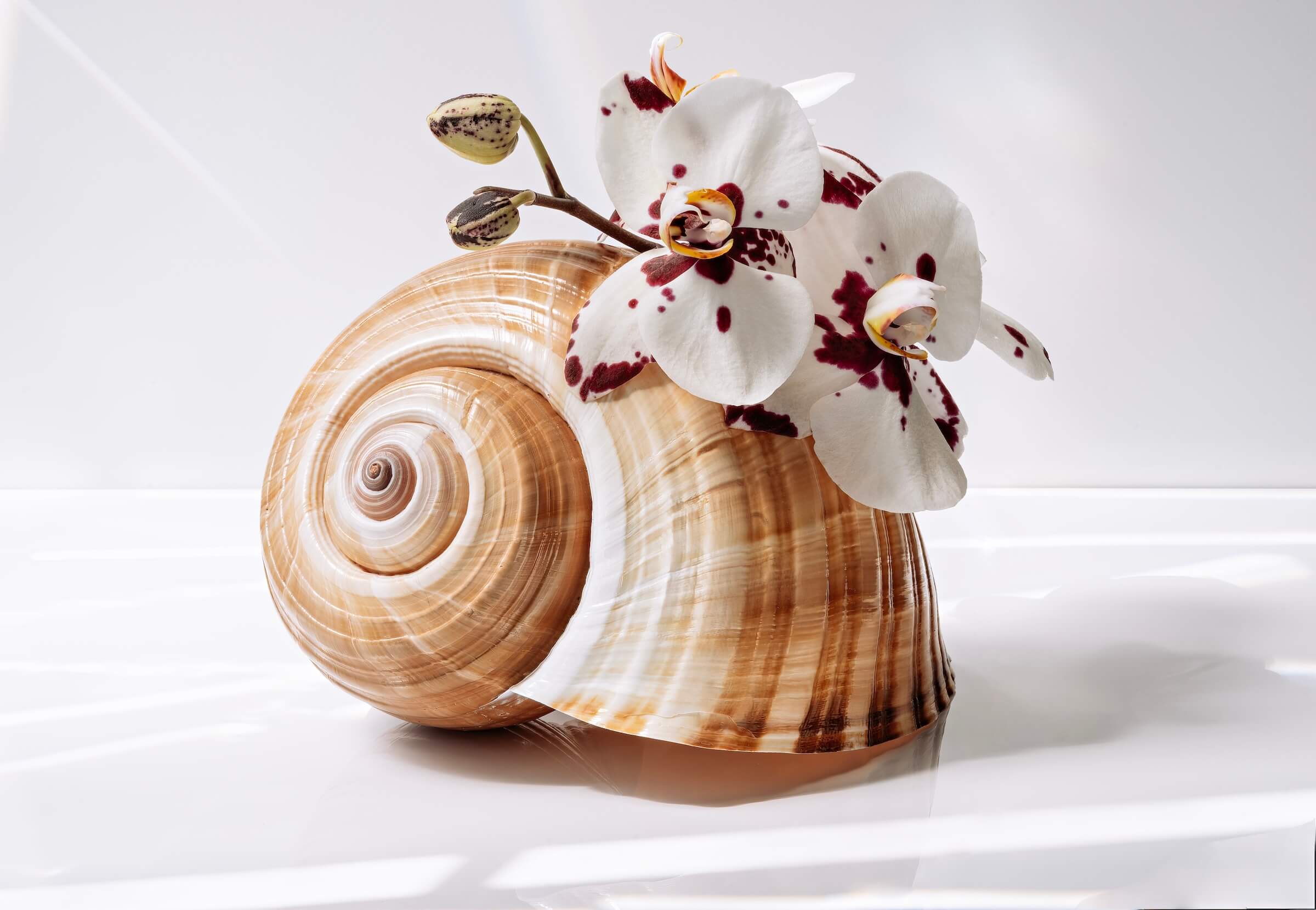
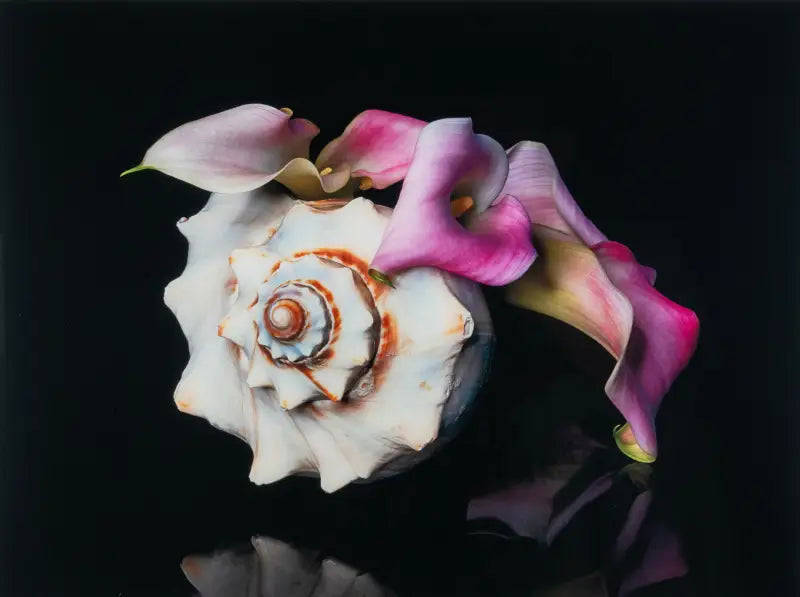
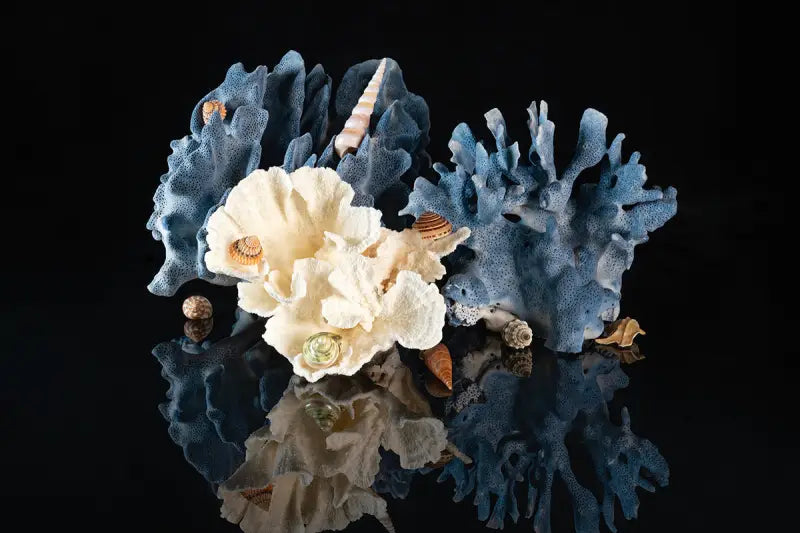
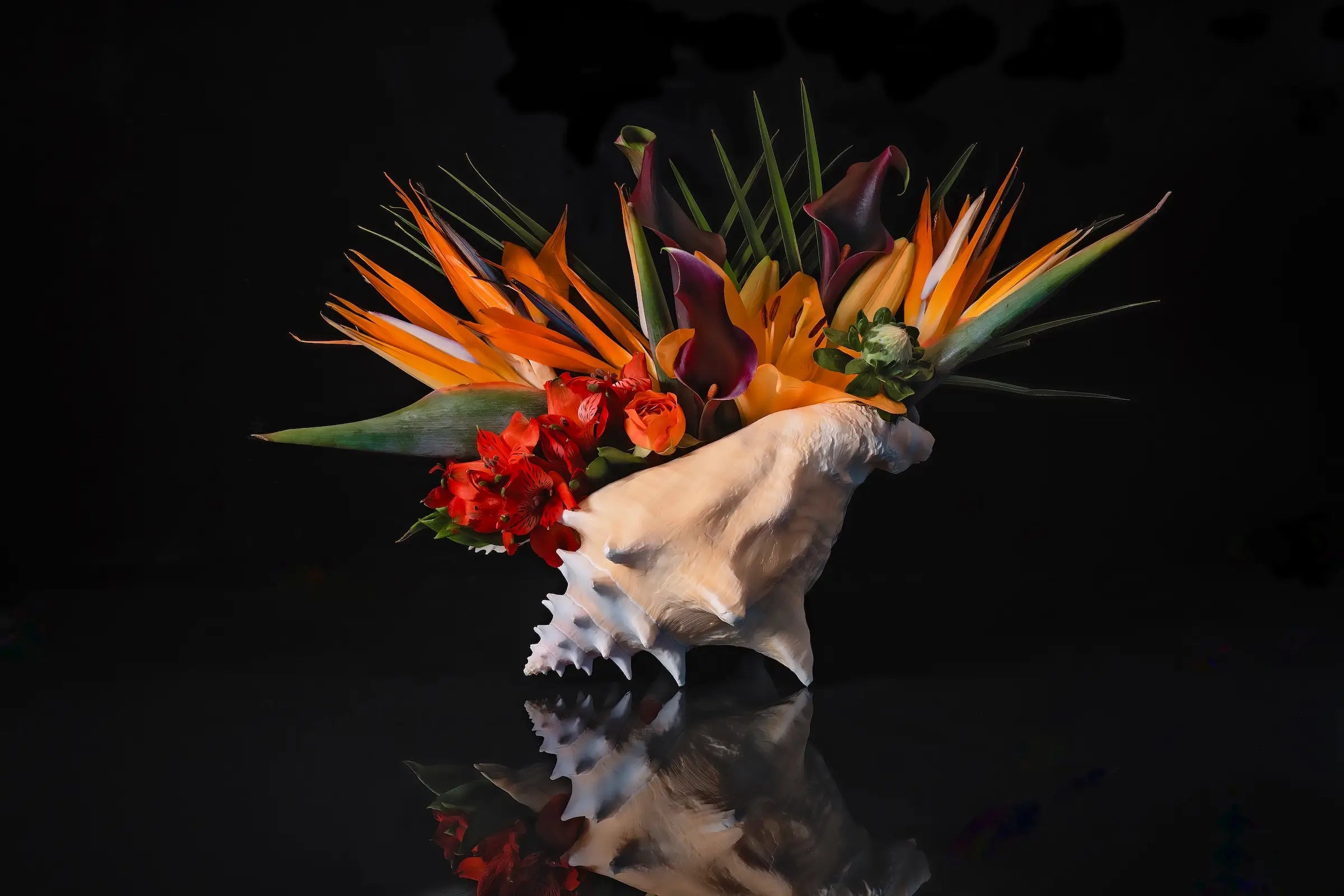
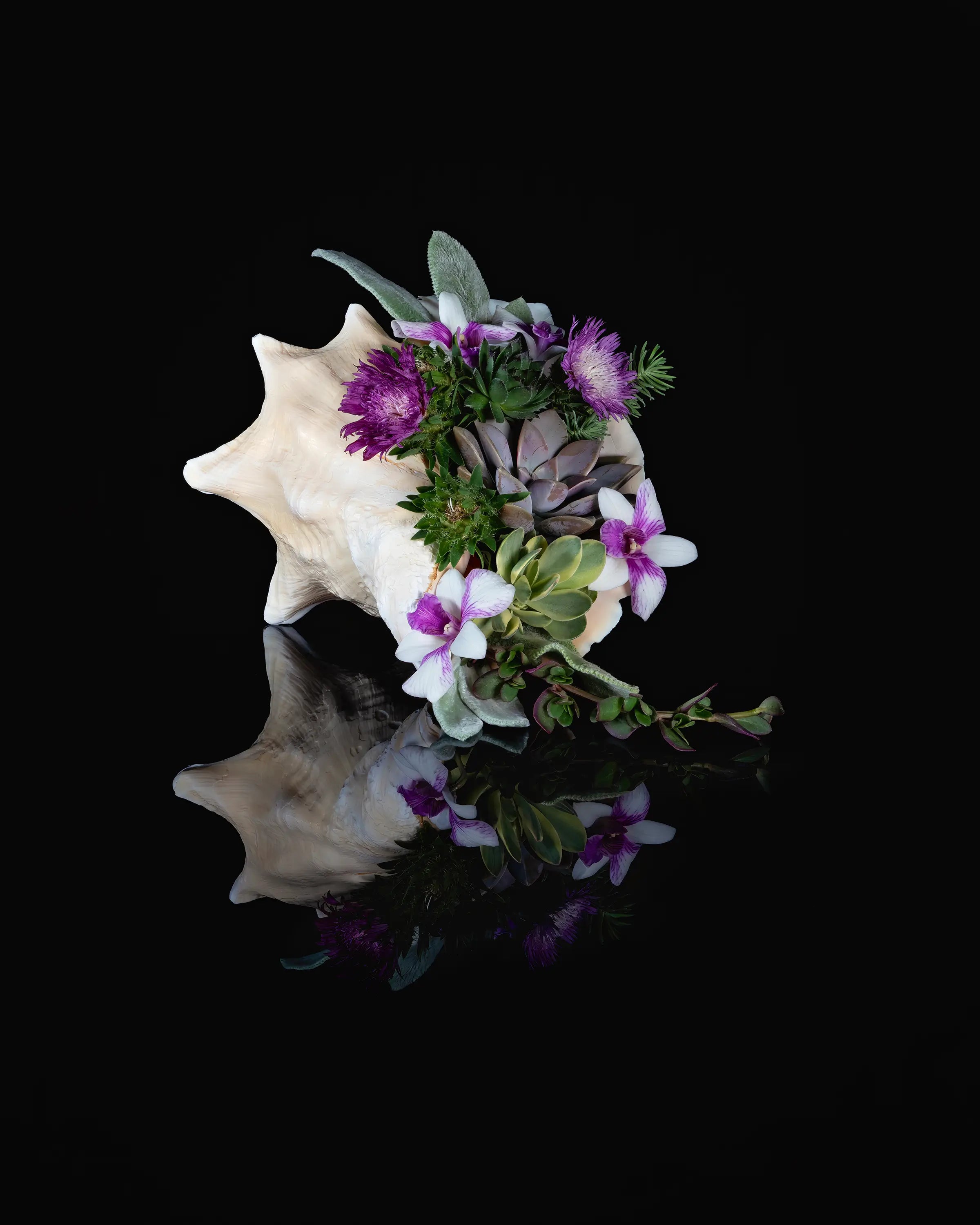
That variety is part of what makes spiral shell art so interesting to create. Some pieces focus on the shell itself, allowing its shape and surface to become almost sculptural. Others pair shells with coral, sea urchins, driftwood, orchids, succulents, or other natural forms.
For artwork centered specifically on the ocean’s most recognizable chambered spiral, explore Nautilus Wall Art.
Why Spiral Seashell Art Looks Beautiful on Glass
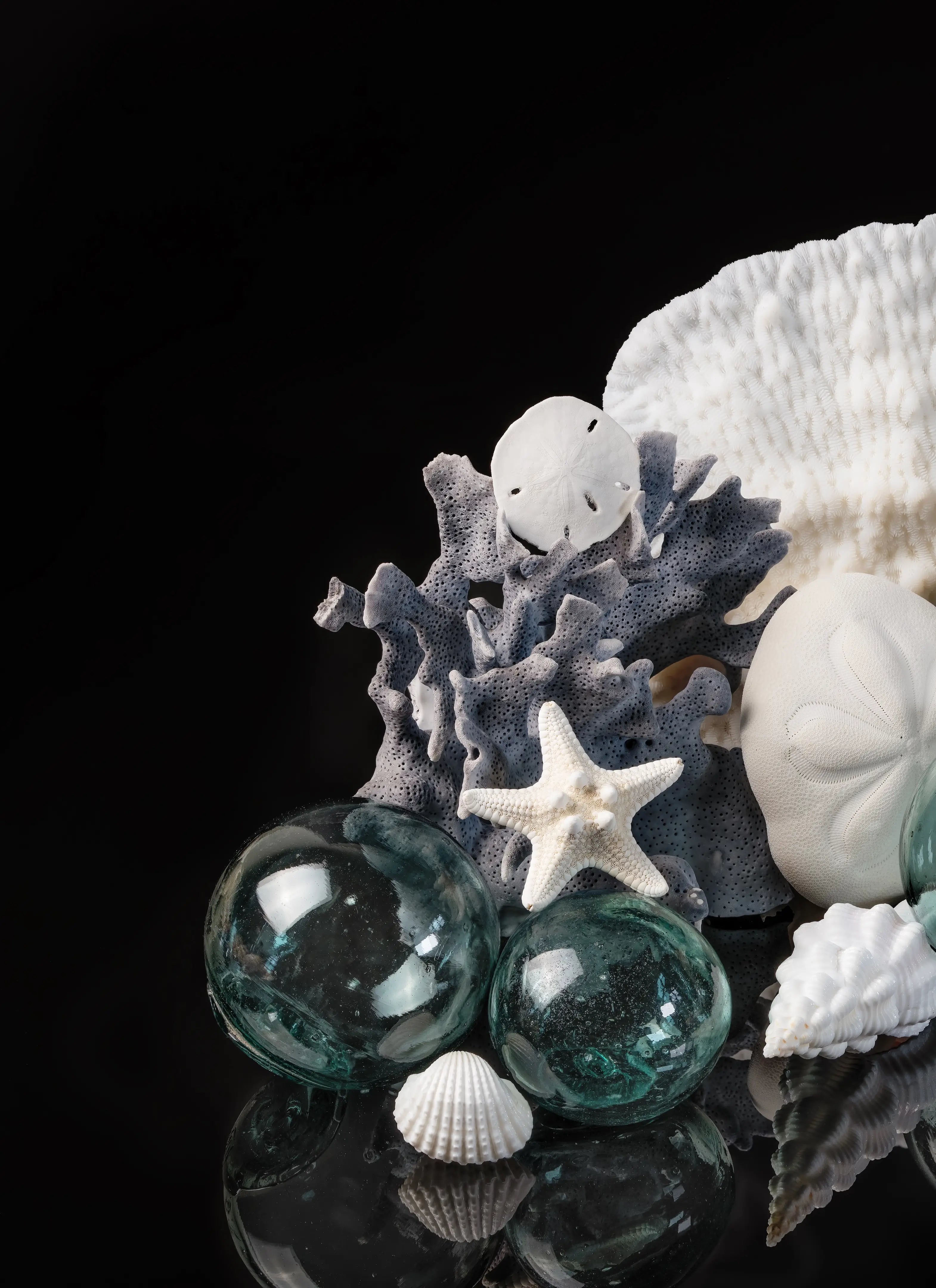
Shells contain an extraordinary amount of fine detail. Ridges, polished surfaces, subtle color changes, worn edges, and the curve of the spiral itself become more apparent when the artwork is reproduced with clarity.
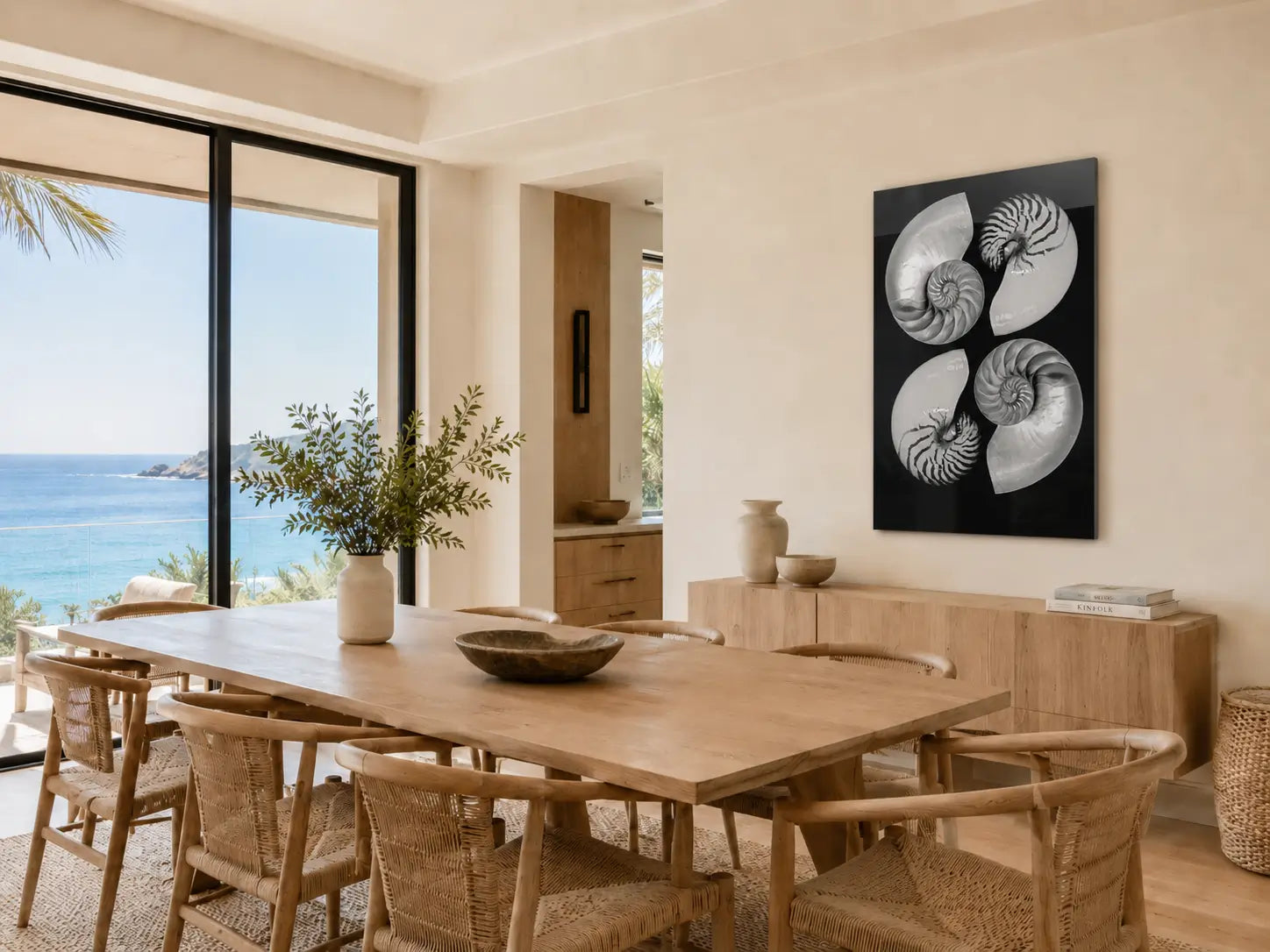
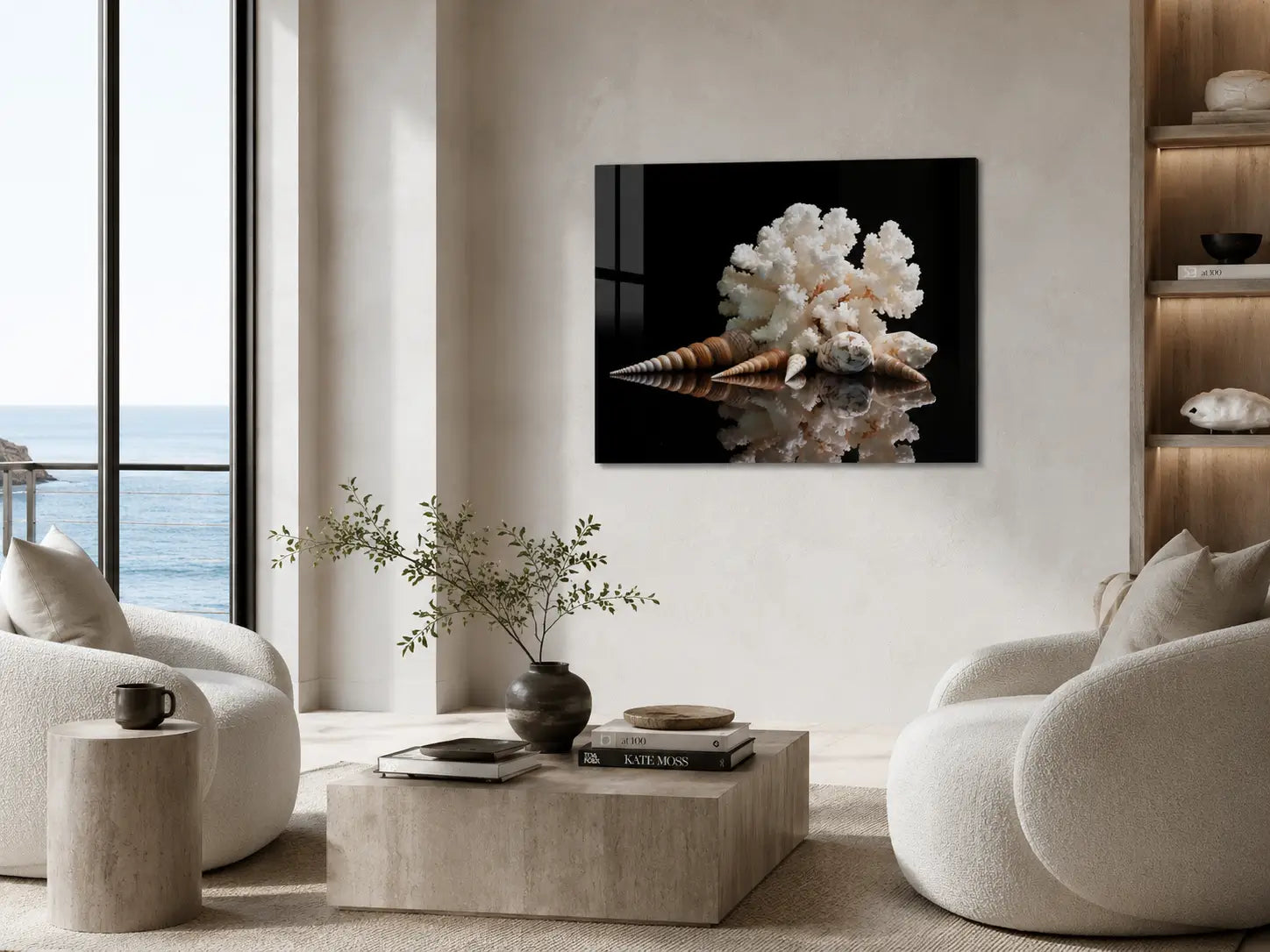
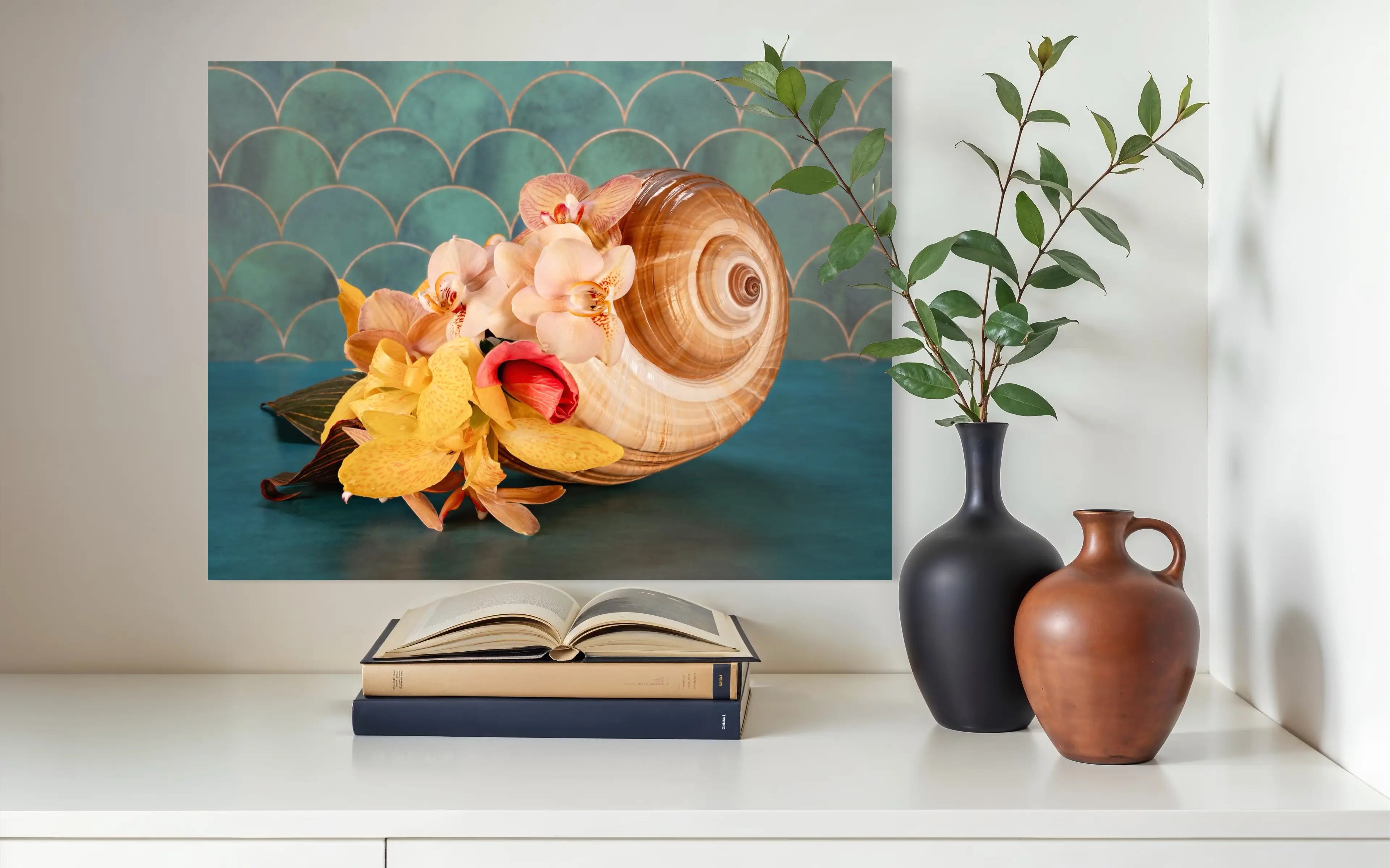
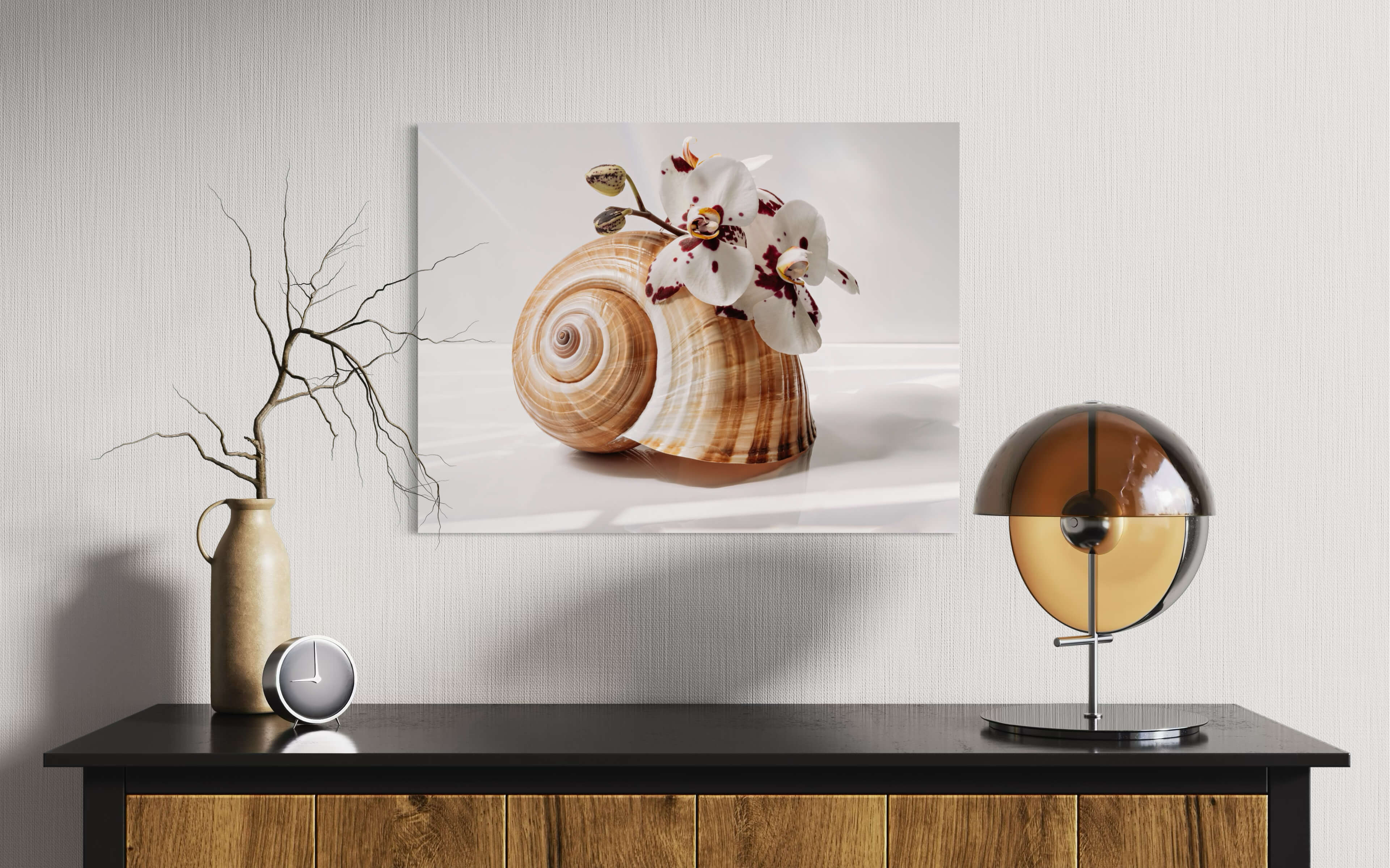
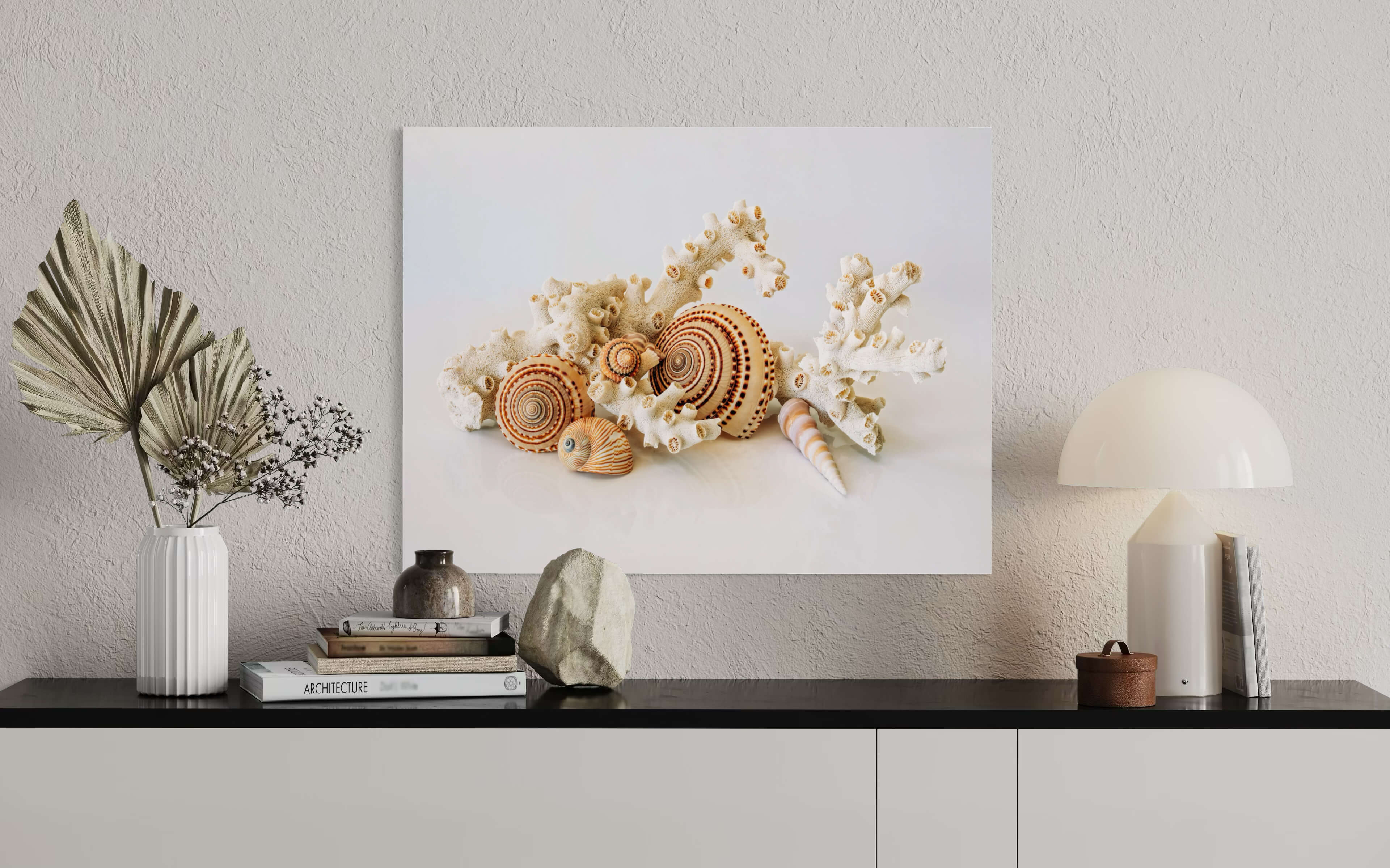
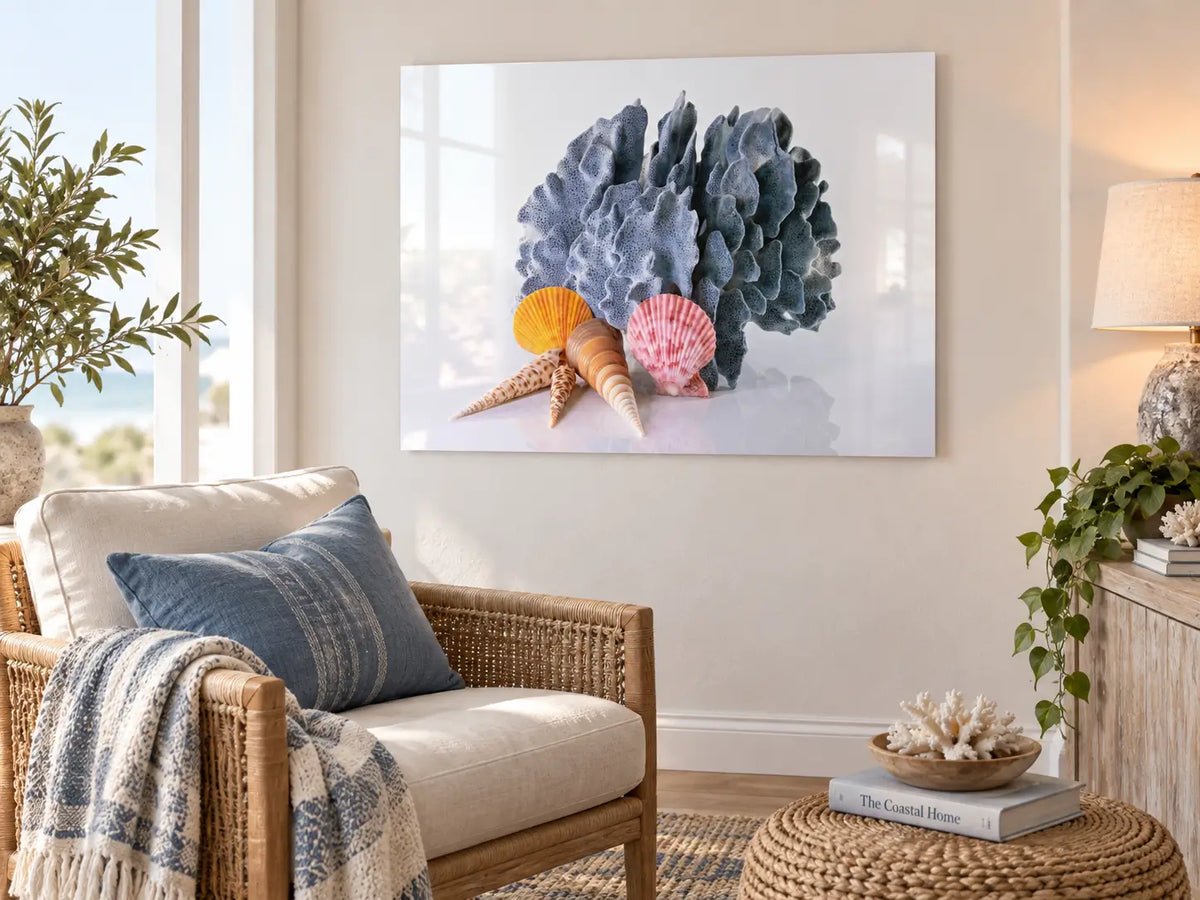
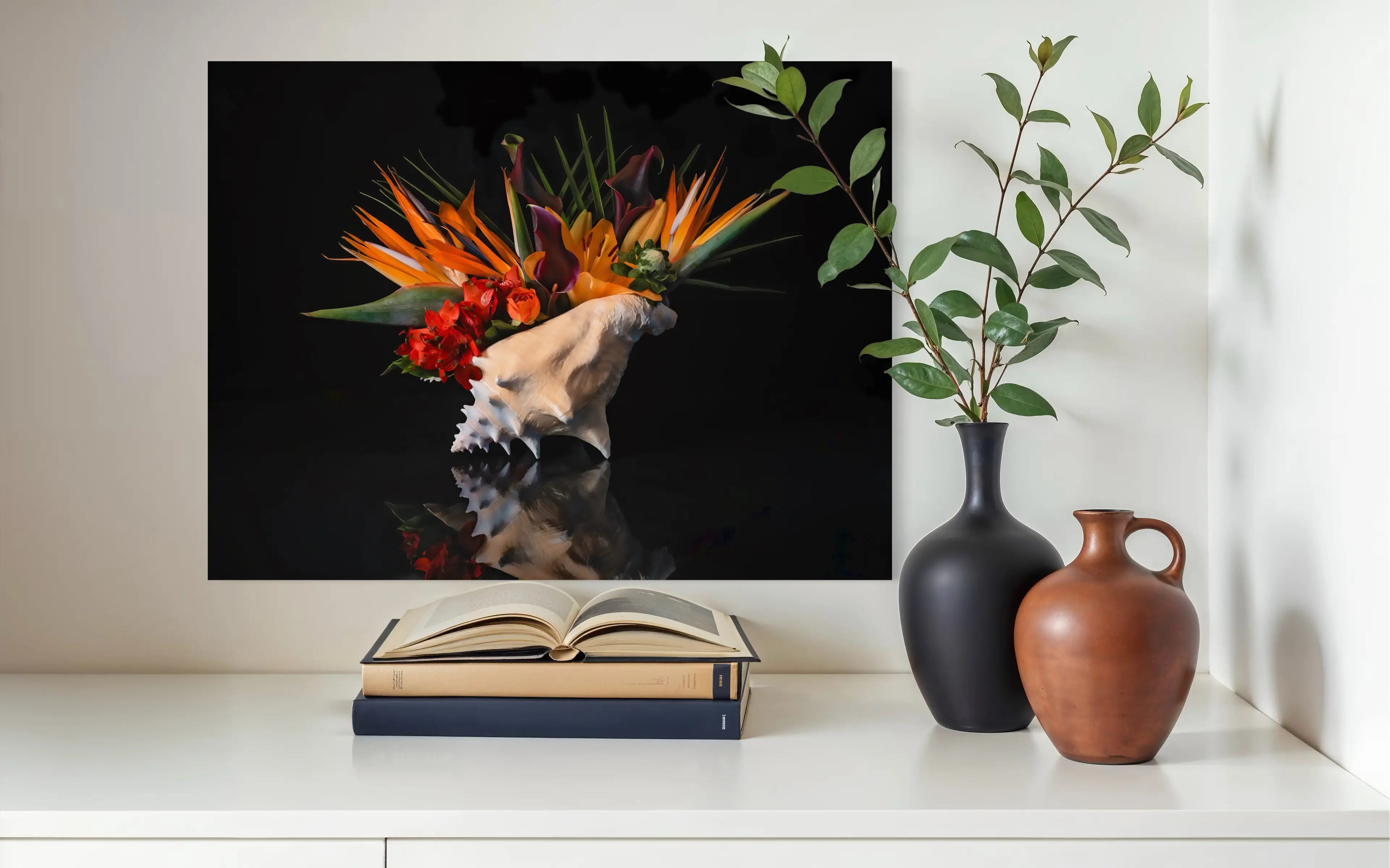
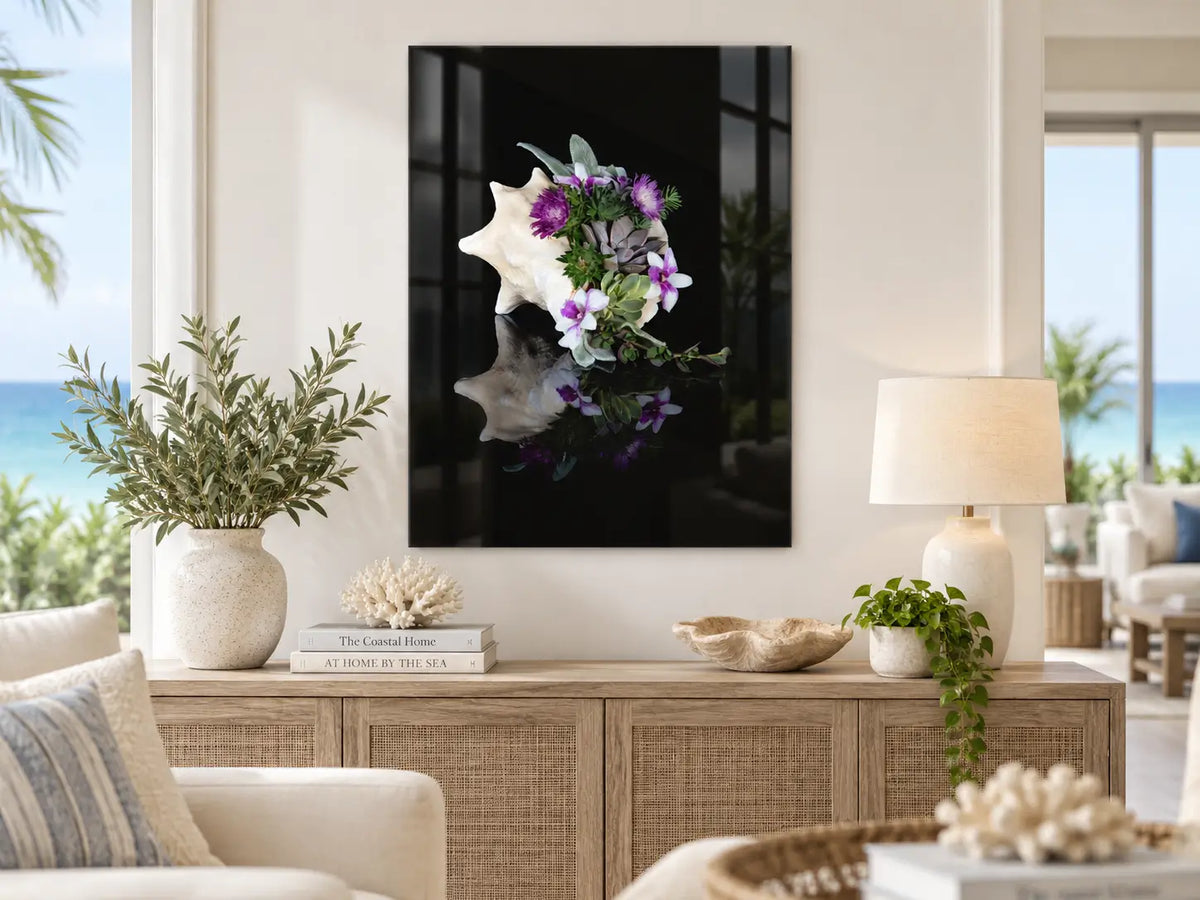
Each piece is printed directly onto real glass using eco-friendly UV inks for rich color, lasting clarity, and fade resistance. Dark backgrounds gain depth, pale shells become more luminous, and subtle reflections allow the glass surface to interact gently with changing light throughout the room.
Made in the USA using eco-conscious materials and processes, the finished artwork keeps the shell’s natural form at the center without the visual weight of a traditional frame.
Styling Spiral Seashell Wall Art
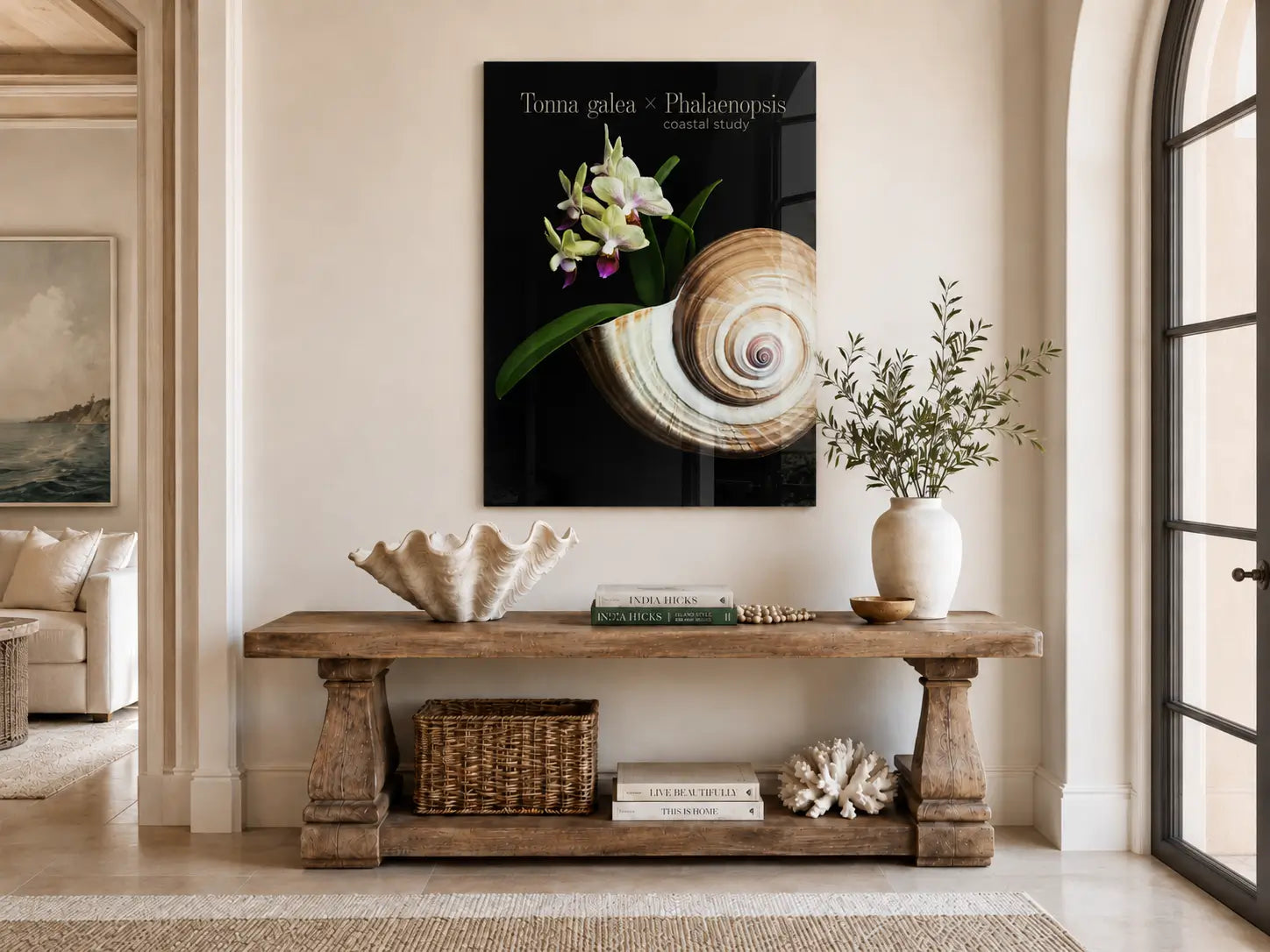
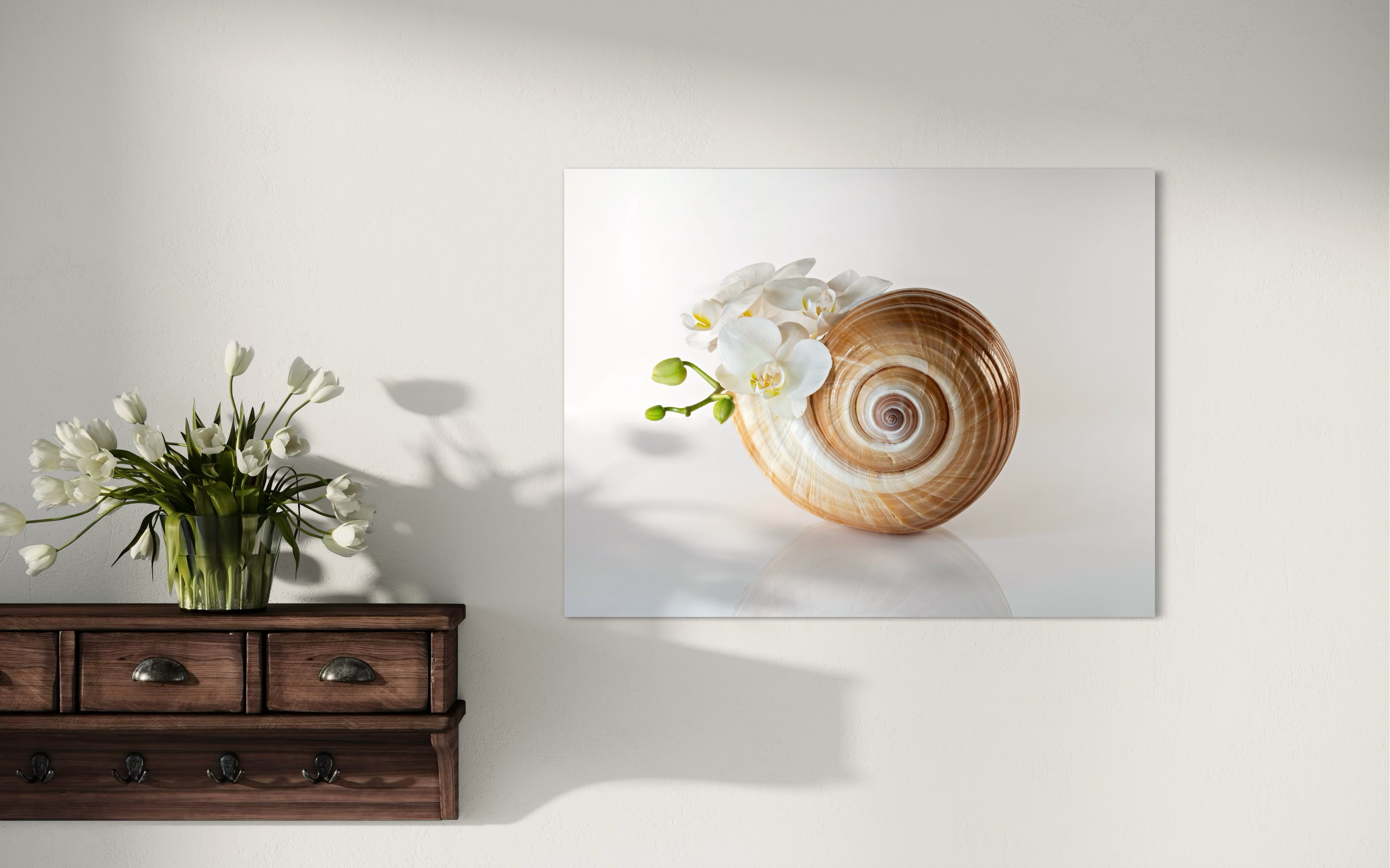
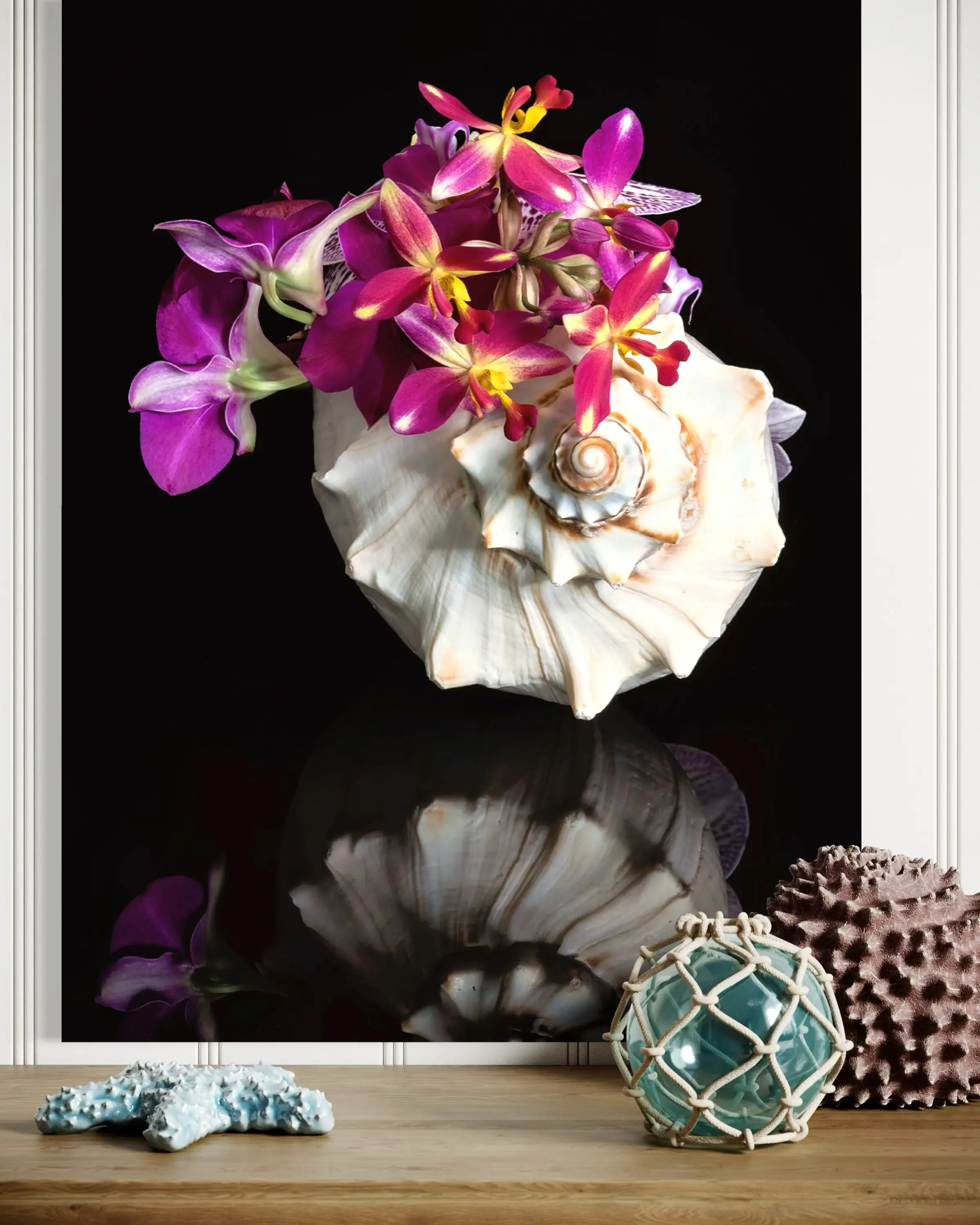
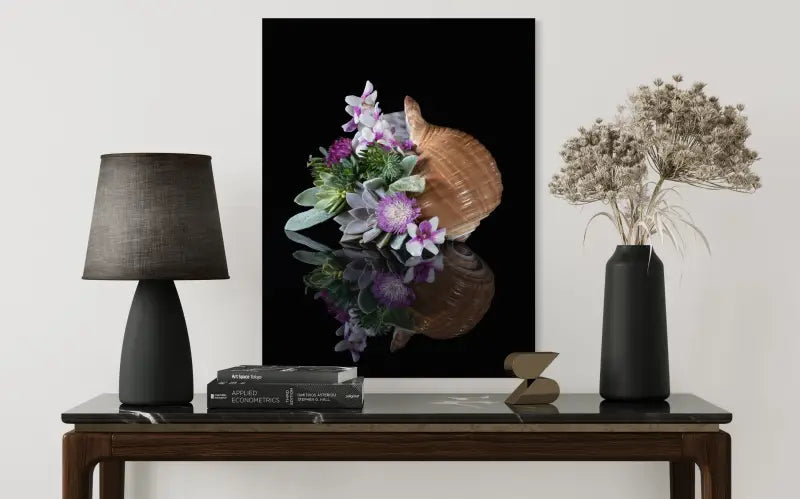
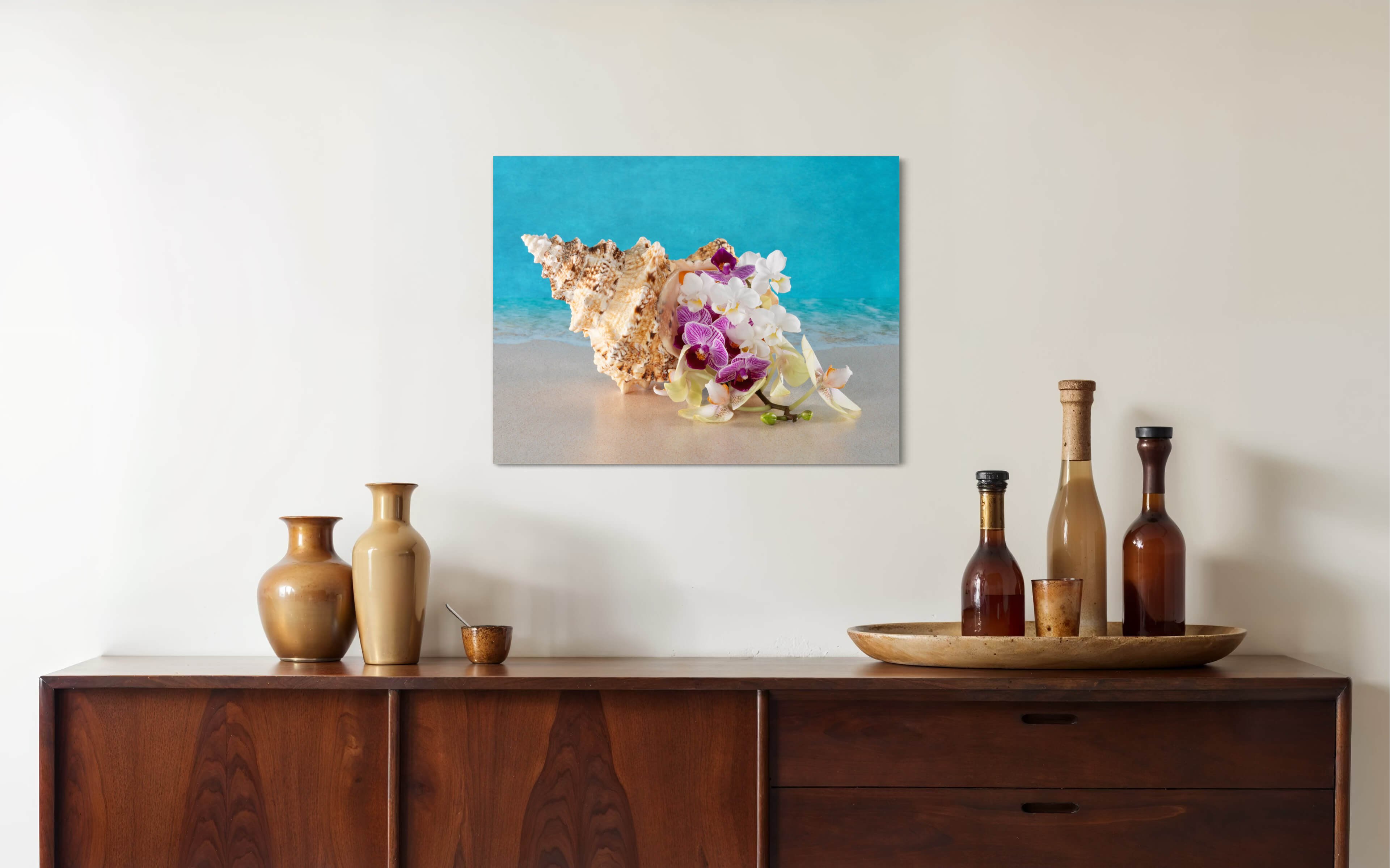
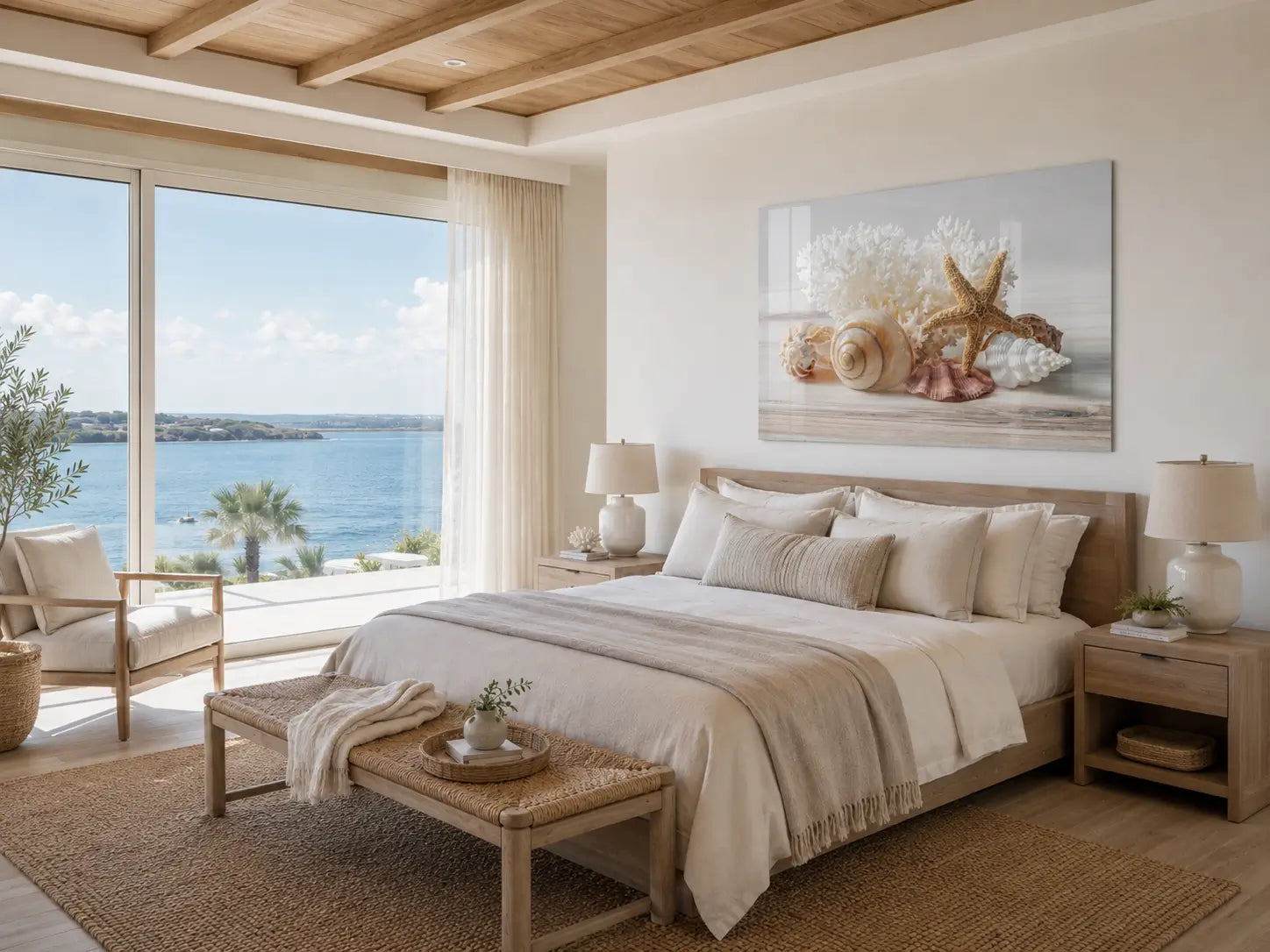
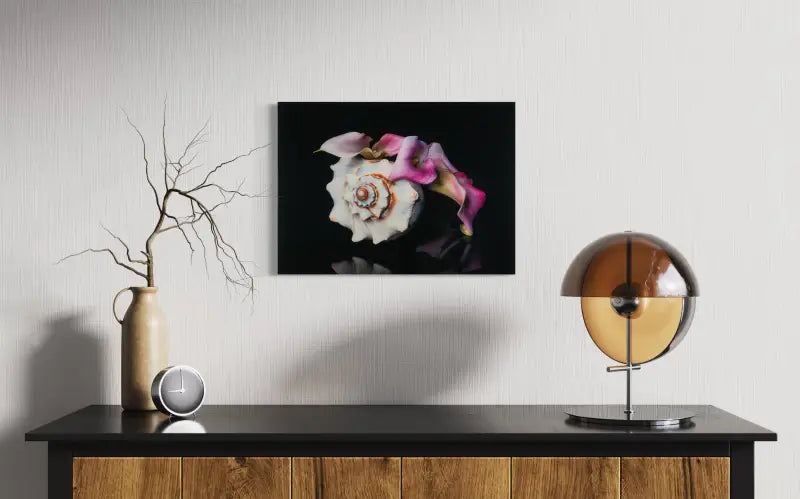
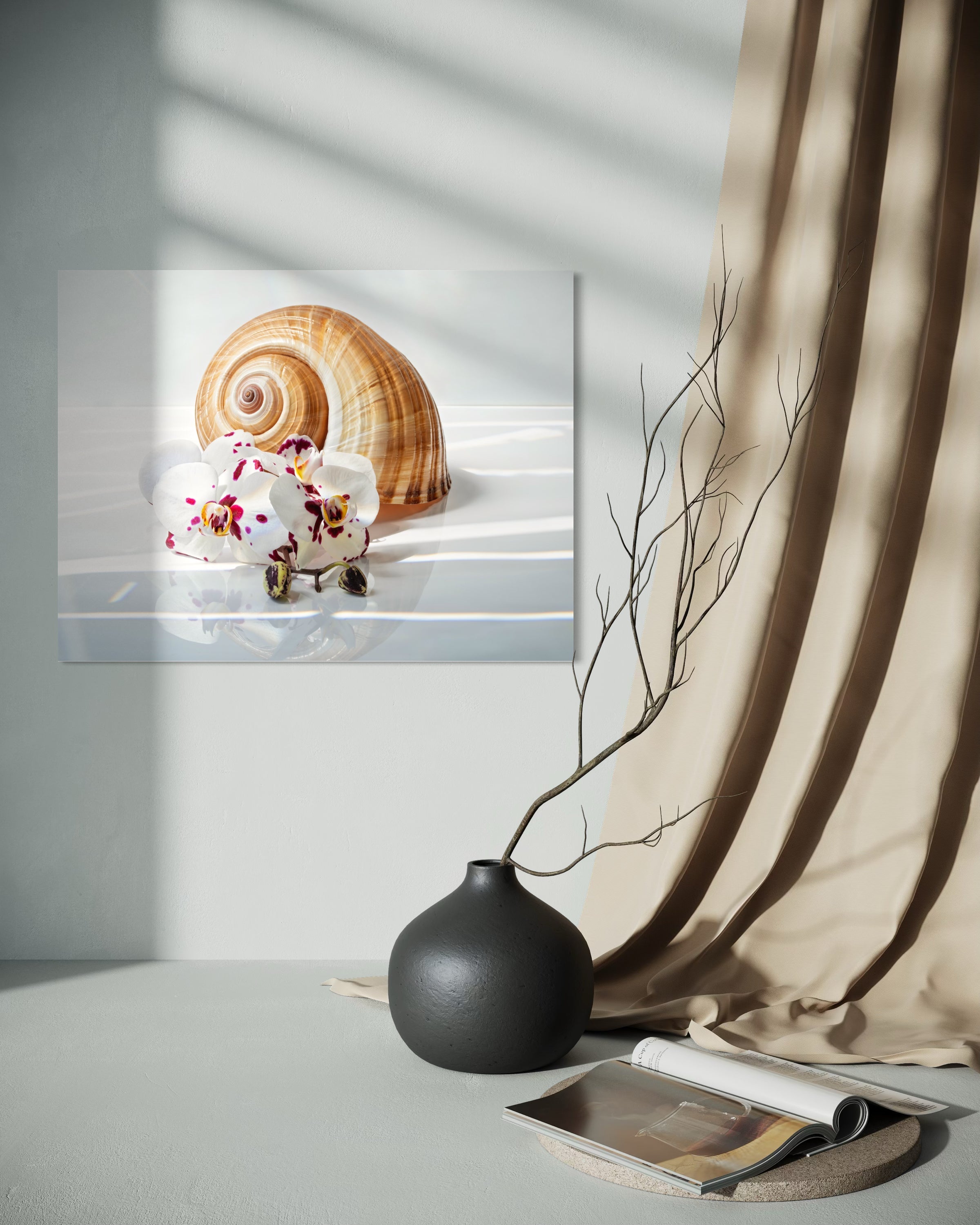
A spiral shell can feel coastal without making a room feel overtly nautical. A single nautilus or conch study can work almost like sculpture on the wall, while botanical shell compositions introduce a softer combination of coastal and organic forms.
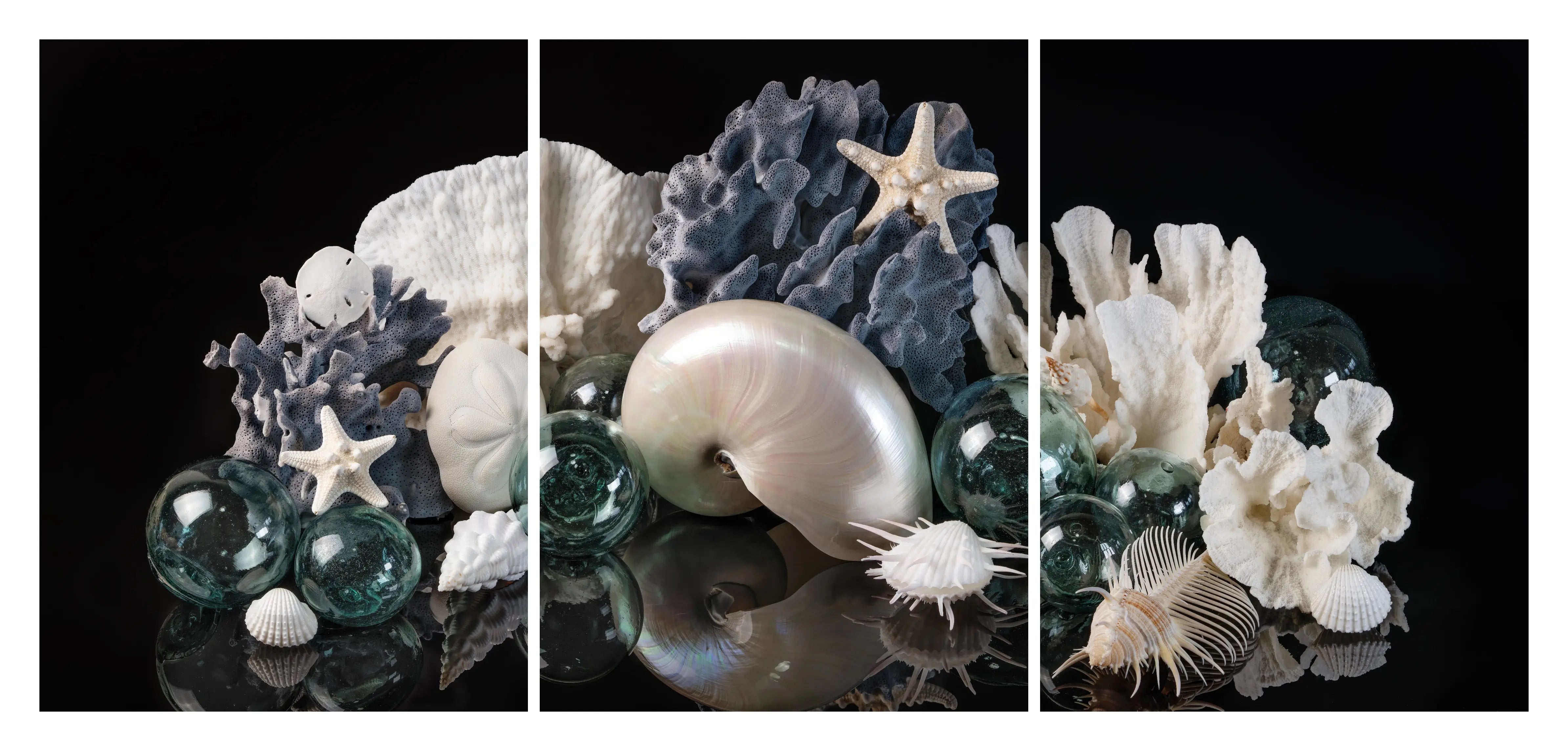
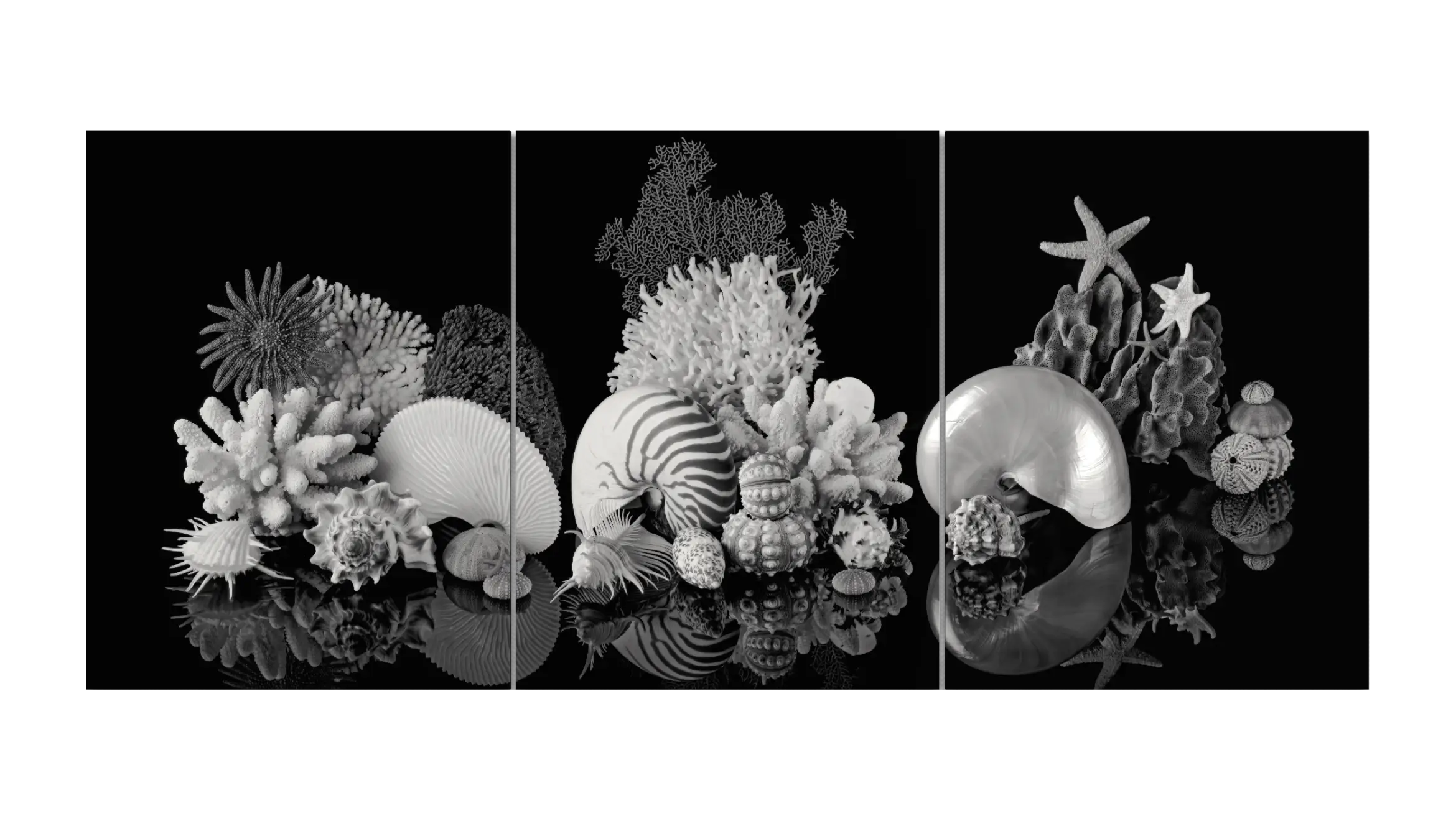
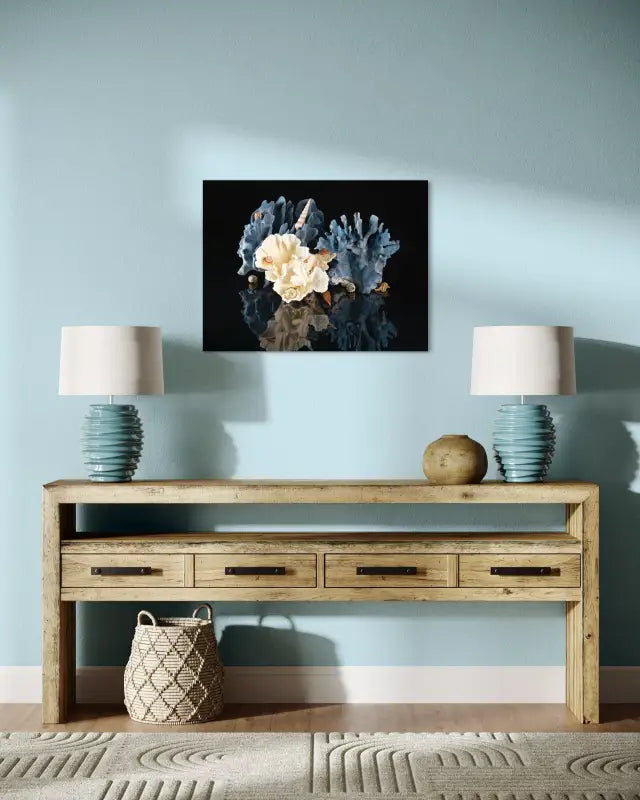
Black-background pieces create stronger contrast and work especially well with pale woods, linen, stone, warm neutrals, and contemporary interiors. Lighter compositions feel more relaxed and airy, while diptychs and triptychs allow spiral forms, shells, coral, and other coastal elements to extend across larger walls.
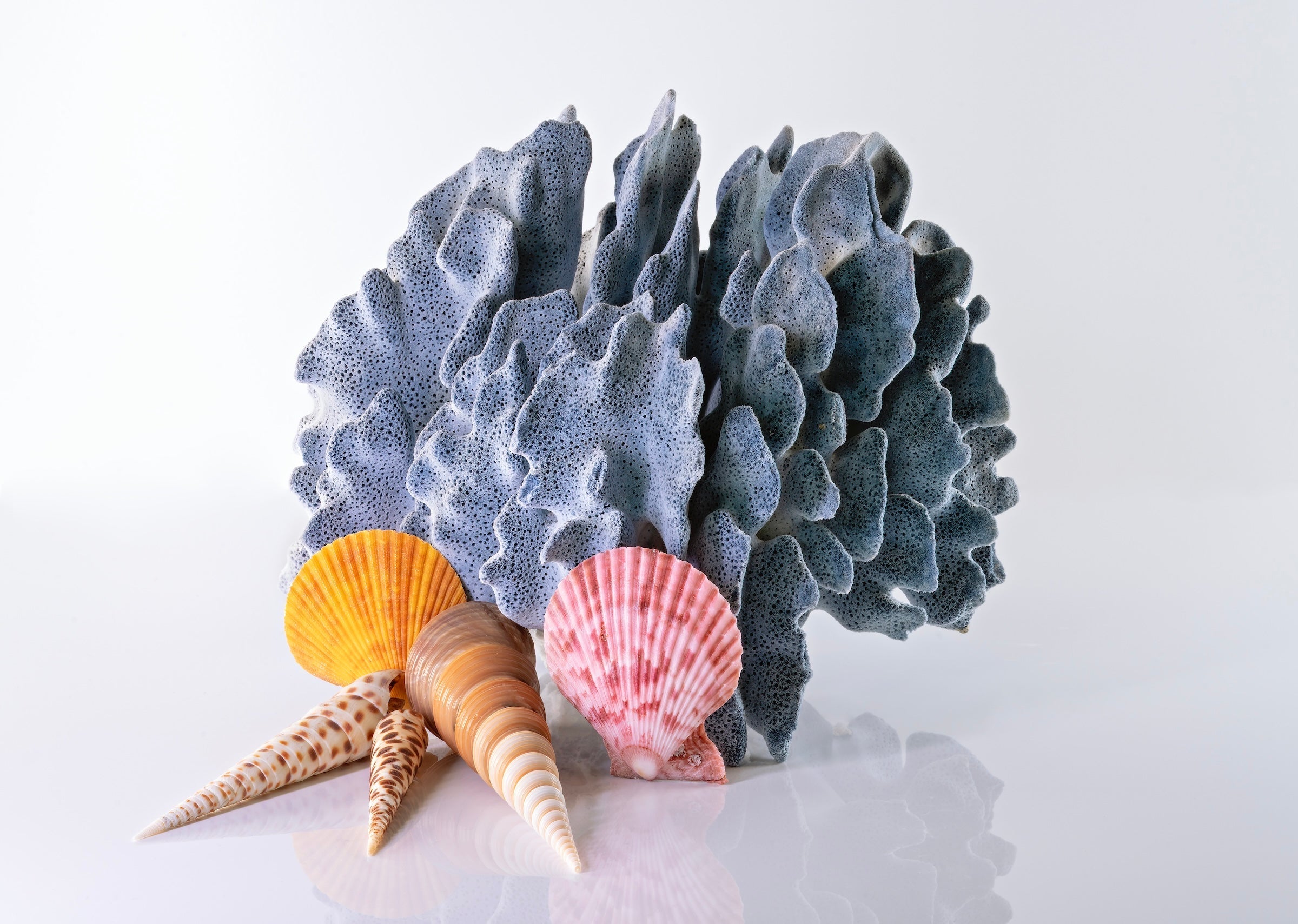
Spiral shell artwork also pairs naturally with Coral Wall Art, Sea Urchin Wall Art, and the broader Seashell Wall Art collection when you want to create a more layered story of forms found along the shore.
What Is Spiral Seashell Wall Art?
Spiral seashell wall art features shells whose growth creates curved, coiled, or expanding spiral forms. Subjects can include nautilus shells, conchs, tun shells, moon snails, sundial shells, and other spiral shells shown individually or combined with coral, botanicals, sea urchins, driftwood, and other coastal elements.
At Echoes of the Sea, spiral shell artwork includes original photography, digitally developed compositions, botanical coastal art, black-and-white studies, and multi-panel designs printed primarily on luminous frameless glass.
About Echoes of the Sea
Spiral shells are among the coastal forms I return to most often because each one gives the eye somewhere to travel. The curve may be the first thing I notice, but then come the ridges, color, wear, reflections, and tiny variations that make that particular shell different from every other one.
I often combine them with coral, sea urchins, flowers, succulents, driftwood, and reflective surfaces because those relationships reveal even more of their shape and structure. Some compositions become almost like natural-history studies, while others are more atmospheric, botanical, or dramatic.
What connects them is my fascination with the way growth becomes visible in form.
Follow the Curve of the Sea
A spiral shell holds both movement and memory. Its curve records growth while its surface carries the marks of the environment around it.
Whether you are drawn to the sweeping chambers of a nautilus, the sculptural form of a conch, or the quieter curve of another shell, choose the piece that makes your eye want to follow the spiral a little farther.