

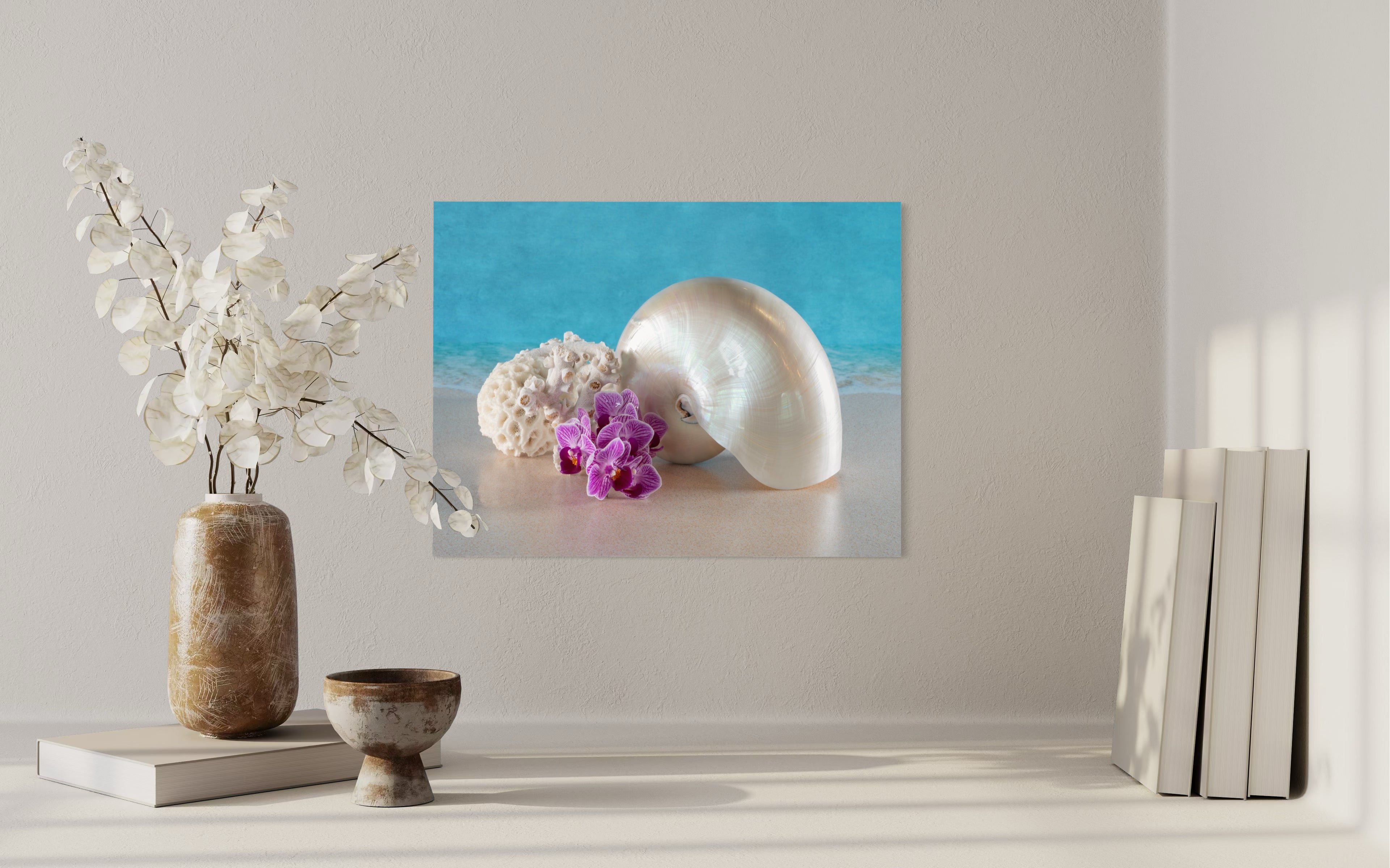
Nautilus Shell Art — Meaning, Growth & Transformation
The nautilus is more than a beautiful shell. Its chambered structure has made it an enduring symbol of growth, continuity, transformation, and moving forward while carrying the past with us.
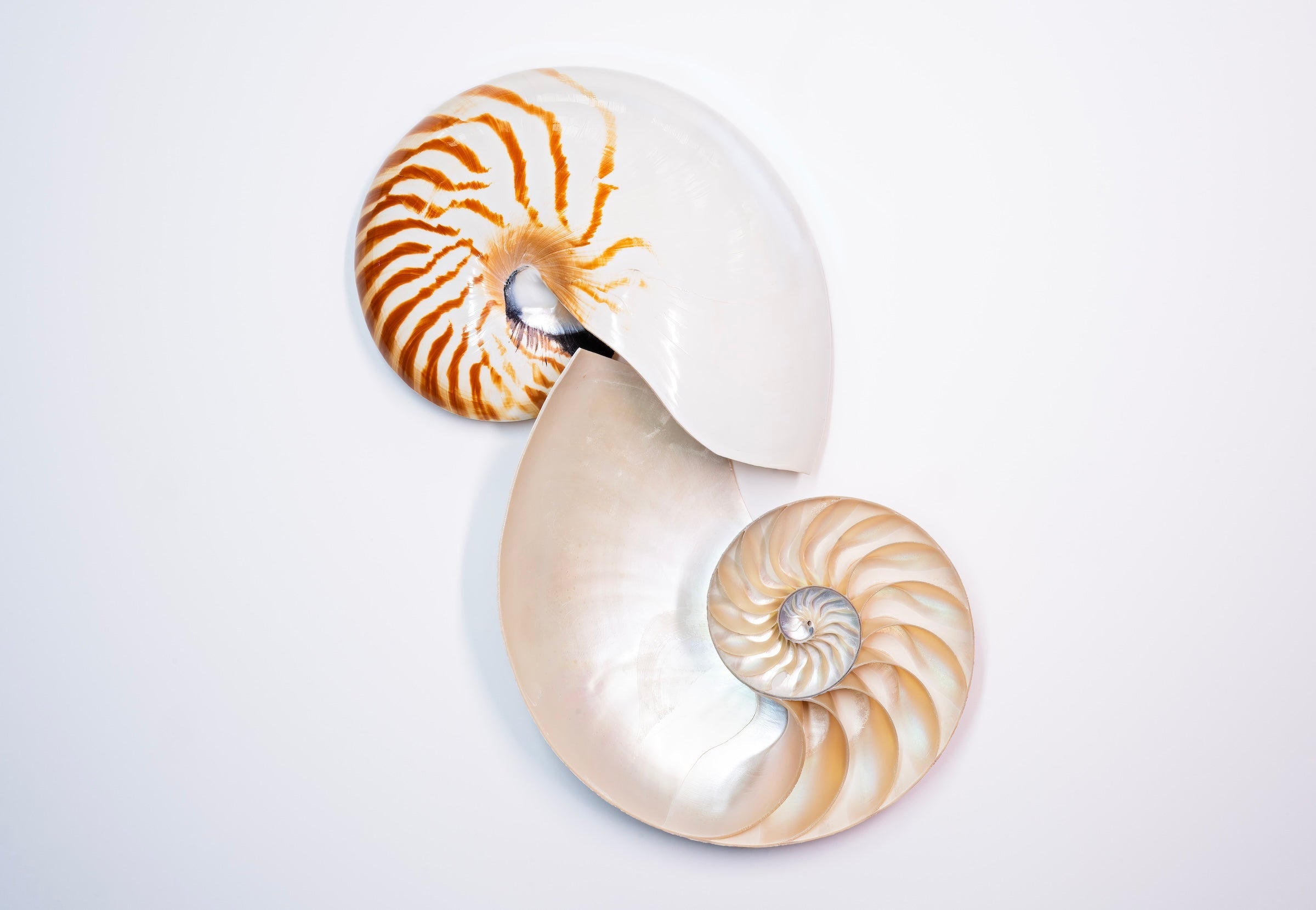
As a nautilus grows, it creates new and larger chambers, moving into the newest one while the earlier chambers remain part of the shell behind it. That extraordinary structure gives the spiral an emotional meaning as compelling as its visual one: life expanding outward, one stage becoming part of the next.
For that reason, nautilus shell art can hold particular meaning when chosen for a new home, a milestone, a new beginning, or someone entering another chapter of life. Explore Gifting with Meaning: The Art of the Nautilus Spiral for a deeper look at why the nautilus can become such a thoughtful symbolic gift.
The Nautilus, Fibonacci & the Golden Ratio
Few natural forms are as closely associated with the Fibonacci spiral as the nautilus. The expanding chambers of the shell echo the spiral geometry associated with the Fibonacci sequence and golden ratio—one of the many reasons this remarkable form has fascinated artists, mathematicians, designers, and nature lovers for generations.
A real nautilus does not need to form a mathematically perfect golden spiral for that relationship to be fascinating. Nature is more varied than a geometry diagram. What makes the shell extraordinary is the way biological growth creates proportion, repetition, expansion, and a remarkably coherent spiral form.
In that sense, the nautilus gives us something even more interesting than mathematical perfection: growth made visible.
For a closer look at Fibonacci numbers, spiral geometry, shells, plants, storms, and other patterns in the natural world, read Why the Fibonacci Spiral Is Nature’s Most Beautiful Pattern.
Why Natural Patterns Feel So Calming
Part of our attraction to the nautilus may come from the way the eye moves through its repeating structure. The curve leads naturally from one chamber to another, creating enough order to feel harmonious without the rigid precision of something mechanically made.
We find similar qualities in branching coral, shell ridges, waves, leaves, and other repeating forms in nature. Pattern is present, but so are variation, irregularity, and change. The result can feel complex without becoming chaotic.
The relationship between natural pattern and the way we experience it is explored more deeply in Fractals in Nature: Why Shells, Coral, and Nautilus Patterns Feel So Calming.
Why Nautilus Art Looks Beautiful on Glass
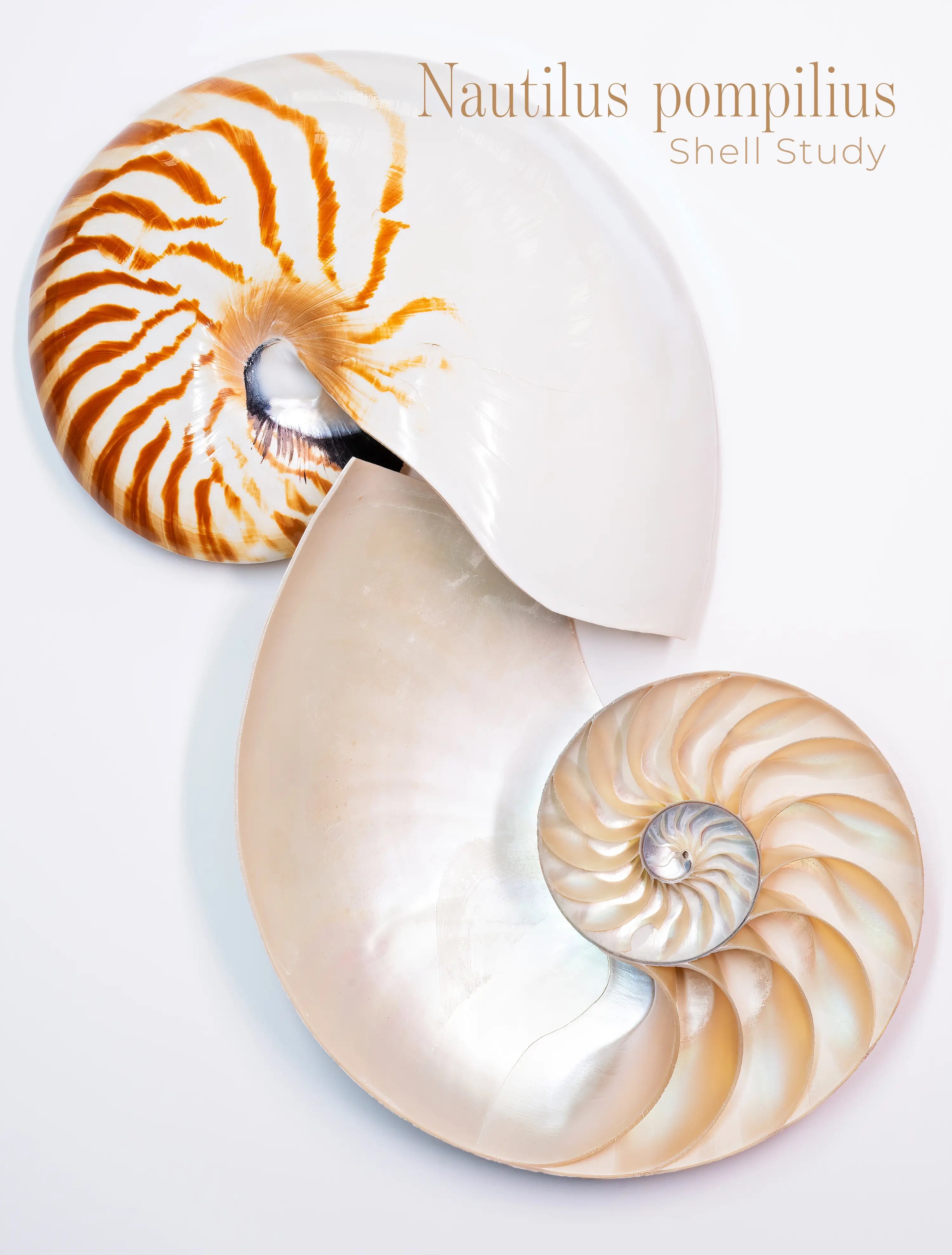
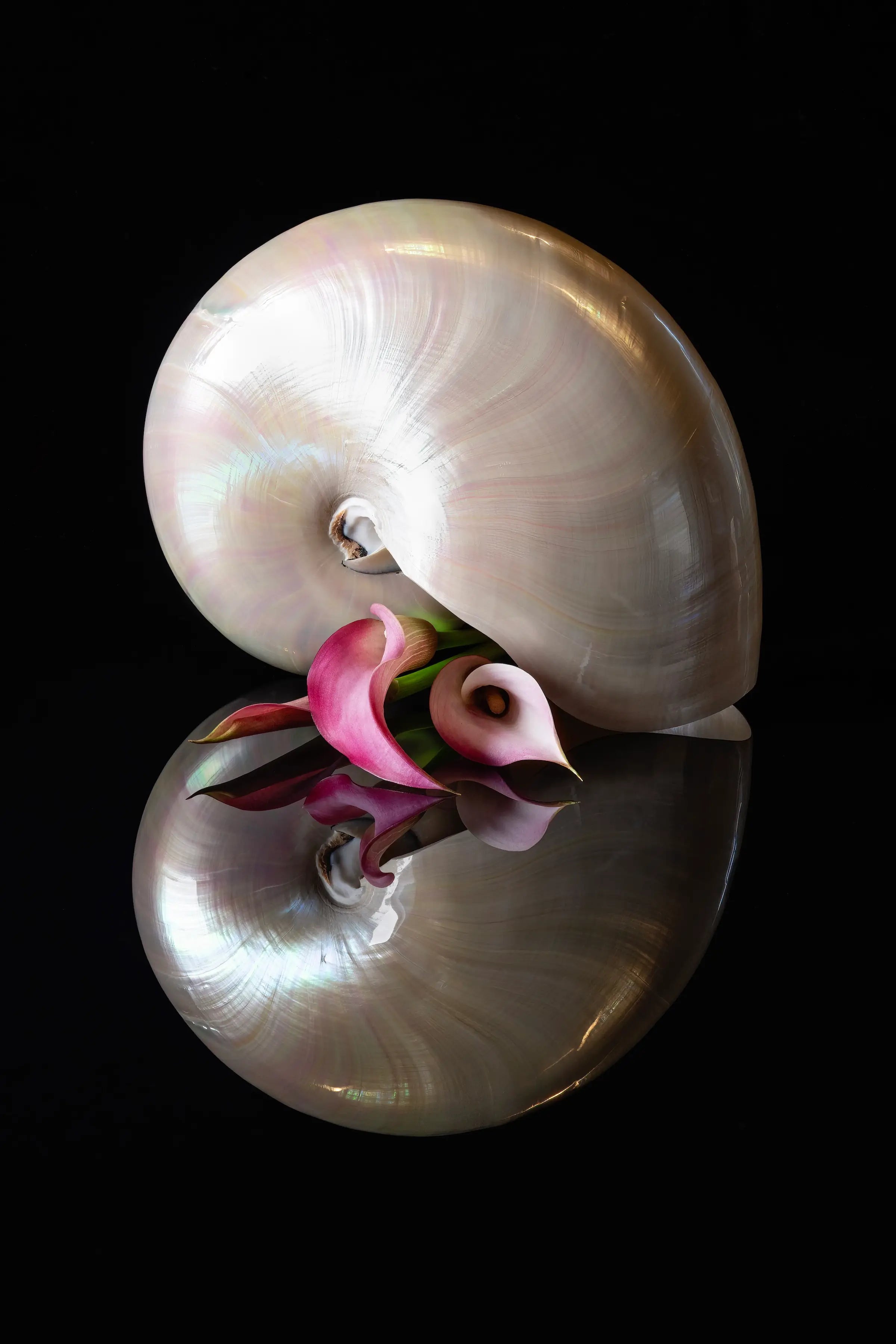
A nautilus contains details that are easy to overlook at first—the fine ridges along the shell, subtle changes in pearlescence, chamber divisions, worn edges, reflections, and the gradual sweep of the spiral itself.
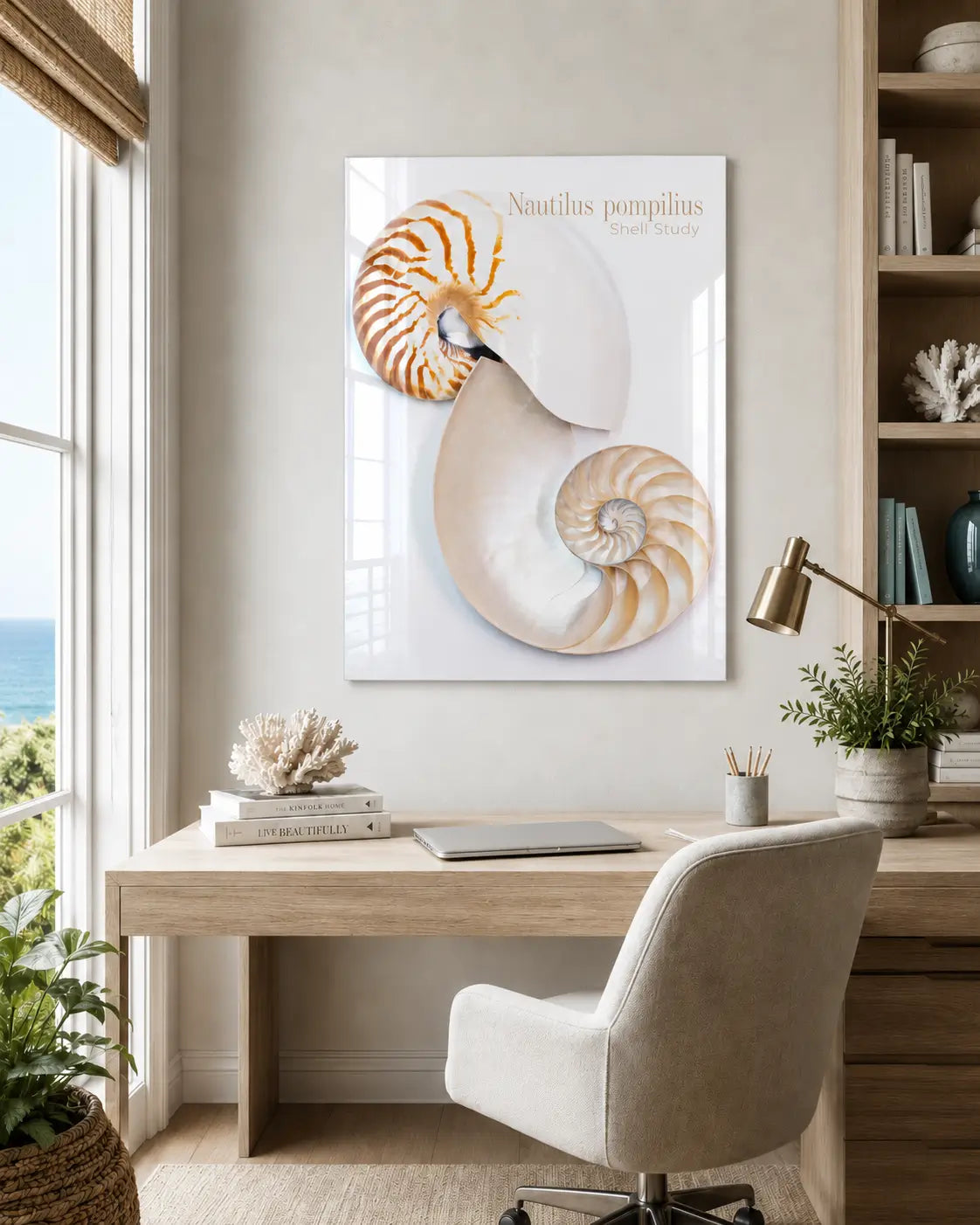
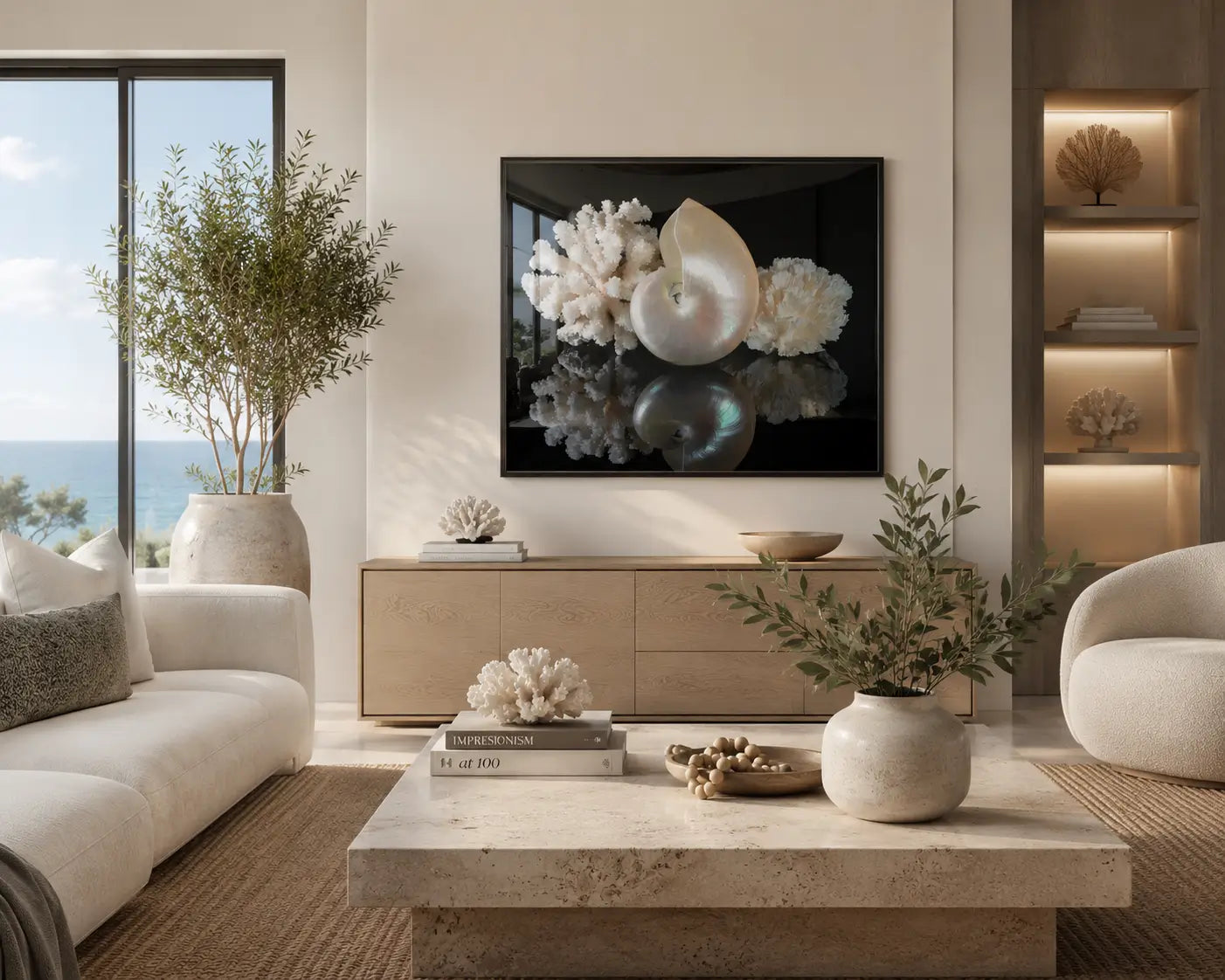
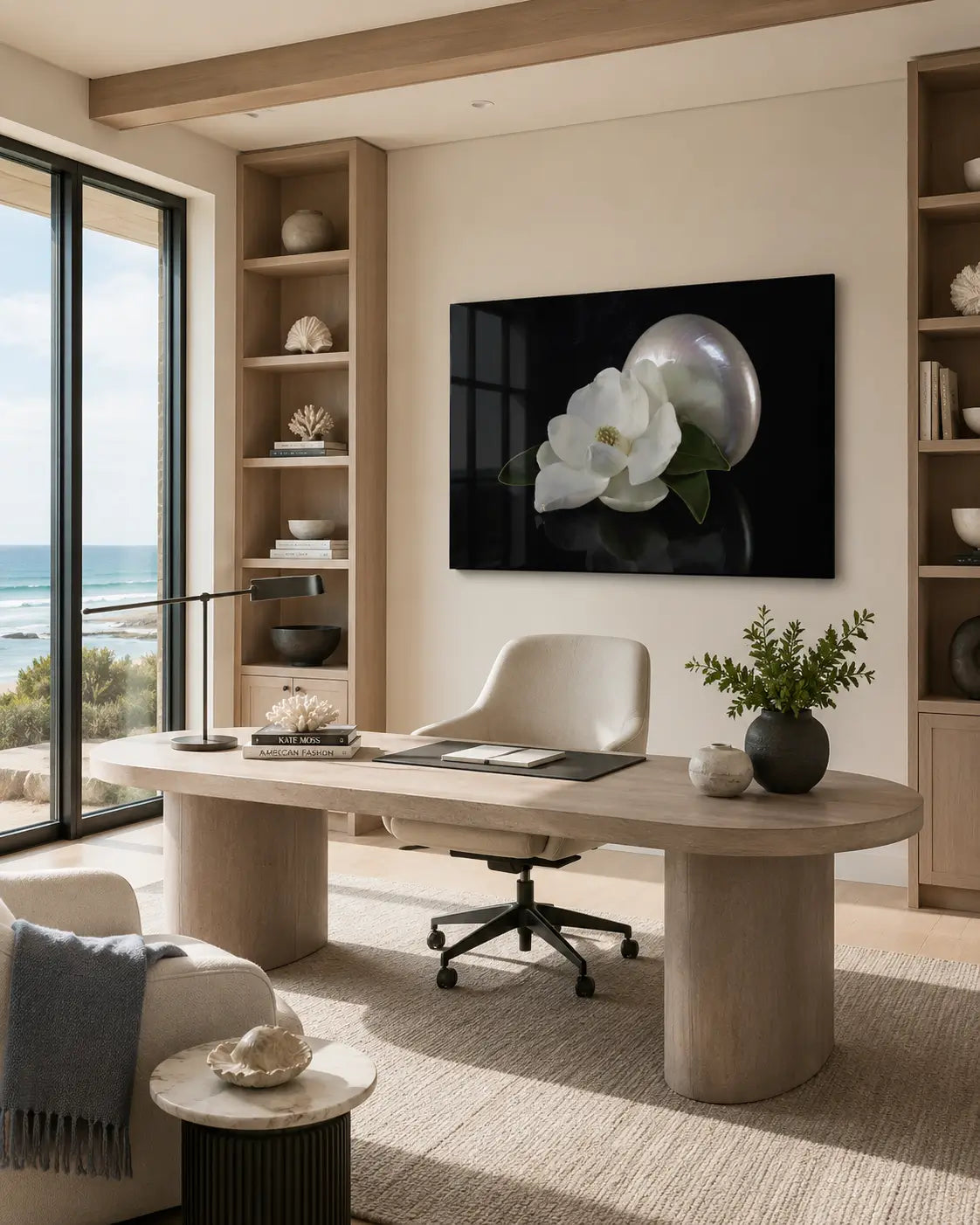
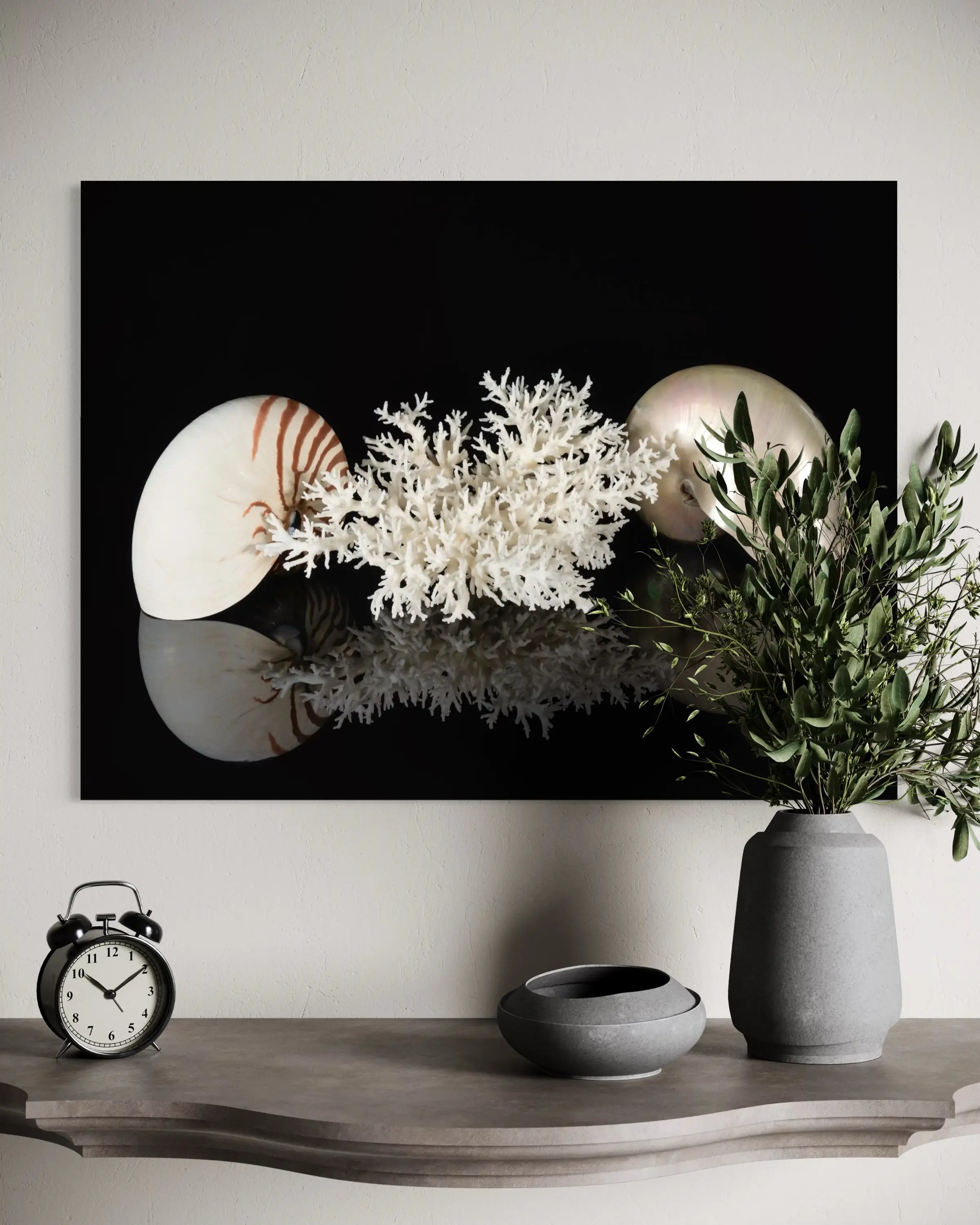
Printing directly onto real glass helps preserve those details. Dark backgrounds gain depth, pale shells appear more luminous, and the smooth frameless surface responds subtly to natural and interior light throughout the day.
Eco-friendly UV inks provide rich color, lasting clarity, and fade resistance, while the glass gives nautilus prints a clean, contemporary presence without the visual weight of a traditional frame.
Glass Prints & Acrylic Blocks with Coastal Depth
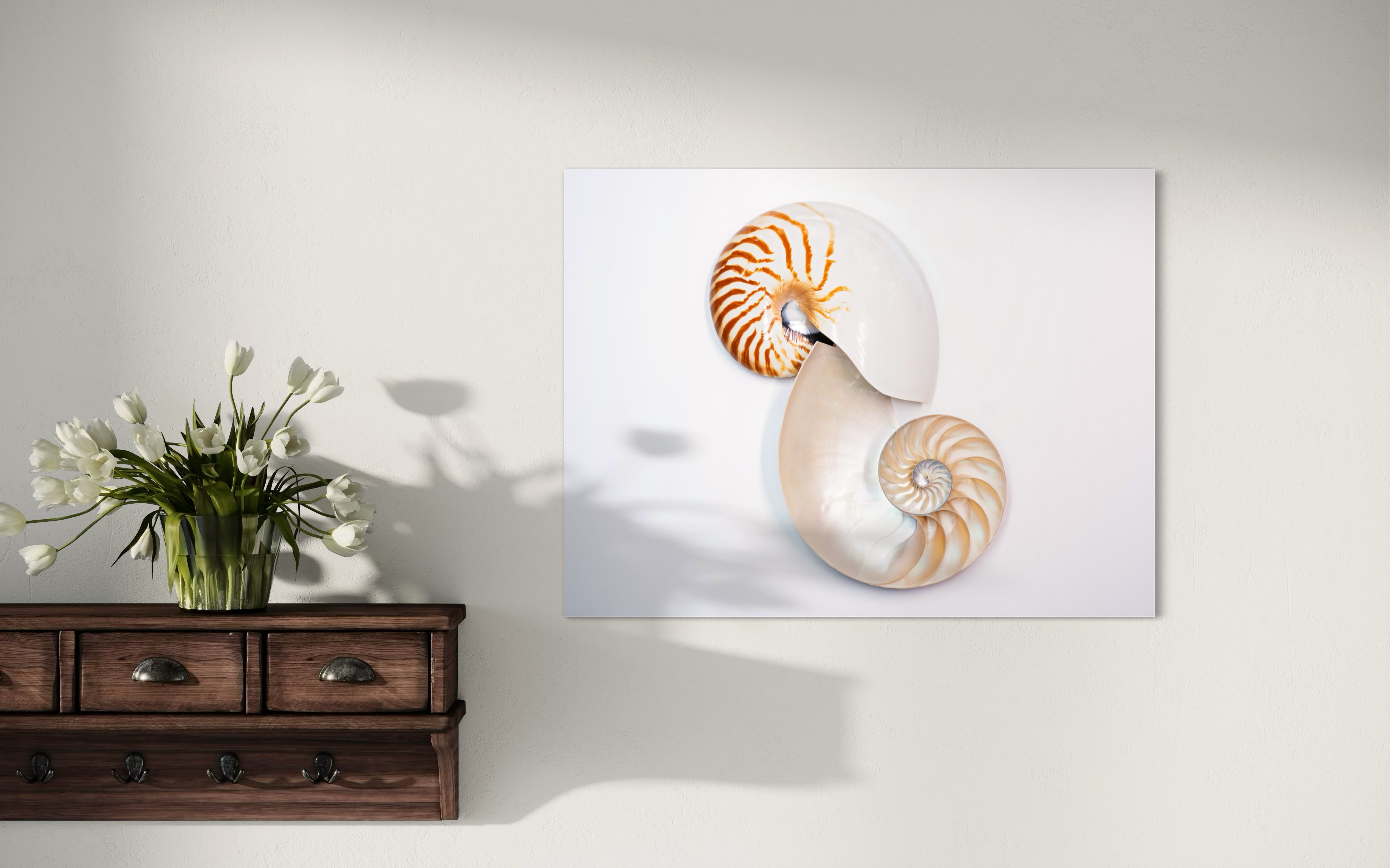
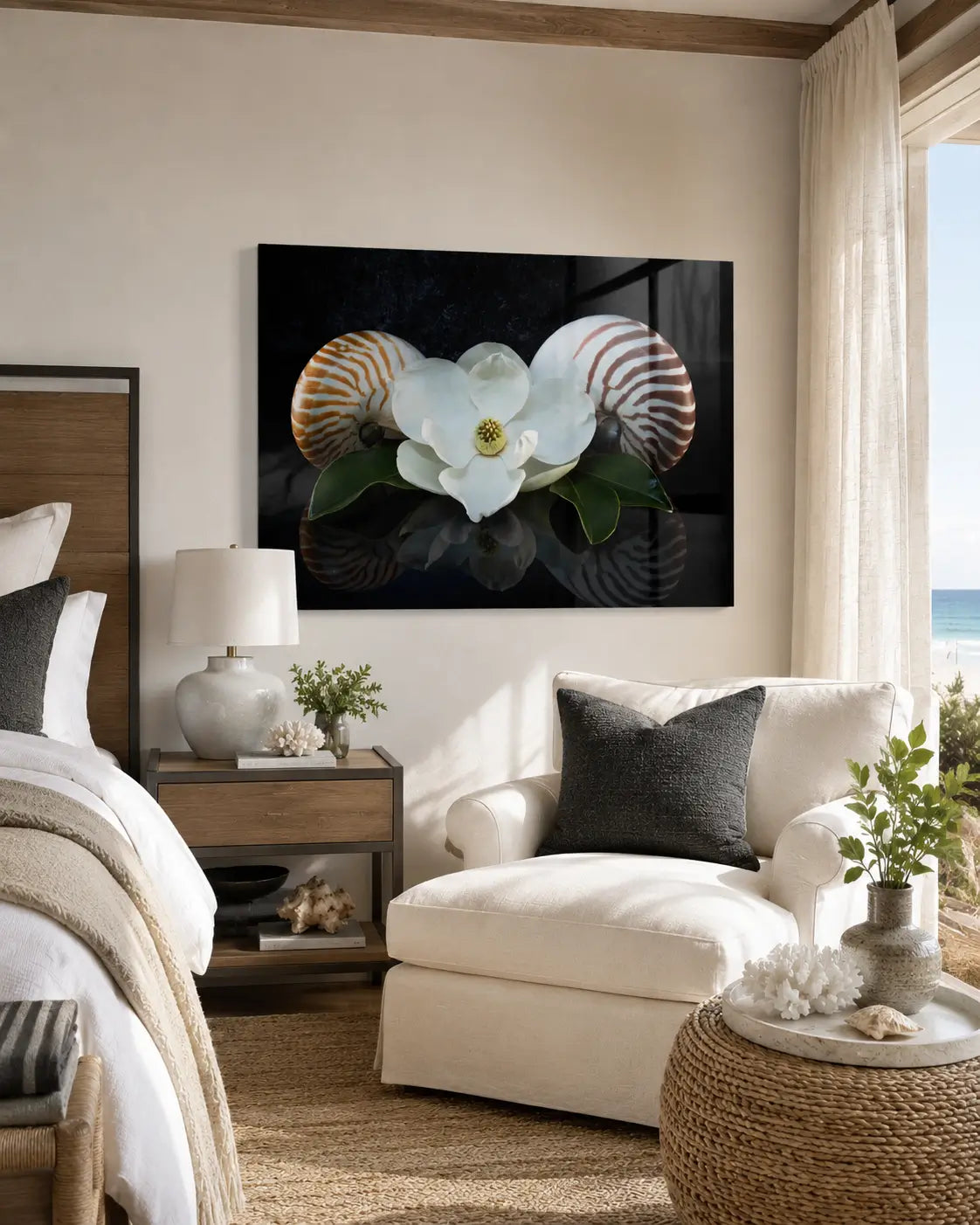
Most pieces in this collection are available as luminous frameless glass wall art designed for living rooms, bedrooms, offices, entryways, dining areas, and other interior spaces.
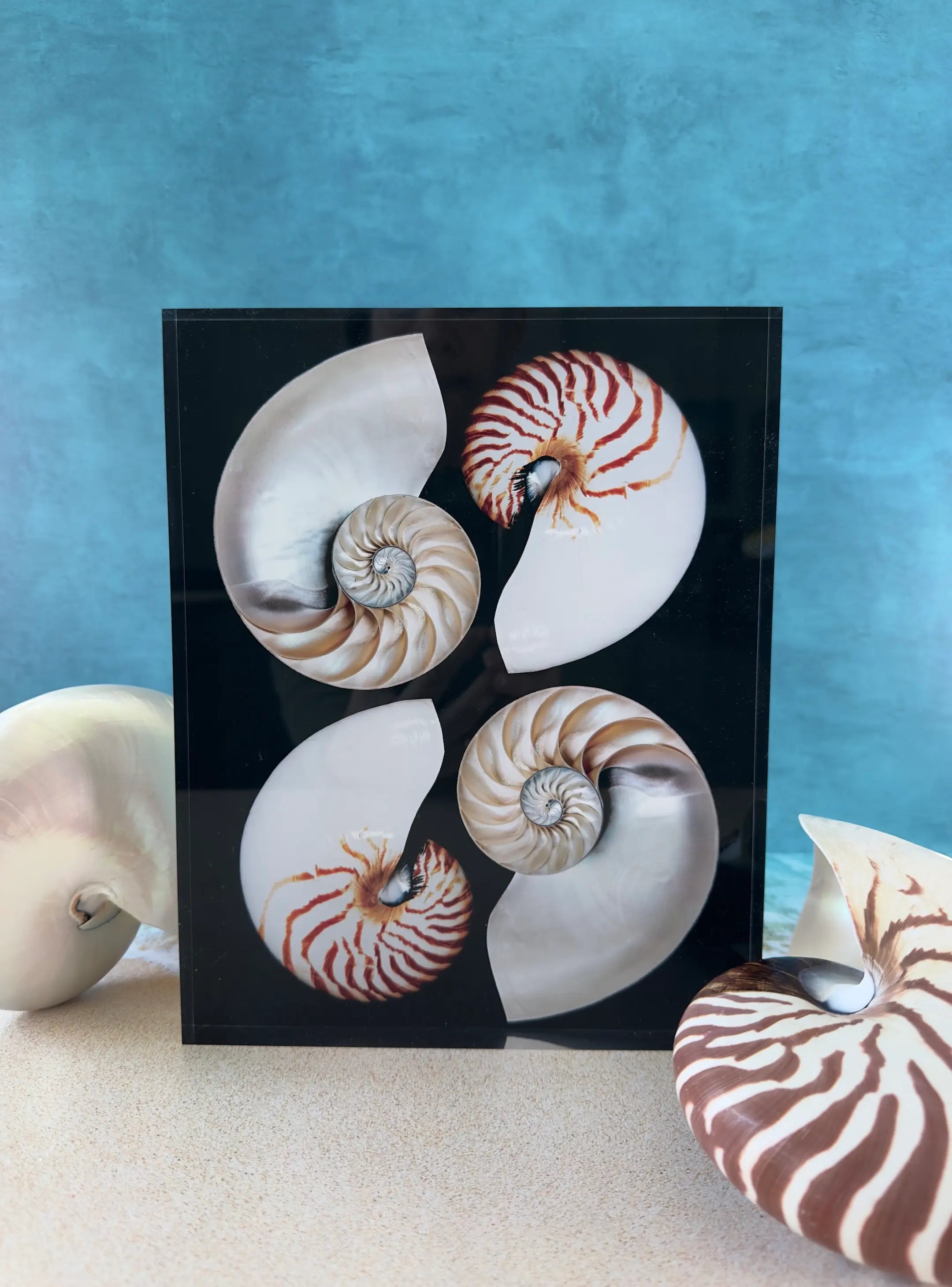
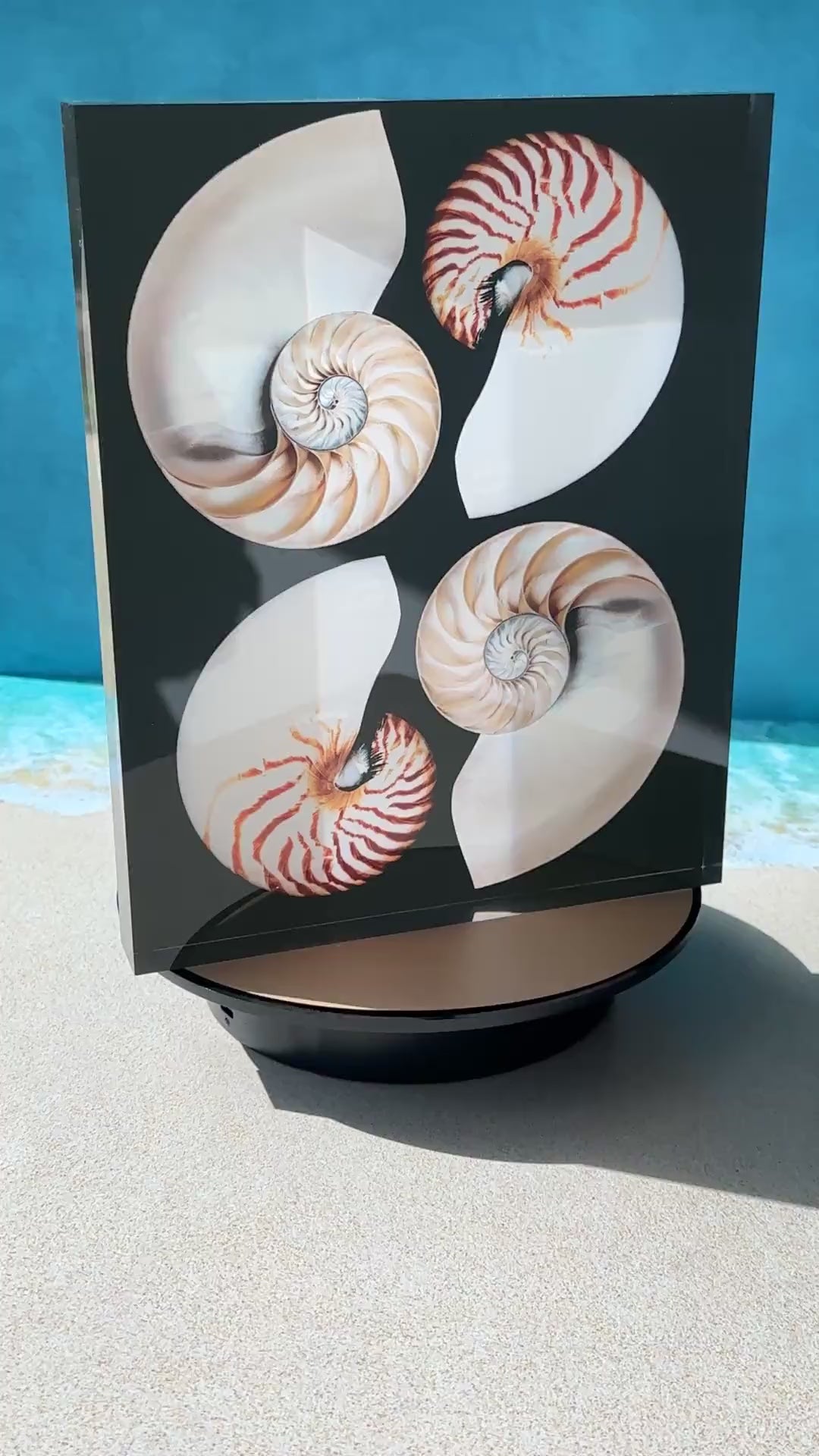
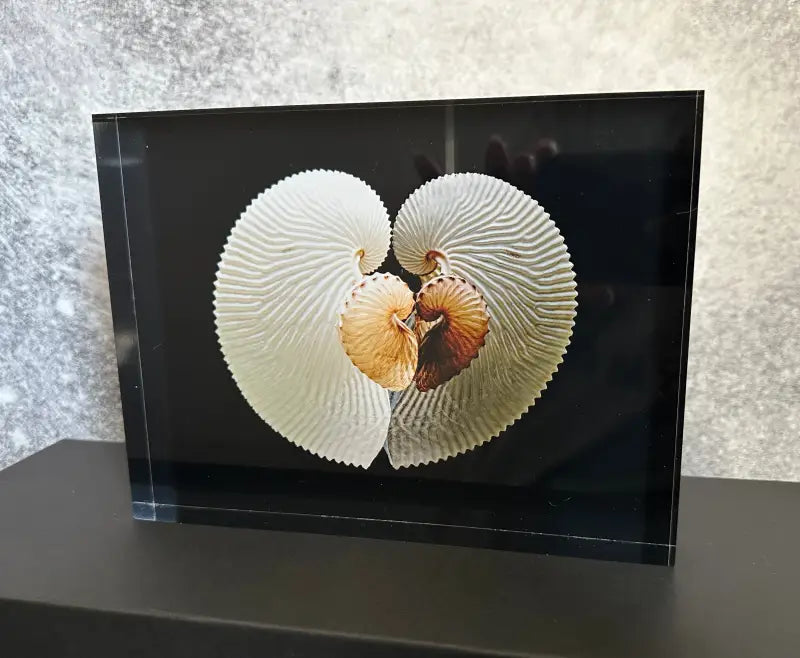
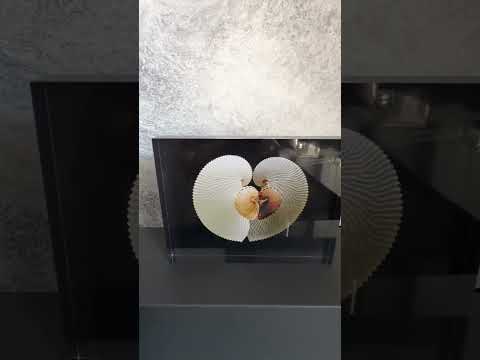
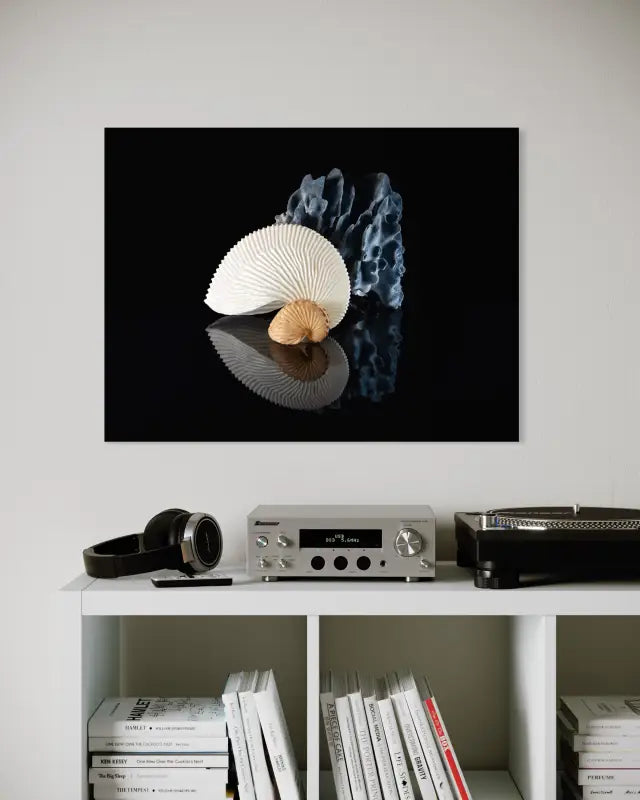
Select nautilus designs are also available as acrylic block prints. Their freestanding form makes them especially suited to desks, bookshelves, consoles, and smaller spaces where the shell can be viewed almost like a collected coastal object.
The two formats create very different experiences. Glass allows the spiral to become part of the architecture of a wall, while an acrylic block offers a smaller, more intimate way to appreciate the shell’s pattern and structure.
Nautilus Art in Different Styles
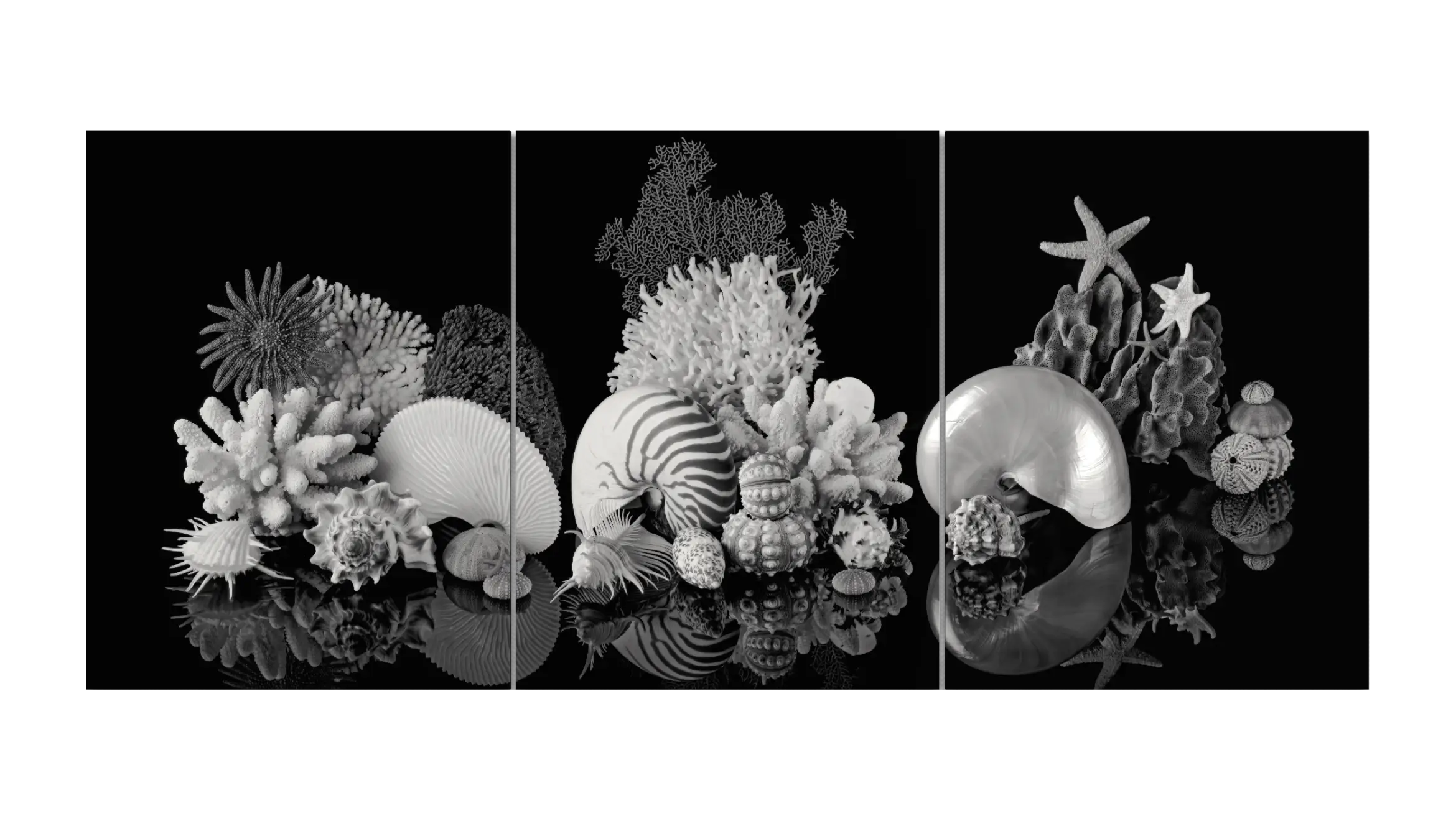
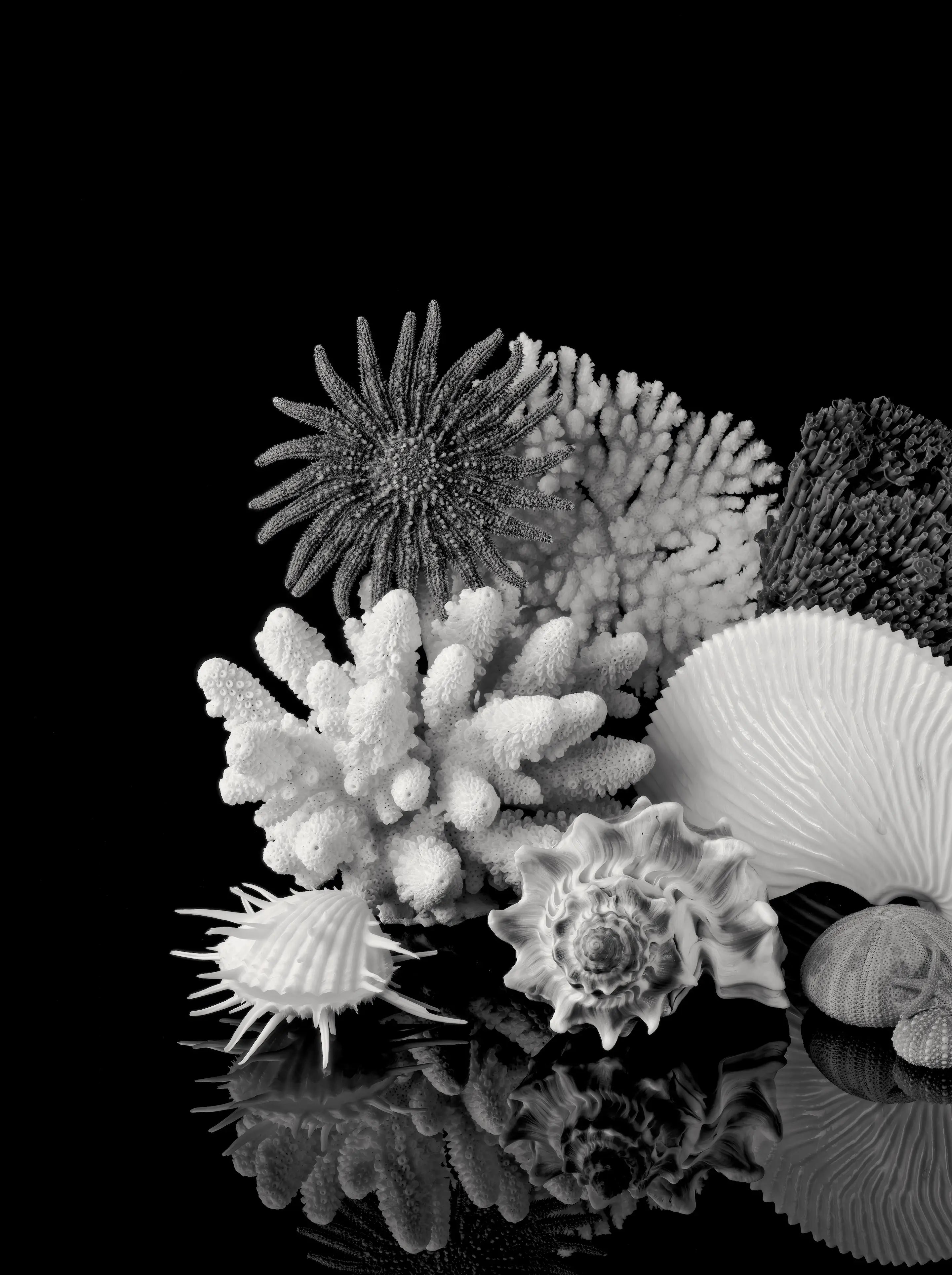
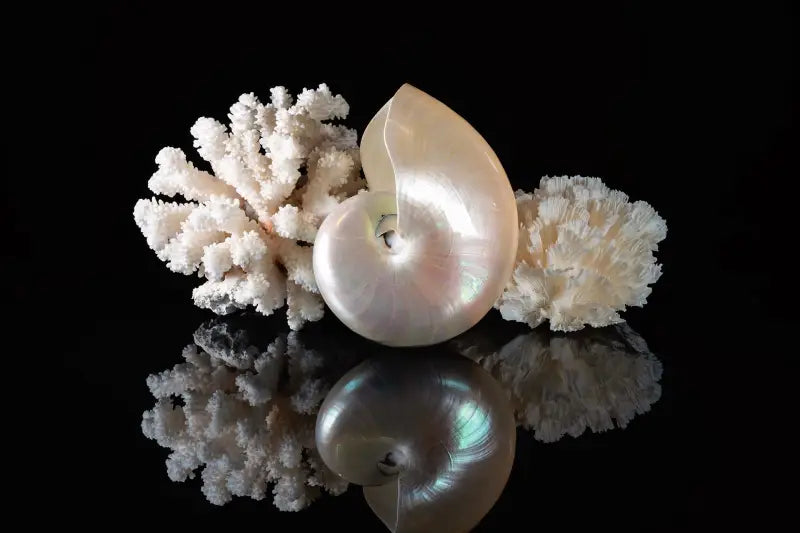
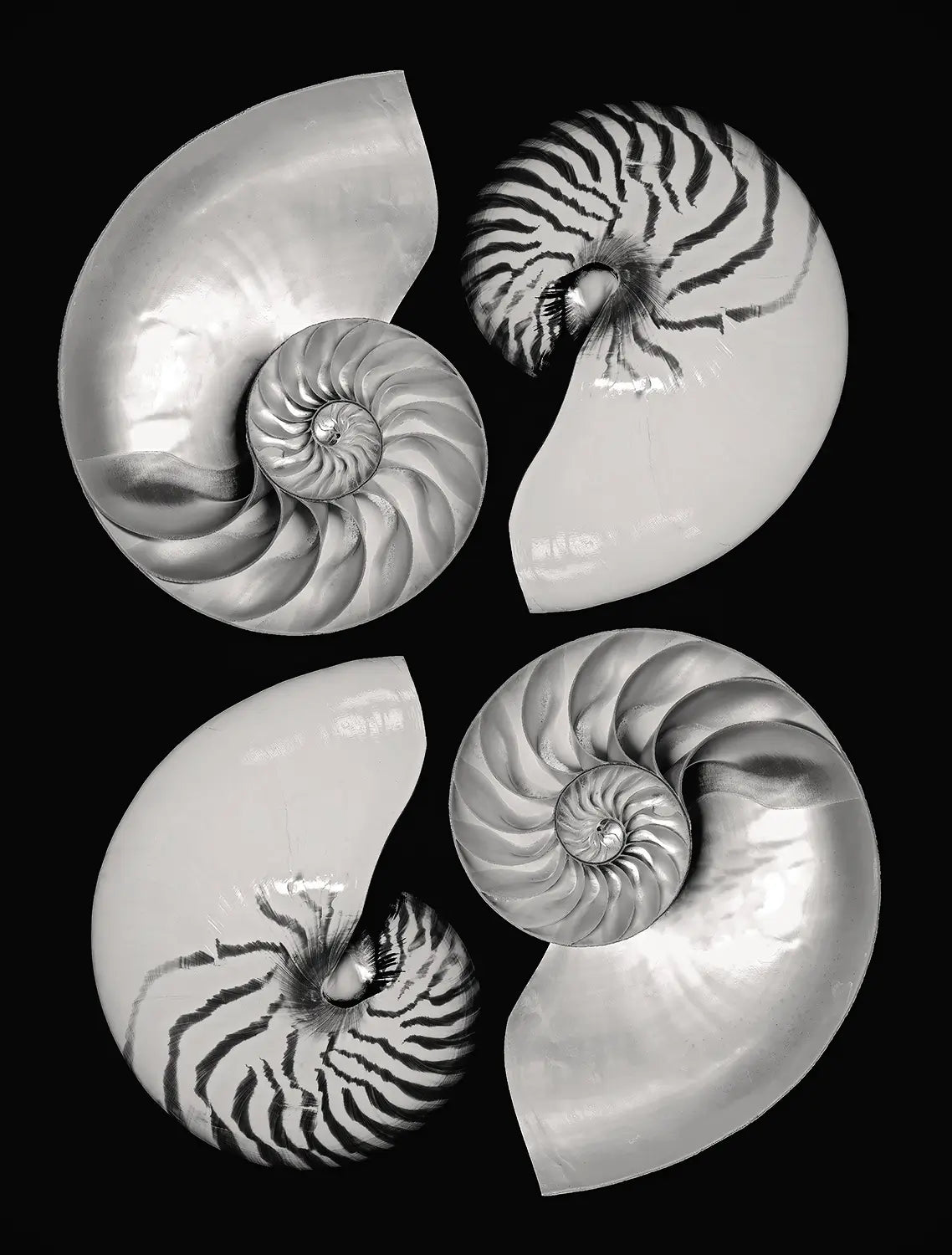
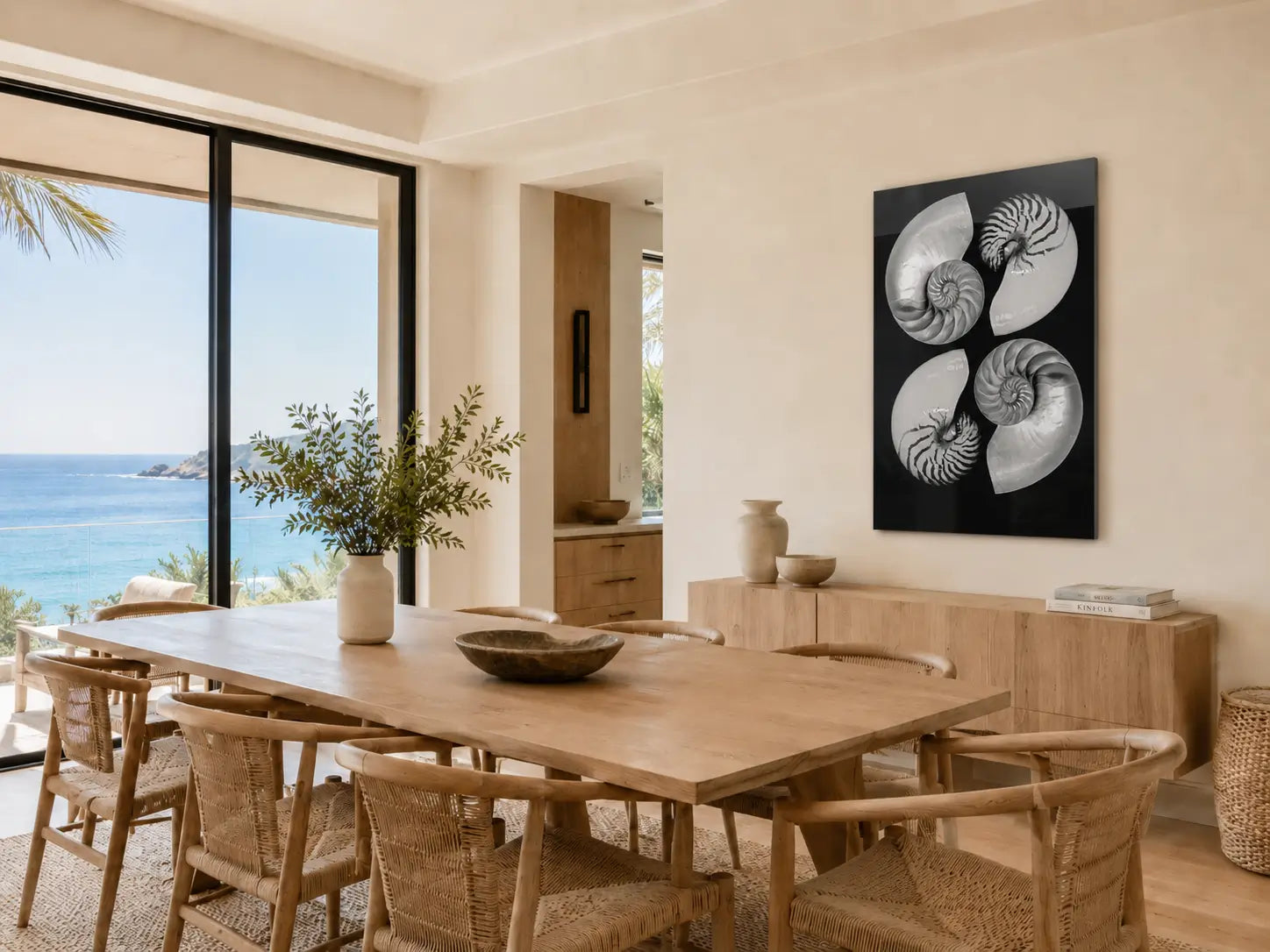
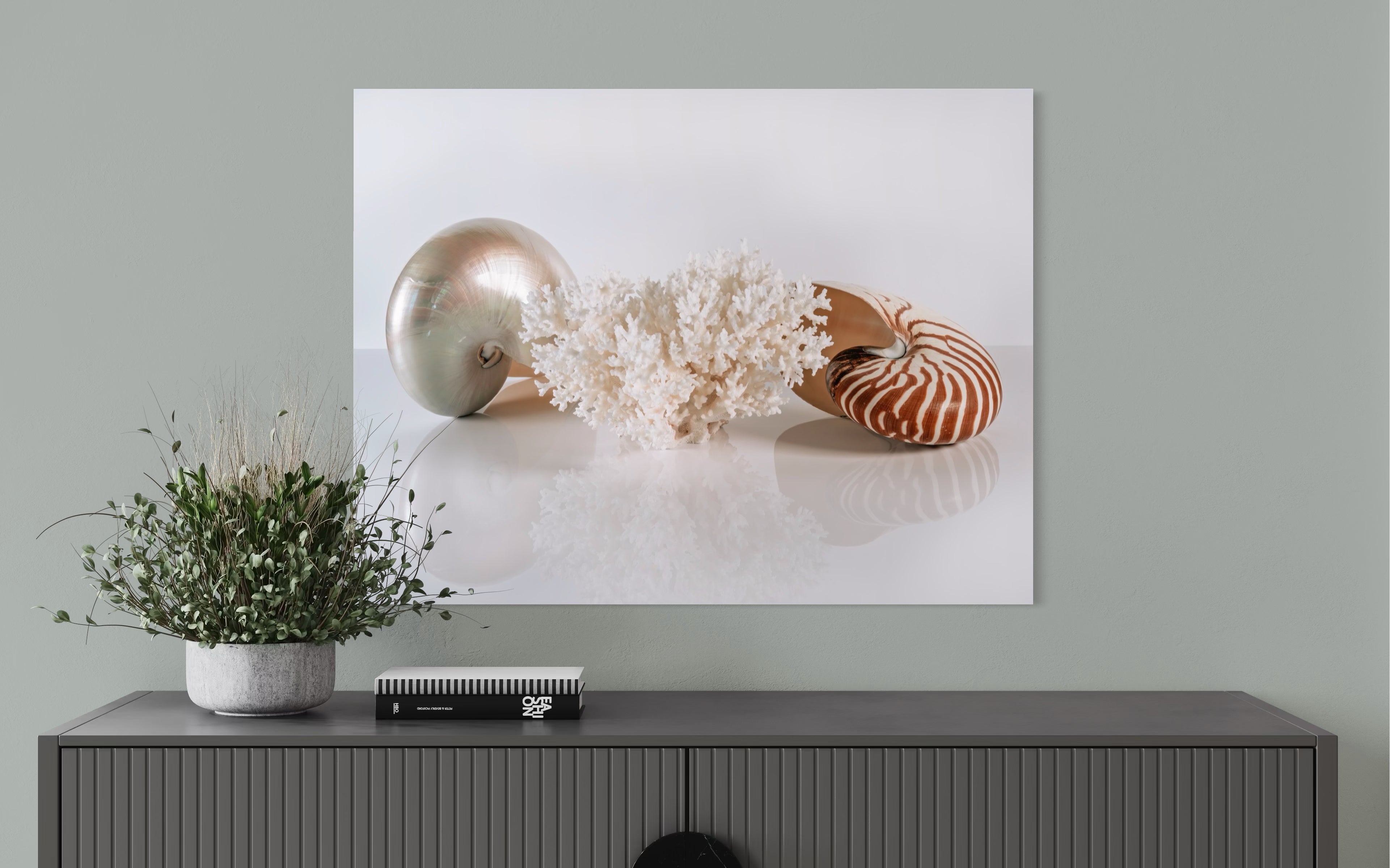
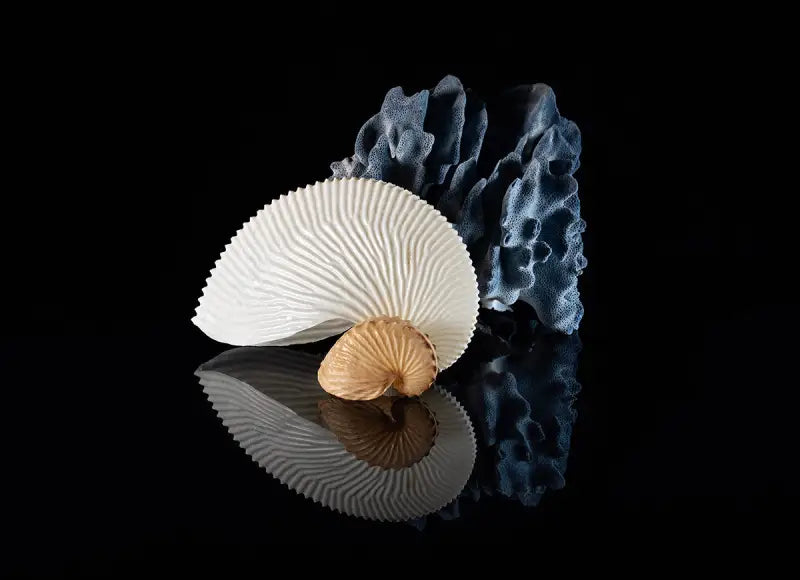
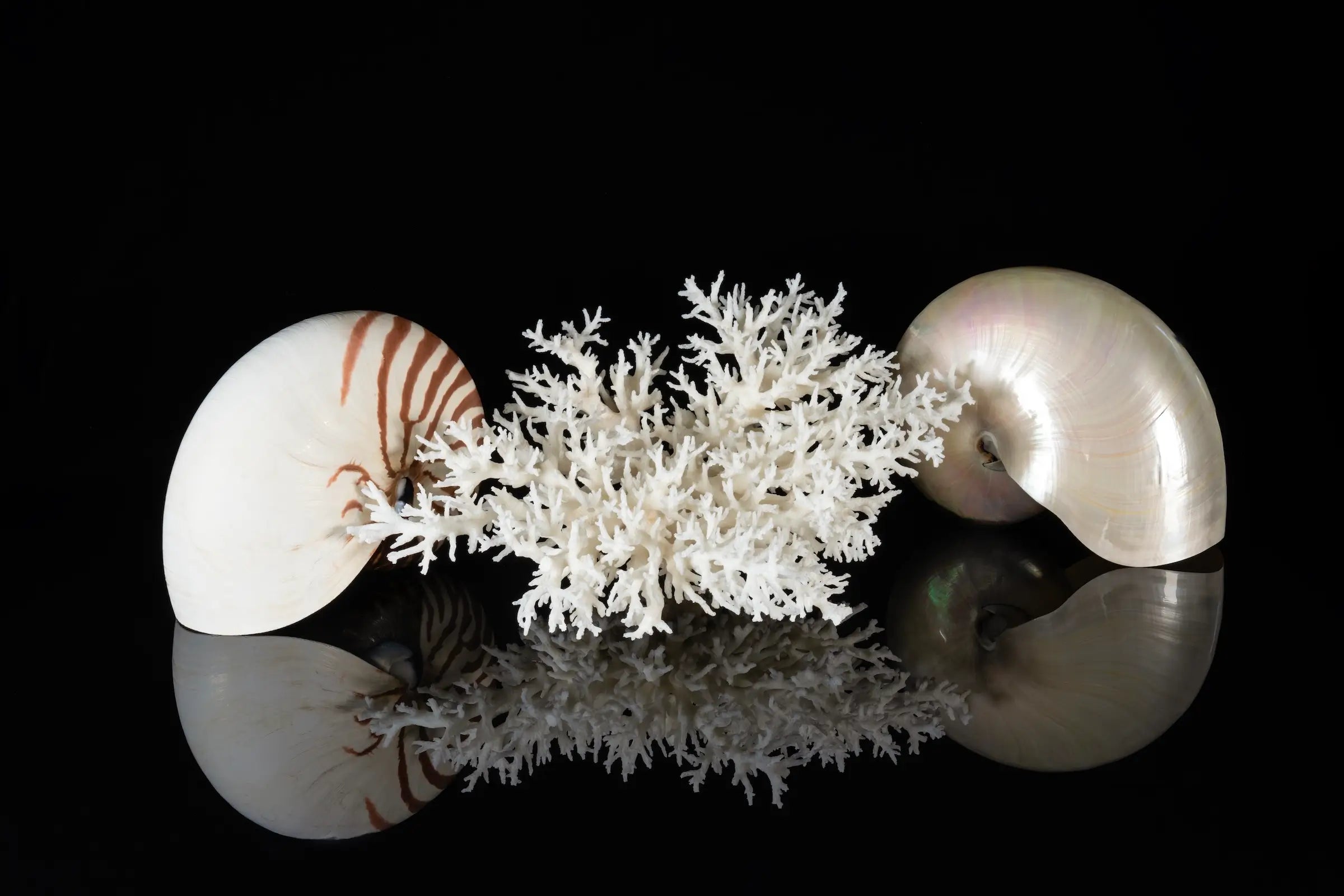
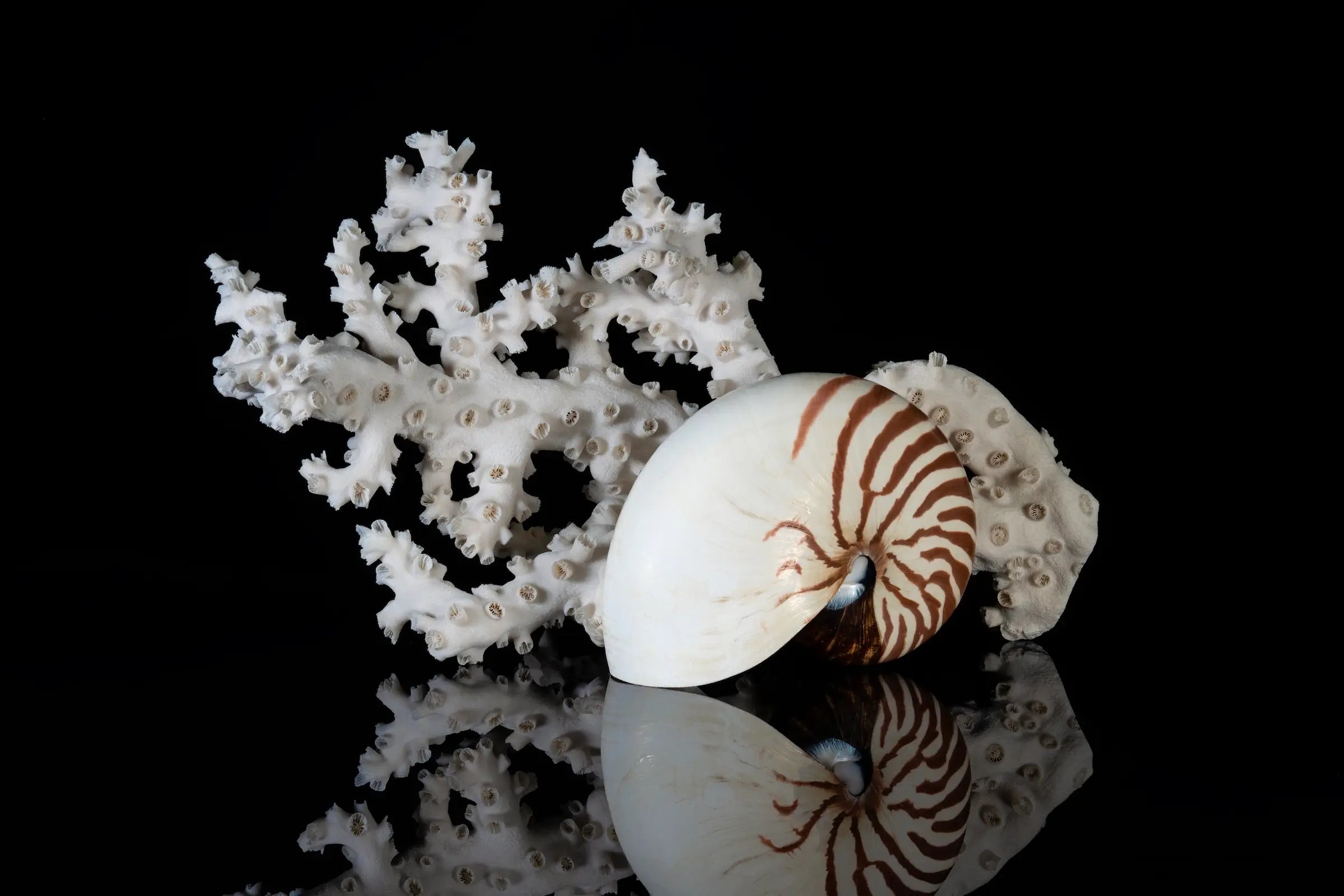
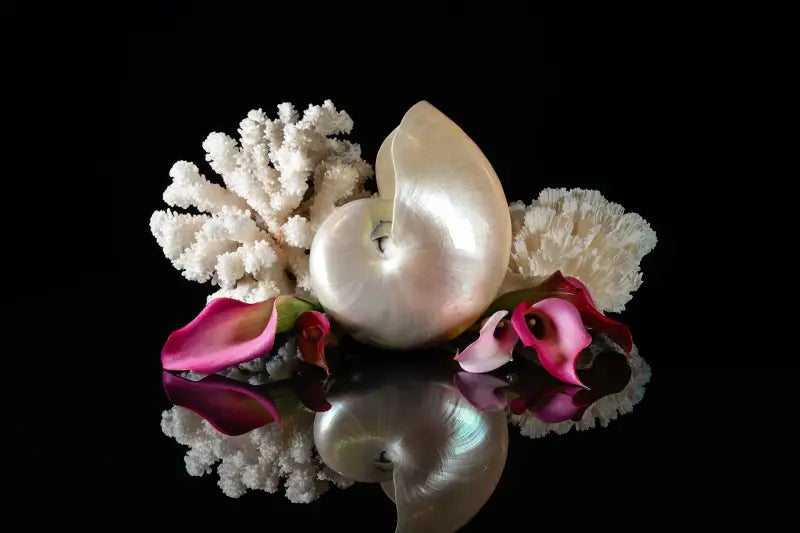
A nautilus can take on a remarkably different personality depending on how it is presented. Against a deep reflective background, a pale chambered shell becomes dramatic and sculptural. In black and white, its curve, chambers, markings, and ridges can feel almost architectural.
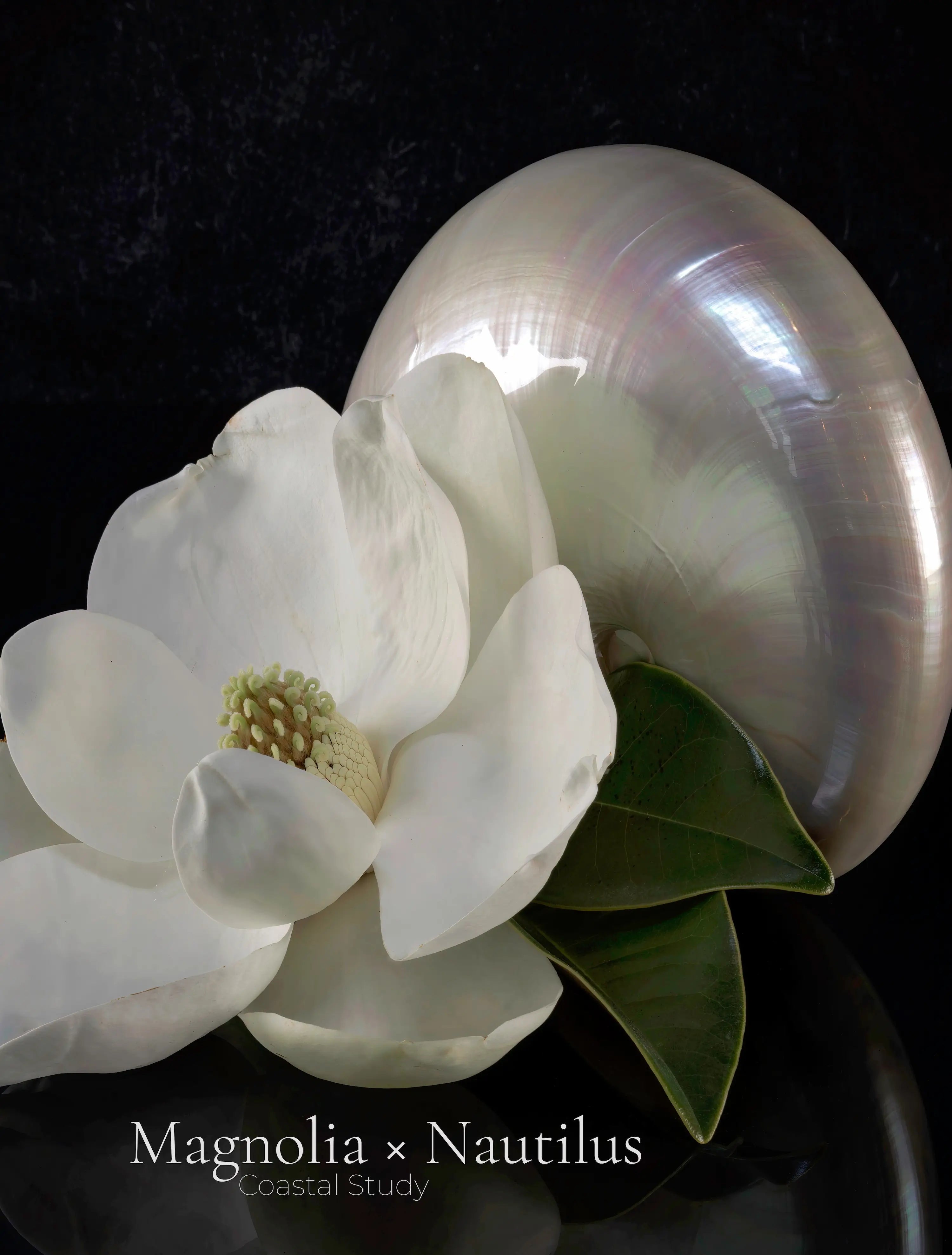
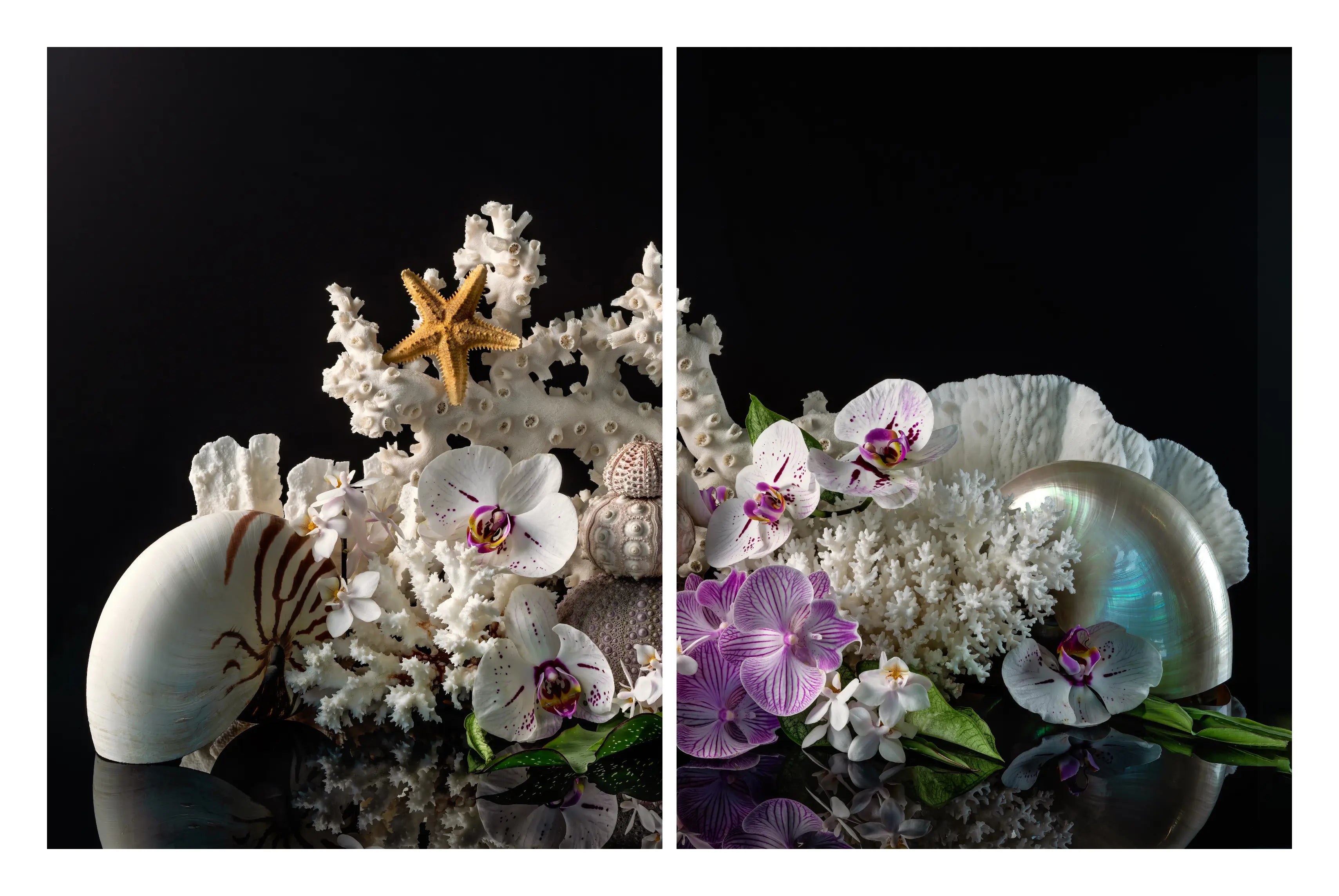
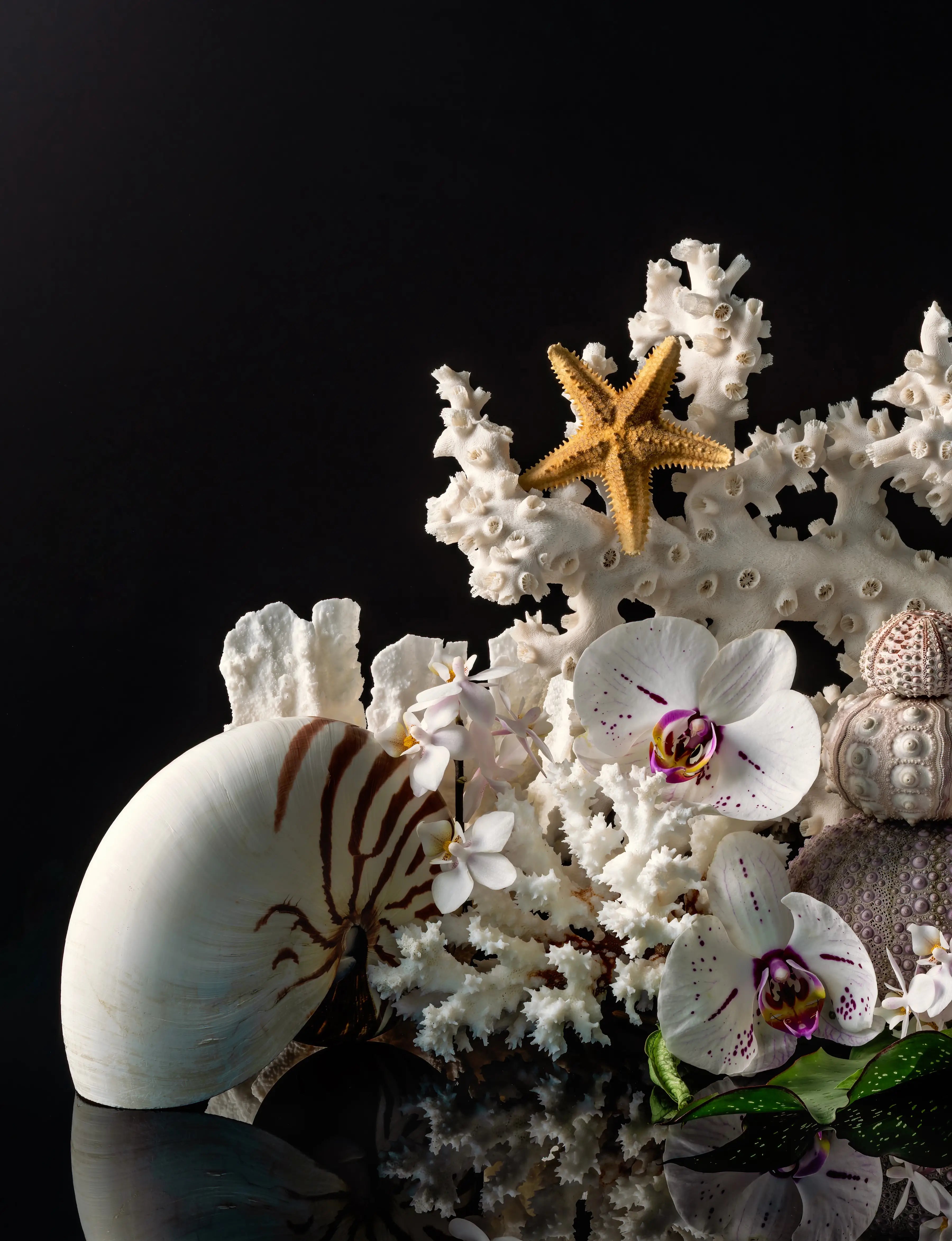
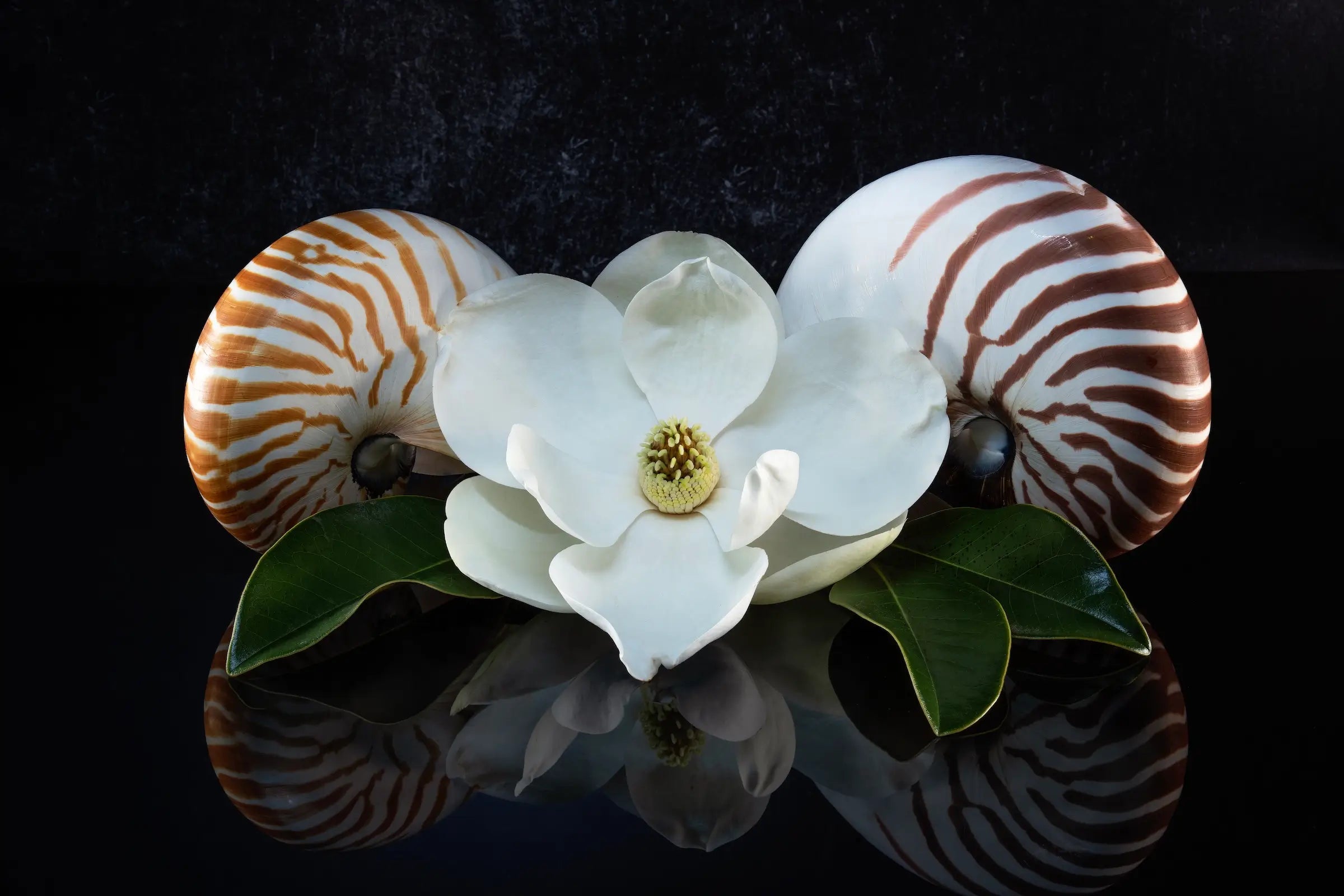
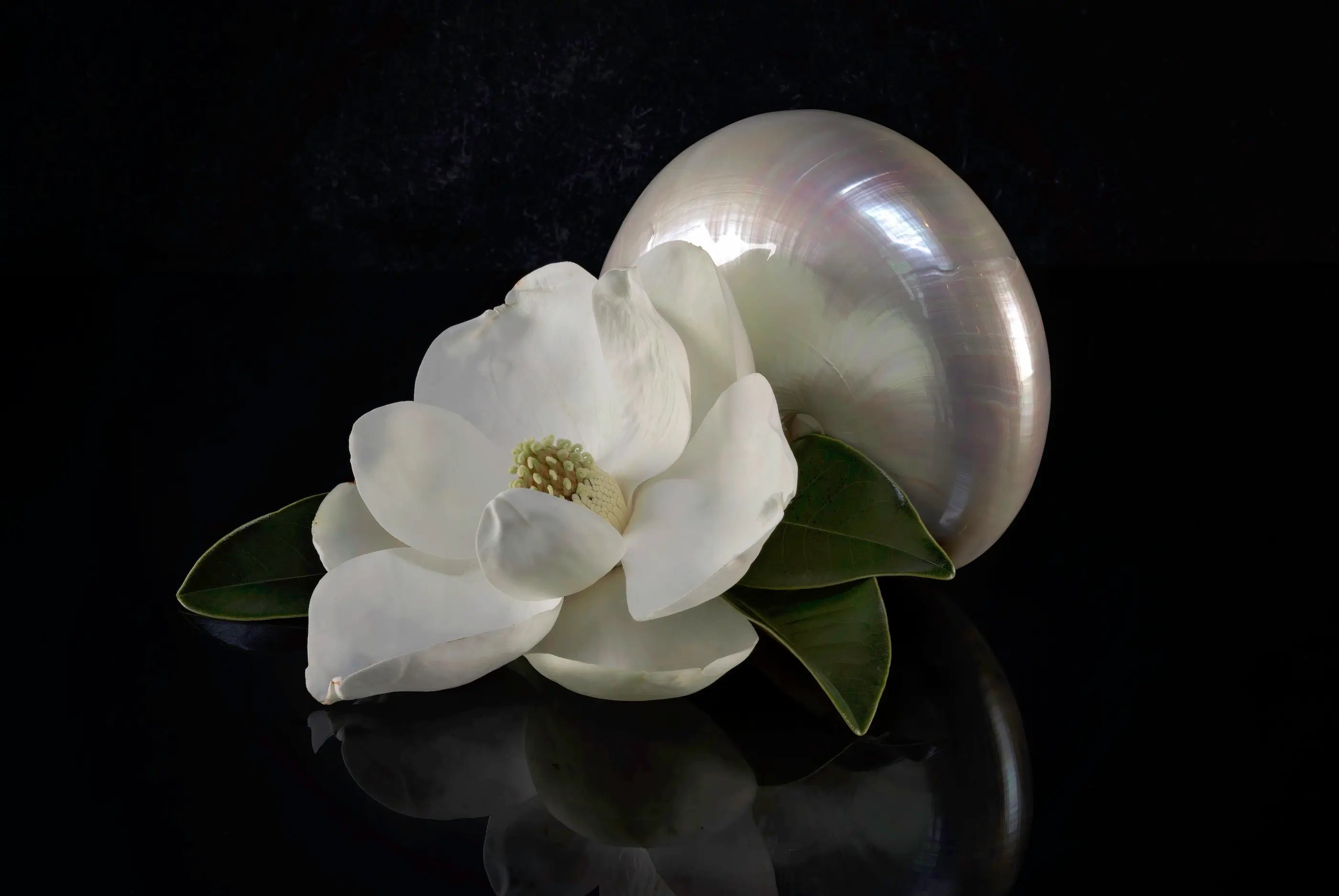
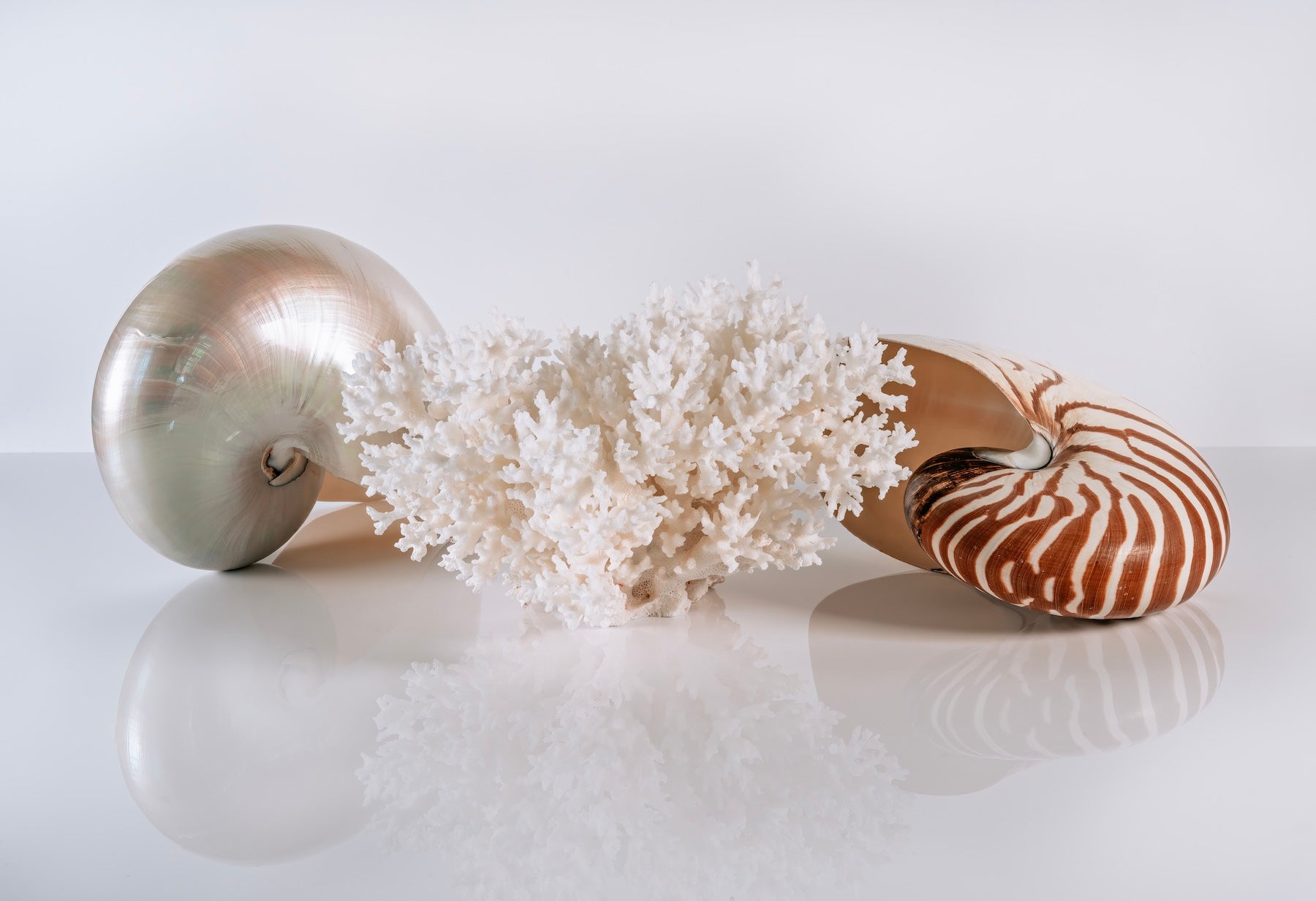
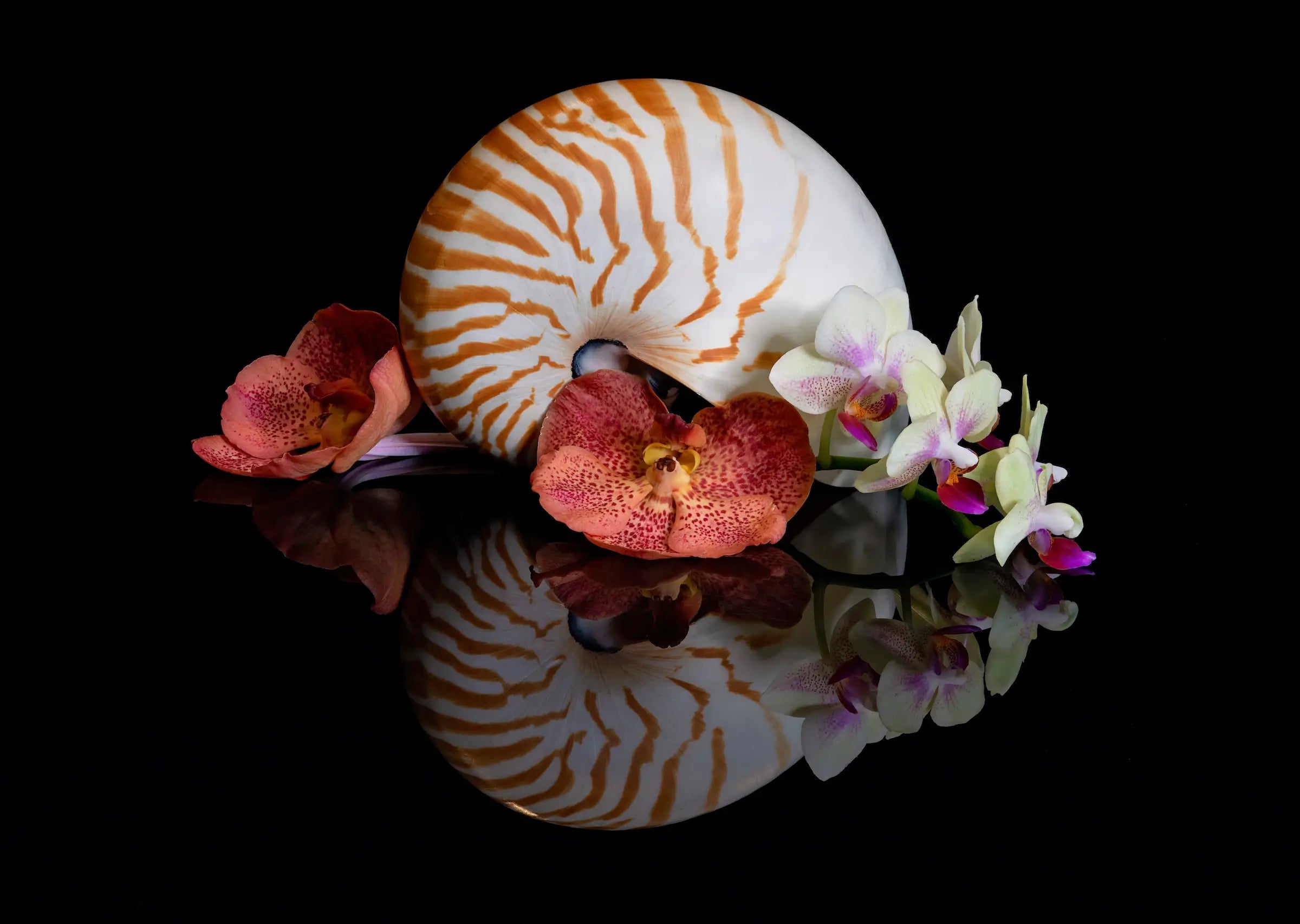
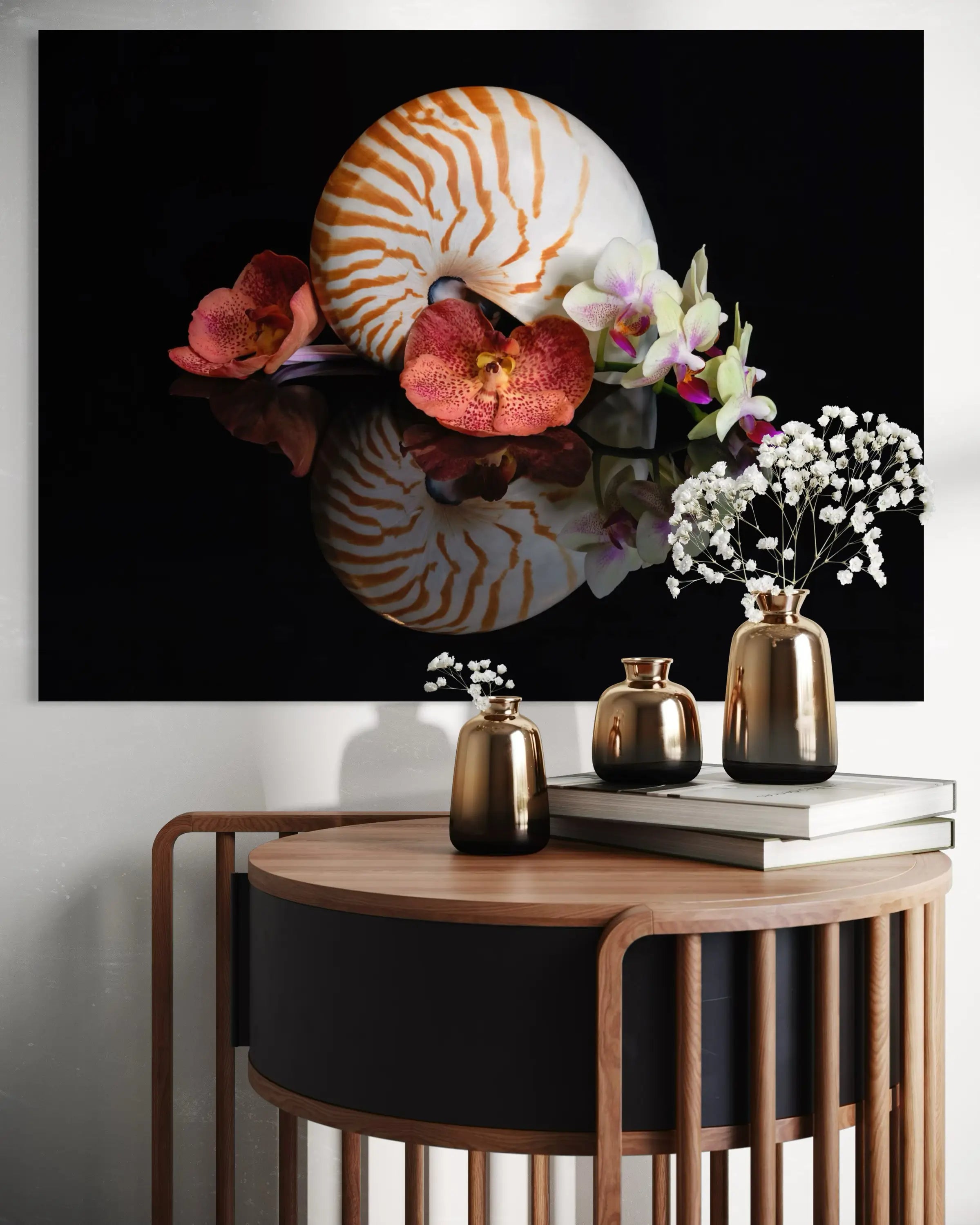
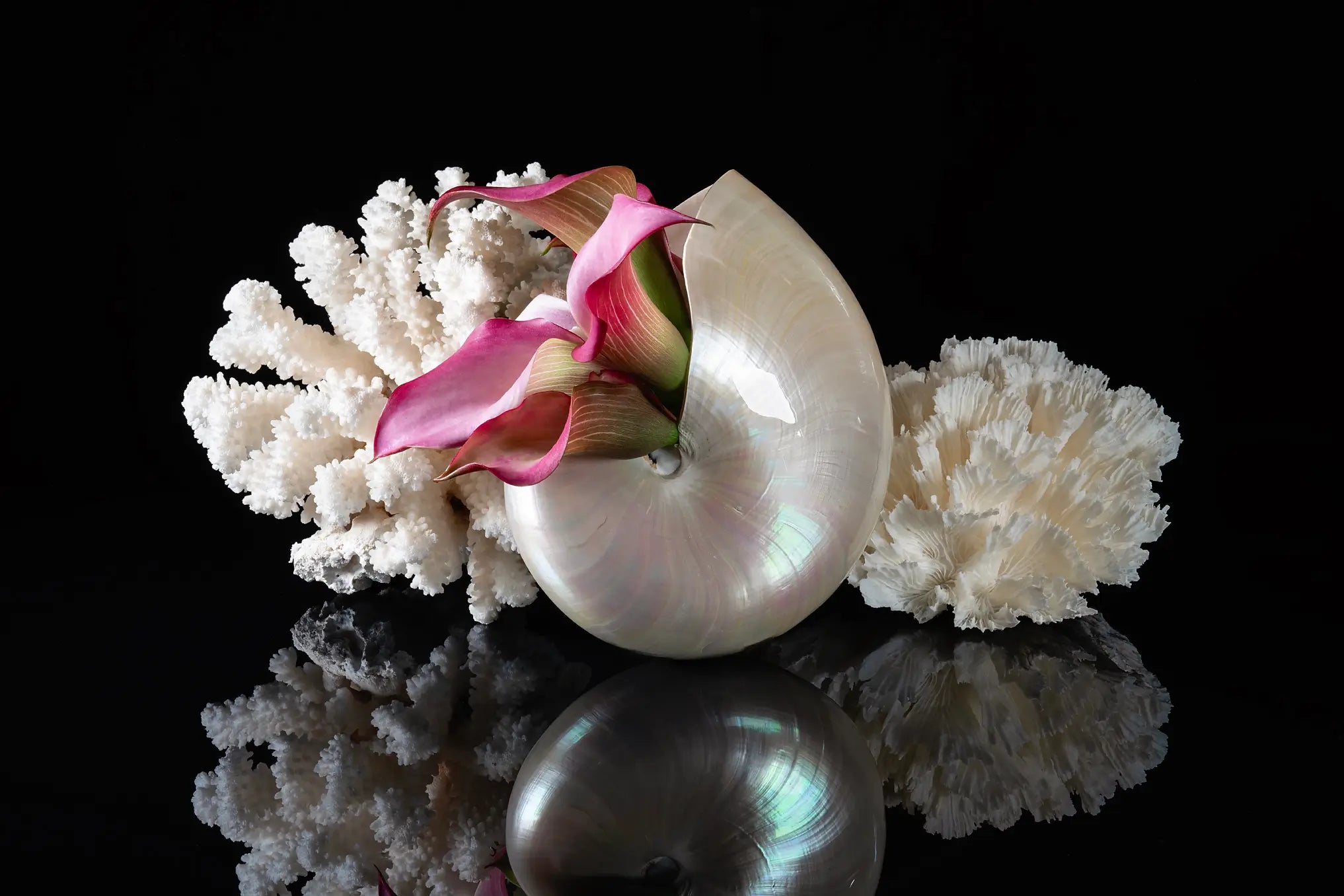
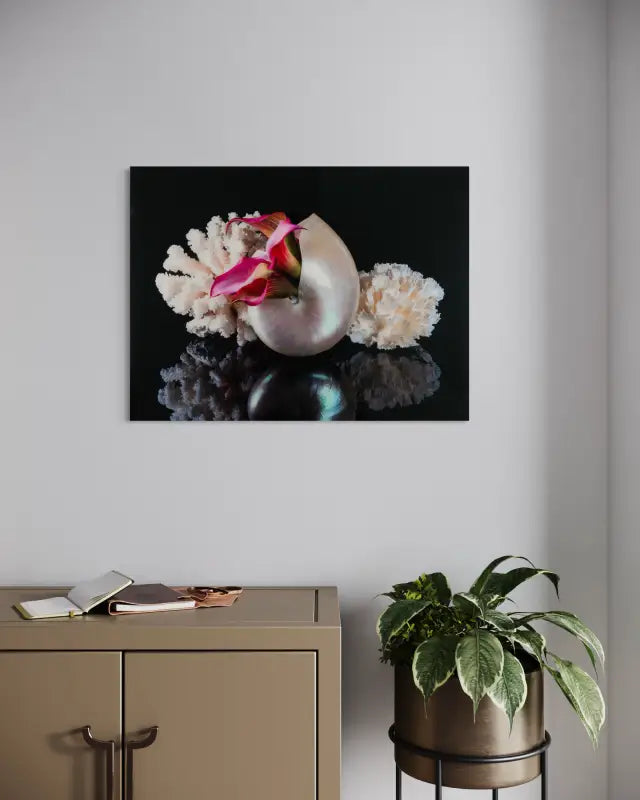
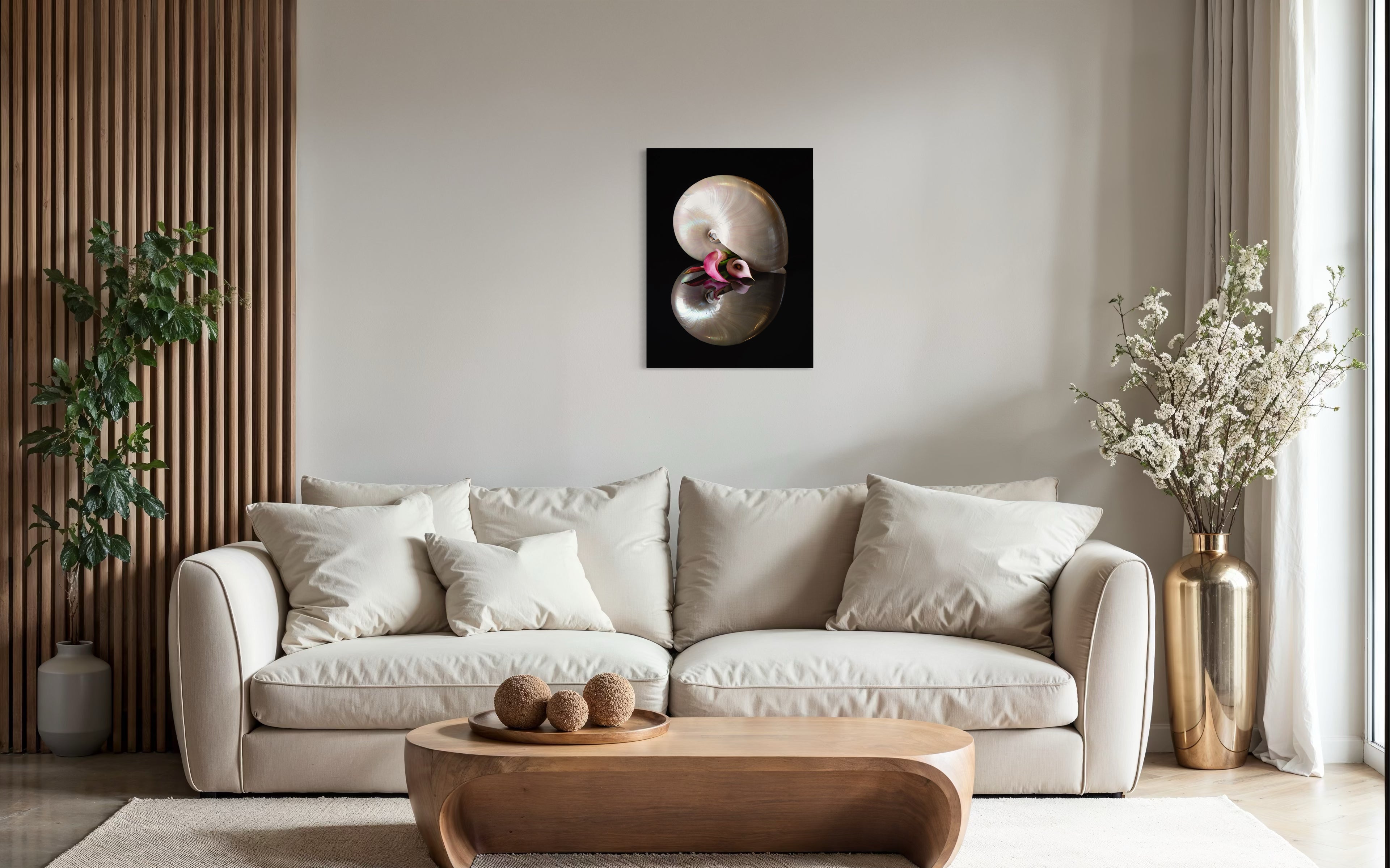
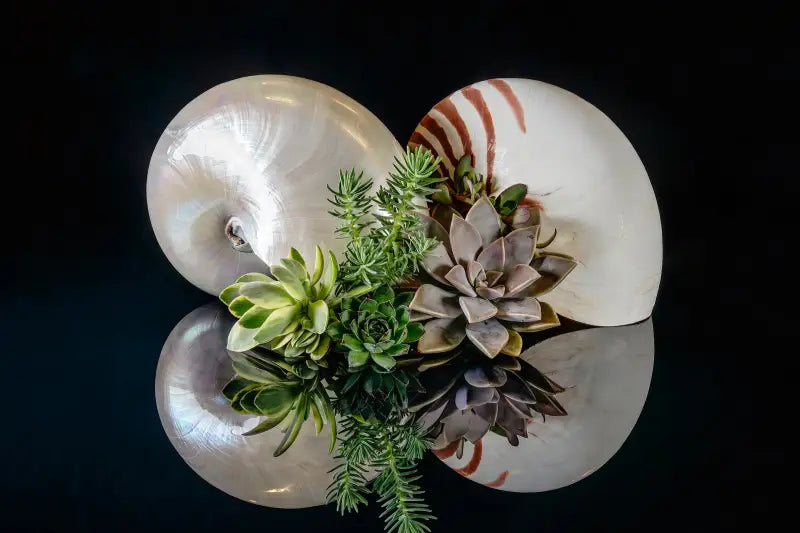
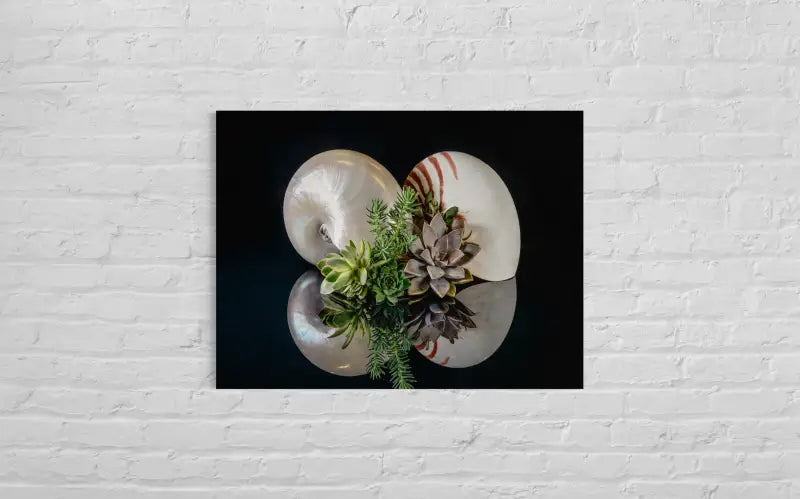
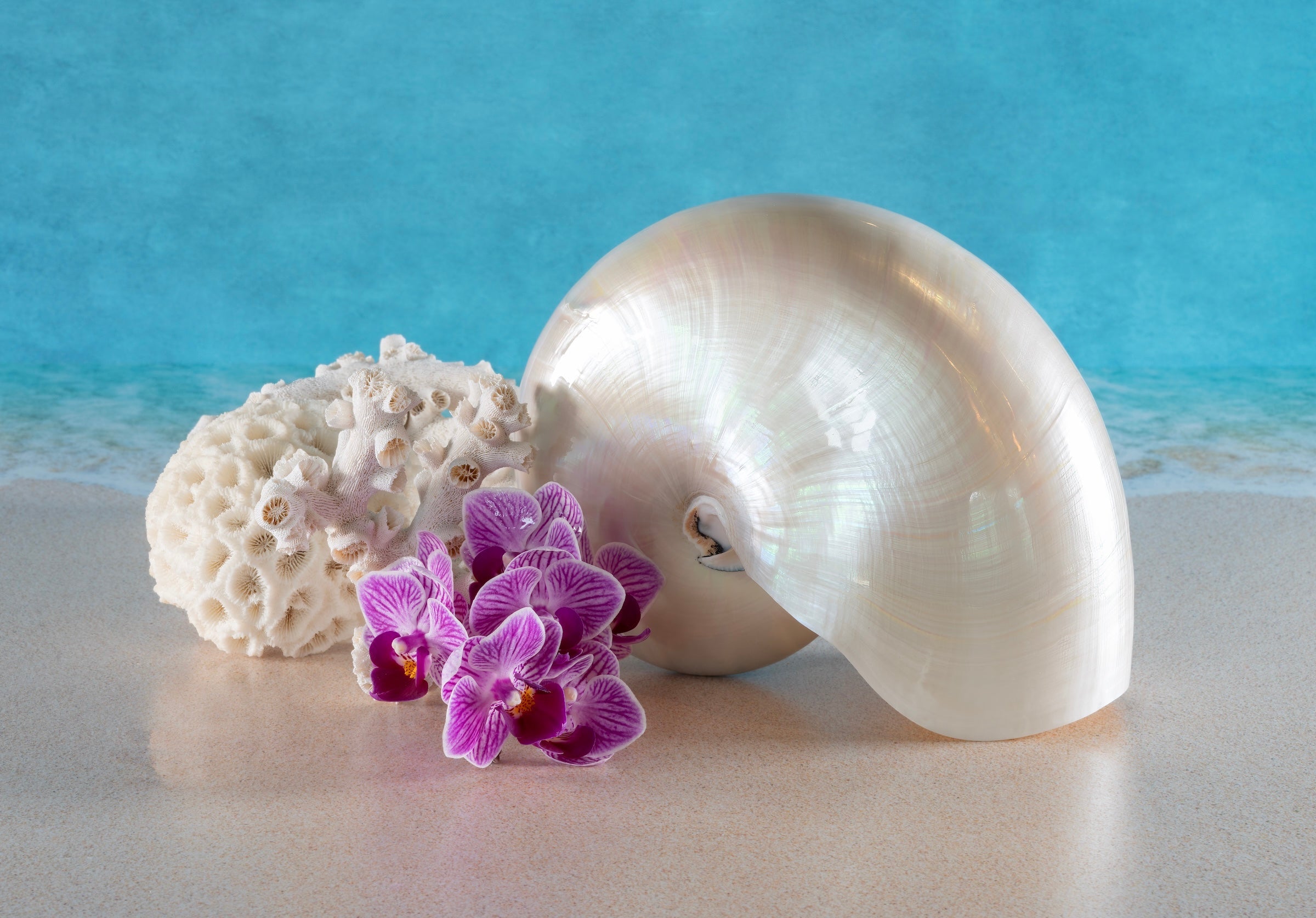
Botanical compositions combine nautilus shells with orchids, magnolias, lilies, succulents, and other organic forms, creating a meeting point between the coast and the garden. Coral and sea urchin pairings emphasize natural geometry, while quieter shell studies allow the nautilus itself to remain the focus.
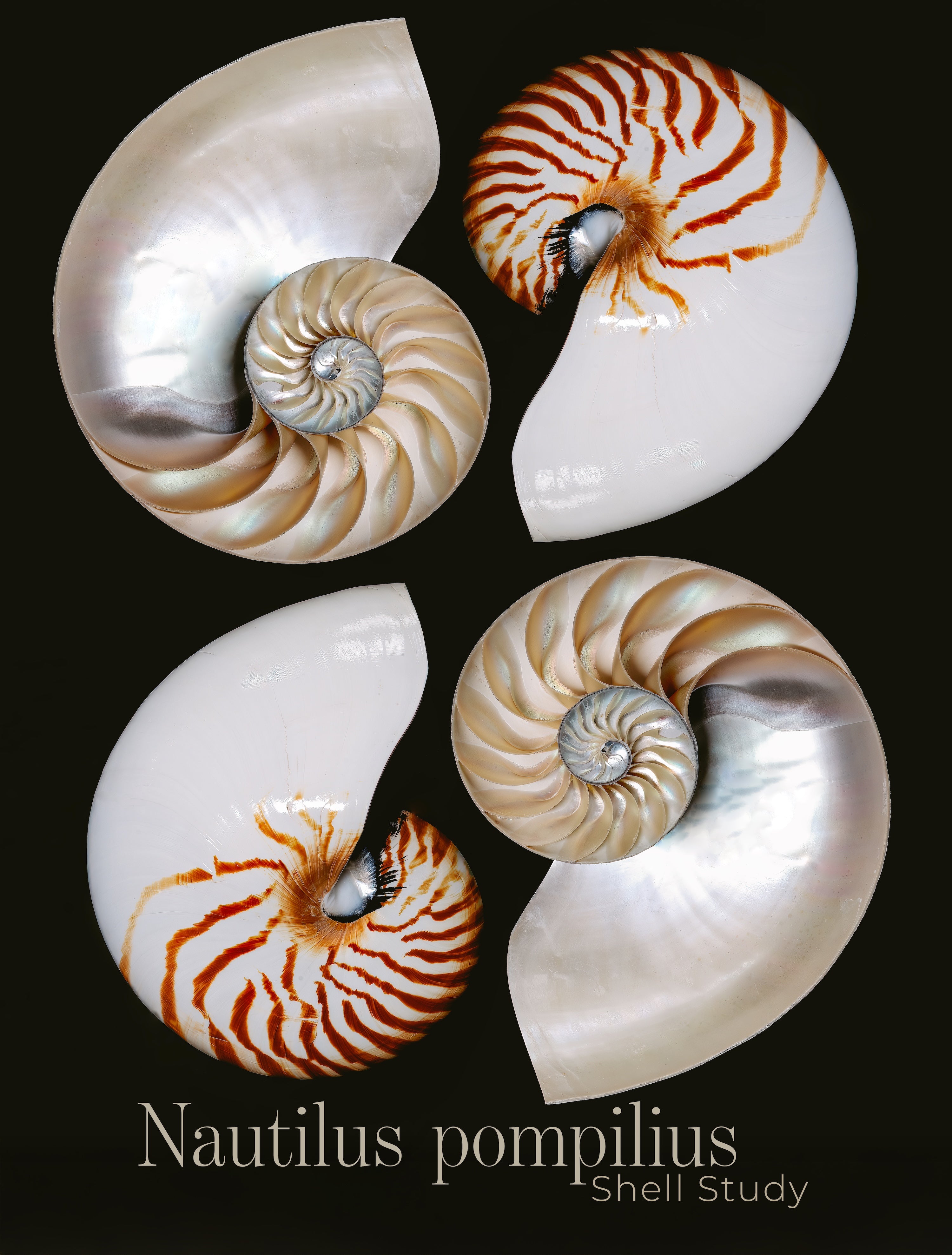
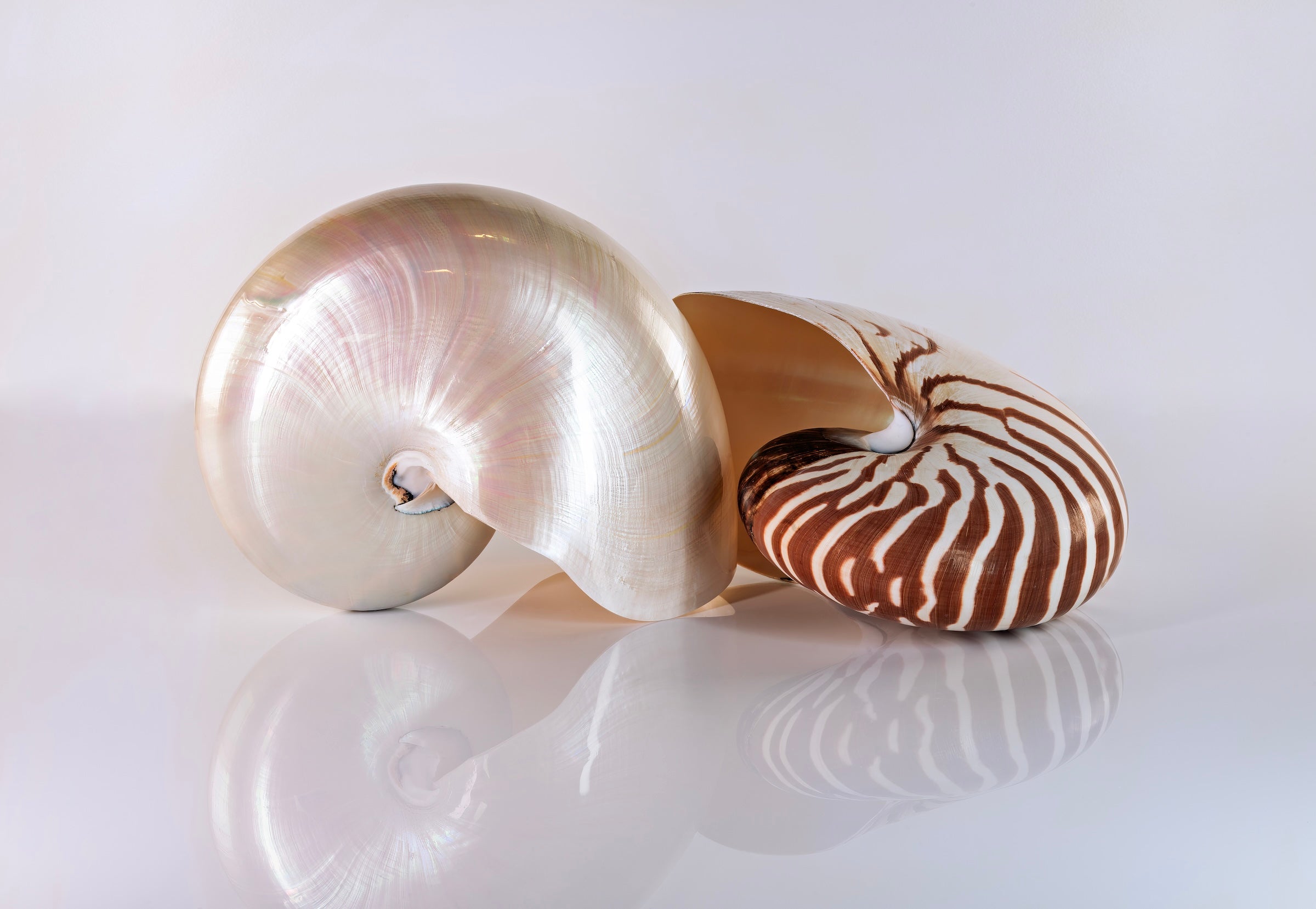
Interior studies reveal the chambers that make the shell so famous, while exterior views draw attention to pearlescence, pattern, silhouette, and the sweep of the outer curve. Together, they show why one shell can inspire so many different kinds of nautilus art.
Styling Nautilus Wall Art
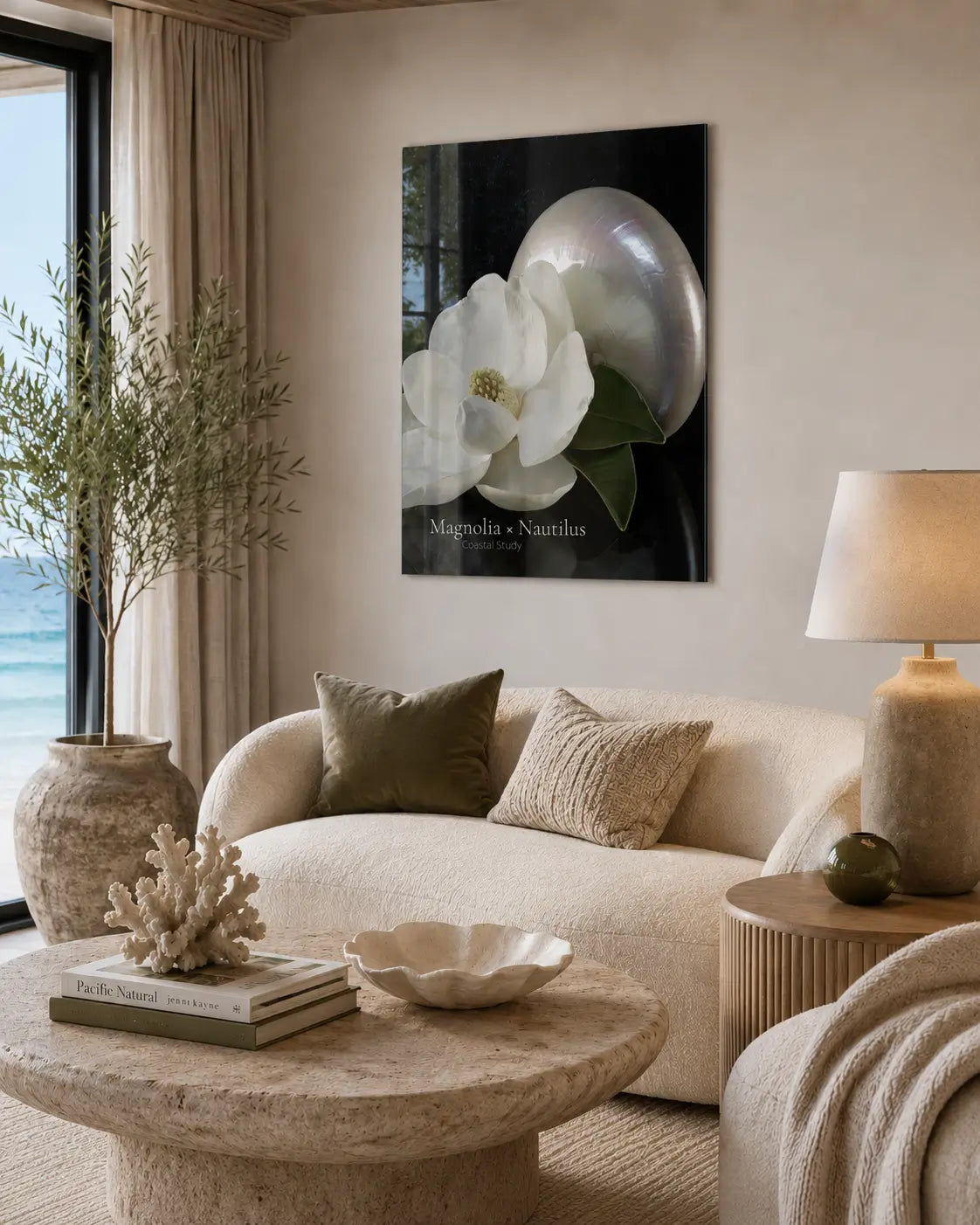
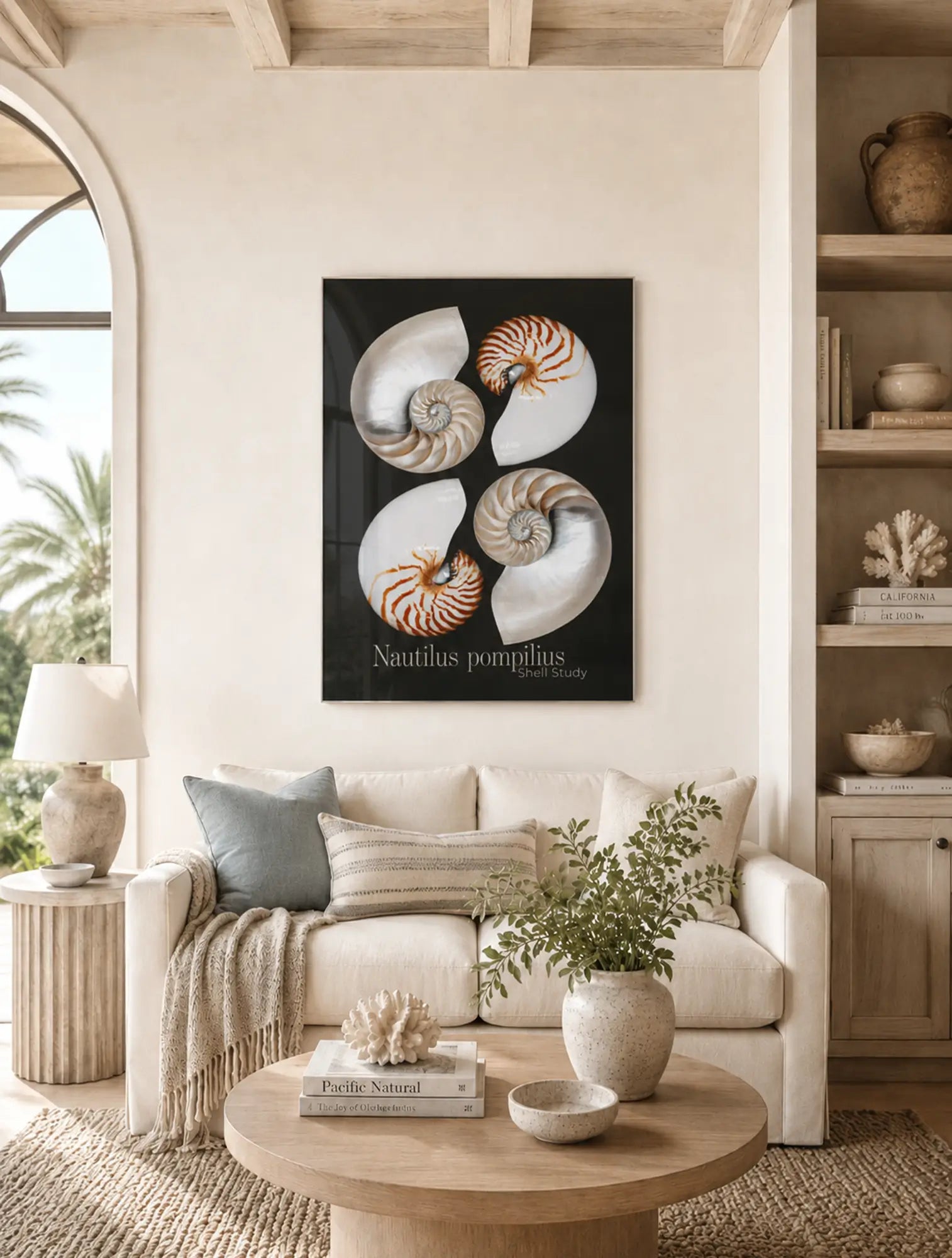
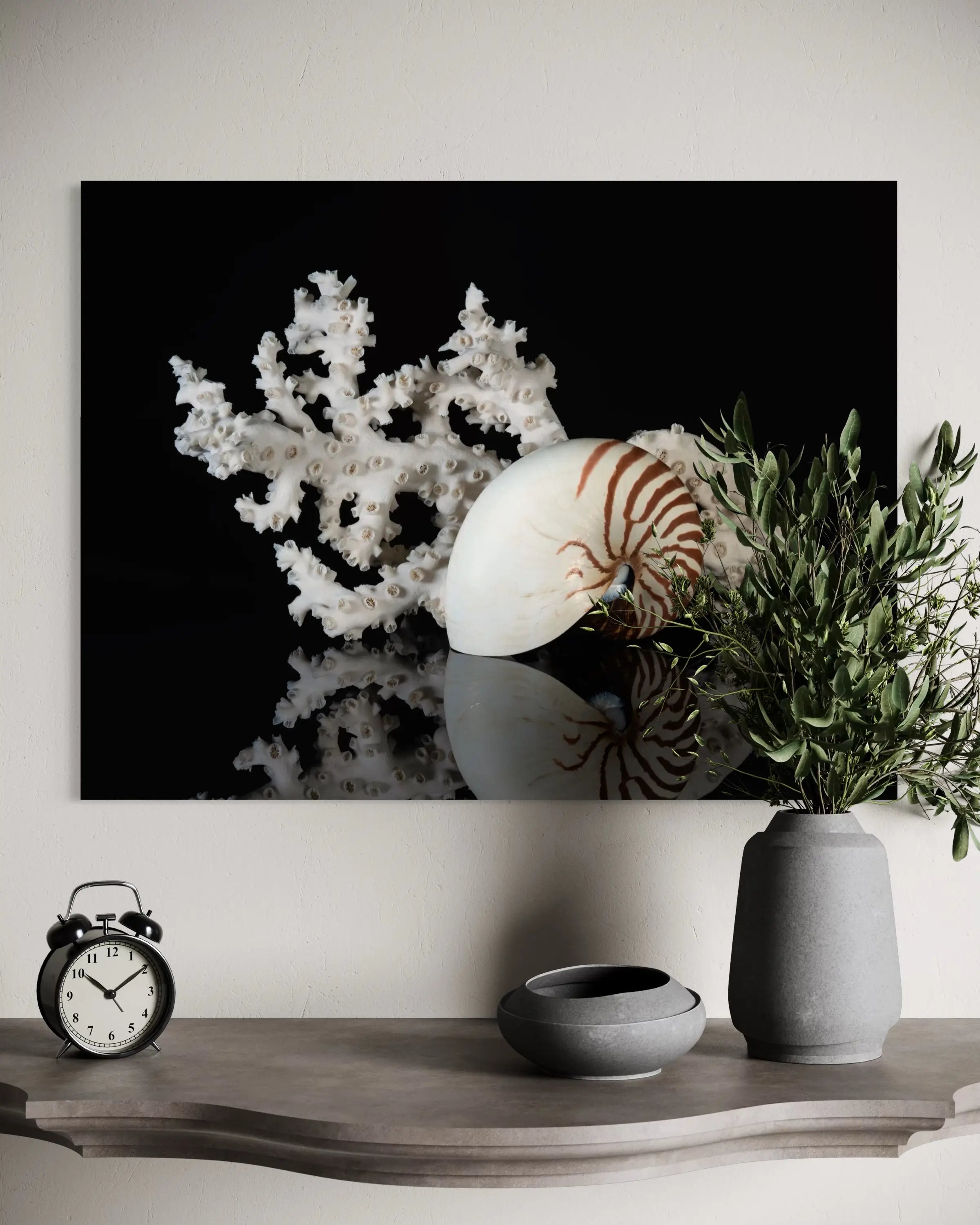
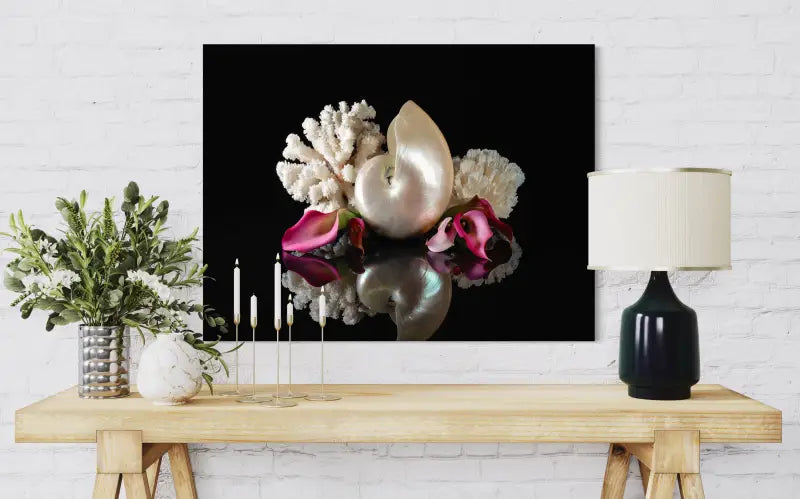
A single nautilus print can bring coastal character to a room without making the space feel overtly nautical. Neutral shell studies work beautifully with linen, pale wood, stone, woven textures, warm whites, charcoal, and other organic finishes.
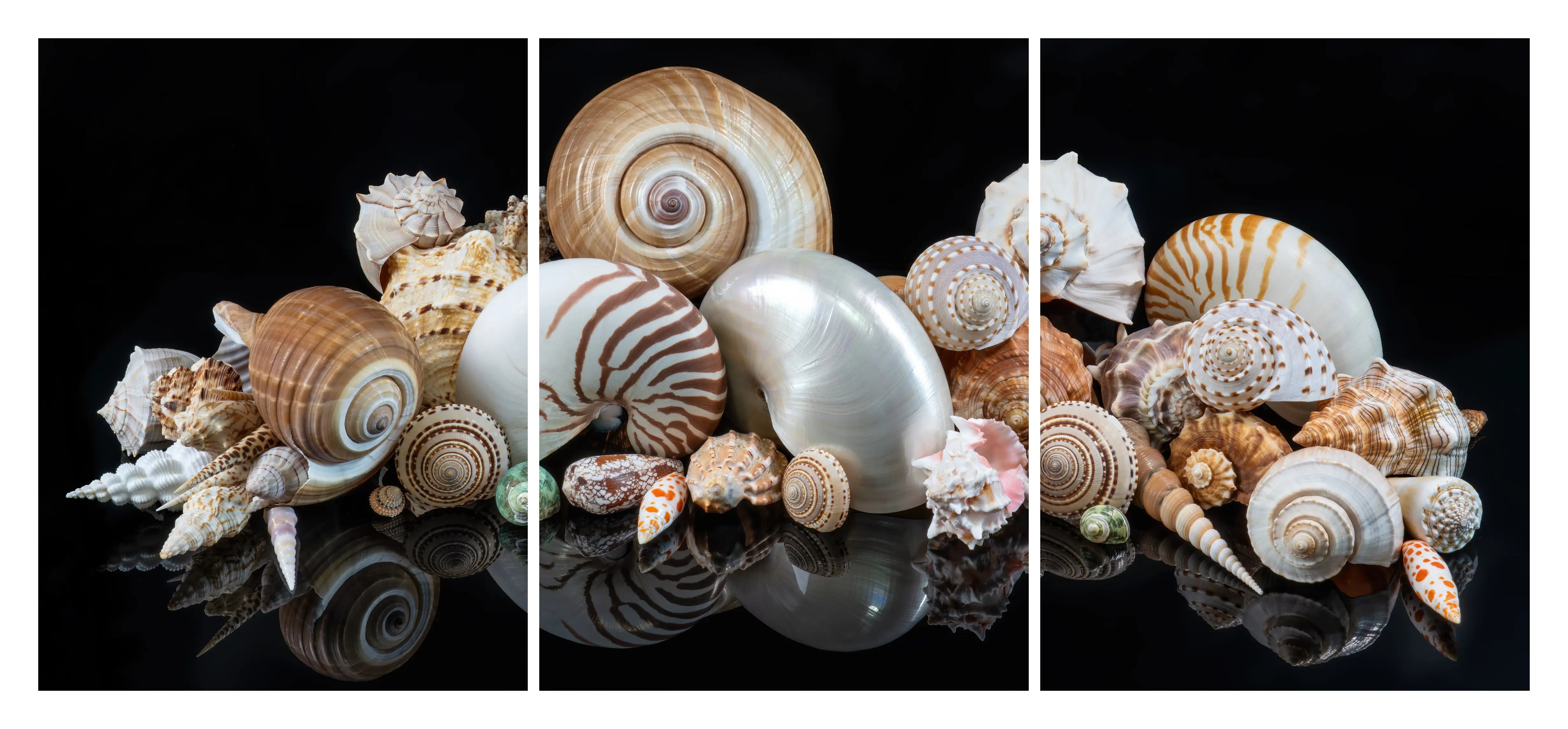
Botanical pieces can introduce orchid, magnolia, pink, green, or tropical color, while black-background artwork creates stronger contrast in contemporary interiors. For wider walls, large nautilus wall art, diptychs, and triptychs give the spiral enough scale to become a true focal point.
Nautilus artwork also pairs naturally with Spiral Seashell Wall Art, Coral Wall Art, Sea Urchin Wall Art, and the broader Seashell Wall Art collection.
Pairing Nautilus with Other Spiral Seashells
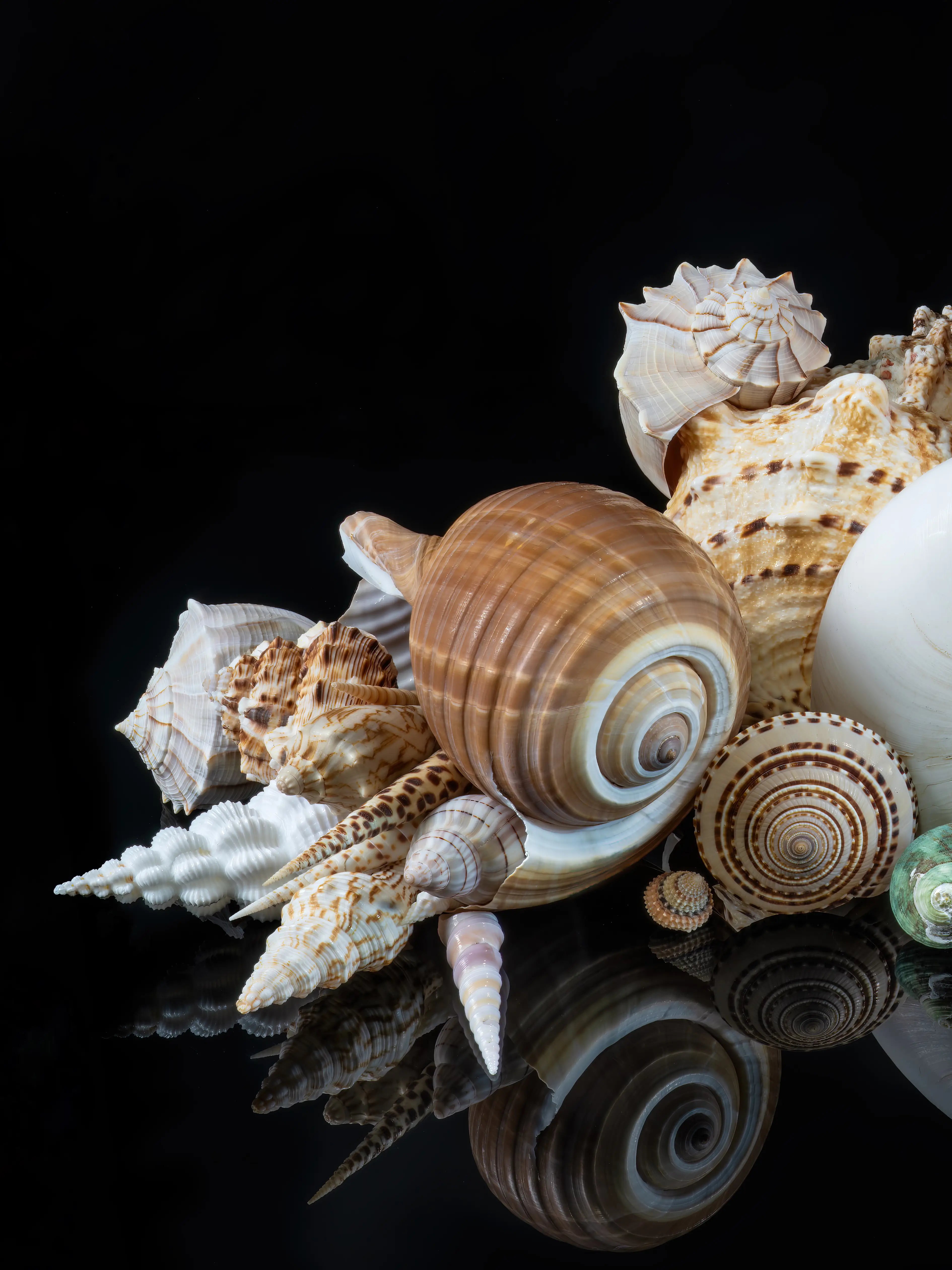
The nautilus may be the ocean’s most famous spiral, but it is far from the only shell built around a sweeping curve. Tun shells, sundial shells, conchs, moon snails, and other spiral seashells create their own variations on growth, proportion, repetition, and movement.
Placed together, these forms reveal just how many different ways the sea can build around a spiral.
Explore Spiral Seashell Wall Art for artwork featuring nautilus alongside other sculptural spiral shells, or visit The Architecture of the Sea for the larger story of shells, coral, symmetry, growth, and natural structure.
What Is Nautilus Wall Art?
Nautilus wall art features the chambered nautilus shell as a primary or prominent subject. Artwork may depict the exterior shell, its exposed interior chambers, several nautilus forms together, or the shell combined with coral, botanicals, sea urchins, and other coastal elements.
At Echoes of the Sea, nautilus art includes original photography, digitally developed compositions, botanical studies, black-and-white artwork, multi-panel designs, luminous frameless glass prints, and select acrylic blocks.
About Echoes of the Sea
The nautilus is one of those forms I can return to again and again without feeling that I have exhausted it. From one angle, I notice the sweep of the exterior shell and its pearlescent markings. Opened to reveal the interior, it becomes something entirely different—a sequence of chambers that makes growth itself visible.
Sometimes I want the shell to stand almost alone so that its structure becomes the subject. Other times I combine it with coral, flowers, sea urchins, or reflective surfaces and let those surrounding forms change how the spiral is perceived.
What keeps bringing me back is that meeting point between geometry and mystery. We can study how the shell grows, describe its curve, and compare it with mathematical patterns, yet it still feels astonishing that an animal in the sea can create something so intricate.
Follow the Spiral
The nautilus carries its story in its form—one chamber leading to another, the curve widening as growth continues outward.
Perhaps that is why we continue to see so much in it: balance, transformation, harmony, memory, mathematics, and the quiet possibility of what comes next.
Choose the piece that makes you want to follow the spiral a little farther.