

Modern Coastal Color Palette: How to Create a Calm, Balanced Coastal Space
|
|
Time to read 5 min
Cart
Your cart is empty
|
|
Time to read 5 min
Modern Coastal color palettes are less about specific colors and more about how those colors are layered. This approach to coastal color design focuses on creating calm, balanced interiors using neutral tones and soft ocean hues. The goal isn’t to decorate a space—it’s to create a feeling. Calm, light-filled, and quietly connected to the sea.
In 2026, this palette continues to shift toward softness and restraint. Instead of bold blues or high-contrast combinations, Modern Coastal interiors favor diffused ocean tones paired with warm, natural neutrals that feel effortless and lived in. This shift reflects the broader rise of Coastal Modernism as a defining design movement.
That same move toward warmer neutrals, natural materials, and quieter coastal color is part of the broader shift explored in Coastal Design Trends for 2026.
The result is a space that feels refined, open, and timeless—never themed, never overdone.
Modern Coastal color palettes combine soft, light-reflective neutrals with muted ocean-inspired tones such as blue and teal. Unlike traditional coastal design, the focus is on balance, subtle contrast, and natural layering rather than bright or decorative color.
Explore more coastal color combinations in our full collection of 45 coastal color palettes.
Modern Coastal color palettes are intentionally restrained. Instead of relying on color to define a space, they use it to support light, texture, and atmosphere—creating depth through subtle shifts in tone.
This palette reflects that balance:
Together, these tones create a space that feels open, calm, and quietly refined.
Browse our full collection of coastal color palettes to explore additional variations.
Modern Coastal color palettes follow a natural hierarchy—where each color has a specific role rather than competing for attention.
Walls, larger furniture pieces, and foundational elements should stay light and neutral. These tones reflect natural light and create the open, airy feeling that defines the style.
Bring in coastal tones gradually—through textiles, ceramics, or subtle décor. These colors should feel blended and natural, never bold or overpowering.
A small amount of contrast keeps the space from feeling flat. Deeper tones like navy or charcoal work best when used sparingly, often through artwork or accent pieces.
Color in Modern Coastal design is as much about placement as it is about selection.
Keep walls light and neutral—soft whites, warm sand tones, or pale gray. This creates a clean backdrop that allows other elements to stand out.
Choose simple, clean-lined pieces in neutral tones. Texture becomes more important than color here—linen, light wood, and natural materials add warmth without visual clutter.
Use coastal color sparingly. A few well-placed elements—pillows, vases, or textiles—are enough to bring the palette to life.
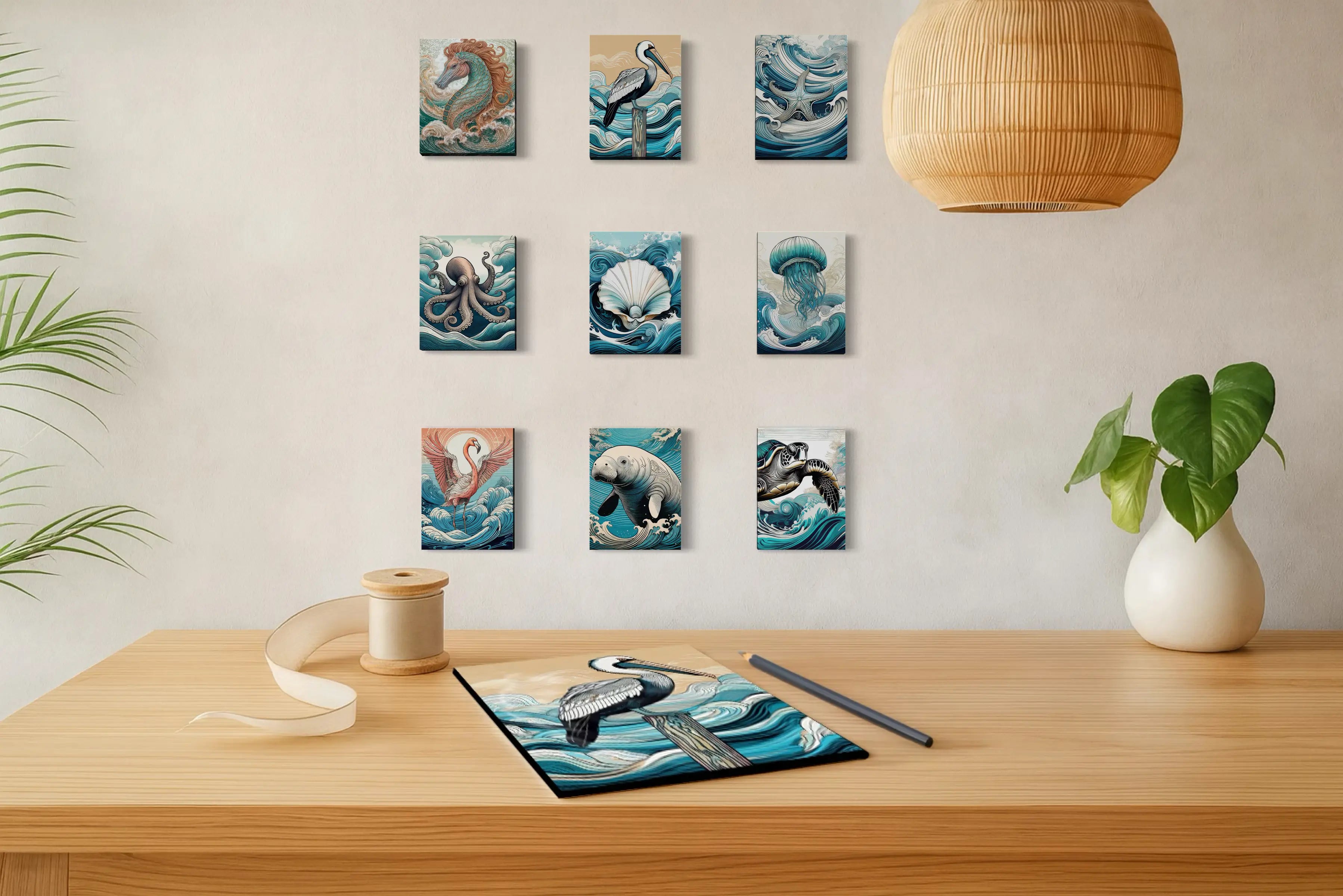
In Modern Coastal spaces, wall art often introduces the strongest color in the room—bringing in ocean tones without disrupting the calm, neutral foundation.
This allows you to incorporate deeper blues, teals, and movement-inspired hues in a way that still feels balanced and intentional.
Rather than filling a space with multiple competing elements, a single piece of art can anchor the palette—adding depth, contrast, and visual interest without overwhelming the room.
In this style, art isn’t just decorative—it becomes part of the overall composition, working with light, texture, and space to create a cohesive, refined atmosphere.
See how this palette comes to life in real spaces in our Modern Coastal décor guide.
Modern Coastal design uses a mix of soft neutrals like white, sand, and gray paired with muted ocean tones such as blue, teal, and sea glass. These colors are layered to create a calm, light-filled space with subtle contrast and a refined coastal feel.
Because Modern Coastal interiors rely on restraint, statement pieces become even more important. Wall art, in particular, adds movement, depth, and light without overwhelming the space.
Glass wall art is a defining element in modern coastal interiors, reflecting light in a way that mimics the movement of water while maintaining a clean, frameless look. It introduces depth and luminosity without adding visual weight—making it the ideal medium for this style.
Discover why glass wall art works so beautifully in modern coastal interiors.
For layered, designer-style arrangements, explore our gallery wall and shop-the-look collections.
Even a well-chosen palette can feel off if it’s not balanced correctly.
Modern Coastal design works best when color feels subtle, layered, and intentional.
Soft neutrals form the foundation
Ocean tones are used in a subtle, layered way
Contrast is minimal but intentional
Color supports light and texture rather than dominating the space
The overall feeling is calm, open, and refined
Traditional coastal color palettes often use brighter blues and more decorative tones, while modern coastal colors are softer, more neutral, and intentionally restrained for a clean, refined look.
Bold colors can be used sparingly, but modern coastal design works best when color feels soft and balanced. Deep navy or charcoal can add contrast without overpowering the space.
Modern coastal palettes often blend both. Warm neutrals like sand and driftwood balance cooler ocean tones, creating a space that feels natural and inviting.
Focus on muted tones, clean lines, and minimal décor. Avoid overly themed elements and let texture and light create interest instead of bright color.
A well-balanced Modern Coastal color palette creates more than just a beautiful space—it creates a feeling.
By layering soft neutrals, introducing ocean tones with intention, and using contrast sparingly, you can create a home that feels open, calming, and effortlessly connected to the coast.
Bring Modern Coastal color to life with glass wall art designed to reflect light, movement, and ocean-inspired calm.
Explore our collection of Modern Coastal glass wall art below to see how light, color, and movement come together in real spaces.
About the Author — Lisa Reid
Lisa Reid is the creative force behind Echoes of the Sea LLC, where coastal art meets thoughtful, modern design. Drawing inspiration from the natural rhythm of the ocean, she creates glass wall art and design content that brings calm, light, and meaning into everyday spaces.
Through The Coastal Journal, Lisa shares insights on coastal décor, color palettes, and modern coastal living—helping others create homes that feel both refined and deeply connected to the sea.


