
Coastal Feng Shui & Science – Bring Ocean Calm Home
|
|
Time to read 8 min
Cart
Your cart is empty
|
|
Time to read 8 min
Research in environmental psychology has found that exposure to natural settings and imagery can support stress recovery, attention, and well-being. Alongside that research, the popular “Blue Mind” idea explores why many people experience water as calming, while Feng Shui offers a traditional framework for thinking about placement, balance, and the flow of a space.
On my last trip to Jekyll Island, I found myself wandering along a stretch of beach where the tide had carried the past right up to my feet. Pieces of driftwood — bleached by sun, sculpted by wind, and smoothed by decades of waves — rested like sculptures the ocean had been working on for years. I ran my fingers along the curves, feeling the grain worn silky smooth. It was as if I was touching time itself.
At the moment, I wasn’t thinking about art, Feng Shui, or even science. I was simply present — listening to the gentle hiss of the waves, smelling salt in the air, watching a gull trace slow circles overhead. Later, I realized how that single morning explained so much of why I create the art I do: because textures, colors, and patterns from the coast carry a kind of energy that changes how we feel in a space.
I felt the calm long before I could explain it. But as I dug deeper, I discovered that what I’d been experiencing on that beach was exactly what both Feng Shui and science describe — the way our surroundings shape our energy, focus, and mood.
If you’re new to this approach, explore our Coastal Feng Shui Series, where we share how ocean-inspired art, symbolism, and placement work together to create calm and balance in a home.
Environmental psychology looks at how surroundings influence behavior, attention, and well-being. Research on natural environments and nature imagery suggests that they can support stress recovery and mental restoration, particularly when a space includes qualities such as openness, natural pattern, and gentle sensory interest.
For me, the coast offers all of that at once: the horizon, changing water, weathered wood, shells, and repeating forms shaped by tide and time. Those elements can make a room feel quieter and more connected to nature without needing to make a medical claim about what any single color or pattern will do to the body.
Studies of nature exposure and restorative environments suggest that even brief encounters with natural scenes can support relaxation and attention recovery. Coastal imagery may offer some of those same visual qualities—depth, rhythm, organic form, and a sense of open space.
Marine biologist Wallace J. Nichols coined the term “Blue Mind” to describe the calm, almost meditative state many of us feel near water. And that feeling is not simply poetic. Research on blue spaces and natural environments has found measurable changes in the body’s stress response—including heart rate, blood pressure, and cortisol—as well as improvements in mood, attention, and mental restoration.
The sea reaches us through more than color alone. There is the rhythm of waves, the open horizon, moving light, salt air, and the constant motion of water without the visual noise of everyday life. Our bodies notice those things, even when we are not consciously thinking about them.
This is why walking by the ocean can feel like a deep reset button — and why, when we can’t be there in person, images of waves, shells, and coastal textures can still spark some of the same calming, restorative effects.
Every time I photograph driftwood, a nautilus shell, or a Hokusai-inspired wave, I think about this science. It’s not just beauty — it’s a bridge back to the feeling of standing at the shore.
Feng Shui and environmental psychology come from very different traditions, but both begin with the same quiet question: how does this space make us feel? Feng Shui looks at balance, placement, and the movement of qi through a room. Environmental psychology looks at how light, color, objects, and spatial arrangement can influence perception, mood, and behavior.
What draws me to both is that neither treats a room as empty space. The placement of a piece of art, the openness around it, the direction of light, even the way we move through a room can change its atmosphere. I don’t see Feng Shui and science as saying exactly the same thing; I see them meeting in that shared awareness that our surroundings are never neutral. They shape the way we settle, focus, gather, and breathe.
That is where intentional placement becomes meaningful to me. A coastal artwork placed within the right Bagua zone can carry the symbolism of that area while also changing the visual feeling of the room through color, light, subject, and scale. This is where my work naturally began to bring the two perspectives together—not as identical ideas, but as different ways of thinking about how the spaces around us can support the way we want to live.
The textures I fell in love with on Jekyll Island became the seed for my Coastal Texture Collection. It starts with driftwood — each curve and knot telling a story of tide and time — and will grow to include coral close-ups, the spiral elegance of nautilus shells, the intricate surfaces of sea urchins, and even starfish patterns.
These pieces work beautifully in Feng Shui because they bring Earth and Water elements into your space at once — grounding yet fluid, steady yet flowing.
Sun-bleached driftwood from Jekyll Island — nature’s sculpture shaped by decades of tide.
The best part about combining science and Feng Shui is that you can make changes that feel good and are backed by research. Here’s how I recommend bringing coastal energy into different spaces:
A space for gathering needs art that balances energy and invites conversation.
Pairing: Starfish Serenity Glass Print + Sea Oats Coastal Glass Print.
Why it works: The starfish carries a sense of renewal, while the sea oats bring the quiet movement of the dunes indoors—those soft grasses bending with the wind, always shifting but never hurried. Together, they give the room a feeling of ease, openness, and welcome, like that first deep breath when the shoreline comes into view.
Regeneration meets calm grounding for a welcoming living room atmosphere.
The first thing you see when you step inside sets the tone for the whole home.
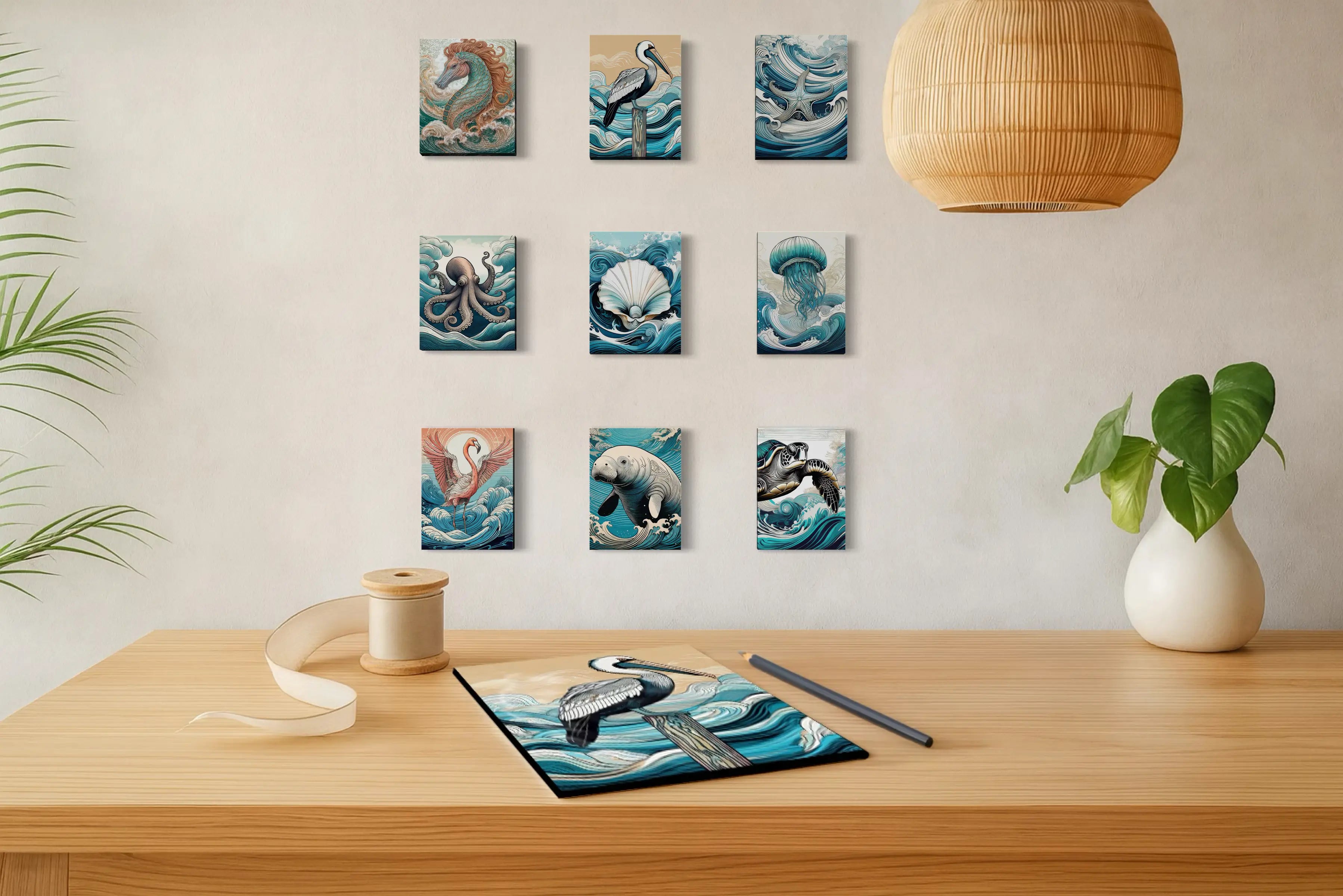
Pairing: Hokusai Pelican Coastal Glass Print + Princess Beach Sunset Glass Print.
Why it works: A pelican’s watchful stance brings a subconscious feeling of safety, while the glow of a sunset introduces warm, familiar evening light that can make an entry feel softer and more welcoming.
Guidance meets new horizons for a welcoming first impression.
While wall art shapes the energy of a room, acrylic block prints are perfect for desks, shelves, or mantels — especially in smaller Bagua zones or spaces that need a personal touch. Their freestanding design means you can move them as your needs shift.
Two nautilus shells, four halves — revealing both the smooth outer beauty and the intricate spiral within — a symbol of love, eternity, and balance.
The Double Nautilus Shell Acrylic Block – Coastal Spiral Art its spiral chambers unfolding in a rhythm that feels almost written by the sea — a reminder of the repeating geometry that appears in shells, waves, flowers, and so many forms shaped by nature.
In Feng Shui, the nautilus spiral represents infinity, growth, and harmony — its precise proportions echoing the natural mathematics found in seashells, waves, and even galaxies. This piece’s dual view — outer shell and inner chambers — offers a powerful metaphor for aligning our outer life with our inner truths. Its acrylic block form makes it easy to move from shelf to desk to windowsill, letting you shift the energy of a room with effortless grace.
Graceful flow in a form that fits anywhere.
For me, art isn’t just about how it looks on the wall — it’s about how it feels to live with it. When I photographed that driftwood on Jekyll Island, I didn’t see a future print or a product collection. I saw a piece of the ocean’s story, and I knew it belonged in the spaces we inhabit every day.
That’s why my art blends the feeling of standing at the shore with the principles that keep a home balanced. The textures, the colors, the gentle lines — they all work together to invite calm, creativity, and connection.
Whether you choose a statement glass print for the living room, a pair of acrylic blocks for your desk, or a driftwood texture to anchor a reading nook, you’re doing more than decorating — you’re shaping the way your space feels and supports you.
Explore our Coastal Glass Prints to bring ocean calm into your home, or discover the luminous depth of our Coastal Acrylic Block Prints for smaller spaces, desks, and shelves.
Coastal Feng Shui blends traditional Feng Shui principles with the calming energy of the ocean. By incorporating coastal imagery, natural textures, and intentional art placement, you create a home environment that supports balance, relaxation, and emotional well-being. Ocean-inspired artwork, shells, driftwood, and flowing water imagery all help encourage a gentle, harmonious flow of energy.
Scientific research in environmental psychology shows that images of nature can lower stress and improve mental clarity. Ocean imagery is especially powerful because the color blue slows heart rate, wave patterns create rhythmic visual movement, and natural textures like shells or driftwood trigger a sense of familiarity and calm. These elements activate the same restorative mental state people experience when they spend time near water.
Coastal wall art influences how a space feels by combining color, symbolism, and placement. In Feng Shui, artwork placed within specific Bagua zones can encourage different types of energy — calm in a bedroom, creativity in a studio, or focus in a workspace. Ocean imagery such as waves, shells, sea life, and coastal textures helps bring a sense of flow and natural balance into everyday living spaces.
About the Author
Lisa Reid is the founder and artist behind Echoes of the Sea, where coastal photography and intentional design come together to create art that restores calm and connection. Inspired by years spent exploring shorelines and photographing the quiet details of the ocean — from driftwood textures to luminous waves — Lisa creates coastal wall art designed to bring balance, serenity, and meaning into everyday spaces.
Through her writing and photography, she explores how Coastal Feng Shui, environmental psychology, and the calming energy of the sea can transform a home into a place of renewal and emotional harmony.
“Every wave tells a story — my art simply helps it find its way home.”


