
The Nautilus Spiral: Meaning, Geometry & Art
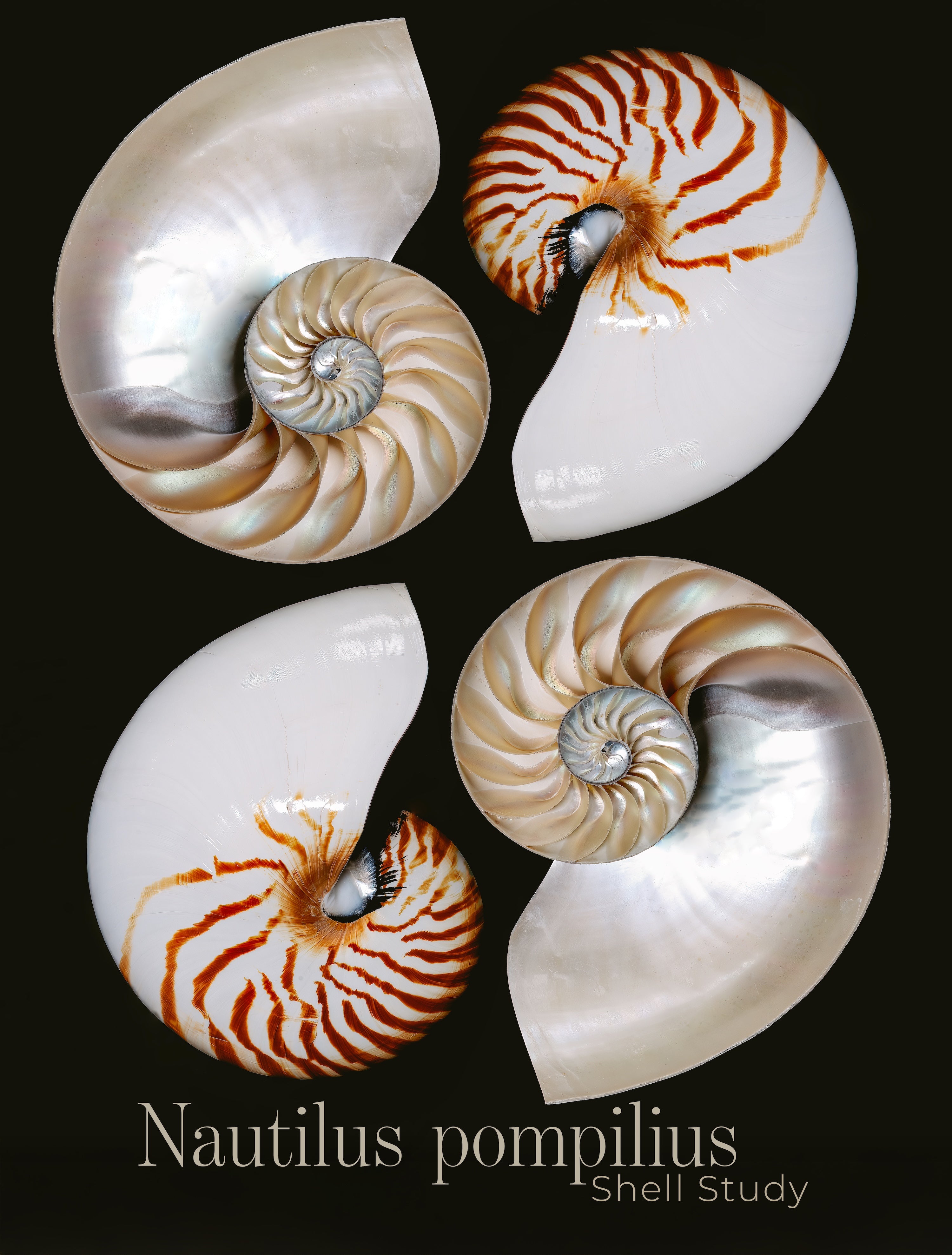
The nautilus spiral symbolizes growth, balance, and natural proportion. Rooted in the Fibonacci sequence and sacred geometry, it represents harmony between mathematics and nature — making it one of the most enduring symbols in coastal art and design.
There is something deeply reassuring about patterns that repeat in nature.
In the curve of a seashell, the unfolding of a fern, or the slow rhythm of waves meeting the shore, we recognize a sense of order — not rigid, but alive. The nautilus spiral holds that quiet balance. It reflects growth that feels natural, steady, and intentional.
Found throughout coastal life, the spiral appears in forms both delicate and powerful. From the elegant chambers of a nautilus shell to the motion of tides and wind, it reminds us that beauty doesn’t rush — it unfolds.
For centuries, the spiral has symbolized harmony, continuity, and the connection between mathematics and the natural world. In art, it becomes more than a shape. It becomes a way of seeing — and a way of living — guided by balance, proportion, and calm.
This page is part of our Coastal Symbolism series exploring the deeper meaning behind ocean-inspired art.
What the Nautilus Represents
At its heart, the nautilus spiral is a symbol of returning to center.
Each chamber grows outward, yet remains connected to the core — a quiet reminder that expansion doesn’t require losing yourself. Growth can be steady. Change can be grounded. Movement can still feel anchored.
The spiral reflects a natural rhythm many of us are searching for:
- Progress without urgency
- Evolution without chaos
- Expansion that remains balanced
In nature, the nautilus never rushes its form. Each curve builds upon the last, guided by proportion rather than force. In our own lives, the spiral becomes a visual meditation — an invitation to pause, recalibrate, and come back to what matters most.
To live with the nautilus is to honor growth that feels intentional, centered, and whole.
Geometry, Growth & the Fibonacci Connection
The nautilus spiral is more than a poetic symbol — it follows a pattern rooted in mathematics and nature.
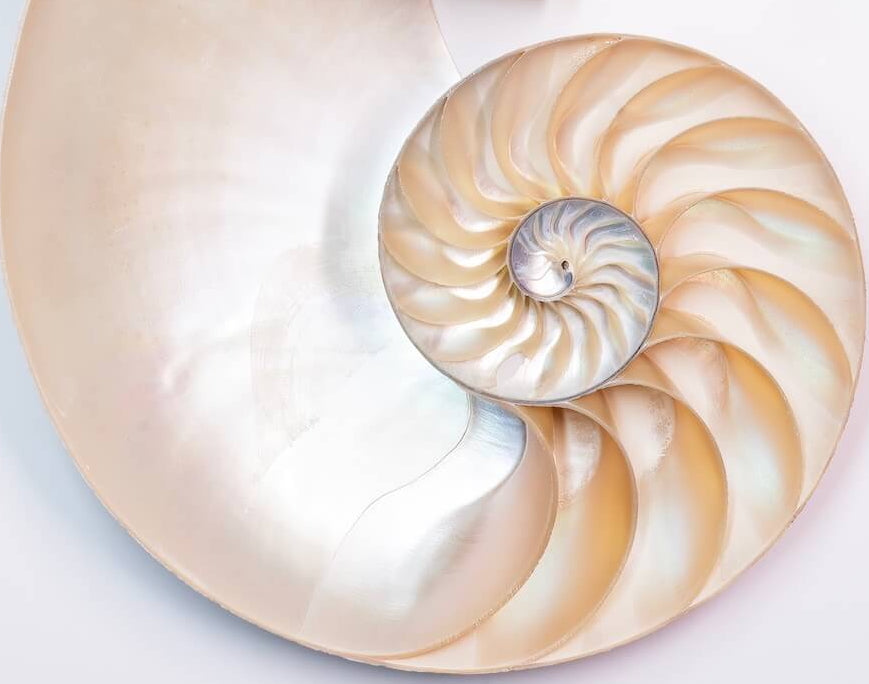
Its chambers expand in a proportional rhythm often associated with the Fibonacci sequence, a mathematical pattern found throughout the natural world. This same geometry appears in shells, flowers, hurricanes, and even the structure of galaxies. It reflects growth that is orderly, efficient, and beautifully balanced.
What makes the spiral so compelling is not perfection, but consistency. Each new chamber builds upon the last, honoring what came before while making room for what’s next. It’s a reminder that growth doesn’t happen all at once — it unfolds in measured, harmonious steps.
If you’re curious to explore the science and geometry behind this pattern more deeply, you can read the full story here:
→Why the Fibonacci Spiral Is Nature’s Most Beautiful Pattern
Why the Nautilus Belongs in a Home
Symbols shape the way a space feels.
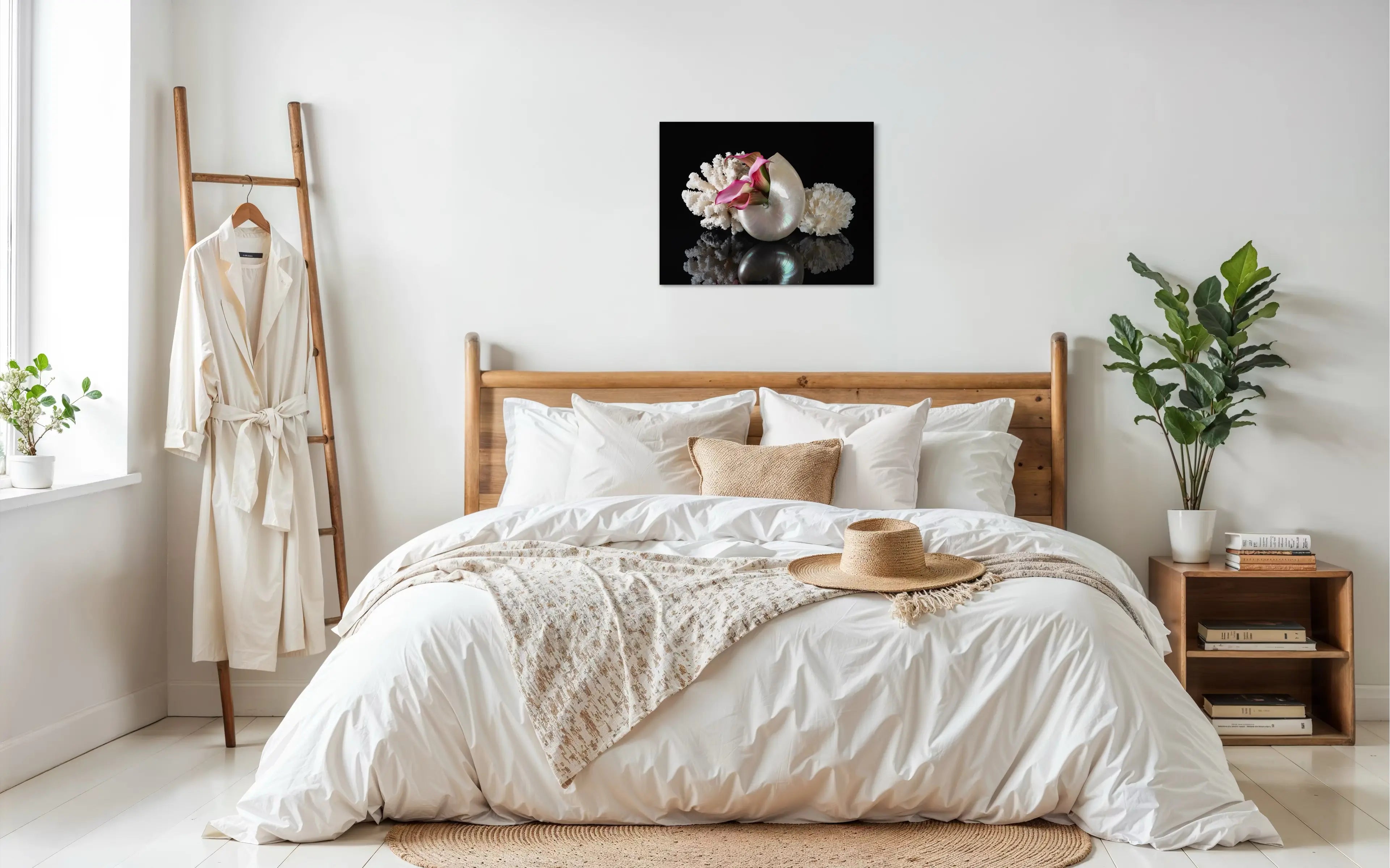
The nautilus spiral carries a sense of calm that doesn’t demand attention — it settles into a room quietly, offering balance rather than spectacle. Its geometry creates a visual rhythm that feels grounding, especially in spaces meant for rest, reflection, or gathering.
To live with the nautilus is to invite a reminder of returning to center. It reflects growth that unfolds naturally, without force or urgency. In a home, this presence can be subtle yet steady — a visual anchor that brings harmony to the space around it.
Art rooted in natural geometry doesn’t follow trends. It endures. The nautilus feels timeless because it mirrors patterns we instinctively recognize, allowing a room to feel considered, intentional, and complete.
Explore how the nautilus works in coastal biophilic design to ground and calm a room.
Why Glass Honors the Nautilus Spiral
The nautilus shell is a study in precision — a natural spiral built on proportion, balance, and quiet expansion.
Printing nautilus artwork on glass preserves the clarity of its chambered geometry and the subtle tonal transitions that define its structure. Unlike textured or matte materials, glass maintains crisp lines and luminous depth, allowing the spiral’s mathematical harmony to remain intact.
As light shifts throughout the day, reflections enhance the shell’s dimensional curve — reinforcing the feeling of growth unfolding in perfect proportion.
The result is not just coastal décor, but architectural art rooted in nature’s most elegant design.
The Nautilus in Art
Each piece in this collection begins with the same intention — to translate the quiet balance of the nautilus spiral into art that lives with you.
Through light, reflection, and scale, the spiral becomes more than an image. On glass, it holds presence. It shifts subtly throughout the day, echoing the same natural rhythm that gives the nautilus its timeless form.
These works are created for spaces that value calm, clarity, and meaning — art that doesn’t overwhelm a room, but completes it.


The nautilus reminds us that growth doesn’t require urgency. It expands by returning to center again and again — steady, measured, whole.
In a world that often asks us to move faster, the spiral offers another way: to grow without losing ourselves, and to find balance in the act of becoming.