

The Gulf Has Its Own Autumn Language: Signs of Fall Along the Gulf Coast
|
|
Time to read 9 min
Cart
Your cart is empty
|
|
Time to read 9 min
Fall arrives differently by the sea. There is no sudden blaze of crimson maples along the dunes or hillsides turning orange overnight. Along the Gulf Coast, autumn speaks more quietly. The sea oats deepen from green to amber and weathered gold, monarchs begin appearing along the coast, and the hard white light of summer softens into something warmer. Mornings begin to feel different, the beaches grow quieter, and even the water seems to take on deeper shades beneath changing skies.
The Gulf has its own autumn language. You just have to know what to look for.
One of the first signs appears along the dunes. By late summer into early fall, the flat seed heads of sea oats swell and ripen, shifting from fresh green into straw, amber, bronze, and sun-baked gold. Against pale sand and blue water, those grasses become the Gulf Coast’s answer to fall foliage — subtler than a forest of turning leaves, but no less tied to the season.
The rest of the dunes begin changing with them. Greens soften toward celery, moss, and olive. Dried grasses bring in earthy brown and weathered gold, while goldenrod, asters, muhly grass, and other coastal plants can add touches of yellow, lavender, pink, and burgundy. Fall does not replace the coastal palette here. It simply deepens and warms what is already present.
Some of the loveliest signs of fall are moving through the air. Monarch butterflies begin passing through the Gulf Coast on their seasonal journey, joined by Gulf fritillaries and other butterflies moving through dunes, gardens, and coastal wildflowers. There is something almost startling about that flash of orange against pale sand and blue water. A monarch is tiny against the scale of the Gulf and yet nearly impossible not to notice.
Bird migration adds another layer of movement. Shorebirds gather along beaches and tidal flats, while warblers and other songbirds use the Gulf Coast as an important migration corridor. The birds that live here throughout the year become part of the changing landscape too — pelicans flying low over the water, terns working the surf, egrets stalking the shallows, and herons standing perfectly still at the edge of the tide.
The coast may feel quieter after summer, but it is anything but empty.
There is something about a heron standing alone at the shoreline that feels especially suited to fall. It waits, watches, and moves only when the moment is right. Against softer evening light and a quieter beach, that patience becomes even more noticeable.
The heron has always seemed to me like a reminder that stillness is not the same thing as standing still. Some seasons are not about rushing forward. They are about paying attention, waiting long enough to understand what is changing, and knowing when it is time to move. That quiet presence is one of the reasons I return to the heron again and again in my coastal art.
If you spend enough time photographing the coast, autumn light is difficult to miss. The sun begins sitting lower in the sky, shadows stretch farther across the sand, and mornings and evenings take on a warmer, more dimensional quality. The intense glare of midsummer begins to soften.
Wet sand catches reflections differently. Sea oats seem to glow around their edges. Clouds hold more depth, and familiar stretches of beach can suddenly look new simply because the light reaches them from another angle. For photography, fall along the Gulf can be extraordinary.
Some of my favorite autumn colors appear in that changing light: deep Gulf blue, luminous clear-water blue, shell cream, moss and herbal greens, earthy brown, and occasionally a soft Rose Earth tone in the clouds just before sunset. None of them need to announce themselves as “fall colors.” They already belong here.
The Gulf is never one single blue. Wind, weather, currents, sediment, algae, cloud cover, and depth can change its appearance from one hour to the next. In fall, the lower sun and changing atmosphere can make the water feel richer — bright summer turquoise deepening toward Luminous Blue or mineral blue, sea-glass green becoming deeper teal, and stormier days introducing charcoal and slate.
Not every day looks this way, of course. That unpredictability is part of the beauty of the Gulf. One morning can be impossibly calm and translucent; the next can bring darker water, wind, clouds, and stronger surf. Autumn here is not simply softer than summer. Sometimes it is more dramatic.
Not every sign of the season happens above the tide line. As water temperatures and food patterns change, marine animals adjust too. Different species of rays may shift where they feed, gather, or travel at different times of year, and on certain days they become unexpectedly visible in clear Gulf water.
You may look down and notice one dark shape beneath the surface, then another, then several rays gliding almost effortlessly below the water. There is something mesmerizing about it because so much is changing beneath us without making much noise at all. The season is moving underwater too.
Fall can also bring increased activity among baitfish and other nearshore fish. Schools may gather close to shore, birds suddenly begin diving, and a stretch of water that looked quiet moments earlier can come alive. The exact timing changes with weather, water temperature, and location, but the sense of seasonal movement is unmistakable.
Fall changes what the Gulf leaves behind as well. Cold fronts begin pushing farther south, winds shift, and rougher water or changing tides can rearrange the shoreline overnight. Fresh shell lines may appear where smooth sand had been the day before, driftwood moves, seaweed gathers in new places, and fragments of coral or unusual shells suddenly turn up after the water settles.
For those of us who rarely walk a beach without looking down, this can make fall especially rewarding. That instinct to notice, collect, and carry a little piece of the shore home is something I explore in Conchophile: Why Some of Us Can’t Stop Collecting Seashells. It is not necessarily that the sea is creating more shells, but that wind, surf, tides, and fewer summer crowds can make what is already there easier to find.
Sea turtle season does not simply stop when summer ends. In many Gulf Coast areas, nests may still be hatching into early fall even as new nesting activity declines. Tiny tracks heading toward the water can still appear in the sand, a reminder that nature does not divide itself neatly into the seasons on our calendars.
That overlap is part of what makes coastal autumn so interesting. Butterflies are traveling south while sea turtle hatchlings are moving toward the Gulf. Birds are arriving, leaving, or simply gathering in different places. The dunes are turning gold while the water may still feel warm enough for summer.
Autumn here is a transition rather than a switch.
Eventually there comes a morning when the difference is impossible to miss. A front has passed through, the humidity has eased, and the breeze carries an edge that simply was not there in August. The Gulf may still be warm, but the air above it feels lighter.
Those first cooler mornings can change the whole experience of the beach without changing the view at all. Sunrise walks linger a little longer. The sand feels cooler beneath your feet. The air smells different, and for the first time in months, you may find yourself wishing you had brought another layer.
Sometimes you can almost feel the season arrive behind a north wind
Once peak summer travel begins to ease, many stretches of shoreline seem to widen. There are fewer umbrellas, fewer overlapping footprints, and more open stretches where the waves become the loudest thing around you again.
That quieter beach is almost a season unto itself. With fewer distractions, smaller details become easier to notice: bronze sea oats bending in the wind, a pelican skimming low over darker water, shells newly exposed by the tide, monarchs moving through the dunes, or the first cool morning when the air finally feels colder than the sea.
This is one of my favorite times of year for beach walking and photography. The softer light, quieter shoreline, changing skies, and little signs of movement along the coast make it easier to slow down and really notice what is happening around me. I find myself stopping more often, looking longer, and coming home with photographs of things I might have walked past in the middle of summer.
This is the version of fall I know best.
If I were building an autumn palette from what is actually outside along the Gulf, I would begin with sea-oat gold, shell cream, mossy olive, celery green, earthy brown, deep Gulf blue, Luminous Blue, warm sand, charcoal, and Rose Earth.
Those colors already exist naturally beside one another here. Celery and herbal greens linger in dune plants while sea oats move toward amber and brown. Deep blue water sits beside pale sand. Rose Earth appears in sunset clouds, and charcoal arrives with stormier skies or wet driftwood.
Maybe there is a small flash of monarch orange or a touch of bronze where the afternoon sun catches the grass.
None of these colors need pumpkins or maple leaves to explain that fall has arrived. The coast has already created its own palette.
For me, coastal fall decor is not about asking a room beside the sea to pretend it belongs somewhere else. It is about noticing what the coast itself is doing and borrowing from that.
A pale summer-blue room can deepen with Luminous Blue or a richer Gulf tone. Sea-glass greens can shift toward celery, moss, and olive. Natural wood, woven grasses, baskets, linen, and earthy brown can bring warmth without adding anything overtly seasonal. A little Rose Earth can echo the blush of an autumn sunset, while aged brass or warm gold picks up the color of ripened sea oats.
Texture matters just as much as color. Smooth glass beside weathered wood, soft linen against woven fibers, coral beside stone, and deeper textiles layered over lighter summer pieces can change the feeling of a room without changing its identity.
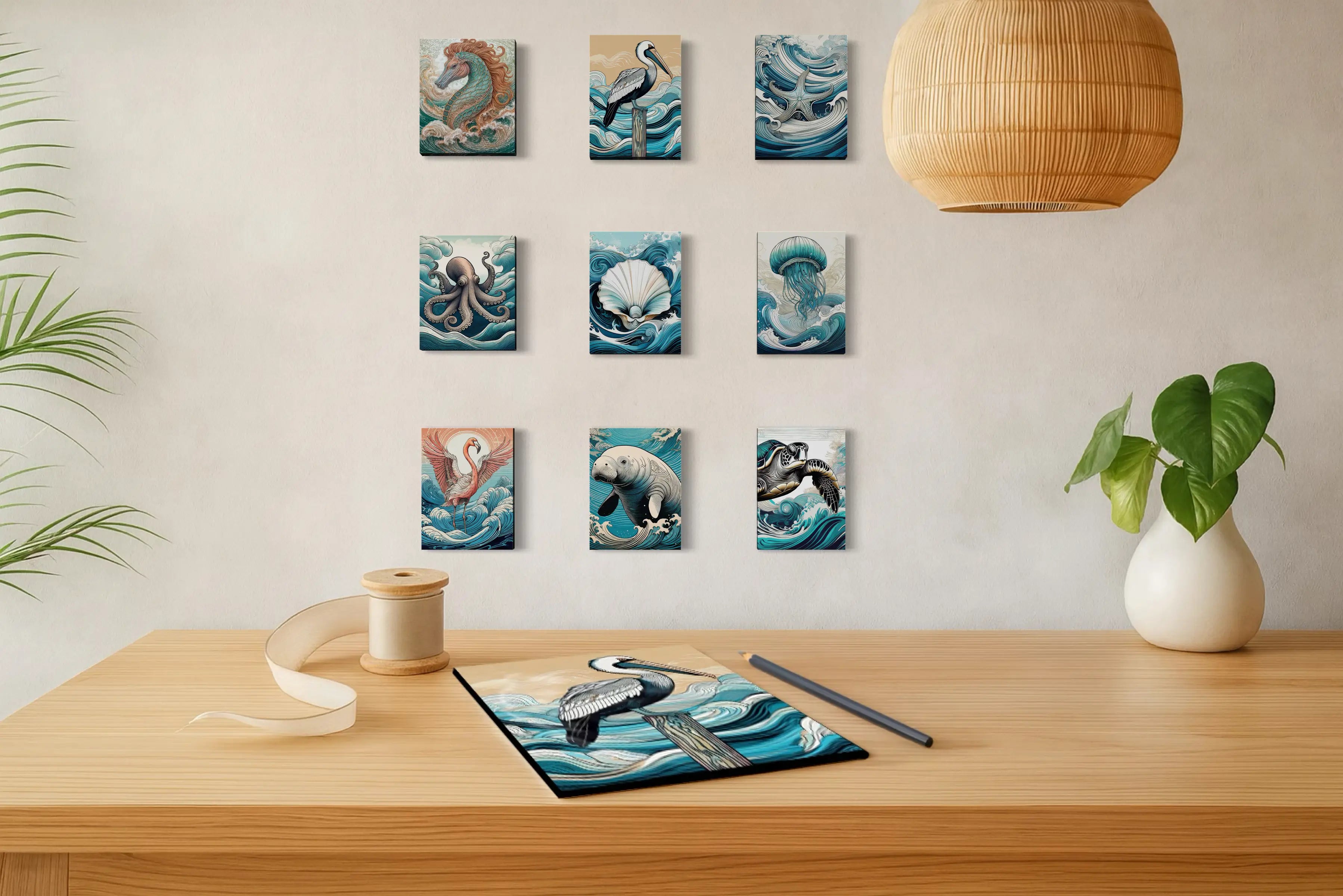
Artwork can do the same. Deeper water, stormier skies, golden grasses, migrating birds, black-and-white shoreline scenes, botanical forms, and warmer shell tones can make a room feel richer and more grounded for fall.
A coastal home should still feel like itself in October. The goal is not to dress the beach up as somewhere else. It is to notice what the coast is already becoming.
Maybe that is what I love most about fall by the sea. Nothing changes all at once. The water is still there, the sand is still pale, and the palms remain green. Yet the sea oats have turned gold, butterflies are moving along the dunes, birds are gathering, shell lines appear after rougher water, rays glide beneath the surface, and the light falls differently across the beach.
Then one morning, almost without warning, the air feels cooler than the sea.
The coast changes without becoming something else. Perhaps there is something worth carrying with us in that. We can deepen, soften, let go of a little brightness, and make room for something quieter without losing the parts of ourselves that still feel like home.
If the colors and quiet rhythms of fall by the sea speak to you, explore coastal glass wall art inspired by beaches, shells, birds, marine life, and the changing colors of the Gulf.
A few pieces that carry the deeper blues, weathered golds, warm neutrals, and quiet coastal mood of the season.
About the Author
Lisa Reid is the artist, photographer and founder behind Echoes of the Sea LLC, where coastal photography, natural forms, color, and life along the Gulf inspire glass wall art and The Coastal Journal.


