

Benefits of Coastal Art: Calm, Connection & Coastal Style
|
|
Time to read 15 min
Cart
Your cart is empty
|
|
Time to read 15 min
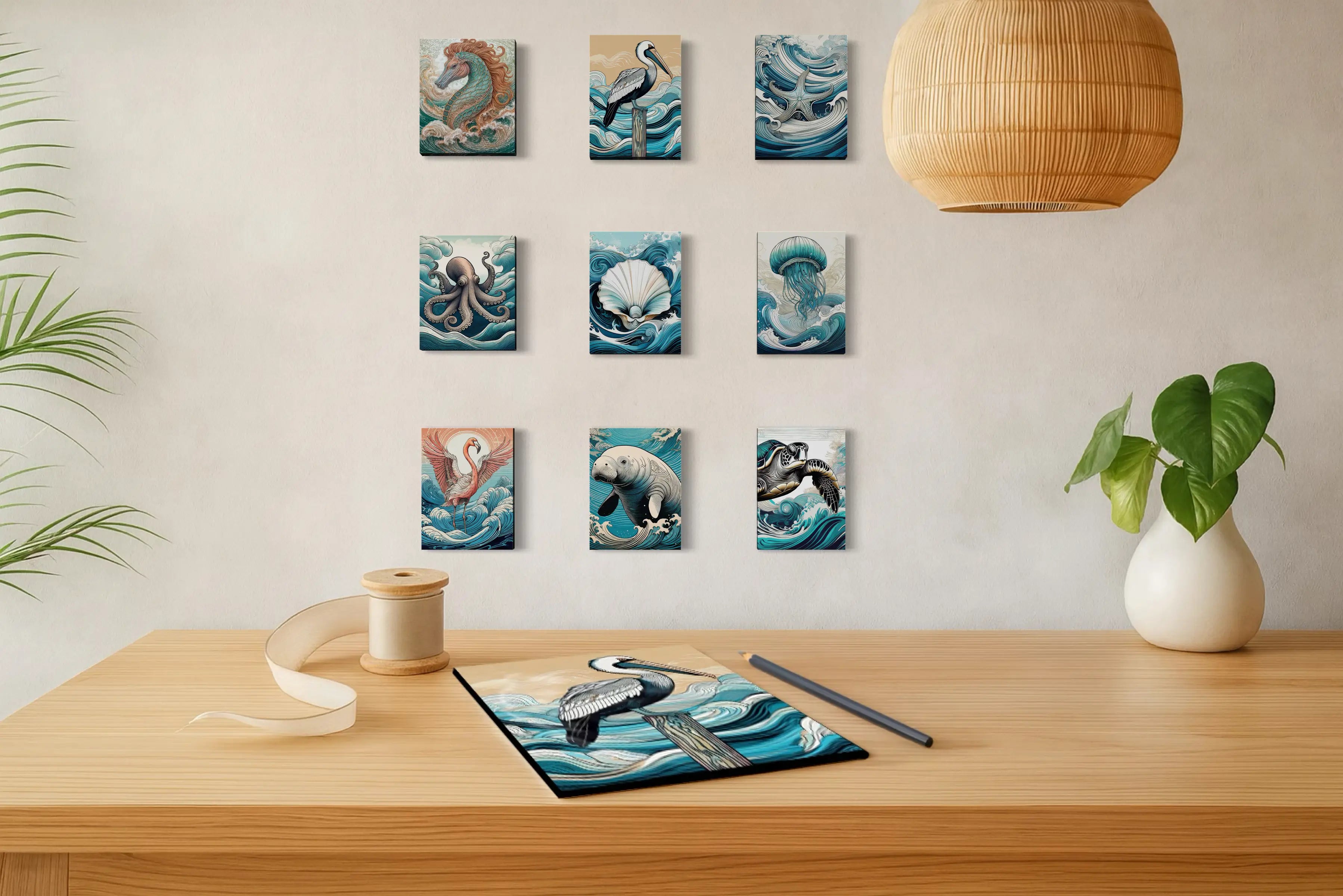
Brown Pelican Coastal Glass Print – a symbol of resilience and grace in coastal waters.
Like the steady gaze of the pelican, coastal art brings a quiet strength into your home—reminding us of the resilience, beauty, and harmony of life by the sea.
From the sunlit curve of a seashell to the sweep of a pelican’s wing, coastal art brings the colors, movement, and quiet rhythm of the shoreline into everyday spaces. Its appeal goes beyond simply decorating a wall. Coastal art can help create a room that feels lighter, calmer, more connected to nature, and more personal — whether your view is of the ocean or hundreds of miles from it.
For me, that is the heart of coastal art: bringing home a little of what the sea gives us.
Coastal art is artwork inspired by the ocean, shoreline landscapes, marine life, shells, waves, seabirds, natural coastal textures, and the changing colors of the sea. It can take many forms, including photography, paintings and drawings, traditional art prints, abstract ocean-inspired art, mixed-media pieces, and glass wall art.
Some coastal artwork captures the sea literally — a breaking wave, a pelican resting near the water, or shells scattered along the shore. Other pieces are more interpretive, using color, movement, texture, or natural forms to evoke the feeling of being near the coast.
What connects them is not one particular style, but a relationship to water, light, nature, and the emotional pull of the shoreline.
One of the reasons coastal art works in so many homes is that it can influence both the visual atmosphere of a room and the way that room feels. The right artwork can introduce calm, movement, memory, color, and a sense of connection without filling a space with unnecessary décor.
Ocean-inspired imagery often uses open horizons, natural forms, gentle movement, and colors associated with water and sky. Blues, aquas, sea-glass greens, sandy neutrals, and weathered whites can give the eye somewhere softer to rest.
A quiet seascape in a bedroom, a shell study beside a reading chair, or a peaceful coastal photograph in an entryway can help establish a more relaxed visual tone without demanding attention. Sometimes the most effective artwork is not the piece that shouts, but the one that lets the room breathe.
For many of us, the coast carries memory. It may remind us of childhood summers, family vacations, quiet walks at sunrise, shells collected with someone we love, or simply the feeling of standing at the edge of something larger than ourselves.
Coastal art can bring that connection into the home. A pelican may represent patience and resilience, a sea turtle may suggest endurance and return, while a nautilus or shell can draw attention to the extraordinary patterns hidden throughout nature. The image becomes more than a subject; it becomes a reminder.

Coastal environments are constantly changing. Sunlight moves across the water, waves rise and disappear, wet sand reflects the sky, and even the colors of the sea can change within minutes.
Artwork inspired by that movement can keep an interior from feeling static. This is especially noticeable with glass wall art, where the smooth surface responds to changing natural light throughout the day, allowing color and contrast to shift subtly as the room changes around it.
A room does not need to be filled with shells, anchors, ropes, and obvious nautical décor to feel connected to the coast. Often, one thoughtfully chosen piece of art can do more.
A large ocean image above a sofa, a pair of shell studies in an entryway, or a quiet seabird print in a bedroom can establish a coastal feeling without overwhelming the room. That is one reason coastal art works so naturally in everything from traditional beach cottages to contemporary and minimalist interiors.
At its best, coastal art captures contrasts that naturally exist beside the sea: strength and stillness, movement and quiet, light and depth. A wave can feel powerful and peaceful at the same time. A shell can seem delicate while carrying the evidence of remarkable structural strength. A pelican can appear almost motionless one moment and rise effortlessly into flight the next.
Those contrasts give coastal subjects their emotional depth.
It’s not just art for your walls — it’s art for your soul.
Artists have been drawn to the sea for centuries. Coastal villages, working harbors, naval journeys, dramatic storms, quiet beaches, and endless horizons have all found their way into art.
During the Romantic movement of the late 18th and 19th centuries, artists often used dramatic seas and expansive skies to express awe, power, mystery, and the relationship between people and nature. Across the world, other traditions developed their own visual language around water.
Katsushika Hokusai’s The Great Wave off Kanagawa, created in the early 1830s, remains one of the most recognizable interpretations of ocean movement ever created. Its sweeping curves and rhythmic energy continue to influence art and design today.
Modern coastal art carries those traditions forward while expanding far beyond traditional seascapes. Today the sea appears in photography, abstraction, minimalist line work, glass prints, mixed media, digital art, and contemporary interior design.
Coastal art can be peaceful, dramatic, colorful, minimalist, playful, or sophisticated. The subject may be familiar, but the way it is interpreted can completely change the feeling.
Some of the most enduring subjects include:
Waves bring movement and energy into a room. They can range from soft, misty shore breaks to dramatic abstract compositions filled with teal, navy, emerald, or gold.
Shells reveal the quieter architecture of the sea. Their curves, spirals, ridges, and symmetry work beautifully in interiors where you want coastal influence without a traditional beach-house look.
Sea turtles, dolphins, whales, jellyfish, and other ocean creatures bring personality and symbolism into coastal interiors. A marine-life piece can feel serene, whimsical, powerful, or deeply meaningful depending on the subject and composition.
Pelicans, herons, flamingos, and shorebirds connect land, water, and sky. They can add movement and presence while also carrying personal associations with patience, balance, community, resilience, or return.
Not every coastal space needs a literal beach scene. Abstract coastal art distills the ocean into movement, color, line, and shape, allowing a room to feel connected to the sea without becoming overtly nautical.
For contemporary interiors, this can be one of the most versatile approaches.
The colors found along the coast are part of what makes coastal art so adaptable. There is no single “coastal blue.” The shoreline offers an entire spectrum: pale aqua, sea-glass green, deep navy, stormy gray, driftwood brown, shell pink, coral, sandy beige, sunlit white, emerald, turquoise, and gold at sunrise and sunset.
That range allows coastal art to work within very different interiors. Soft blues and neutrals can support a quiet bedroom, while deep navy and emerald can create drama in a modern living room. Coral, flamingo pink, or tropical turquoise can bring energy to an otherwise restrained space.
The best palette is not necessarily the one that looks most “beachy.” It is the one that supports the atmosphere you want the room to have.
Coastal art appears in many materials and mediums. Traditional paintings bring visible brushwork and texture, photography preserves a real encounter with light, wildlife, or landscape, and mixed media can introduce tactile materials and layered surfaces.
Glass offers something different.
At Echoes of the Sea, our coastal artwork is printed directly on glass, giving each image vivid color, depth, and a sleek reflective finish. The frameless presentation keeps the artwork visually clean while allowing it to work within both layered and minimalist interiors.
Because glass responds to the light around it, the artwork can feel slightly different throughout the day. That changing relationship with light feels especially appropriate for art inspired by the sea.
Coastal art works across a much wider range of interiors than the traditional beach house. It can complement Classic Coastal, Modern Coastal, Coastal Cottage, California Coastal, Japandi Coastal, Coastal Glam, Coastal Noir, Tropical Coastal, Bohemian Coastal, Coastal Farmhouse, and many styles beyond them.
The difference is often not the subject itself, but the way it is presented. A quiet shell study might feel minimal and contemplative in a Japandi-inspired room, while the same subject paired with linen, weathered wood, and collected objects could feel relaxed and cottage-like. An emerald wave triptych against a dark wall might become dramatic Coastal Noir.
Art helps establish the emotional direction of the room.
Before thinking about size or color, start with a simpler question: How do you want the room to feel?
Do you want calm, energy, warmth, drama, a sense of escape, or a meaningful connection to a particular animal, place, or memory? The artwork you choose can shift the emotional direction of a room even when everything else stays exactly the same.
You can see that idea in action in Same Room, Different Mood: How the Right Glass Print Changes the Feeling of a Room.
Once you know the feeling you want to create, consider three practical elements: scale, color, and meaning.
Artwork should feel proportionate to the wall and the furniture around it. A large blank wall often needs enough visual weight to feel intentional, while smaller spaces may benefit from one compact piece or a carefully arranged grouping.
For a deeper look at scale and placement, explore our Ocean Prints & Coastal Wall Art Guide.
Artwork does not have to match the room exactly. Often it works better when it connects with one or two existing colors and introduces a little contrast.
Let the art participate in the palette rather than disappearing into it.
Choose imagery you actually want to live with. A piece that reminds you of a place, animal, memory, or feeling will usually have more staying power than artwork chosen simply because it matches the sofa.
Rooms feel more personal when the objects inside them carry a story.
Abstract coastal art offers another way to bring the sea indoors without relying on literal shoreline imagery. Waves can become sweeping lines, currents can become color, and the horizon can be reduced to a simple division of light and depth.
This makes abstract coastal artwork especially effective in modern interiors, where the feeling of the ocean may matter more than a recognizable beach scene. It can introduce energy, movement, and color while still leaving the room visually open.
Glass gives coastal art a distinctly modern presence. Printed directly on glass, ocean-inspired artwork gains vivid color, depth, and a sleek reflective finish. The frameless presentation keeps the artwork visually clean, while the glass surface responds beautifully to changing natural light throughout the day.
That makes coastal glass wall art surprisingly versatile. A luminous shell study can soften a bedroom or entryway, a dramatic wave print can anchor a modern living room, and marine life or coastal birds can introduce personality without relying on traditional nautical décor.
Glass works especially well when you want the feeling of the coast to come through light, movement, and color rather than obvious beach motifs.
Large coastal artwork can completely change the relationship between a wall and the room around it. Instead of filling a large space with several small decorative objects, one oversized ocean print or multi-panel composition can create a clear focal point and establish the room’s color, movement, and mood all at once.
A wide wave composition can echo the horizontal line of the horizon, a dramatic marine-life piece can bring energy to a tall wall, and an abstract triptych can transform an otherwise empty space into something architectural.
The goal is not simply to fill a large wall. It is to choose artwork with enough presence to feel intentional within the scale of the room.
If you’re drawn to bold focal pieces, our guide to Coastal Statement Wall Art explores how large glass prints can anchor modern coastal interiors with depth and dramatic presence.
The benefits of coastal art can reach beyond decoration. For many people, ocean imagery carries associations with rest, openness, memory, and escape. Soft colors, natural forms, distant horizons, and familiar scenes of water can help create a space that feels visually quieter and more restorative.
Coastal art is not medicine, but the atmosphere we create around ourselves matters, and art can be a meaningful part of that atmosphere.
A room filled with harsh contrast, clutter, and competing focal points feels very different from one built around softer colors, natural imagery, and open visual space. Ocean-inspired art can contribute to that calmer feeling through soft blues, aquas, sandy neutrals, and organic forms that give the eye somewhere uncomplicated to rest.
A quiet seascape, shell study, or still seabird can introduce a sense of pause into rooms meant for rest. Bedrooms, reading nooks, meditation spaces, and quiet corners are especially natural places for this kind of imagery.
Sometimes calm begins with simply giving the eye somewhere peaceful to land.
The shoreline is always changing. Tides rise and fall, waves reshape the sand, storms pass, and shells carry evidence of growth, movement, and time. Perhaps that is why coastal imagery so easily becomes connected with ideas of renewal.
A sea turtle may remind us of endurance and return, a shell may suggest strength formed slowly over time, and a sunrise over the water can represent another beginning. These associations are personal, but that is precisely what can make artwork meaningful.
The right image becomes more than something beautiful to look at. It becomes something you recognize yourself in.
There is something about looking into an ocean scene that invites the imagination beyond the walls of the room. A distant horizon can make a space feel more open, a breaking wave can suggest motion, and a quiet beach photograph can bring back the memory of warm sand, salt air, or the rhythm of water reaching shore.
That small mental shift can create a moment of pause in an otherwise busy day — not an escape from life, but more like a brief return to ourselves.
Light plays an important role in how coastal art feels within a room. Reflective glass can interact with daylight, creating subtle changes in brightness and color as the sun moves through the space.
Placement can strengthen that effect. A piece positioned where it receives soft natural light can feel luminous without becoming overpowering. In entryways, living rooms, and other shared spaces, artwork can also help guide the eye and establish a visual focal point.
This idea connects naturally with Coastal Feng Shui, where artwork, light, placement, and symbolism are considered together to create a more intentional environment.
Explore our Coastal Feng Shui guide for more on choosing and placing art with intention.
Coastal art works because it can meet us on several levels at once. It brings color into a room, connects us with nature, carries memories, and can introduce light, movement, symbolism, and personality.
Sometimes it simply reminds us of a place where we felt peaceful.
From tranquil seascapes to bold marine-life prints and sculptural shell studies, coastal art allows the feeling of the shoreline to remain present long after we have left the water.
That is what I mean by Art for the Soul.
Trends change, but our connection to the sea does not. Perhaps that is why coastal art continues to feel relevant across so many different design styles.
A pelican can feel at home in a relaxed coastal cottage or a clean contemporary room. A shell can appear traditional, minimalist, organic, or dramatic depending on how it is photographed and displayed. An ocean wave can become a peaceful landscape or a bold abstract statement.
Coastal art does not need to belong to one decorating style. Its real subject is the relationship between nature, light, movement, memory, and the way a space makes us feel.
And that relationship is timeless.
Our homes hold more than furniture. They hold memory, mood, ritual, and the objects we choose to live beside every day, which is why selecting art can feel more personal than choosing almost anything else in a room.
The same space can feel completely different depending on the artwork placed within it — quiet or energetic, dramatic or serene, playful or contemplative. That is the idea at the heart of Same Room, Different Mood: How the Right Glass Print Changes the Feeling of a Room.
Sometimes nothing else in the room needs to change.
The art changes the conversation.
Coastal art is artwork inspired by the ocean, shoreline landscapes, marine life, shells, waves, seabirds, and other elements associated with coastal environments. It can include photography, paintings, prints, abstract artwork, mixed media, and glass wall art.
Coastal art can help create a calmer, more open visual atmosphere through natural imagery, soft colors, water-inspired movement, and scenes associated with the shoreline. Its emotional effect is personal and can also come from memories or experiences the viewer associates with the sea.
Coastal art can work almost anywhere. Larger pieces often anchor living rooms, dining rooms, and entryways, while quieter imagery can work beautifully in bedrooms, reading areas, bathrooms, or meditation spaces. Scale, natural light, and the mood you want to create should guide placement.
No. Coastal art can work in homes far from the ocean and within design styles ranging from Classic Coastal and Coastal Cottage to modern, Japandi, glam, bohemian, farmhouse, and dramatic interiors. Coastal influence can come through color, light, natural forms, and imagery without making a room look overtly nautical.
Glass creates a sleek, frameless presentation with vivid color and a reflective surface that changes subtly with the light around it. Canvas offers a softer, more textured appearance. Glass is especially suited to interiors where you want crisp detail, luminosity, and a contemporary coastal finish.
The Final Wave
Coastal art is not simply a design choice. It is one way of keeping a connection to nature, light, memory, and the shoreline present within everyday life.
A wave can bring movement into a room, a seashell can reveal the quiet architecture of nature, and a pelican can carry a sense of patience and resilience. Each subject brings its own rhythm and meaning, allowing coastal art to feel personal rather than simply decorative.
Sometimes the right artwork simply gives us a moment to remember how it feels to stand beside the sea.
At Echoes of the Sea, that is the idea behind Art for the Soul — artwork that does more than fill an empty wall. It gives the room something to feel.
Lisa Reid is the founder and creative force behind Echoes of the Sea LLC and The Coastal Journal. Inspired by the changing light, wildlife, natural forms, and emotional rhythm of the shoreline, Lisa creates coastal artwork designed to bring beauty, serenity, and connection into everyday spaces.
Through The Coastal Journal, she explores coastal design, symbolism, nature, color, and the stories behind the forms that continue to inspire her work.
“Every wave tells a story — my art simply helps it find its way home.”


