

Feeding Flamingos at Jungle Gardens: What the Experience Taught Me About Joy
|
|
Time to read 8 min
Cart
Your cart is empty
|
|
Time to read 8 min
"Some moments don’t just make you smile — they light you up. Feeding flamingos at Jungle Gardens was one of those moments."
Feeding flamingos at Jungle Gardens in Sarasota, Florida, was more than a fun wildlife encounter for me. Standing among these brilliant pink birds — watching them gather, feed, balance, and move together — turned into one of those unexpected moments that stays with you.
It reminded me why flamingos have become such powerful symbols of joy, confidence, balance, and connection — and why they continue to find their way into my art.
There’s something inherently fun about flamingos.
Maybe it’s their color — a pink so unapologetic it almost feels celebratory. Maybe it’s the way they move together in groups, curious and confident, or how they pause mid-motion to rest peacefully on one leg.
Flamingos seem capable of being both exuberant and calm, and I think that contrast is part of their charm.
Feeding them added another layer entirely.
Up close, they were curious and confident, stepping toward me as the flock gathered. Wings lifted, heads tilted, and suddenly I was surrounded by movement, color, and a surprising sense of calm.
It was impossible not to smile.
The experience felt playful without feeling frivolous — one of those moments that pulls you completely into the present.
Yes… this is what being here feels like.
Three vibrant pink flamingos standing together by the water at Jungle Gardens — joy amplified through connection.
During my visit to Sarasota Jungle Gardens, guests had the opportunity to feed flamingos by hand. I knew it would be fun.
I didn’t expect it to feel quite so joyful.
As the flamingos gathered around me, the air seemed to change. Pink feathers flashed in the sunlight. Long necks curved and crossed. Heads dipped toward the food and lifted again while birds moved around one another with an ease that somehow felt both chaotic and beautifully coordinated.
What struck me most was how comfortable they seemed being exactly what they were — bright, social, expressive, and impossible to overlook.
Nature doesn’t always have to be distant to inspire awe.Sometimes it walks right up to you.
And sometimes it happens to be brilliant pink.
Flamingos earn their color through nourishment — what they consume shapes how they appear.
Their pink coloration comes from carotenoid-rich foods such as algae and small crustaceans. Those pigments accumulate in their feathers and help create the shades of coral, blush, and brilliant pink we associate with flamingos.
Standing among them at Jungle Gardens, that fact suddenly felt like more than biology.
Joy, like color, is shaped by what nourishes us.
The flamingos were vibrant, social, curious, and completely themselves. Watching them made me think about joy not as something superficial, but as something cultivated — through nourishment, connection, confidence, and the freedom to take up a little space.
That experience deepened my understanding of pink flamingo meaning. Flamingos have come to represent joy, balance, resilience, community, and confidence in art and modern symbolism. Perhaps that is part of why they resonate so deeply.
“Joy doesn’t need to be loud — but sometimes it arrives in brilliant pink.”
There is another layer to the flamingo story that makes seeing them in Florida feel especially meaningful.
Wild American flamingos have begun appearing across the state again in remarkable numbers, renewing hope that Florida may once again become a more lasting part of their range. Their comeback adds another dimension to the joy I associate with them.
Flamingos are not simply colorful birds. Their story has also become one of resilience — of returning, adapting, and appearing again in places where they had become increasingly rare.
I explore that extraordinary story — from Hurricane Idalia and the Everglades to statewide flamingo counts and Merritt Island — in Flamingos in Florida: Nature’s Pink Revival and My Artistic Inspiration.
Knowing that wild flamingos are appearing in Florida again made my experience at Jungle Gardens feel even more connected to the landscape I love.
Experiences like this almost always find their way into my work. Not necessarily as a literal copy of what I saw, but as a feeling I want to remember.
Color.
Movement.
Confidence.
Connection.
Joy.
Those are the qualities I return to when creating flamingo art.
Our Best-Selling Flamingo Glass Print
This piece was created for those who want joy to feel intentional — not accidental.
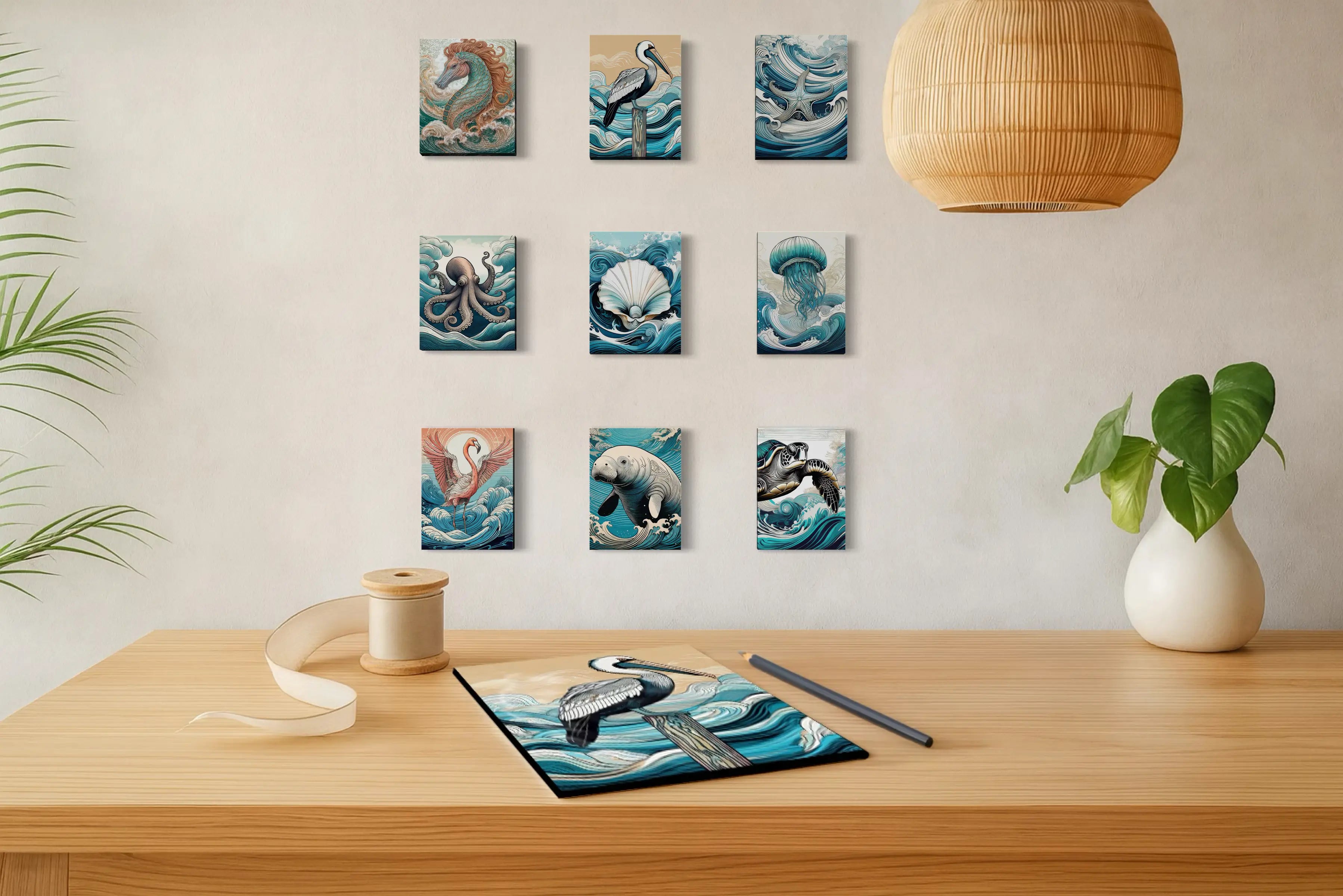
Our Flamingo Coastal Glass Print captures many of the qualities I love most about flamingos: confidence, movement, graceful curves, and color that refuses to disappear quietly into the background.
Set against a dramatic dark backdrop, tropical florals and layered textures surround the flamingo with warmth and depth.
The result feels expressive without becoming chaotic — bold, joyful, and still grounded.
When light moves across the glass, the colors shift subtly with it, giving the piece an energy that changes throughout the day.
It’s no surprise this has become one of our most beloved pieces — it radiates happiness, invites conversation, and brings a sense of playful calm to any space.
Long after I left Jungle Gardens, a few thoughts stayed with me.
That last lesson may be the one I carried home most strongly. We often imagine joy as something loud — excitement, celebration, movement. But the flamingos were just as compelling when they stood quietly in the water, balanced on one leg, seemingly content to simply be there.
Joy can move.
Joy can rest.
Both can be true.
I’ve always been drawn to flamingos, but feeding them helped me understand why.
They remind me to stand confidently even when life feels unsteady. To embrace color and connection rather than shrinking away from them. To notice joy when it appears unexpectedly — and let it take up space.
For me, the flamingo represents a kind of joyful resilience: bright without being shallow, graceful without being fragile, and capable of both movement and stillness.
If you’d like to explore the deeper cultural and artistic symbolism of the flamingo, including what pink flamingos represent spiritually and in art, visit my complete guide to Pink Flamingo Meaning & Symbolism.
Flamingos are also part of our broader exploration of Coastal Birds of the Sea, alongside herons and pelicans — each offering its own expression of presence, balance, and belonging.
That feeling — the color, the confidence, the playful energy — doesn’t have to stay at Jungle Gardens.
As an artist, this is the joy I try to carry into my work. Each flamingo piece is inspired by the same sense of exuberance and calm I felt standing among those birds — art designed to remind us that joy is something we can live with, not simply visit.
Flamingo glass prints bring that color and movement into the home while reflecting changing light throughout the day.
A quiet reminder, perhaps, to make a little more room for joy.
Art has a way of carrying meaning beyond the moment — into the spaces where we rest, gather, and begin again.
Joyful Flamingo Color Palette
The colors that surround us shape the way a room feels.
Inspired by the flamingo’s combination of exuberance and calm, this palette blends soft blush, warm peach, coral glow, coastal blue, and grounding neutrals.
It works especially well in spaces where you want color to feel playful without becoming overwhelming — from tropical coastal rooms to bedrooms, creative spaces, and cheerful entryways.
During my visit to Sarasota Jungle Gardens, guests were able to feed flamingos by hand, which was one of the most memorable parts of the experience. Visitor experiences, schedules, and animal-interaction policies can change, so check directly with Sarasota Jungle Gardens for current flamingo feeding information before your visit.
Feeding flamingos by hand is colorful, lively, and surprisingly immersive. The birds gather closely around you, moving their long necks and bills toward the food while interacting with the rest of the flock. For me, the experience felt playful, peaceful, and completely absorbing.
Flamingos get their pink coloration from carotenoid pigments in the foods they eat, including algae and small crustaceans. Those pigments are processed by the birds and deposited in their feathers, producing colors that can range from pale blush to vivid coral pink.
Flamingos are often associated with joy because of their vivid color, expressive appearance, social behavior, and unmistakable presence. In modern symbolism and art, their bright pink feathers can represent confidence, happiness, individuality, and the freedom to live more fully in color.
In art, flamingos can symbolize joy, balance, confidence, community, resilience, and individuality. Their graceful shape and vibrant color make them especially powerful visual symbols when an artist wants to express both calm and exuberance.
About the Author
Lisa Reid is the founder of Echoes of the Sea LLC, an artist and photographer inspired by nature, symbolism, and the quiet emotional language of the coast.
Her work begins with lived experience — moments of awe, connection, color, and joy — and becomes luminous coastal art designed to carry those feelings into everyday spaces.
Through The Coastal Journal, Lisa shares reflections on wildlife, coastal symbolism, mindful living, and the meaning woven into natural forms — from flamingos and sea turtles to shells, spirals, and shifting tides.
Her approach blends artistry, observation, and personal experience, inviting readers to slow down and notice what often goes unseen.
Table of contents


