

Which Print Does a Room You Don’t Love Yet Need?
|
|
Time to read 8 min

Cart
Your cart is empty
|
|
Time to read 8 min
The same coastal bedroom corner, before and after artwork—showing how one statement print can bring contrast, focus, and a more finished look to the room.
Have a room you don’t really love?
You know something is not quite right, but you cannot quite put your finger on it. Maybe the wall looks too blank. Maybe the room is pleasant enough, but forgettable. Maybe everything technically works, yet the space still does not seem finished.
That is more common than people think.
Often, the answer is not a full redesign. It is not always a new rug, a different chair, or more styling either. Sometimes the room simply needs the right print — one that adds warmth, contrast, structure, movement, or a clearer focal point.
That is where this guide can help.
If you are wondering how to choose wall art for a room that still feels unfinished, it helps to look first at what the room is not doing yet. Instead of choosing only by subject or color, name what the space is missing — warmth, contrast, structure, movement, or a clearer focal point.
When people shop for art, they often begin with subject matter: a shell, a flamingo, a sea turtle, a pelican, a shoreline, a nautilus, or a jellyfish.
That makes sense. Subject matter does matter.
But rooms usually tell on themselves before you ever choose the art. Sometimes the wall disappears. Sometimes everything sits in the same tonal range. Sometimes the shelves are doing too much work. Sometimes nothing looks wrong, but nothing looks resolved either.
That is the better place to begin.
Not just with “What do I like?” but with “What is this room still missing?”
A blank room is not always empty. Often it is simply unfocused.
The furniture may be in place. The palette may be beautiful. The room may already have good bones. But when the wall has no clear focal point, the eye keeps moving without landing anywhere. That can make the whole space look more tentative than finished.
This is where one stronger piece can do far more than several smaller accents.
A well-scaled print gives the room a center of gravity. It tells the eye where to go first. It makes the surrounding furniture feel more intentional. It can even make a compact room look more complete, because the wall no longer feels undecided.
If scale is the part you are unsure about, my guide to choosing the right wall-art size above a sofa goes into that decision more closely.
This is often the answer in bedrooms, living rooms, home offices, and sitting areas where the room does not need more objects. It needs more conviction.
A room that looks too blank usually needs a focal point more than more décor.
Some rooms are perfectly pleasant.
The palette is calm. The furniture works. Nothing clashes. Nothing jars. Everything is tasteful.
And yet the room does not say very much.
That is the difference between a room that is calm and a room that is cautious. One feels settled. The other feels like it stopped just before becoming memorable.
Art is often the easiest place to change that.
A stronger bird portrait, a flamingo, a graphic pelican, or a more expressive coastal subject can wake up a room without making it loud. The goal is not chaos. The goal is a little more life.
This is where color, gesture, or contrast can help. Not a lot. Just enough to keep the room from disappearing into its own good manners.
Some rooms do not need more restraint. They need one brave choice.
A room can read as dark in two different ways.
Sometimes it is actually short on natural light. But other times, the problem is tonal. The upholstery, wall color, rug, and wood tones all live in the same visual range, so the room starts to feel heavier than it really is.
In those rooms, the wall is a chance to introduce lift.
A shoreline with breathing room, a dune path, sea oats, a pale shell study, or a luminous marine print can brighten the room without making it feel washed out or stark. These kinds of pieces add openness. They create a sense of horizon. They give the room somewhere lighter to travel.
That shift can be subtle, but it matters.
When a room reads too dark, art can function almost like a window.
Busy rooms are often not bad rooms. They are just rooms without hierarchy.
The shelves are styled. The textures are layered. The accessories are collected. But everything is asking for attention at once.
That is when the wall needs to do the opposite.
A quieter print — a nautilus study, a single shell, or a minimal marine subject — can calm a room because it introduces order rather than more visual noise.
This kind of artwork gives the eye a pause. It makes the room easier to read. And it often improves the whole space not by adding excitement, but by removing friction.
In a busy room, the best art is often the piece that knows how to be still.
Some rooms are beautiful, but visually flat.
The palette is soft. The textures are nice. The furniture is well chosen. But everything sits at the same volume. Nothing pushes forward. Nothing recedes. Nothing creates rhythm.
That is when the room needs shape.
A wave print, jellyfish piece, bird with lift, or a print with a darker background can change that quickly. Movement gives the eye a path. Contrast gives the room depth. A print with stronger line or tonal variation can create the kind of visual push-and-pull that the furnishings alone are not providing.
A room does not always need more color. Sometimes it needs stronger shape, contrast, or movement.
Sometimes it needs more contour.
A room can be beautiful and still seem a little unwelcoming.
That usually happens when the palette is too gray, the finishes feel a little hard, or the styling is so restrained that the room never quite softens.
The solution is not always brighter color. Often it is warmer light.
A sunrise, sunset, warmly lit shorebird, sea turtle, or shell-and-botanical piece can bring a room back toward welcome. These prints do not have to be loud or overly saturated. They just need to introduce warmth in a way the room currently lacks.
Think less “more color” and more “warmer light.”
That is often the difference between a room that looks finished and one that feels inhabited.
That is what makes this decision more interesting than people expect.
That is why choosing art only by subject or palette can be limiting.
The better question is not “What goes here?”
It is “What would improve the way this room reads?”
Sometimes the easiest way to understand this is to see the same space with different artwork. A change in subject, contrast, color, or movement can shift the entire mood without changing the furniture at all.
See Same Room, Different Mood: How the Right Glass Print Changes the Feeling of a Room.
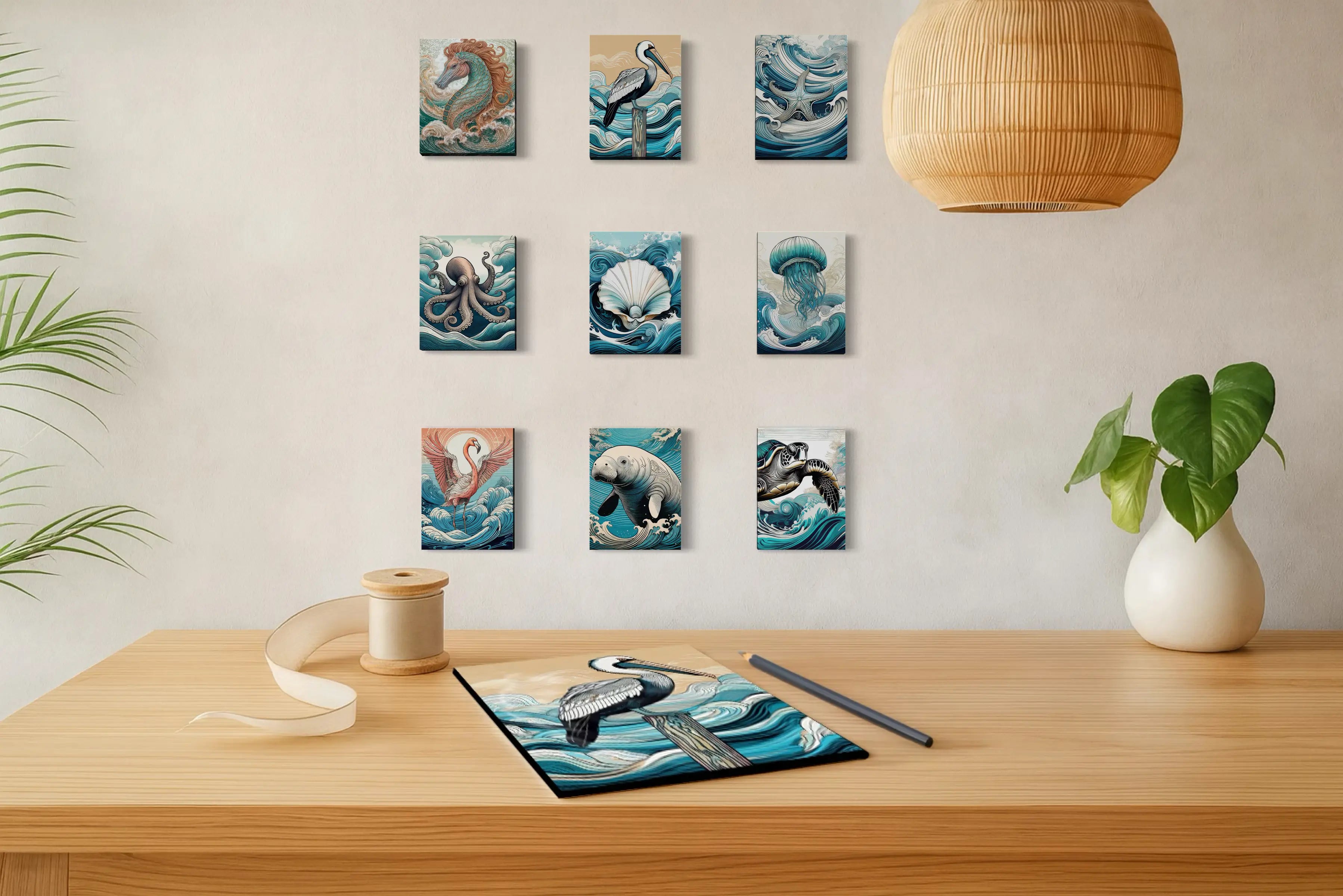
If you are starting to recognize what your room is missing, the featured prints below offer a good place to begin.
You do not have to redesign the whole room to change how it looks or reads. Sometimes the room has been waiting for one stronger choice on the wall.
Start by identifying what seems off. Is the room too blank, too dark, too busy, too safe, too flat, or too cold? The best art choice is often the one that changes that imbalance.
Yes. Art can add calm, contrast, warmth, movement, glow, structure, or personality. In many rooms, that shift is enough to change the atmosphere without changing everything else.
A larger statement piece or one print with stronger visual presence often helps a blank room look more finished and more intentional.
Rooms that come across as too cold often respond well to sunrise and sunset prints, warm-toned wildlife, softer shell studies, or artwork with warmer undertones and softer light.
A room that looks too busy usually benefits from one cleaner focal point rather than more layered decor. Shell studies, nautilus prints, and minimal marine pieces often work well.
Sometimes the shift is furniture. Sometimes it is layout. But often, it is the wall.
The right print can give a room its focal point, its contrast, its calm, its warmth, or its rhythm. It can bring order to a crowded space or life to a careful one. It can make a room that was almost there finally come together.
If your room is close but not quite right, start there — not with what you want to buy, but with what the room still needs.
About the Author
Lisa Reid is the photographer and founder behind Echoes of the Sea LLC, where she creates coastal glass wall art designed to bring atmosphere, light, movement, and emotional presence into the home. Her work is inspired by the shoreline, marine life, shells, coastal botanicals, and the changing rhythm of the sea.


