

Japandi Coastal Décor: Warm Minimalism Meets the Sea
|
|
Time to read 5 min
Cart
Your cart is empty
|
|
Time to read 5 min
Japandi Coastal décor blends Scandinavian minimalism with Japanese wabi-sabi principles, softened by warm coastal tones and natural materials. Defined by tonal layering, organic texture, and restrained glass art, this style creates interiors that feel grounded, airy, and deeply restorative.
Table of contents
Japandi coastal design brings together brings together two philosophies rooted in restraint and intention. Scandinavian functionality meets Japanese wabi-sabi simplicity, softened by sun-washed neutrals and the quiet movement of the sea.
Where Modern Coastal Décor leans into architectural contrast and defined silhouettes, Japandi Coastal favors warmth, tonal harmony, and natural imperfection. It is minimalism with texture. Coastal design without excess.
The result is an interior language that feels calm, grounded, and quietly refined.
Japandi Coastal relies on subtle tonal transitions rather than contrast. Its foundation is quiet and layered, allowing texture and light to carry the design.
Core tones typically include:
In Japandi coastal interiors, light moves softly across ash wood and linen, allowing subtle tonal shifts to carry the room.
Unlike Coastal Luxury Décor or Coastal Glam, metallic accents are nearly absent. Richness comes from material depth rather than shine.
Texture is central to the emotional tone of Japandi interiors. Rather than layering decorative elements, the style builds warmth through natural surfaces and honest materials.
Common materials include:
Furniture silhouettes remain low and grounded, emphasizing proportion and calm over ornament.
This approach reflects broader Japandi principles of craftsmanship and balance often discussed in contemporary design publications (Dezeen’s guide to Japandi interiors).
In Japandi Coastal spaces, art should feel contemplative rather than commanding. The goal is not to dominate a wall, but to create a moment of pause.
Soft horizon landscapes, tonal ocean gradients, and restrained shell studies align naturally with this approach. Japandi Coastal interiors often favor a single, centered artwork to preserve calm and proportion. However, in larger rooms with generous wall space, a restrained tonal triptych can work beautifully — provided spacing remains balanced and the composition maintains visual quiet.
Where Coastal Luxury embraces scale and symmetrical grandeur, Japandi Coastal embraces stillness and restraint. The art becomes part of the architecture rather than a focal spectacle.
Learn more about how glass enhances light while maintaining minimal presence.
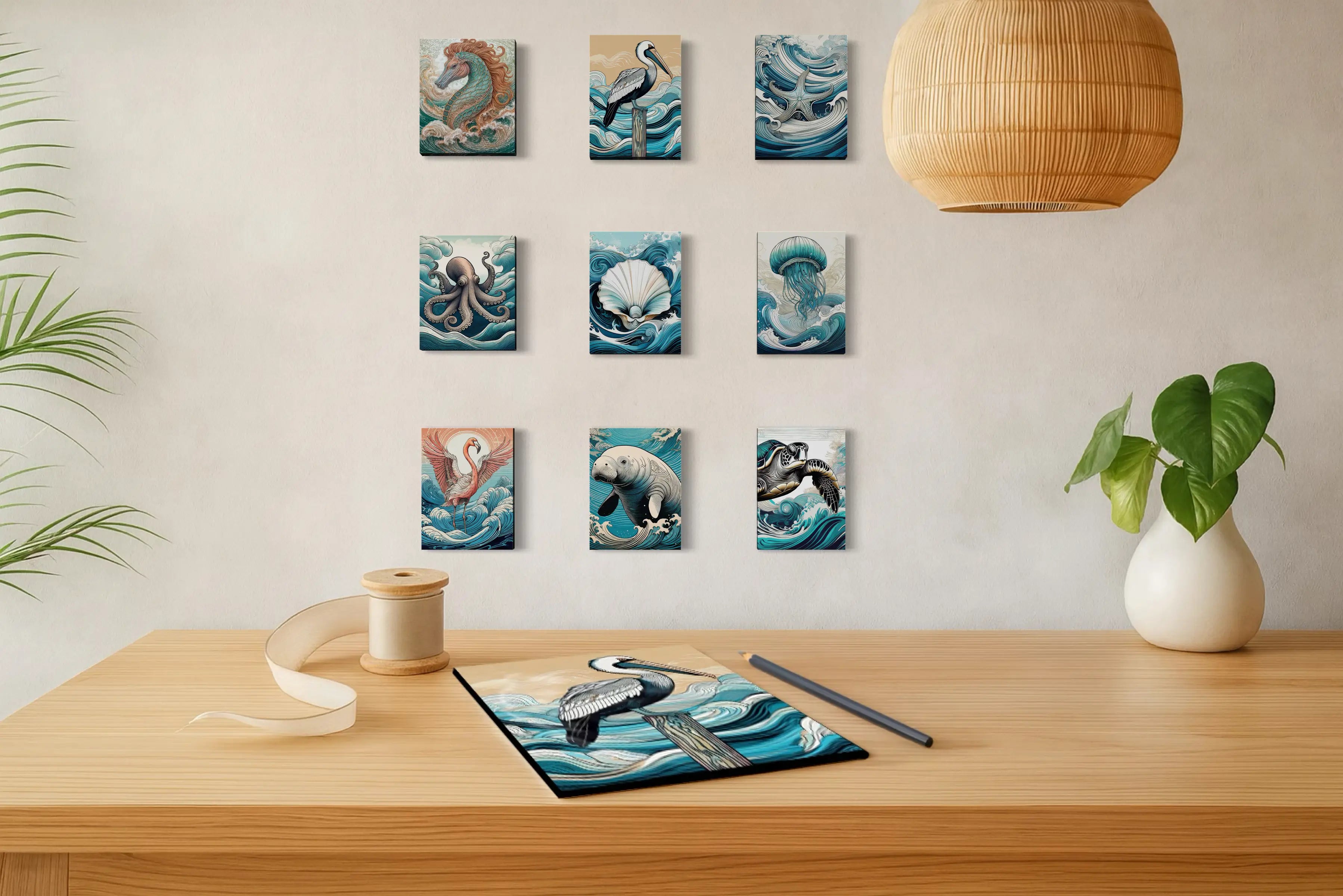
Thoughtfully scaled and tonally restrained, the pieces below complement Japandi coastal interiors without overwhelming them.
A Japandi Coastal living room feels grounded and serene. A low-profile linen sofa anchors the space, paired with a simple light wood or travertine table. Decorative elements are minimal and intentional — a sculptural ceramic vessel, a woven textile, or a single centered coastal glass print.
Air and light are allowed to move freely through the room. Negative space is not emptiness; it is balance.
In the bedroom, the style becomes even more contemplative. A low platform bed layered in ivory and sand tones sets the tone, complemented by light wood nightstands and understated lighting.
Above the bed, a single tonal ocean horizon or soft shell print reinforces calm without introducing distraction. Gallery walls and layered ornamentation give way to simplicity and proportion.
The result is restorative and deeply composed.
Dining spaces in this style remain warm and organic. A clean-lined oak table, linen-upholstered chairs, and a simple ceramic centerpiece create understated elegance. A single coastal print, thoughtfully centered, completes the composition.
Lighting remains soft and sculptural rather than dramatic. The emphasis is on material honesty and balance.
Japandi coastal design is about editing — not adding.
Japandi coastal interiors resonate because it prioritizes emotional clarity. It blends Scandinavian simplicity, Japanese restraint, and coastal softness into a cohesive and timeless language.
For those who appreciate the ocean but prefer warmth over contrast, This Japandi coastal style offers offers a refined middle ground between Modern Coastal Décor and Classic Coastal Décor. It is a style rooted not in trend, but in atmosphere.
Proportion preserves calm in Japandi coastal interiors.
For bedrooms, artwork should span approximately 60–75% of the bed width.
For dining rooms, leave breathing room on either side of the piece.
In larger living rooms, tonal triptychs can work when spacing remains generous and the palette restrained.
While Japandi Coastal sits comfortably within the broader coastal design family, its tone is distinct.
Compared to Modern Coastal Décor, which emphasizes architectural lines and contrast, Japandi Coastal feels softer and more tonal. Modern Coastal sharpens edges; Japandi diffuses them.
In contrast to Coastal Luxury Décor, which relies on scale and proportion to create presence, Japandi Coastal achieves elegance through reduction. Luxury makes a statement through expansiveness. Japandi makes a statement through restraint.
And where Classic Coastal Décor embraces familiar nautical references and layered seaside motifs, Japandi Coastal removes ornament in favor of material purity and quiet balance.
Each style speaks to a different emotional temperature. Japandi Coastal remains the most contemplative of them all.
Thoughtfully proportioned glass art enhances light, texture, and tonal harmony in Japandi coastal interiors.
Japandi Coastal blends Scandinavian functionality, Japanese restraint, and soft coastal tones to create warm, minimal interiors rooted in natural materials.
Modern Coastal emphasizes contrast and architectural structure, while Japandi Coastal focuses on tonal layering, texture, and intentional restraint.
Yes. Japandi Coastal favors single, centered art installations with negative space rather than bold gallery walls or oversized decorative groupings.
Warm whites, sand neutrals, light ash wood tones, muted sea-glass blues, and soft charcoal accents.
No. Minimalist coastal often removes warmth. Japandi Coastal maintains warmth through wood, texture, and organic materials.
About the Author — Lisa Reid
Lisa Reid is the creative force behind Echoes of the Sea, blending architectural restraint with the luminous movement of coastal glass art. Inspired by shoreline light and the power of proportion, her collections are designed to elevate interiors with clarity and quiet sophistication.
Through The Coastal Journal, Lisa explores the evolving language of coastal design — from modern minimalism to refined resort living — helping readers create spaces that feel intentional, timeless, and serene.


