

How Coastal Glass Art Elevates Reception Areas and Waiting Rooms
|
|
Time to read 9 min
Cart
Your cart is empty
|
|
Time to read 9 min
A guide to using coastal glass art in reception spaces, waiting rooms, wellness interiors, and other commercial environments where calm, light, and first impressions matter.
Coastal glass art works especially well in reception and waiting rooms because it brings calm, polish, and a more welcoming atmosphere to commercial interiors. With reflective surfaces and refined coastal imagery, it helps professional spaces feel intentional rather than generic.
In reception areas and waiting rooms, people begin reading a space immediately. They notice the light, the mood, the color palette, and whether the room feels polished, calming, or forgettable. That is part of what makes artwork so important in commercial interiors. It does more than decorate the wall. It helps define the emotional tone of the space.
That is where coastal glass art can be especially powerful. Because glass wall art combines a reflective surface, natural subject matter, and a more elevated visual presence, it can bring calm, clarity, and a refined coastal atmosphere to professional spaces without feeling overly themed or overly corporate. In the right setting, it helps a room feel more welcoming, more intentional, and more memorable from the moment someone walks in.
If you’re drawn to interiors shaped by light, restraint, and a more refined coastal point of view, you may also enjoy our post on the rise of coastal modernism.
For more ideas across hotels, vacation rentals, restaurants, lobbies, and guest-facing interiors, visit our guide to coastal glass wall art for commercial and hospitality spaces.
Coastal glass art can soften reception areas and waiting rooms while still feeling polished, professional, and thoughtfully designed.
Glass works especially well in commercial interiors because it reflects light and gives the artwork a more finished presence than paper or canvas.
Shell studies, botanical pairings, coastal birds, and quieter shoreline imagery all work beautifully in calm commercial spaces.
Reception desks, waiting areas, lounges, hallways, and wellness rooms are all strong placements for coastal glass art.
The best commercial coastal interiors feel refined and restorative, not overly themed.
A well-chosen glass print can help create a memorable first impression.
Choosing reception area wall art is about more than filling an empty wall. Seating, flow, durability, lighting, and layout all matter, but spaces that only solve practical needs can end up feeling cold, generic, or forgettable.
Seating, flow, durability, lighting, and layout all matter. But spaces that only solve practical needs can end up feeling cold, generic, or forgettable. In places where people may be arriving nervous, early, tired, or uncertain, atmosphere matters just as much as efficiency.
That is why artwork plays such an important role. A calm, thoughtfully chosen piece can soften the room, create a sense of welcome, and signal that the environment has been designed with care. In coastal reception areas and waiting rooms, glass art helps do that beautifully because it introduces both subject and surface at once: natural imagery paired with a clean, reflective finish.
The result feels less like filler and more like part of the room’s identity.
Coastal imagery has a natural advantage in spaces where people need to feel more at ease. Shorelines, shells, sea birds, horizon lines, and botanical coastal forms all suggest calm, openness, and light. They can help a room feel quieter without becoming dull.
The material itself changes the effect. Because glass reflects light rather than absorbing it, coastal art printed on glass tends to feel cleaner, more luminous, and more finished in commercial interiors. It interacts beautifully with:
That makes it especially strong in spaces that want to feel polished and welcoming rather than decorative or overly casual.
The same idea applies in smaller guest-facing spaces, too. If you are styling an Airbnb, VRBO, beach condo, or guest suite, you may also like these beach vacation rental decor ideas for creating a calm, guest-ready space.
For a closer look at why glass changes the way art holds light and depth, visit our Why Glass page.
The best art for reception spaces is usually calm, clear, and visually grounded. That does not always mean pale or minimal. It means the work should help shape atmosphere without making the room feel visually noisy.
Some of the strongest choices include:
In a front-desk or reception setting, artwork should feel intentional and composed. It should support the room, not compete with it.
For more ideas on choosing artwork across guest rooms, lobbies, lounges, and other hospitality interiors, you may also like our guide to hotel wall art for coastal hospitality spaces.
That is one reason shell studies and botanical glass posters can work so well in these spaces. They feel collected, thoughtful, and quietly distinctive.
Waiting Rooms
Waiting areas benefit from artwork that lowers visual stress rather than increasing it. Coastal glass art can bring movement, light, and calm without adding clutter.
Lounges and Seating Areas
Small lounges or hospitality-style seating areas often feel more finished when anchored by one or two pieces of art that reinforce the mood of the room.
Hallways and Transitional Spaces
These are ideal places for shell studies, smaller pairings, or more structured pieces that guide the eye without overwhelming narrow walls.
Wellness and Medical Spaces
Therapy offices, wellness studios, spa reception areas, and medical waiting rooms can all benefit from coastal art that feels restorative, polished, and quietly natural. When choosing medical office wall art, calmer imagery such as shorelines, shells, botanical forms, and coastal birds can add visual interest without making the room feel busy.
This is one of the most important parts.
Commercial coastal interiors work best when they feel refined, not overly beachy. The goal is not to fill a professional space with obvious nautical signals. It is to use the coast more subtly — through natural form, atmosphere, and material.
That usually means:
In other words, think coastal modernism rather than coastal theme. That is what allows the work to feel elevated in a business setting.
Different types of coastal art can shape a room in different ways.
Shell Studies
These are especially strong when you want structure, symmetry, and a more collected or design-forward feel. They work beautifully in reception areas, hallways, and professional lounges.
Botanical Pairings
These bring softness and warmth. They are ideal for wellness spaces, spa settings, waiting rooms, and quieter reception areas where calm matters most.
Coastal Birds
Bird imagery can bring stillness and presence to a room. These pieces often work well in offices, lobbies, and spaces that want something recognizable but still elegant.
Shoreline and Wave Imagery
These pieces are often best when the goal is openness, serenity, and a more atmospheric mood. They work especially well in larger waiting areas or guest-facing spaces.
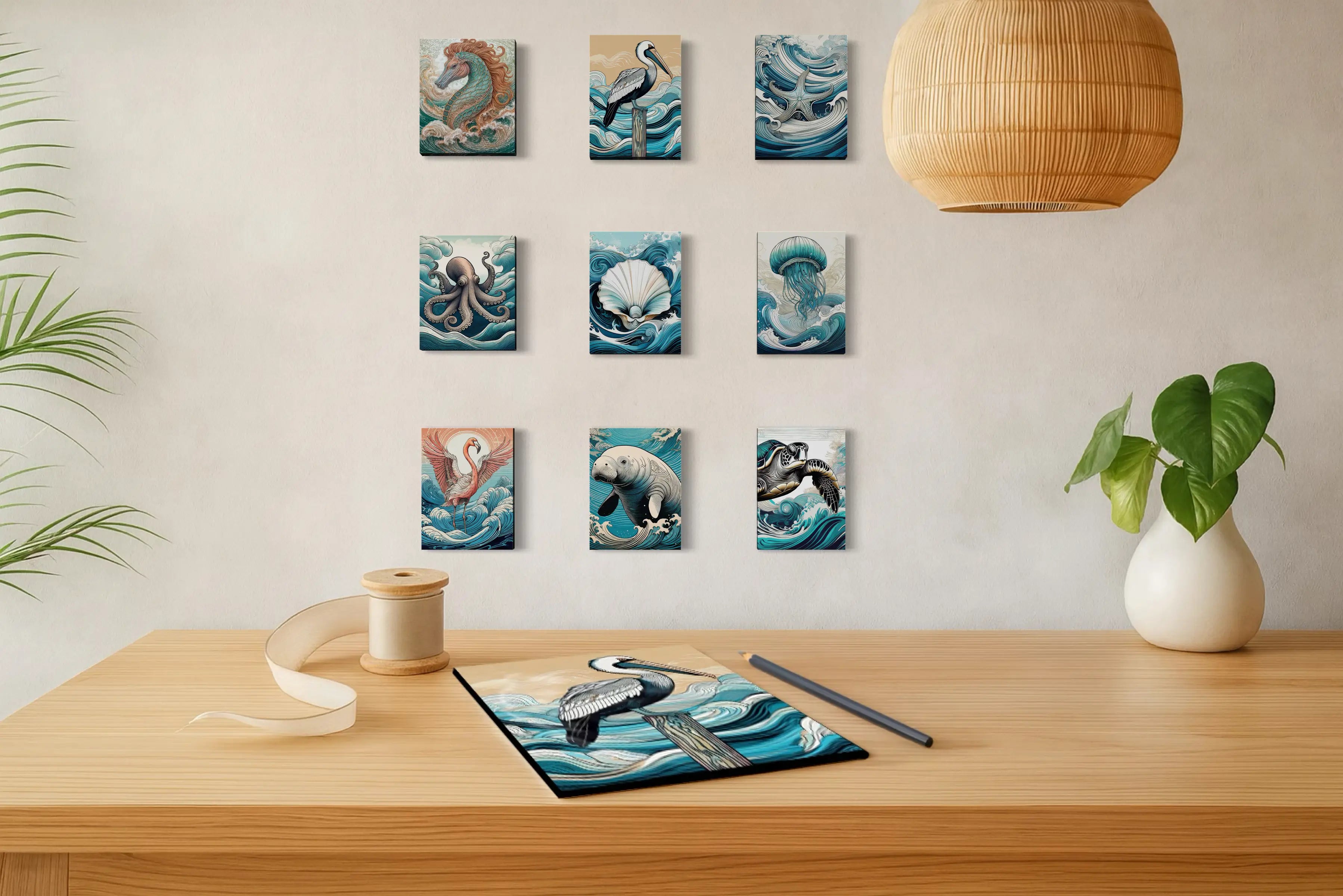
In commercial spaces, scale matters just as much as subject. A single larger piece can create a calm focal point behind a reception desk. A pair can work beautifully in a smaller waiting area or hallway where you want balance without too much presence. A trio tends to feel more architectural and can help define a larger wall in a lounge, guest corridor, or spacious waiting room.
In general:
If you are deciding which arrangement will work best on a larger wall, see How to Decorate a Large Wall with Diptych, Triptych & Multi-Panel Art
The right arrangement makes the difference between art that feels added and art that feels integrated.
There is something about glass that feels immediately more finished in a commercial setting. Paper can feel temporary. Canvas can feel softer and more casual. Glass feels polished, intentional, and clean.
That matters in spaces where visitors are quietly forming impressions of a business, a practice, or a hospitality environment. Glass art reflects light, adds clarity, and brings a sense of professionalism without feeling cold. In coastal commercial interiors, that balance is especially useful. It allows the room to feel calming and elevated at the same time.
That is part of what makes glass such a strong fit for waiting rooms, reception spaces, and wellness environments shaped by light, restraint, and first impressions. If you’d like a more personal look at why reflection matters so much in my work, read how wet sand reflections inspired my coastal glass prints.
At its best, commercial coastal design should not feel like generic décor.
It should feel thoughtful.
Calm.
Light-filled.
Genuinely welcoming.
That is what coastal glass art can help create. It brings the coast into the room through natural form, reflective light, and a sense of atmosphere that feels restorative rather than distracting. In reception areas and waiting rooms, that can change how a space is experienced before any interaction even begins.
And that is what makes it worth choosing carefully.
If you’d like to see how coastal glass art can work in professional spaces, explore our coastal glass prints and glass posters below.
A few curated favorites:
The best waiting room art is calm, polished, and visually grounding. Coastal glass art works well because it brings natural form, light, and atmosphere into the space without feeling loud or distracting.
Glass reflects light and adds a more polished, elevated finish than many other wall art materials. In reception areas, that helps create a stronger first impression.
Yes. The key is choosing refined coastal imagery such as shell studies, botanical pairings, birds, or shoreline scenes, and pairing it with restrained interiors rather than obvious beach décor.
Reception areas, waiting rooms, lounges, hallways, wellness studios, therapy offices, spa spaces, and guest-facing hospitality interiors can all work beautifully with coastal glass art.
That depends on the wall and the space. A single larger piece works well behind a reception desk. A pair suits smaller waiting areas or hallways. A trio can define a larger wall in a lounge or spacious reception area.
Shell studies, botanical pairings, coastal birds, and shoreline imagery are all strong choices because they feel calming, elevated, and design-forward.
About the Author
Lisa Reid is the artist and founder behind Echoes of the Sea, a coastal wall art brand inspired by the shoreline, reflected light, and the quiet beauty of the sea. Her work blends coastal imagery with a more collected, artful approach to help create homes and commercial spaces that feel peaceful, elevated, and deeply connected to the coast.


