

A Day in the Life of a Shore: From First Light to Tidefall
|
|
Time to read 8 min
Cart
Your cart is empty
|
|
Time to read 8 min
A shore is never only one thing for very long.
At first light, it can feel hushed and almost private — pale sky, soft water, a quiet so gentle it seems to hover just above the sand. Then the day begins to gather itself. A heron moves with deliberate grace at the water’s edge. Shells and sand dollars turn in with the tide. The surf changes its rhythm. Pelicans lift into the open air. By evening, the whole shoreline warms and deepens, and after the sun slips away, the coast becomes something quieter still.
That may be part of why coastal wall art stays with people. It does not only bring the sea into a room as a subject. It brings a certain hour of it. A certain softness. A certain movement. A certain kind of light.
Some pieces feel like dawn. Some feel like lift and open air. Some carry the structure of shells left behind or the rhythm of water returning. Some hold the warmth of evening. Others carry the mystery, instinct, and continuity of the shore after dark.
When you begin there — not only with what the image shows, but with the feeling it preserves — it becomes much easier to choose coastal wall art that feels lasting, personal, and alive.
Before the shore becomes bright, it becomes quiet.
The color is still finding its way in. The water reflects more than it announces. The horizon feels softer, less defined, as though the day is arriving gradually rather than all at once. It is one of the gentlest moments the coast offers: spacious, pale, and calm without ever feeling empty.
This is the part of the shoreline that sunrise pieces hold so beautifully. They bring hush into a room. They soften edges. They create breath. A print with first-light color does not need to be dramatic to be memorable. Very often, its power is in restraint.
If you are drawn to the calmer side of coastal wall art, this is often the place to begin. A sunrise scene or coastal photography wall art with softened dawn tones can bring stillness into a bedroom, sitting area, or any room that needs a quieter kind of presence.
Sooner or later, the shoreline shows you a living shape within its stillness.
A heron does not rush the morning. It steps through the shallows with patience, attention, and a kind of quiet certainty. Nothing about it feels wasted. Its movement is measured. Its presence is elegant without trying to be.
That quality is part of what makes heron wall art so enduring. It brings more than wildlife into a space. It brings poise. It brings watchfulness. It brings calm that still feels alert.
In rooms that do not need loud color or dramatic motion, a heron can offer something subtler and often more lasting: grace, focus, and a sense of balance. That is especially true when the piece still feels connected to the shoreline itself, rather than isolated from it.
Not all of the shore’s beauty arrives in large gestures.
Some of it is found low to the ground, in what the water leaves behind: shells turned at the tideline, sand dollars rolled in quietly, fragments of coral, small forms made intricate by time and tide. These are the details that make the coast feel intimate rather than grand.
Shell-based coastal wall art has a different emotional register than horizon scenes or wildlife pieces. It feels collected, considered, and close. It gives the eye a place to linger. It brings structure and delicacy at the same time.
That is why shell wall art works so well in rooms that need detail more than drama. A shell study, coral arrangement, or still-life composition can calm a space while still giving it something to discover.
The shore is never static for long.
What looked still a moment ago begins to gather, shift, and return. The tide changes its reach. The edge of the water redraws itself. The same place looks different simply because the motion within it has changed.
This is one of the reasons wave-based art feels so alive in a home. It carries rhythm. It gives the eye somewhere to travel. It introduces movement without clutter. In rooms that feel visually flat, wave wall art can create the push and pull that the furnishings alone are not giving.
The effect does not have to be loud. Even a quieter water study can bring contour and energy into a room simply by reminding it that beauty is rarely motionless.
By now, the coast has opened.
The sky reads wider. The light is clearer. The shoreline no longer feels private in the way it did at dawn. It feels expansive. Air moves differently. The scene widens upward.
This is where pelicans and other coastal birds change the mood entirely. There is something unmistakable about seeing a bird move above the water with that combination of ease and strength. It adds lift to the shoreline itself.
That same feeling is what makes pelican wall art and coastal bird wall art so effective in a room. They create openness. They pull the eye up. They bring gesture and air, not only color or subject matter. When a space needs more movement, bird artwork can sometimes do more than another landscape because it introduces the feeling of life in motion.
Late in the day, the shoreline changes again.
The brightness that belonged to midday softens into warmth. Reflections lengthen. The water begins to hold the sky differently. What was once clear and blue becomes luminous, layered, and a little more atmospheric.
This is why sunset beach wall art feels different from other coastal pieces. It does not only show the sea. It shows the sea carrying the day toward its close. It brings glow, softness, and emotional warmth into a room in a way that cooler shoreline imagery does not.
For spaces that feel too restrained, sunset pieces can be especially transformative. They warm a room without overwhelming it. They add feeling without adding noise. Sometimes that is exactly what a clean, neutral room has been missing.
As the sun slips away, the shore does not stop. It simply changes hands.
The light softens. The sea deepens. And on certain beaches, another, quieter rhythm begins. Mother sea turtles come ashore under cover of night, returning to familiar stretches of coast to lay their eggs above the tide line. It is one of the oldest movements the shoreline still keeps — patient, instinctive, and mostly unseen.
Sea turtle wall art often resonates for the same reason. It carries more than marine life into a room. It carries return. Continuity. Tenderness. Ancient memory.
This kind of coastal art can feel especially meaningful in a home because it is not only decorative. It suggests guidance, endurance, and belonging. It reminds us that the shore is not only beautiful in daylight. Some of its most moving stories begin after dark.
And that sense of return is only part of the story.
And when the hatchlings emerge, they move instinctively toward the brightest horizon, traditionally the moonlit reflection over the water. It is one of the most delicate and determined movements in the natural world: brief, vulnerable, and full of purpose.
There is something unforgettable in that image — life beginning in darkness and moving toward light, then toward tide, then toward the sea itself.
We are often drawn to coastal wall art as though we are choosing a subject.
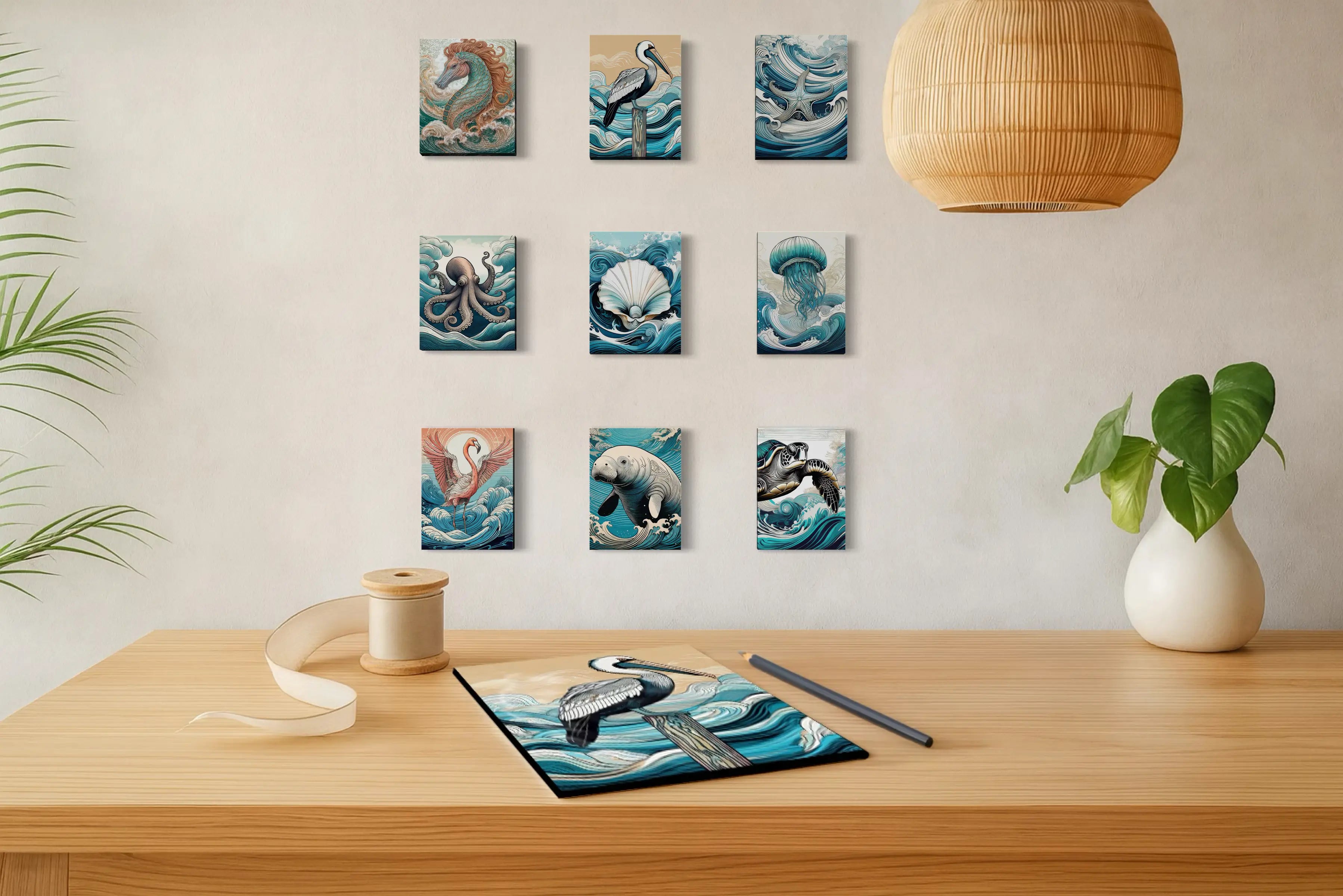
A heron. A shell. A wave. A pelican. A sea turtle. A sunset.
But more often, what we are really choosing is a feeling.
We are choosing the quiet of first light. The still focus of a bird at the shoreline. The detail of shells left behind. The rhythm of water returning. The lift of open sky. The warmth of evening. The mystery and instinct of the coast after dark.
That is why some coastal prints stay with us longer than others. They do more than match a palette. They preserve a moment of the shore that we do not want to lose.
If you are choosing coastal wall art for your home, that may be the best place to begin: not with what looks pretty in isolation, but with the moment of the shoreline you want to keep living with.
If you are also deciding which medium will hold that feeling best, visit Why Glass to see what glass brings to light, depth, and presence on the wall.
If a certain moment of the shoreline stays with you — first light, shells at the tide line, birds in open sky, or the quieter mystery of the coast after dark — that may be the best place to begin when choosing the print you want to live with.
Coastal wall art often feels calming because it reflects open space, softer light, natural rhythm, and the visual quiet many people associate with the shoreline.
A useful place to begin is with the feeling you want to live with. Some pieces bring stillness, some add movement, some warm a room, and some create a more reflective mood.
Wave wall art, pelican artwork, and pieces with stronger gesture or changing water tend to bring more energy and rhythm into a room.
Sea turtle artwork often resonates because it suggests return, continuity, instinct, tenderness, and the deeper cycles of the shore.
Usually, yes. Sunset pieces tend to bring more glow, softness, and emotional warmth than cooler daylight shoreline imagery.
About the Author
Lisa Reid is the photographer and founder behind Echoes of the Sea LLC, where she creates coastal glass wall art designed to bring atmosphere, light, movement, and emotional presence into the home. Her work is inspired by the shoreline, marine life, shells, coastal botanicals, and the changing rhythm of the sea.


